
How the Ultimate Outsider Helped Transform New Orleans
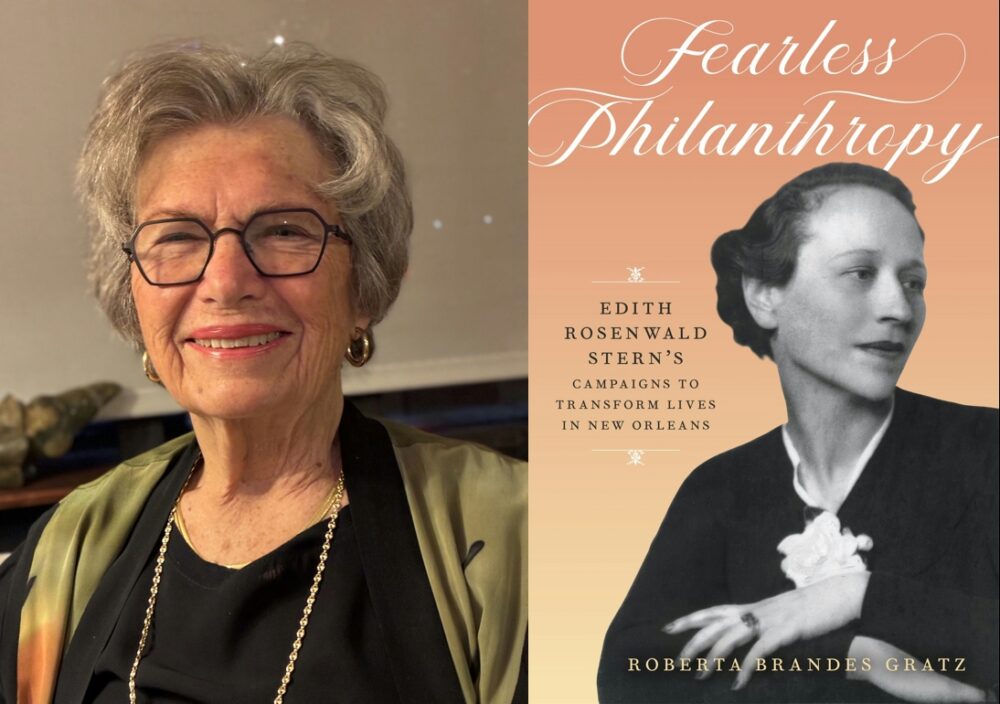
Roberta Brandes Gratz’s new book, Fearless Philanthropy: Edith Rosenwald Stern’s Campaigns to Transform Lives in New Orleans (LSU Press), is a bit of a departure. An acclaimed urbanist and author with a long history of writing about cities, Gratz has now released a biography of a seminal, but somewhat overlooked figure in 20th century New Orleans. Stern was a Chicago-born heir to the Sears & Roebuck fortune who arrived in the Crescent City in the 1920s with not just deep pockets, but a real desire to enact change. Along with her husband, Edgar, Edith was involved, both publicly and behind the scenes, in everything from expanding voting rights and access to education, to funding the art museum and symphony, helping to found Dillard University and revitalizing the French Quarter. Gratz—a frequent contributor to this site—is the author of six previous books, including The Living City: How America’s Cities Are Being Revitalized by Thinking Small in a Big Way; The Battle for Gotham: New York in the Shadow of Robert Moses and Jane Jacobs; and We’re Still Here You Bastards: How the People of New Orleans Rebuilt The City. Recently I talked to her about the book, the unique nature of Stern’s activism, and why today’s rich seem so mean and miserly in comparison.
MCP: Martin C. Pedersen
RBG: Roberta Brandes Gratz
Edith and Edgar Stern have been gone from New Orleans for decades and were almost written out of the city’s history. What led you to them? And why are they important, not just to New Orleans, but to philanthropy?
What led me to them was watching the aftermath of Hurricane Katrina and wondering how the city was going to recover. I had written books about urbanism. I’d covered New York City for 15 years at the New York Post. Cities were my subject, and I figured this was a story with my name on it. How would the city recover? From the bottom up or from the top down? I was down in New Orleans three weeks after Katrina and started writing stories and eventually wrote my first book about the city, We’re Still Here You Bastards.
In the process of researching that book, I met an extraordinary man: Bill Borah. He was very much to the manor born, a lawyer. His father was a judge and a big part of Rex [the collective that puts on a major Mardi Gras parade]. His sister was queen of Rex. Bill had spent his life fighting the city elites’ top-down, money-making projects. He famously led the fight against a Robert Moses–designed expressway, planned and approved, to go along the waterfront of the French Quarter. A third of the quarter would have been wiped out, creating a giant wall between the French Quarter and the river. It would have been a disaster.
Bill told me about this rich man—an uptown cotton broker—who funded the fight, Edgar Stern, who was part of the elite, but also an outsider, Jewish—not religious, by any means—but accepted by the elite. In those years, between the 1920s and 1980s, New Orleans was very anti-Semitic and racist. Anyway, Bill and I bonded over his highway battle, because my friend and mentor, Jane Jacobs, was one of the leaders of the fight against the Lower Manhattan Expressway. I became interested in Stern, but Bill also told me about Edgar’s wife, Edith, who had the money. Edith was the daughter of Julius Rosenwald, who I had only vaguely heard about. Rosenwald was the head of Sears & Roebuck and at one point early in the 20th century was one of the richest men in the country.
In the book, you call Rosenwald the “Jeff Bezos of his day.”
Early in the 20th century, Rosenwald started funding Black institutions: YMCAs, hospitals, schools. He was a close friend of Booker T. Washington and became a lead supporter of the Tuskegee Institute. In the 1940s and ’50s, Washington and Rosenwald began to build scores of one-room schoolhouses throughout the South for Black children, who had no access to education. A number of well-known people, including Julian Bond, John Lewis, and Maya Angelou, were educated in these schoolhouses. Rosenwald didn’t just fund the schoolhouse, he funded the library, the teachers, but he had a philosophy. He would donate one-third, if the community would donate one-third, leaving the last third to the local Black community.
What’s called the matching grant today.
Yes. What that meant was every white locality had to come up with one-third of the money. So they were funding, often reluctantly, Black schools. Rosenwald hired an important architect who designed some of the schools, a Black man named Robert Taylor. Some of the white localities were so envious that they sometimes used Taylor’s drawings and blueprints for their schools. Rosenwald helped fund more than 5,300 one-room schoolhouses throughout the South. That’s extraordinary. So Edith inherits that kind of guts and liberalism and eventually makes her way to New Orleans.
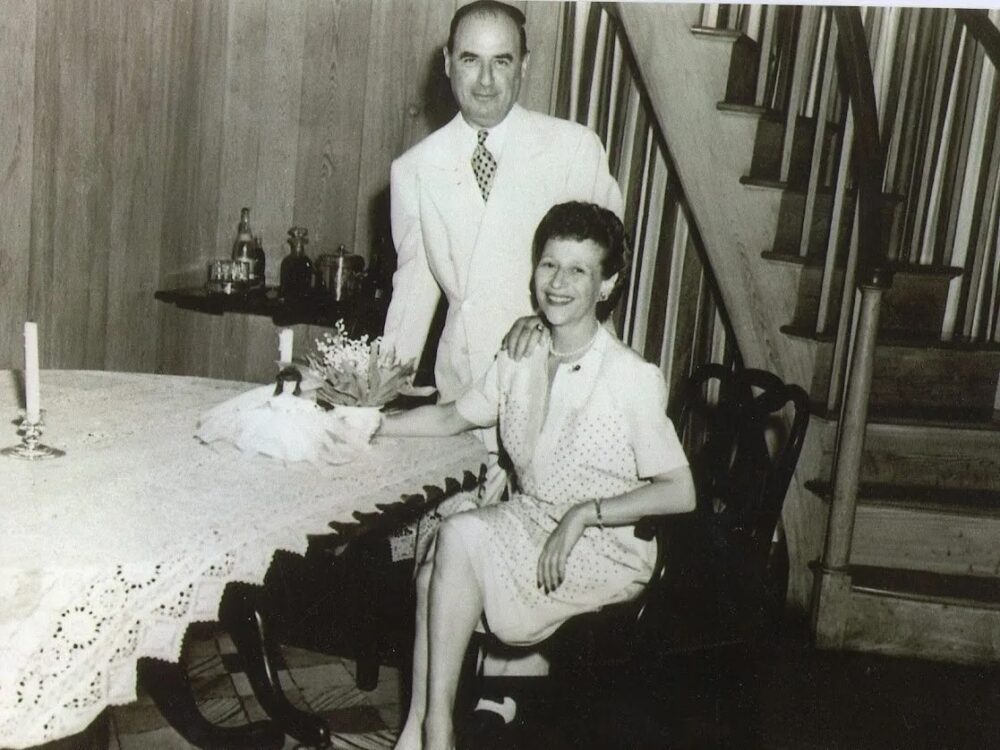
Edith and Edgar Stern in the 1940s.
How does she end up in New Orleans?
She marries Edgar Stern in 1921.
Who wasn’t nearly as wealthy as her?
No, but he was successful. So Edith arrived as his wife with the biggest pot of money New Orleans had ever seen. She’s liberal, Jewish, and has as much guts as she has money, and she’s not about to be held back by either the social or the financial rules of New Orleans. Edith becomes an extraordinary philanthropist.
She funded the campaign for the integration of the schools, led by a group, primarily of women, called Save Our Soul, SOS. Edith did that quietly, funding the PR firm that developed the campaign and left town because anything with her name on it was already trouble. On other issues, like voter registration, she was not quiet. At one point she bussed her whole staff—there were more than 20 people—to the polls to register to vote. Hate graffiti appeared on the Longue Vue fence after that. She wasn’t gonna be stopped. She organized a whole group of women to work on registration. She wanted to be the registrar in New Orleans, but she didn’t get it.
So she meets with Governor Jimmy Davis and tells him about all these phony registered voters, and the governor says, “How do you know they’re phony?” She says, “One registrar had 30 voters in one day, 27 of whom were handicapped. Now, what do you think, governor?” Being handicapped allowed a poll official to go into the booth with the voter to “help” them. These were all compromised votes. Edith made a point of teaching people how important voting was. But she also funded a wide range of other philanthropic interests.
What are some of the initiatives that we know today that were Stern-led?
One of the things I learned early from a New Orleanian, very much part of the elite, who said to me, “If it weren’t for the Jews, there’d be no culture in New Orleans.” And what he was saying, of course, doesn’t include Black culture, because New Orleans culture is Black culture. He was talking about the traditional cultural institutions like the museum, symphony, theaters, the opera—all those things were heavily funded by Jewish philanthropists because most of the money of the elite was going into Mardi Gras.
Edith was one of the big funders to the New Orleans Museum of Art, probably the biggest of the three women who led the charge. She funded the symphony, which her mother-in-law had saved from bankruptcy years before. She bought and restored houses in the French Quarter, while Edgar Sr. and Edgar Jr. were building the Royal Orleans Hotel, which was the first new hotel in the Quarter in decades and helped revive it. They bought WDSU, which they headquartered in the Quarter. So the Sterns, as a family, with Edith’s money behind all of this, helped revive the French Quarter.
Edgar led an integrated group in the founding of Dillard University, with a lot of support from the Rosenwald Fund, Edith’s father. But the project I love the most is Pontchartrain Park, the first suburban tract development in the country for Black homeowners backed by the FHA. This was 1955. Until that time, the FHA was notorious for turning down funding for any project that allowed even one Black occupant. That goes for Levittown, too. Black housing was not fundable until Pontchartrain Park.
This happened largely because of Edgar’s connections in Washington. The Sterns joined Rosa Freeman Keller and her husband, Chuck, and the four of them funded the early development of Pontchartrain Park, which was planned around a golf course, designed by a well-known course designer, a Black man named Joseph Bartholomew. He designed courses all over the place, but the one in Pontchartrain Park is the first one he was able to play on legally. Pontchartrain Park was important for middle-income housing in New Orleans, occupied mostly by veterans coming back from the war, with GI bill funding. A number of well-known people—Dutch Morial, the first Black mayor, composer Terrance Blanchard, NPR reporter Gwen Thompson, and actor Wendall Pierce—all grew up there.
So when you add up Pontchartrain Park, New Orleans Museum, the symphony, Dillard University, the first nursery school ever in the south, Metairie Country Day, and more, you find an extraordinary impact on the city. I don’t know of another city who has a funder with such high impact as this family.
There are philanthropists all over the country of high impact.
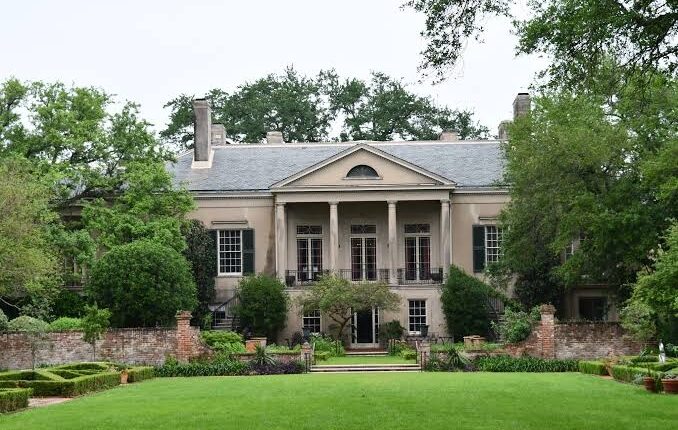
But what makes Edith compelling is, especially for her time, she had guts to stand up to the hierarchy of the city, defy the unwritten social rules, and not give a damn. Even the house that they built, Longue Vue, an extraordinary mansion, is on the edge of New Orleans bordering Metairie. It was her way of saying, “I’m not going to live where the upper crust is supposed to live.” Building Longue Vue in this totally undeveloped area of the city was a real turning of her back to the elite.
I don’t think she would have been able to accomplish all that she accomplished, especially around race, if she had been a member of the elite. It helped to be an outsider.
Well, it was purposeful. She had no interest in being an insider. She would never have been an insider, because in New Orleans to be Jewish is by definition to be an outsider. But, because it’s very much a German-Jewish style in New Orleans to play down the Jewish affiliation, there was an ability to socialize. Edgar was accepted by the business elite. He was too successful to be ignored and he had many positions: head of the cotton exchange, a board member of Whitney Bank. He was connected to the business leadership, but socially, it was another story. Being Jewish—and from Chicago—already labels Edith as an outsider. But she’s also politically active, a liberal, openly defiant, and not concerned about being accepted. Still, she could be strategic about her approach. Some of her philanthropy is quiet, some of it’s bold. She would have luncheons or dinner parties and tell people, “Bring your checkbook.” She didn’t necessarily socialize for the sake of socializing. She might have done that with small dinner parties. But when it came to fundraising, she was very upfront and let everybody know what she expected. And like her dad, she often did matching grants, and because of that got other New Orleanians to donate more than they might have if she hadn’t challenged them. Nobody did that.
One of the themes in the book is the leadership of women in some of the biggest fights in New Orleans, integrating schools, expanding voting rights, saving the French Quarter. Was that something you set out to explore, or did it emerge as you researched the book?
It emerged here, but didn’t surprise me. It’s an interesting issue, which I discovered years ago. When I was writing my books about various cities, I discovered most of them that were recovering from the urban renewal/highway building era recovered first through an early historic preservation movement, and those early preservation battles were all started by women, including in New Orleans: San Antonio, Miami, Charleston, Baltimore, and more.
What period of time is this?
The 1920s, 1930s, and 1940s, when property values were not high. Providence, Annapolis, Washington, D.C.—all these cities where the top neighborhoods today are all historic neighborhoods, saved by women. That fascinated me, and what I realized is, women then were not welcomed in the workplace, especially if they were women of a certain social standing. Instead, they were in the garden club or the junior league. These were the institutions, the organizations, that led these fights. There’s a wonderful story about San Antonio: After a big flood, the leadership—meaning, the men—wanted to dig out and straighten out the river. The women stood up and said, “No, no, no. The river identifies us.” They fought their own husbands, who were the political leaders of the city, and won. San Antonio today is defined by its river, because of women.
So it didn’t surprise me when I found this to be true in New Orleans, because women have been civic leaders all along, on every level. They just never get the recognition or have as much money as Edith Stern had. But you look at fights against highways: Jane Jacobs led fights all over the place, Barbara Milkowski landed in Congress after she helped lead the fight against the highway in Baltimore. Women have been fighting for cities from day one. Their instinct is always local. They’re not interested in the big projects that bring in all the corporate money and the lawyers and the bondholders.
They’ve never pushed for a stadium or a highway or an arts center. All these things are top-down, big projects that never deliver on their promise. So, Edith followed a pattern that I’ve been writing about for seven books now. And New Orleans exhibits some of the best qualities of urbanism that date before the Robert Moses/urban renewal era took its toll on cities across the country. Of course I couldn’t resist focusing on this in the book as well.
By the way, Pontchartrain Park happens because the Black cook of the Sterns was burned out of her house and during urban renewal couldn’t find a place to live. Edgar couldn’t believe that there was no place for her that was affordable and he went looking with her. He was furious to discover she was right. That’s when he and Edith talked to Chuck and Rosa Kelle, and decided to build Pontchartrain Park. So the women theme was a familiar one for me, but I had never found one as totally gutsy, totally disinterested in social status. Edith had enough money not to care about anything but doing what she thought was right.
Let’s zoom out from New Orleans. Our current oligarchy—Musk, Bezos, and others—give virtually nothing. There are some “good” billionaires: David Geffen, McKenzie Scott, to name two. But the richest among us aren’t committed to the common good. That’s what struck me reading the book. Edith was often the most progressive person in the room, but she was also the richest. God, what a sad contrast to today.
I don’t understand the super-wealthy today, whether they’re real estate developers or digital overlords. And it’s not their utter lack of philanthropy that I don’t understand. I just don’t get the ceaseless need for more. To keep plundering, while convincing yourself that you’re adding to society when in fact you’re doing the opposite. It makes me crazy—and if we had an Edith Stern today, she would be standing out among all them, calling them out, and making them look as shameless as they are.
Feature image: Longue Vue, New Orleans, via Life Magazine.