

What If We Designed Cities Around the Wind?
I’ve been thinking a lot about wind lately. It started with a conversation with an urbanist friend about how differently we might shape a city if we considered the movement of air at the very beginning of a master plan, not as a building-performance issue, or something tested after the streets and blocks have already been drawn. Much earlier than that.
Where does the air come from? Where does it want to go? Where should it be allowed to move freely, where might we want to slow it down? Could the shape of a neighborhood make a hot summer street more comfortable simply by the way its buildings, courtyards, and landscape are arranged?
How cities might look if air were factored in earlier is a deceptively simple question. And this summer made it feel relevant. I live in France, which experienced its hottest summer since national records began in 1900. There were 53 days of heatwave conditions across three separate episodes. Ninety percent of the country experienced temperatures of at least 95 F at some point, and 45% experienced at least one day above 104 F. Unprecedented.
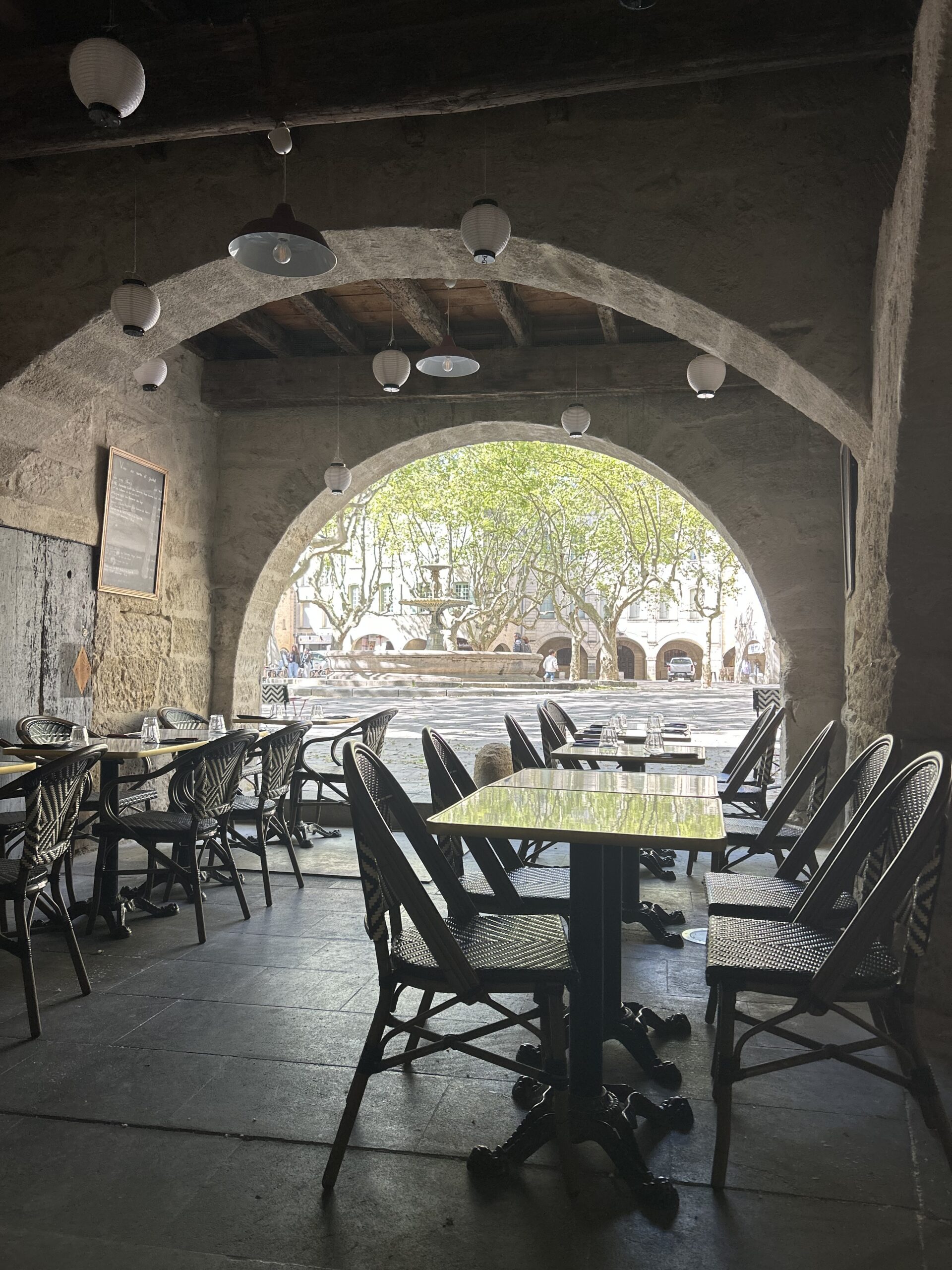
This July, I remember looking for shade without thinking about it. Noticing which side of a street felt tolerable. Feeling the difference between a still, exposed space and one where air was moving. Looking for a tree, a doorway, a courtyard—anywhere my body could find a little relief.
This is the point at which climate stops being a circumstance and becomes a driver.
We Know More Than We Think We Know
Humanity has been designing in response to climate from its earliest days, and every climatic region has made a contribution to this science. In the U.S., Charleston, South Carolina, is known for its traditional piazza houses that use narrow building forms, shaded side porches, and operable openings to capture summer breezes and create cooler, better-ventilated microclimates in the city’s hot, humid climate. Mediterranean cities have narrow streets, shaded passages, courtyards, and building orientation in order to create conditions protected from heat and tempered by wind. In Barcelona, Ildefons Cerdà’s 1860 Eixample plan considered street orientation as a means of capturing desirable summer breezes and limiting exposure to colder winter winds. In the scorching, arid deserts of the Middle East and North Africa, a nuanced tradition distinguishes between capturing favourable winds at roof level and restricting hot, dusty winds at pedestrian level, from early history through to Masdar City and other new towns. In Cairo, where I’m writing this, malqaf windcatchers, courtyards, and screened openings help mediate sun and move air through dense urban blocks.
These innovations weren’t designed using computational fluid dynamics, but instead relied on observation, experience, and generations of accumulated knowledge. The people who built them did not have the luxury of assuming that technology would solve whatever the climate presented. They understood where the wind came from, when the air cooled, where shade mattered. They understood how buildings could shelter one another, or create useful air movement between them.
We should not romanticize the past. Many of those buildings were created under conditions of necessity that we would not want to reproduce. But there is knowledge embedded in them that remains relevant, and that has been largely lost to us at the urban scale.
We Have An Extraordinary Opportunity
We are living through a peculiar moment. The climate is changing faster than many of our planning assumptions. At the same time, our ability to understand complex environmental systems has never been greater.
Computational tools are beginning to let us explore combinations and future scenarios at a scale that was previously unimaginable. We can model airflow through a neighborhood, simulate heat and solar exposure, measure temperature and wind at increasingly fine scales, and observe wind profiles.
We now have the tools to explore multiple futures rather than optimize a master plan around a single forecast. Urban digital twins can bring together climate projections, building form, landscape and infrastructure, allowing us to test how different decisions might play out over time. Sensors can tell us what is actually happening on the ground while anticipating shifts, while AI is beginning to help us uncover relationships too complex for any one person to grasp.
Singapore is already doing some of this at the planning scale. Its Urban Redevelopment Authority uses environmental modeling to guide building form and channel wind toward streets and public spaces, and is testing wind LiDAR technology alongside sensor networks to improve its understanding of urban airflow.
These technologies are still evolving, and their usefulness depends on the quality of the information we give them. But their potential is extraordinary. They can help us understand what our choices might mean, and make the consequences visible to the people who will live with them. What they cannot tell us is which future we should choose. That remains a human decision.
What we’re still developing is the social framework for bringing all of that intelligence together. We are making room for scientific knowledge, professional expertise, historical knowledge, local observation, emerging technologies, and lived experience. We’re making space for disagreement. And for the difficult conversations about what we are willing to protect, change, and invest in.
And Then There Are the Difficult Decisions
My thinking about this was shaped in part by my experience in New Orleans after Hurricane Katrina. After a disaster, the conversation becomes brutally concrete. You cannot save everything. You cannot rebuild everything exactly as it was, nor should you if that institutionalizes vulnerability.
Resources are limited. Land is limited. Time is limited. People have different needs and different ideas about what is worth protecting. You have to ask what matters—and think carefully about who gets to make those decisions.
Climate change is going to bring more moments like this, although they won’t all arrive as dramatic disasters. Sometimes, the choices will be slower: A neighborhood becomes dangerously hot. Water becomes scarce. Insurance becomes unavailable. A coastal edge becomes harder to defend. A public space that worked beautifully 20 years ago no longer works under today’s conditions.
The question isn’t simply how engineers respond, but how a community decides what it values enough to protect, what it’s willing to change, and what it’s prepared to invest in. That’s a different conversation from resilience as a technical performance metric. It’s a conversation about values.
The Master Plan Has Always Been a Choice
We sometimes speak about master planning as though we are discovering the inevitable shape of a place. We are not. Every master plan reflects a series of choices: How much density, shade, and open space? Where does water go? Where do people gather, walk, and play? Which landscapes are protected, and which buildings are expected to last for generations?
A changing climate makes these choices more consequential. How much heat can a public space tolerate before it becomes unusable? Where should wind move freely, and where should it be moderated? How much energy are we willing to expend compensating for a poorly designed urban form? And behind these questions lies a more fundamental one: What kind of life are we trying to make possible here?
This is not a question architects and urbanists can answer alone.
Designing the Conversation Before Designing the City
Public engagement should mean more than presenting a finished master plan and asking people what they think. Those who live with the consequences of planning decisions have knowledge that belongs at the beginning of the process.
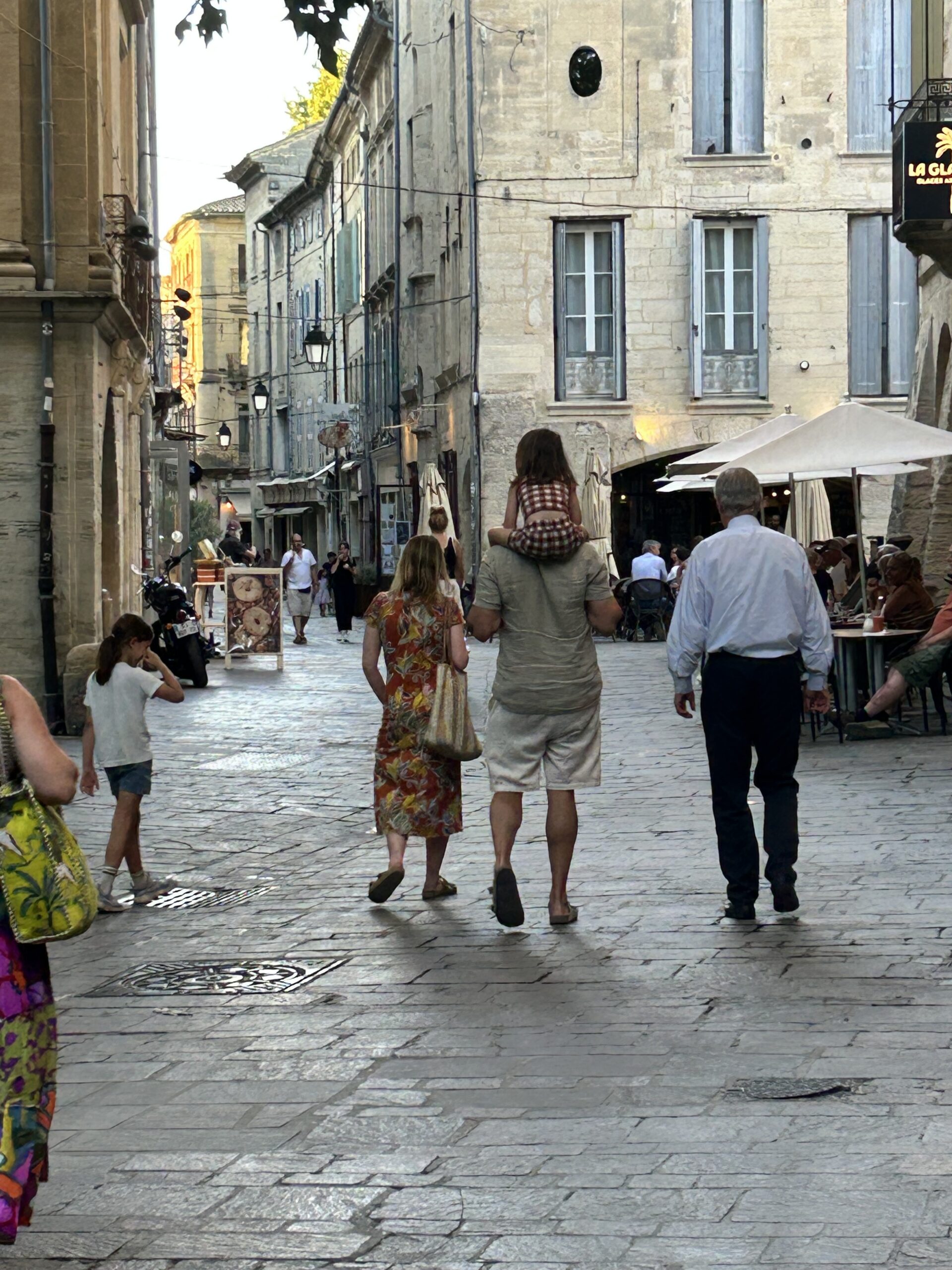
Residents know where the wind is welcome and where it isn’t, which places feel safe enough to linger, where people gather when conditions become difficult. These observations are not anecdotal noise around the edges of the planning process—they’re essential design intelligence.
The Intergovernmental Panel on Climate Change makes a similar case for locally accountable adaptation, bringing scientific and technical expertise together with community knowledge and experience. Its assessments recognise the importance of co-producing decisions with the people whose lives will be affected.
This is not an argument for replacing expertise with opinion. Quite the opposite. The meteorologist and hydrologist each understand things the other may not. The landscape architect sees relationships between water, soil, and vegetation. The urbanist understands movement and density. And someone who has lived in the neighborhood for 30 years knows things none of them can discover from a model alone.
A good master planning process brings these different forms of knowledge into conversation, allowing each to inform the decisions that shape a place.
This Changes What a Master Plan Could Be
Perhaps that’s the next evolution of the master plan: not a drawing that tells us what the future will look like, but an evolving, shared framework that helps us decide how we want to live as the future changes.
The designer’s role is no longer to collect preferences and turn them into a collage. It is to bring different forms of knowledge together, to ask questions that reveal possibilities and trade-offs, to ask questions that do not lead to a single answer. And to help a community understand the consequences of its choices.
Perhaps the natural evolution of the master planning process in our current environment is as a framework and an iterative process for making good decisions over time. What should be fixed, protected, and allowed to evolve can change with circumstances or generations.
This is one way master planning could make a significant contribution to climate adaptation. Before asking people to respond to a drawing, we can invite them to help make an informed decision about the conditions that drawing is intended to create.
The conversation becomes richer when people can see the relationships between their aspirations, the trade-offs, and the choices that will make a shared vision possible. When people can explore the relationship between the lives they want to lead and the physical decisions that will shape them, they become participants in defining the future of their communities, rather than simply responding to someone else’s vision.
That, to me, is where we start to take responsibility for, and co-invest in, our futures. That is where design becomes genuinely democratic.
Featured image via Let’s Talk Science. All other photos by the author.