
NYC’s Antiquated Fire Regulations Impede the Push to Build New Housing
Just as the human body needs an immune system to fight diseases, a city needs a fire department to fight fires. Sometimes, however, the immune system goes too far, and its actions actually harm the body. Rheumatoid arthritis, for example, is the result of an overly zealous immune system. In a metaphorical way—and with all due respect to our brave firefighters—New York City is facing a similar threat from overly zealous regulations enforced by the Fire Department of New York (FDNY).
There are many people here trying to figure out how to create more housing. To do so, they must find new ways to construct it quicker, cheaper, and better, with better safety, durability, and energy efficiency. The people at FDNY have no direct interest in more housing or in making it cheaper to renovate or maintain a home. Their only abiding interest is fire safety.
Unfortunately, FDNY’s single mindedness has made two-family homes more expensive to maintain, renovate, and insure. The costs become so onerous that it prevents legal renovations in poorer communities; as a result, more people live in illegal housing. These units lack egress or fire safety features that they could have if FDNY would allow commonsense changes to the code to incorporate modern technologies.
Because FDNY is slower than almost any other municipal department to approve changes, the newly created ancillary dwelling unit (ADU) program will not increase legal housing at all. Who could possibly afford to dig a new connection to the water main and install a sprinkler system in order to turn a garage into an ADU? It would take decades of rent to pay such an investment back.
For FDNY, some easy fixes remain firmly not possible. As unattended stoves are the primary source of house fires, induction stoves with automatic shutoff features would be an obvious way to reduce risk, but the city’s fire and building codes don’t recognize this. Instead of sprinklers, there are “smart misting” systems that use infrared sensors to detect the location of a fire and spray water directly at the source. These systems are lower pressure and require so much less water that a new connection to the water main in the street generally isn’t required. Using this technology could result in huge savings to homeowners, but FDNY doesn’t support their use.
Sprinkler systems make sense for multifamily buildings, but don’t for two-family homes. They’re too expensive to install and maintain, and even for a small fire the water damage will be significant. Two-family homes have operated without sprinklers or any fire suppression for more than a century. But FDNY would like to make them safer. Safer is better, but not at any expense. Not during a housing crisis, when we desperately need to produce more housing.
Other code requirements are equally cumbersome. The NYC fire code requires a 6-foot wide path from the front to the back of low-rise residential with flat roofs, such as brownstones. The National Standard Fire Codes (IFC/NFPA) say these buildings are exempt from this pathway. If NYC followed the national standard, townhouses would not need 9-foot-tall steel canopies to mount solar panels on. These canopies are ugly and expensive and, according to NFPA, unnecessary. They substantially increase the cost of solar and therefore reduce potential electricity generation.
Plug-in solar panels are now permitted on balconies, but FDNY would never allow these on fire escapes. Even if they were mounted on the exterior of the railing and didn’t block egress, FDNY does not support their use. There are far more fire escapes than balconies in NYC, and poor people are much less likely to have access to balconies. So this program, which could create a lot of power for people who don’t have a lot of money, will instead be used for a few people who do have a lot of money.
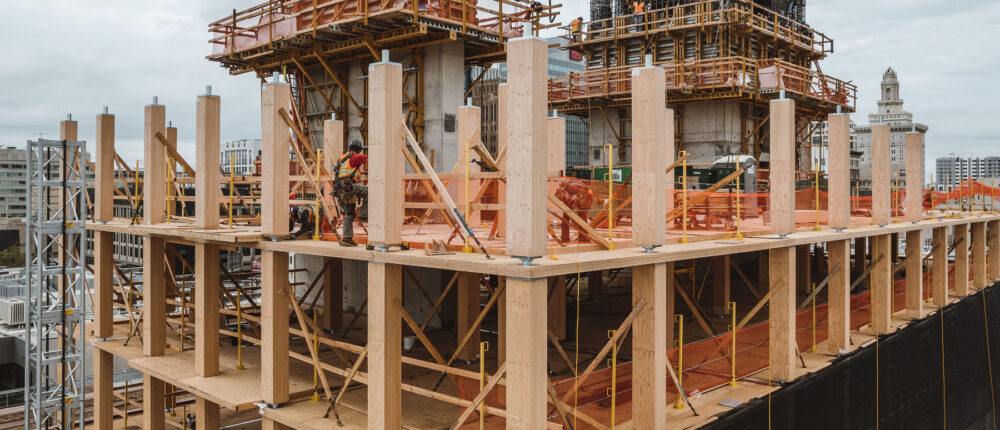
This blinkered focus is not just limited to regulations and codes. The use of mass timber has become popular in modern cities across the world. It’s a great low-carbon way to build, and the International Building Code allows its use up to 270 feet in height. Other U.S. cities abide by that code, but the Department of Buildings and FDNY have decided it’s only safe for buildings lower than 85 feet. Tokyo—which is arguably more dense than NYC and has seismic issues as well—now has a number of midrise towers made from mass timber and is planning for hybrid mass timber/steel skyscrapers.
FDNY red tape has become a form of municipal arthritis restricting the ability of the bureaucracy and home owners to respond to a rapidly changing city. I deeply appreciate what the rank and file do, risking their lives for us. But can anybody please get the top brass to make some commonsense and desperately needed changes?
Featured image via Wood Works.