
Rome vs. Japan: Two Civilizations, Two Philosophies of Architectural Permanence
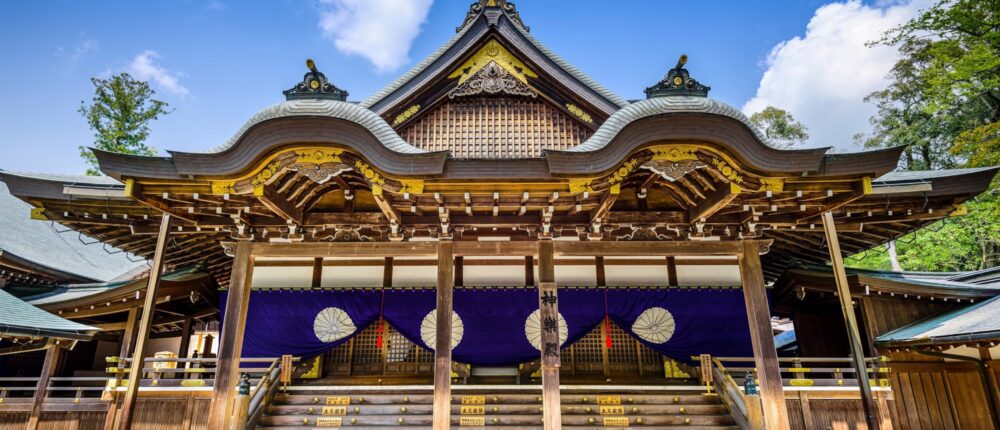
At Ise Jingū, Japan’s most sacred Shinto shrine, the main buildings are torn down and rebuilt from scratch every 20 years. And they have been for more than 1,300 years. The old timber is felled, the joinery cut by hand, the thatch laid fresh, and the previous structure dismantled and dispersed—some parts sent to shrines elsewhere in the country, some composted back into the forest that will eventually supply the next rebuilding. The shrine standing today is, materially, only two decades old. And yet Ise is considered one of the oldest continuously existing structures on Earth.
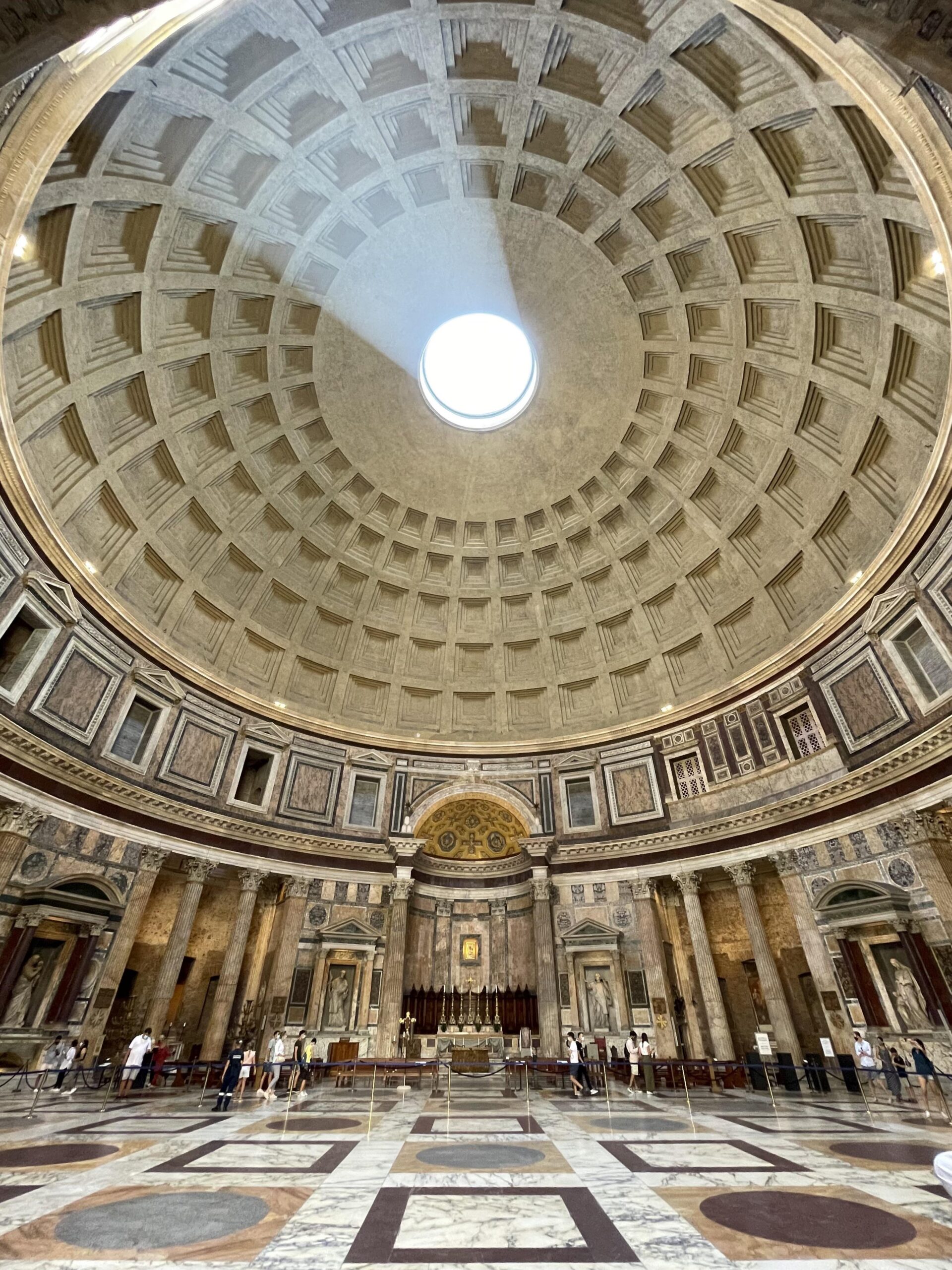
Now picture Rome’s Pantheon. Its dome, poured in unreinforced concrete in the second century, is still the largest of its kind in the world. Roman engineers reportedly tested and overbuilt to standards meant to outlast a human lifetime many times over. Nobody has rebuilt the Pantheon. Nobody was meant to. It was built to outlast its builders, its emperor, its empire, and—its architects seem to have believed—time itself.
Both buildings raise the same, unsettling question: Not simply how do you make a building last, but how does a civilization engineer its own immortality into the built world? How do you build something that will continue standing long after everyone who remembers its creators is gone?
Rome’s answer was to transcend time through defiance, while Japan’s answer was to survive time through continuous rebirth. One is a monument. The other is a ritual. Both have survived, on their own terms, for roughly two millennia—which means permanence was never really about the material at all. It was about which theory of legacy a civilization built in service of: whether immortality exists within the building itself, or within an idea that the building merely carries forward.
The Logic of Stone
Rome built as an empire builds: for control, for the projection of power, for the flattering fiction that the state is eternal. A basilica, an aqueduct, a triumphal arch: each told the same story. Rome’s power would last forever. The Pantheon carries a nuance worth sitting with, though. It began as a pagan temple, dedicated to all the gods of Rome, and became, centuries later, a Christian church. Its use, its meaning, even its patron faith, all changed underneath it—it survives today as a building rather than the temple it was built to be. The structure endured; the purpose evolved. Still, walk through Rome, or Florence, or any European city built on Roman bones, and you feel the payoff of that philosophy. These buildings became the three-dimensional blueprint everything afterward was forced to respond to. Modern streets still bend around foundations laid 2,000 years ago. That kind of permanence produces something modern real estate almost never generates: pride, continuity, a physical thread connecting the living to their ancestors. This is architecture as legacy, and legacy is precisely what a great deal of contemporary construction has quietly abandoned.
A disposable office fit-out engineered for a 10-year lease; a “luxury” condo clad in thin veneer over a frame that needs replacing within 30 years; a civic library value-engineered to its cheapest finishes because the lowest bid always wins—none of this is built to be inherited; it is built to be depreciated in the same way you know a fast-fashion seam won’t survive a season. Even institutions meant to signal permanence aren’t exempt: a form of lightweight concrete used widely in UK schools and hospitals from the 1960s through the ’80s began, decades later, to crumble so badly that hundreds of schools closed almost overnight in 2023—proof that public institutions built to a budget instead of a legacy pay for it eventually.
The tragedy is twofold: It’s bad for the planet, since cheap construction guarantees multiple rounds of embodied carbon a durable building would have avoided; and it’s bad for the people inside the structure, because nobody falls in love with a building they suspect won’t outlive their mortgage. At its best, architecture is supposed to inspire: the calm of a reading room, the dignity of a courthouse, a home that feels permanent enough to raise a family in. A building never meant to last can’t do that work. It communicates its own disposability, and thus people respond with detachment, not devotion.
So there’s a real case, standing on Roman foundations quite literally, for the old provocation: “The greenest building is the one you only build once.”
The Logic of Wood
But not so fast: Rome had a luxury Japan never had, and pretending otherwise flattens two sophisticated civilizations into a lazy morality tale about Western ambition versus Eastern humility.
Japan sits on the boundaries of multiple tectonic plates. Earthquakes, typhoons, tsunamis, and fire are structural facts of life there, as fundamental as gravity. A structure engineered to never move is a liability on unstable ground. When it finally fails, it fails catastrophically rather than gracefully. So Japanese architecture developed a different relationship to time: not conquering it, but moving with it. Traditional timber framing lets a structure sway rather than resist, and modern Japanese seismic codes still reflect that logic—engineering that permits movement rather than minimizing it. It can look, on paper, like a “lesser” standard, but it’s some of the most sophisticated structural engineering on Earth, built for a country that never had the option of assuming the ground would hold still.
At Ise, this practical wisdom became theology. Shinto belief holds renewal as a form of purification; Buddhist thought reinforces the same concept. Impermanence isn’t a flaw to engineer around but the nature of things, the spirit behind a monk creating a sand mandala. only to sweep it away once finished. Care isn’t diminished by impermanence; if anything, it’s intensified, the way devotion deepens when you know the object itself won’t be what survives you. Nor is any of this wasteful. The forest supplying Ise’s timber is managed and replanted on the same generational cycle as the rebuilding, so shrine and land renew in step. The shrine isn’t preserved—it’s transmitted, through carpenters trained to reproduce their predecessors’ joinery exactly, generation after generation. Permanence resides not in the object, but in the process.
Here the contrast with Rome sharpens into something almost inverted. The Pantheon survives physically but not functionally—its walls still stand, but the gods it was built to house are long forgotten. Ise survives functionally but not physically—the building is reconstituted every 20 years, but the purpose, the rite, and the living relationship between shrine and worshipper have never once lapsed. Rome preserved the object and lost the meaning. Japan let go of the object and kept the meaning intact.
That maps onto a different theology of time. The Western tradition leans linear from its very origins—Rome’s own imperial ideology held the city to be Roma Aeterna, and the Christianity that later shaped Rome’s architecture inherited that same idea of a story moving toward an end point, where a cathedral stands as fixed, eternal witness. Shinto and Buddhist thought lean cyclical—decay and rebirth as partners, a flame passed candle to candle still, meaningfully, the same flame. Rome wanted the object to survive because the object was the idea, made flesh. Japan wanted the capacity to remake the object to survive, because the object was only ever a vessel for an idea that exceeded it. Neither belief is more or less true. Choosing to build for impermanence, deliberately and ritually, is a different philosophy of permanence, argued just as seriously.
So Which Is Sustainable?
The Roman conception of durability—captured in Vitruvius’s ancient principle of firmitas—isn’t wrong. In relatively stable geology, a building engineered for centuries really is the more sustainable choice, and it produces a civic soul no disposable tower ever will. The embodied carbon of one extraordinary building, loved for 500 years, beats five mediocre ones demolished every century.
But transplant that logic onto a fault line, a floodplain, a coastline losing ground to the sea, and it stops being virtuous and starts being reckless. Japan’s model—expect the disruption, design for swift and graceful rebuilding, keep the craft alive so reconstruction is skillful rather than emergency improvisation—is arguably the more climate-literate approach for an increasing share of the world.
Sustainability was never really a property of stone or timber in the abstract, but a property of fit, whether a building’s theory of time matches the actual risks of its site, climate, culture. Begin by being honest about how a place experiences time, then choose a theory of permanence that matches it, instead of importing one that flatters the architect or cuts the developer’s costs. The real enemy is neither impermanence nor permanence. It’s indifference: buildings erected neither to last a thousand years nor with any ritual care for their own renewal—just built cheaply, occupied briefly, and forgotten.
The Shape of Permanence
Both civilizations, it is worth pointing out, reserved this devotion mostly for their monuments; the average Roman insula (apartment building) and Japanese machiya (townhouse) were never held to the Pantheon’s or Ise’s standards. But a building doesn’t need to be a temple to deserve conviction. If we want a world worth inheriting, that belief has to run through everything we build, not just the monuments.
Maybe the real lesson of comparing the Pantheon to Ise is not which building will outlast the other. It’s that both have already outlasted almost everything else humans have built in the last 2,000 years—one by refusing to change, one by changing constantly and purposely. Permanence, it turns out, has more than one shape. Failure isn’t picking the wrong material or mentality—it’s assuming there’s only one right way to work with time. And it’s building, in either direction, without enough conviction to make anyone want to inherit what you leave behind.
Feature image: Ise Jingū via National Geographic.