
The Urban Lens: “I Want to Show How Places Are Used”
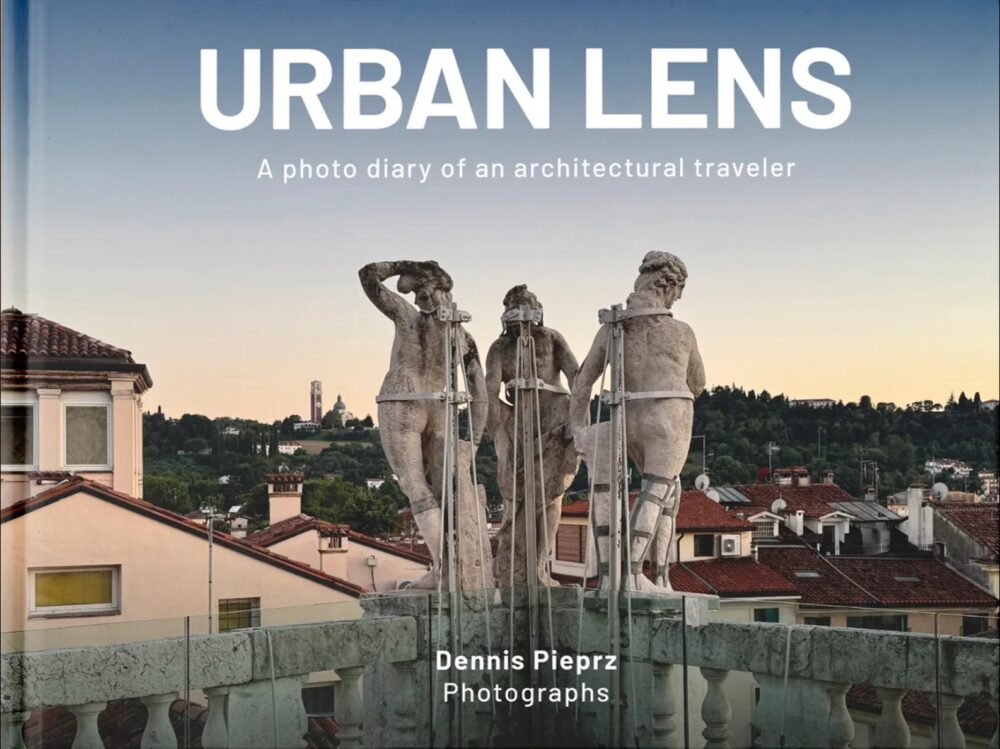
Dennis Pieprz, a principal urban designer at Sasaki, travels all over the world. And, like many itinerant travelers (especially designers), his cellphone has in recent years become the equivalent of an artist’s sketchbook. It’s how he processes cities, places and spaces—a tool of wonder and investigation. He has now collected a trove of photographs and compiled a huge, nearly 700-page book, Urban Lens: A Photo Diary of An Architectural Traveler (Oscar Riera Ojeda Publishers). In some ways it is exactly the kind of book that a student of the urban form would produce, both fine grained and occasionally spectacular. Like cities. Recently I talked with Pieprz (a frequent contributor to this website) about the new book, the role photography plays in his work as an urban designer, and his favorite remarkable (and remarkably ordinary) cities.
MCP: Martin C. Pedersen
DP: Dennis Pieprz
I recognized some of the many photos in the book because a number first appeared on Common Edge. Tell me the genesis for the book.
I have traveled quite a bit over the years, for work and for fun, looking at cities, places, settings, landscapes, and architecture, always learning. And, in our planning work, we always try to understand a new place—its culture, its essence—and so I’ve taken many pictures over the years, made easier with the advent of the iPhone.
When you arrive at a city, do you go out and photograph it? Or do you just photograph it in the course of being there?
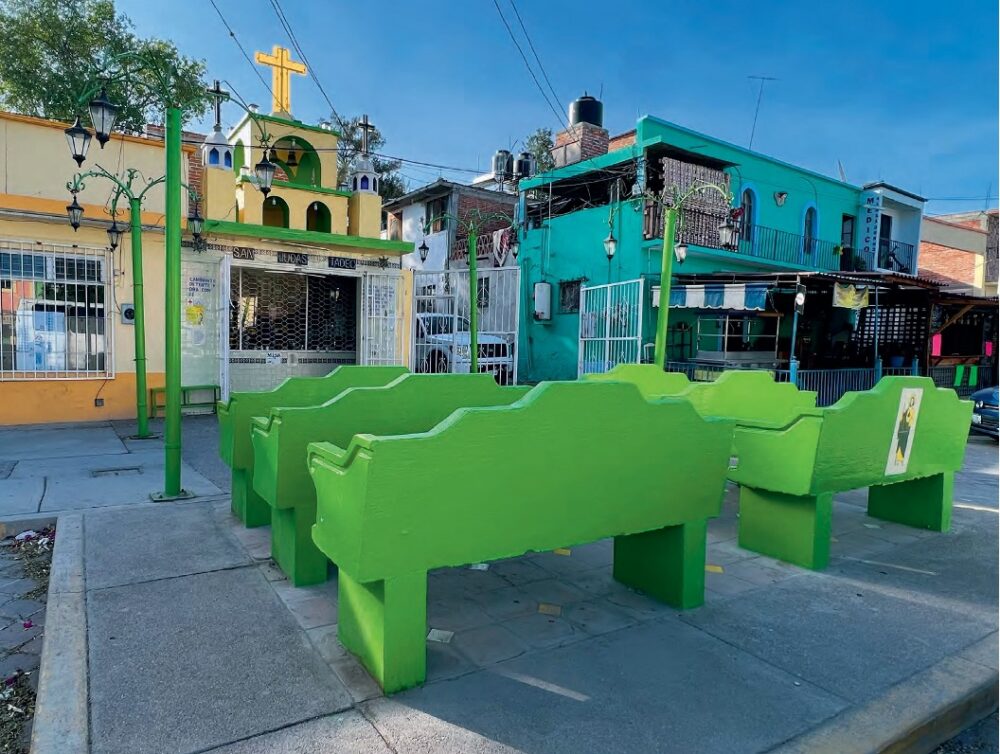
It’s always in the course of being there. Some of them are carefully composed and very deliberate. Others are snaps through a taxi window. We were starting a new project in Dolores Hidalgo, Mexico, and I noticed these green concrete chairs on the sidewalk. We were stuck at a red light when I realized it was a church, on the sidewalk, so I snapped a few pictures, literally through the car window, then convinced my colleagues to stop for one minute. I jumped out, took a few more, and off I went. It’s about discovering places, unusual angles on things, a beautiful light condition, or the way people are occupying a place that catches my eye.
How does photography inform your work as an urban designer?
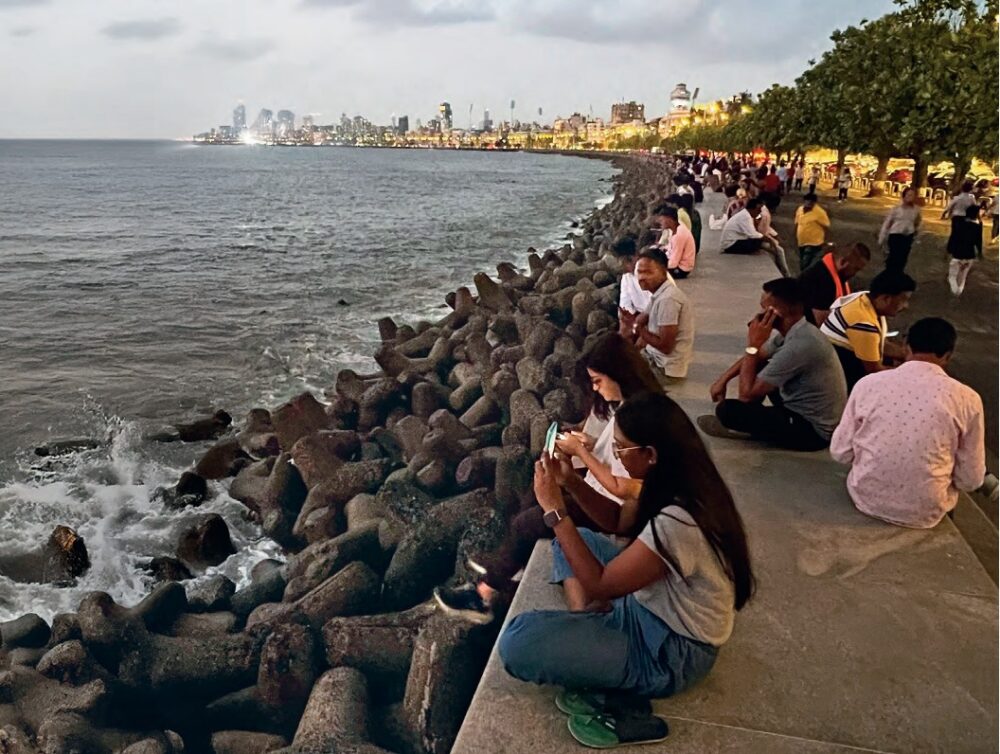
One thing you’ll notice about the book is that most of the pictures have people in them. It’s about the storytelling of how people use places, cities, and occupy space—whether it’s to sit in a shaded place under a tree, a grove somewhere, or on a bench at the edge of a vibrant plaza. I’m always looking for how and why that happens. So much photography in the design professions shows these austere images, very carefully choreographed and undisturbed by human activity, and I want to do the opposite. I want to show how ordinary and remarkable places are used, the action within them, and the life of the city.
There’s a wonderful example in Mumbai, India. I was intrigued by the edge of Marine Drive as it faces the ocean. Built into the revetment is a continuous wall that can be used as a seat—perhaps the longest seat-wall in the world. People come here at all times of the day, from yoga in the morning to viewing sunsets in the evening. It’s an incredible artifact that is part of the sea-protection infrastructure, yet it’s also a place of civic engagement.
What are some of your favorite remarkable places?
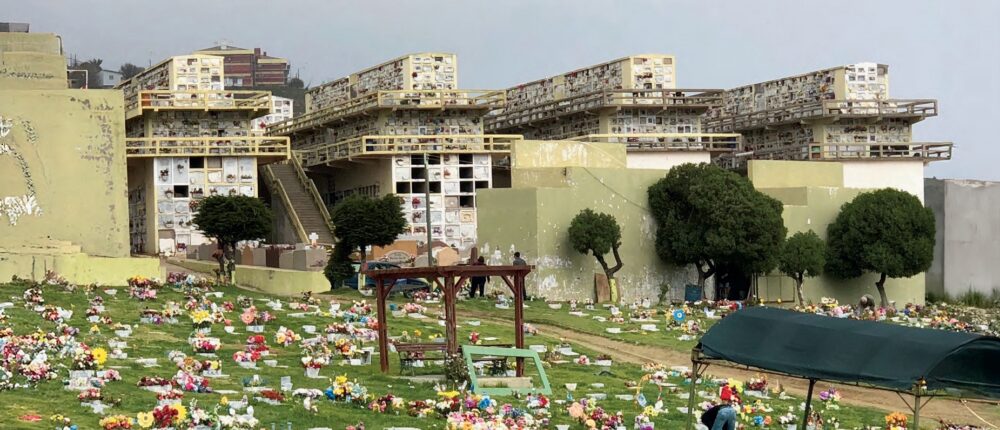
I was with colleagues in Valparaiso, Chile, and we were driving along the coast, and I looked out the window and saw an amazing building. It could have been designed by Enric Miralles. It was behind a concrete wall, and I said, “Stop, I wanna get a picture of this!” It turned out to be a vast cemetery, very architectural and citylike. I said, “We’ve got to go in there!” So we parked the car, went in, and discovered an amazing set of buildings, with all sorts of structures holding human remains. But it was a stunning urban landscape, almost Aldo Rossi-like, better in fact. Some of the buildings looked like they could have been designed by Peter and Alison Smithson in the ’60s. I walked around all over, up and into the structures getting different views, seeing the relationships, and making pictures all the time. Playa Ancha Cemetery (shown above) is an example of a place I’ve never heard of or seen published. It’s one of the most remarkable architectural landscape settings I’ve ever seen.
Another interesting place is Vicenza, Italy. There’s Palladio’s great public building at Piazza dei Signori, the heart of the city. I went there in the morning and there was a market set up, which was difficult to photograph because everything was right in your face. But then I came back in the late afternoon and discovered they had set up these bright red chairs for a concert. It was very striking, because it was completely different to what I’d seen in the morning. And then fences started appearing because it was a paid event. So I realized I could go up on the rooftop terrace, and I timed my visit to the roof to get a view of the concert that evening. This is a famous architectural setting, but what I tried to show is how these places are actually used, day to day or for a special occasion.
I often take multiple pictures of the same scene, sometimes in the morning, sometimes in the late afternoon, sometimes empty, sometimes full of people. Returning to the same place over and over reveals how it transforms across time—whether captured in a shifting light or enlivened by changing events. The Tuileries in Paris is a good example: quiet on a Sunday morning or bustling with crowds on a Saturday afternoon.
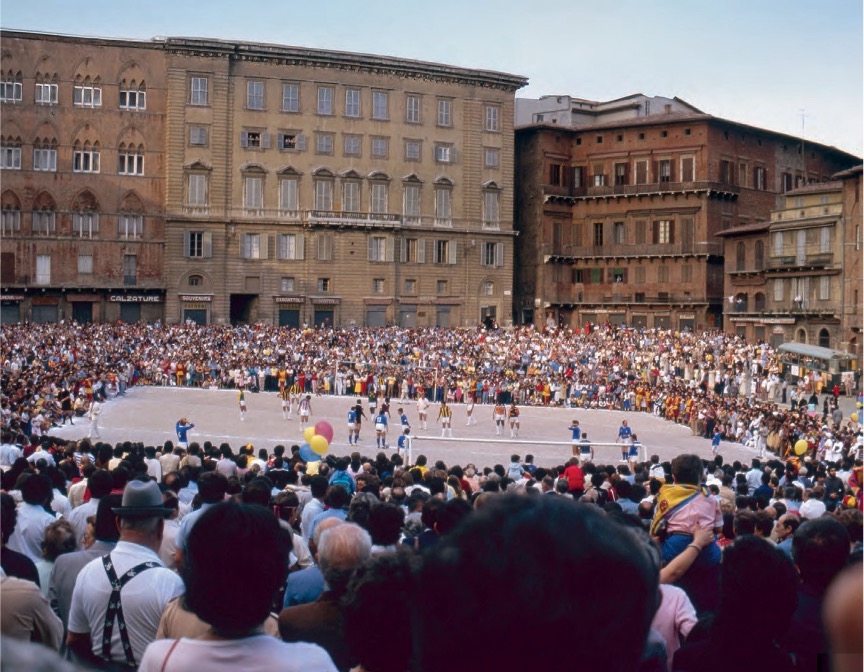
The Campo in Siena is one of my favorites. I first went there as a student in 1982. At the time I was at Giancarlo de Carlo’s ILAUD program and lived in Siena for 10 weeks. One afternoon I was at the Campo and I noticed some people drawing chalk lines onto the plaza surface. It became apparent that they were laying out a soccer field. A crowd began to gather. Meanwhile, I was taking pictures with my Nikkormat. Some goal posts were set up, the crowd filled the Campo and the game was on! Incredible. Last January I went back and discovered snow on the Campo. Kids sliding down the slopes on boards. The same place, dramatically different.
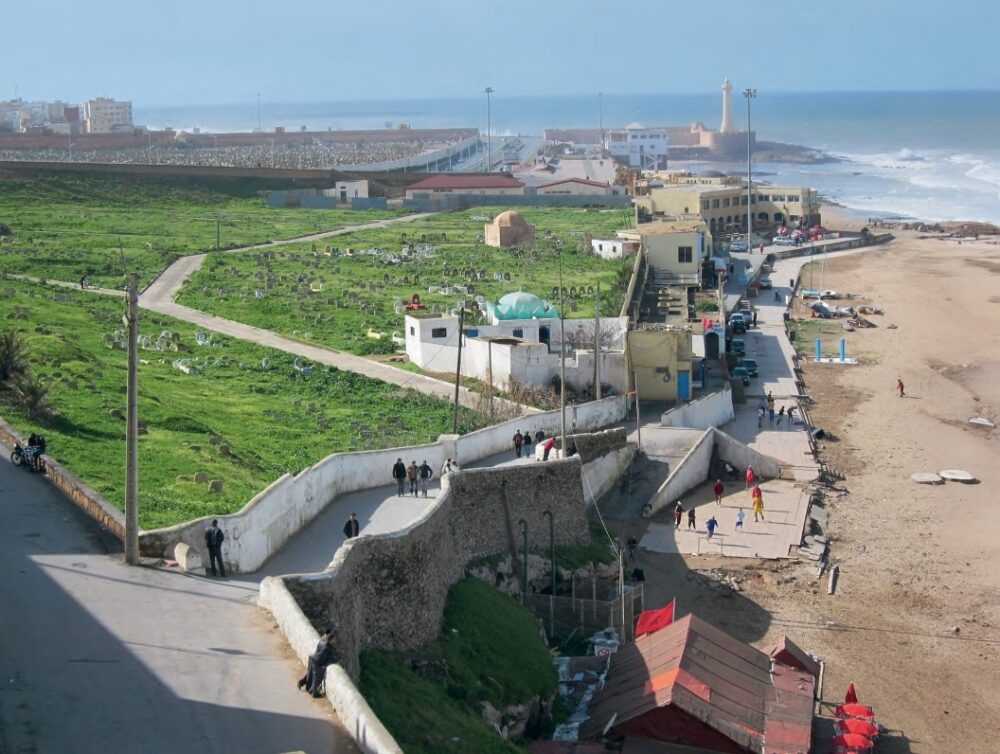
There’s a great place that I discovered in Rabat, Morocco: some buildings and an informal promenade between a hillside cemetery and a beach area. It had this curved, ramped walk that reminded me of Le Corbusier or Aalto, and I noticed a concrete platform on the sand where some kids were playing soccer. I became fascinated by this place and watched them playing, taking multiple pictures. It looked like a Richard Serra at the Dia Beacon, yet a mind-boggling ordinary place at the edge of Rabat. Most people would probably ignore it, but I saw it as an artistic, poetic, place, and took a number of photos of people using it in different ways. When I was completing the book and writing captions, I went on Google Earth to find this place. I knew it was in Rabat, but I didn’t know its name or where in the city it was. Because it’s next to a cemetery, I eventually found the area, and I realized it had been demolished and replaced by some kind of megastructure. I thought, “Oh my God, this is one of the most beautiful places I’ve ever seen, and it doesn’t exist anymore.”
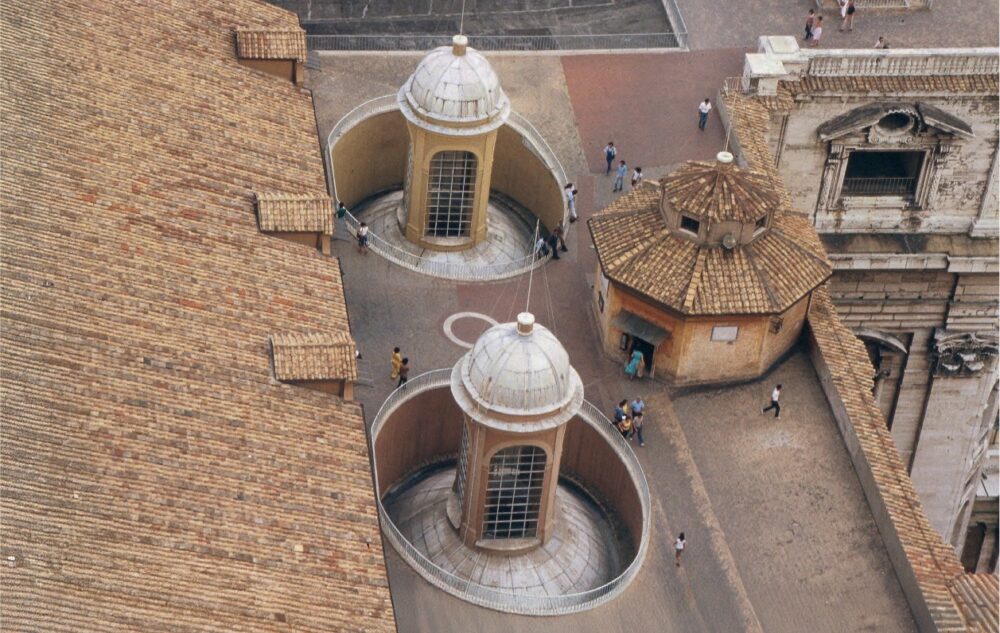
The book includes a great rooftop shot of the Vatican. How did you get that shot?
Years ago, a great teacher of mine, Peter Pragnell, from the University of Toronto, told me, “When you go to the Vatican, you’ve got to go to the roof.” In those days there was a simple sign to the roof and a spiral staircase, which I climbed. Today it’s a nightmare of tourists, ticketing, and advance bookings. But when you get there, you realize it’s a stunning landscape of sloped floors, almost like Le Corbusier’s Palace of the Soviets Competition that he designed in the ’30s, or OMA’s Paris Library project. You have these light monitors to the chapels below. It’s a mind-blowing landscape of architecture and building forms and people wandering around on this dynamic plane. It’s amazing because you’re actually over the nave and chapels of the cathedral. You can go to the edge and look past the great sculptures at the square beyond. I went there in 1979 or 1980. These are Kodachrome pictures that I had scanned and decided to put in because, I don’t think I’ve seen many pictures of Saint Peter’s from that vantage point.
Are there cities that are hard to capture?
I can always find something of interest. There are some cities that are stunning and overwhelming, like Venice or Cairo. What’s interesting about Valparaiso, besides the topography and the dramatic setting, is that it’s a city filled with graffiti and wall paintings. Wherever you look, someone has created a scene. These incredible wall paintings add a layer of richness to the urban setting—a city of stories and secret messages. When I visit a place, I invariably discover all sorts of other things that I didn’t know about. The really interesting places I’ve been to are places I discovered on the way to somewhere else.
Featured image: Playa Ancha Cemetery, Valparaiso, Chile. All photos courtesy of Dennis Pieprz.