
Why Better Streets Make Better Cities
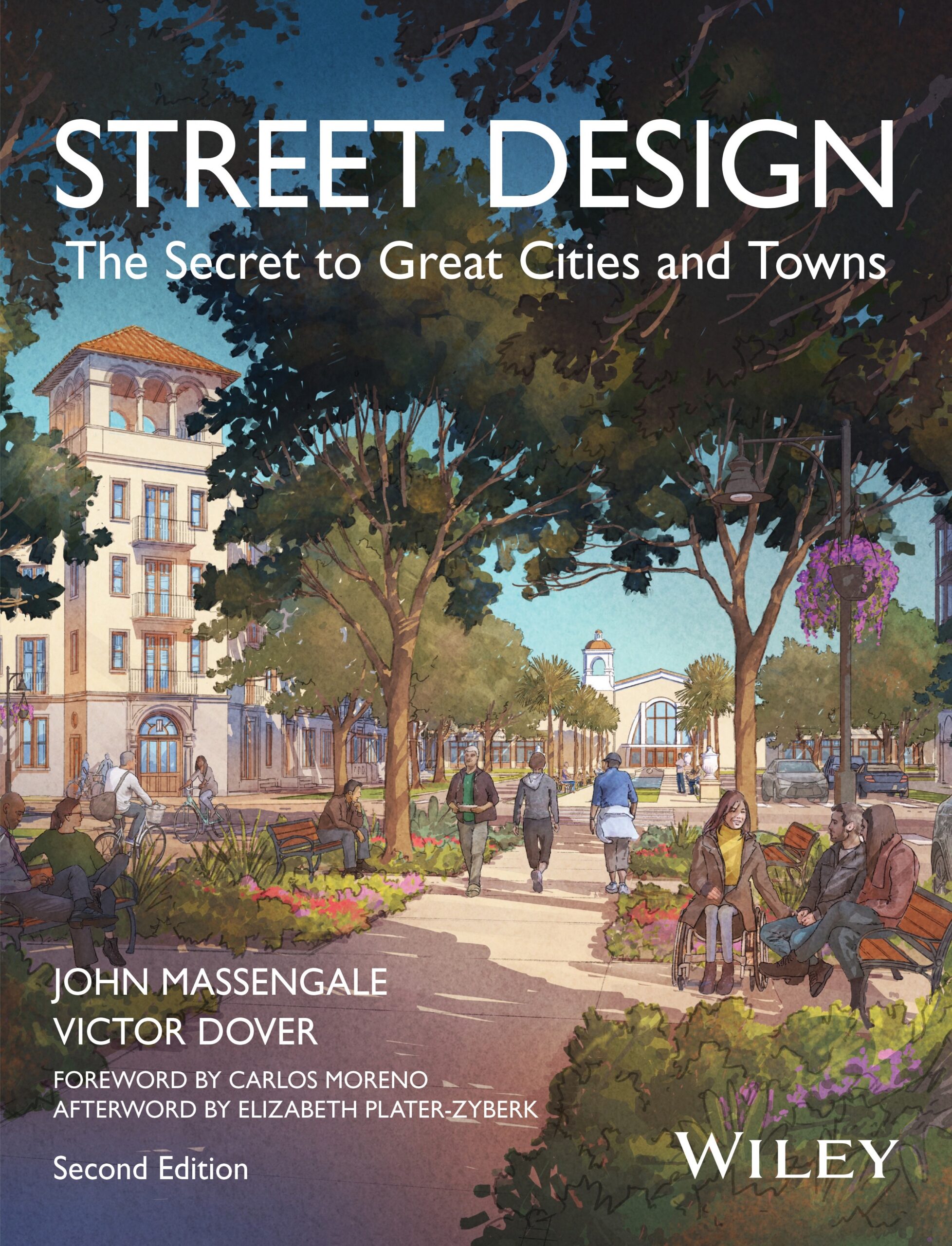
When I began writing for Common Edge almost a decade ago, I resolved to let readers know when a significant book appeared that might change their view of architecture, urbanism, and landscape. I missed the publication of one book that I have subsequently used in my practice, and believe to be one of the best handbooks, histories, and teaching texts written in the present century. This year, a revised edition of Street Design: The Secret to Great Cities and Towns (John Wiley & Sons) was released. Co-authored by John Massengale and Victor Dover, I was delighted to have watched it emerge over several years as a friend of Massengale’s.
The second edition is remarkable for many reasons, not least of which are its organization and visual impact. This is a truly beautiful book, full of some of the most evocative photos and graphic features in any contemporary study of urbanism. It has also been improved as a research and teaching text: savvy readers can locate information in a matter of seconds by perusing the table of contents. As Street Design is 680 pages long, and no one is likely to read it cover to cover, this is a necessary feature; most professionals will use the book as a reference.
All authors wish they could rewrite their texts following publication, but few have the chance to do so. As Massengale and Dover write in their new preface, a lot has happened over the past 12 years that offers hope for urbanists and transportation designers, and documenting developments in a bigger format would provide designers and historians with additional useful information. Now reduced to five chapters from six, the book combines three chapters of case studies into two, “Historic Streets” and “New and Retrofitted Streets,” and brackets them with more concise polemical texts.
The opening chapter, “Street Design Matters,” is a short, persuasive presentation of the benefits of good streets and the schema that the authors use to analyze them throughout the text. Chapter Three, “Street Systems and Networks,” is a similar bridge chapter to the one in the first edition. The final chapter, “Whose Streets?,” makes the case that Modernist theories and contemporary urbanism have failed to give us cities and streets that meet our most important human needs. Its arguments are powerful, and they are underscored by testimonials by both authors about how their cities, New York and Miami, have affected their lives over the decades.
Lest one believe that a city with excellent public transportation, walkability, and memorable streets can’t be better, Massengale offers a series of design proposals for the Financial District and Lower Manhattan called Slow Streets New York. By working for years with local advocacy groups, planners, artists, and transportation experts, his firm produced a compelling case for removing auto traffic from the Brooklyn Bridge, using highway spaces for parks, and redesigning many streets for limited or no parking and better pedestrian access. Only a few of the measures were put in place, but we can hope for more progress in the near future.
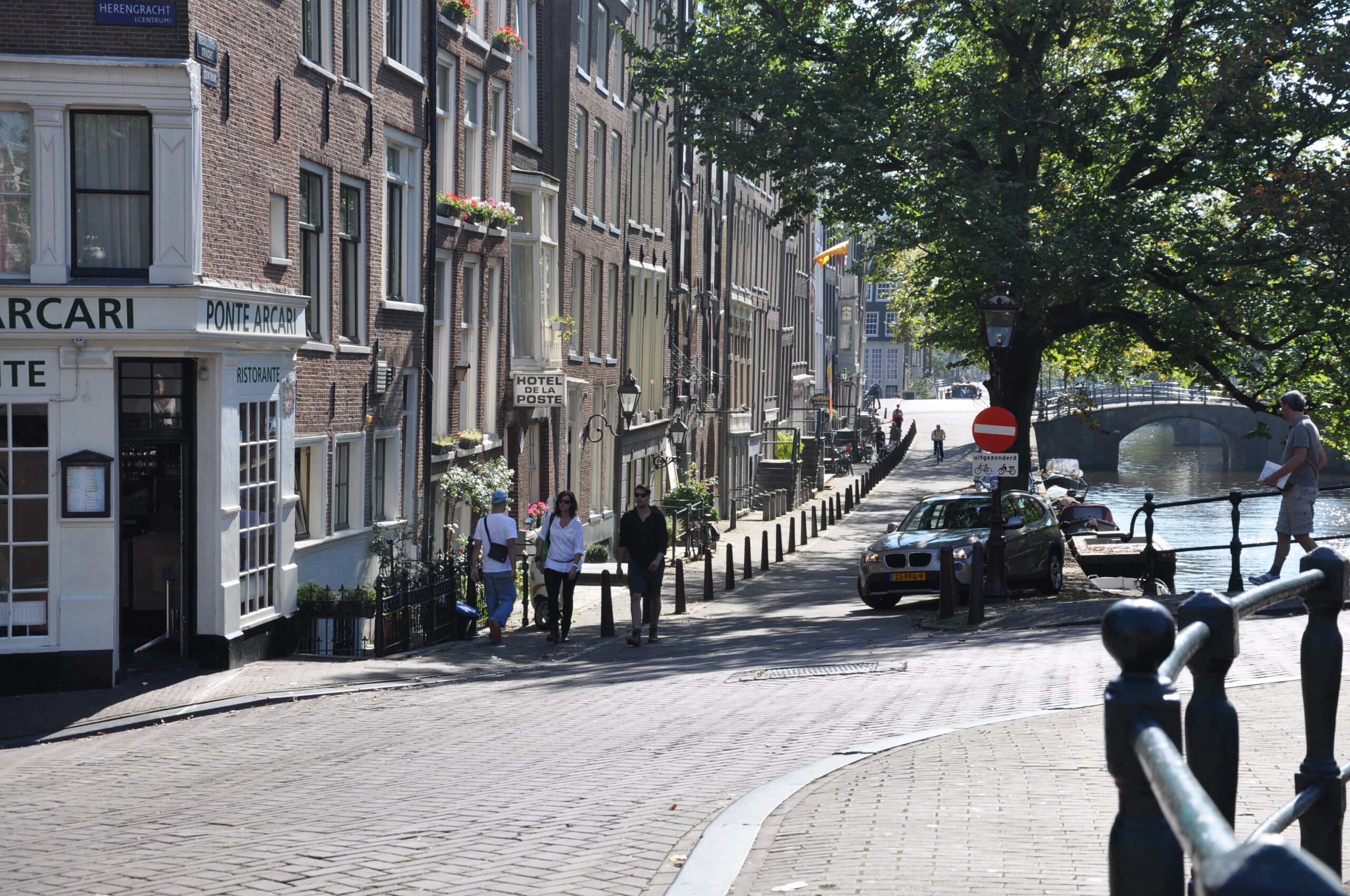
The unique centerpiece of this book is the group of essays, photos, drawings, maps, and charts that describe historic streets throughout the world. By introducing readers to these street types, the authors prepare them for the later chapter on new and retrofitted streets of the same types. Many of the essays in the case studies were written by experts or residents of the place where the street is a key element in a city or rural landscape. Both editions of the book include some superb personal tours of a particular street, avenue, or boulevard. Their authors are often distinguished architects and urbanists, such as Andrés Duany, Stefanos Polyzoides, David Brussat, Nicholas Boys Smith, Hank Dittmar, Gianni Longo, and Gabriele Tagliaventi. The varied writing styles point up the flavor and emotional tenor of the places described.
One of my favorites is Douglas Duany’s detailed analysis of the central Corso in the Italian town of Orvieto, in Umbria. A landscape architect and professor at Notre Dame, Duany is a patient teacher who lays out his lessons carefully. His tour emphasizes both space and time as one gambols from a piazza at one end of the winding medieval street to the magnificent cathedral, or Duomo, at its culmination. He helps one understand how the visual system, with its 15-degree cone of vision, and the haptic system of the moving viewer, takes in scenes of varying height and width, while also being directed by landmarks in the distance.
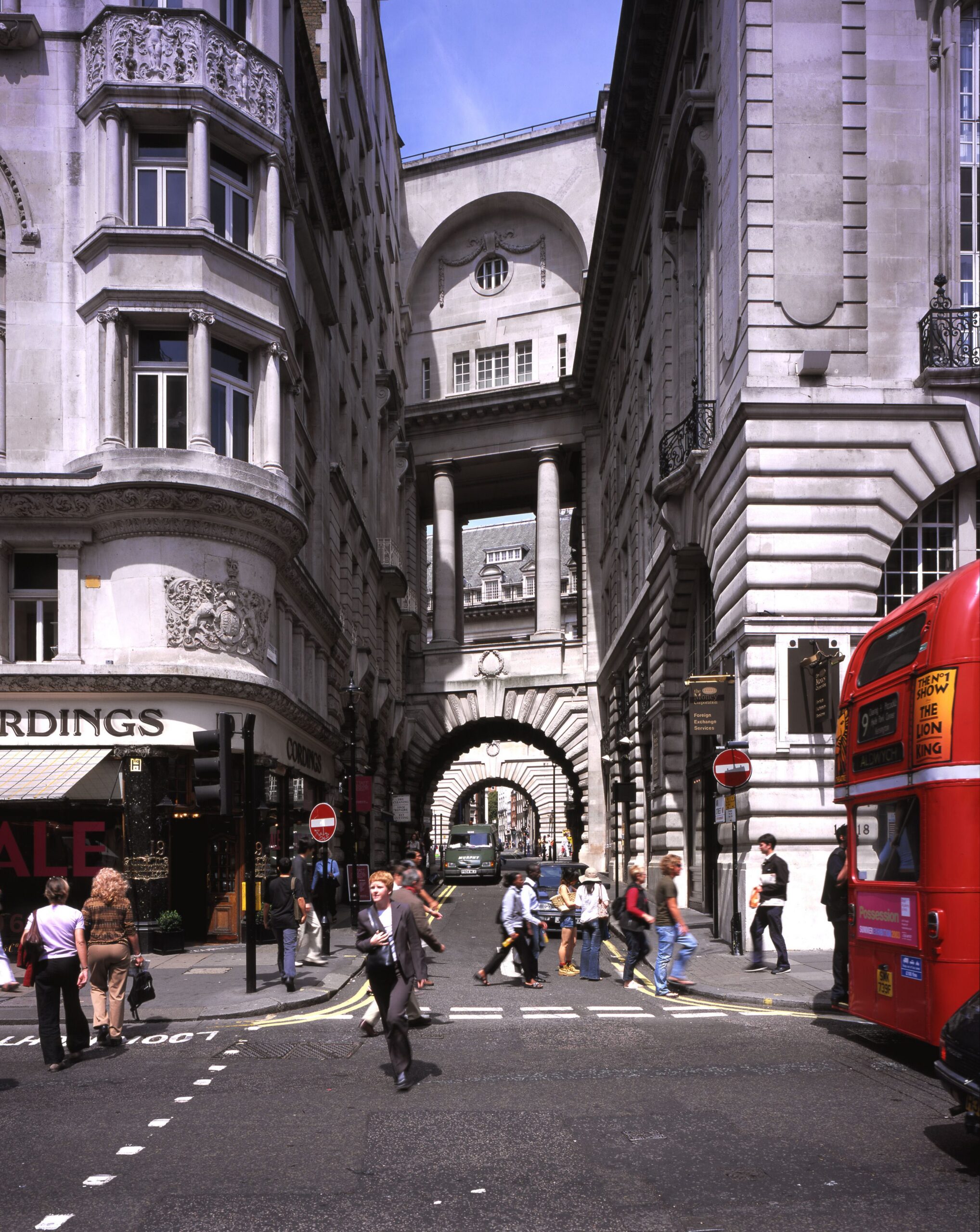
Orvieto isn’t on everyone’s bucket list, so a good essay may give designers a taste of what makes European towns so tourist friendly and beautiful. New York’s Riverside Drive is a more familiar place to most Americans, and the new edition includes a superb and comprehensive presentation of its history and key features by Massengale, who moved to the street after the first edition was published. His essay is the longest in this chapter, as the original plan for Riverside Avenue by Fredrick Law Olmsted in 1871 morphed into a complex landscape of roads, paths, monuments, and parks in the 1890s and 1930s. It describes the architecture, landscape, engineering, and natural features of this west side neighborhood.
The most valuable portions of the second edition are the new and retrofitted streets in the fourth chapter, mainly in the U.S. Though perhaps familiar to regular attendees of the Congress for the New Urbanism conferences, these too-little-known projects are impressive in their ambition and scope. Many are the work of Dover, Kohl & Partners, Victor Dover’s Miami firm. Often, the work includes the demolition of destructive highway interchanges and concrete freeways. Almost everyone is aware of how urban renewal and highway planning ripped swathes of fabric out of cities, breaking up neighborhoods and causing economic decline and social unrest.
Two dramatic examples of what traditional street design can offer a town are Boundary Street in Beaufort, South Carolina, and Mesa Street in El Paso, Texas. In the former, the designers created a four-lane “multiway boulevard” out of a barren arterial, planting trees for needed shade. Further, the ends of the new neighborhood were marked by circular plazas, one fronting city hall, the other a planned traditional neighborhood development zone. The Battery Creek marshes adjoining the road were incorporated into the overall environmental plan.
In the border city of El Paso, a high-speed arterial was built decades ago to bring motorists into the historic 1930s downtown. It failed to work for retail businesses, as the huge parking lots left shoppers hot and frustrated on the way to and from their vehicles. When Dover, Kohl worked on the new Plan El Paso in 2010, it redesigned Mesa Street as a tree-lined, pedestrian-friendly shopping street that slowed traffic and allowed on-street parking for shoppers. It has improved things both economically and socially in this diverse Southwest city.
Though Street Design is nominally about streets and avenues, it’s fundamentally a handbook containing notable examples of New Urbanist civic design. Many of the newly built projects in the book have been constructed in tourist regions of the Southeast, with remarkable results. The Crystal Lake Drive neighborhood, along the Savannah River in North Augusta, South Carolina, is particularly striking for its storybook character and vitality. Designed 20 years ago by Dover, Kohl, its houses, public buildings, retail, and parks are fully built out today. Unlike most such developments, there are several types of housing, with affordable options on most streets in the neighborhood. Virtually all the houses are built in vernacular styles and adhere to a strict form-based code.
Though the book inevitably includes high-end developments like Alys Beach, Florida, it also has unexpected successes such as Monon Boulevard in Carmel, Indiana, Parker Alley in Detroit, and la rue du Grand Fromage in Starkville, Mississippi. People of all races and economic classes congregate on memorable streets. They’re magnets for commerce, public life, and joyful experiences of all kinds. The message is that, with political will, sound economic planning, and informed traditional urban design, our cities can once again be places we are proud to call home. By taking the long view of history and human striving, Dover and Massengale can ignore the shameful politics of the present moment and press us to consider the next generations, who will inherit what we build.
A new and important argument, informed by cognitive neuroscience, provides an anchor for the final chapter: the importance of place. Human children, like all young animals, develop attachments to home places from their earliest memories of walking and being among family members. Their experiences multiply through life, reinforcing identity, emotional maturity, and social skills. By the time we’re adults, most of us have strong bonds to places and the people occupying our most cherished towns or cities.
“Urban places are communities where developers and designers combined the creation of places they would like to live in themselves with the making of places others will love too,” the authors write. “The first New Urbanists were students in architecture who said to their teachers, ‘Look, this ordinary city street is better than the superblocks you’re showing us.’ The first New Urban development was Seaside, consciously created by Daryl and Robert Davis for their children, grandchildren, and generations of families they had not met yet.” I remember my professor, Charles Moore, smiling broadly and saying similar things in his lectures about using our experience of memorable places, no matter how humble, in making new buildings.
Andrés Duany often says that urbanists have far more influence than architects because they code the guidelines under which builders may construct individual buildings. Because neighborhoods and districts develop over relatively extended periods, they should not be constrained by the fashions of the moment. Virtually all the great cities of Europe that we admire grew gradually to become vital, evocative, and compelling places over generations.
Street Design, in its second edition, is an ideal guide to making good places in rural, urban, and exurban environments. Students, design professionals, policymakers, and developers will find essential lessons throughout the book. It’s written in a clear, compelling style that invites questions while also giving readers commonsense solutions to problems confronting our troubled society. Amid many dystopian condemnations of contemporary environments, this book is a rare compendium of positive, beautiful urban design success stories that prove we can build better for future generations.
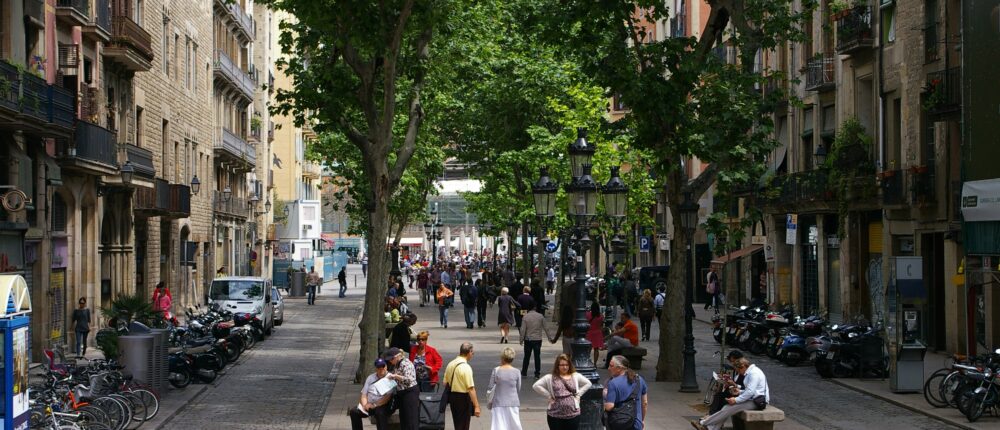
Featured image: Passeig del Born in Barcalona. All photos courtesy of John Massengale and Victor Dover.