

In Search of Frederick Law Olmsted
Landscape architects worship at the feet of Frederick Law Olmsted, the de facto founder of our profession. But he was much more—and much less—than that. And it can be argued that only by happenstance (and our good fortune) did he arrive at, and succeed at, what we now know as landscape architecture. He stands as one of those mythical beings who achieved so much in one lifetime. But he paid a price for his success; by most accounts he was extremely stressed and overworked throughout most of his working life.
Olmsted did not know a work-life balance. He continuously worked himself into a state of exhaustion and was often quite irritable. In January 1863, a friend, George Templeton Strong, wrote in his diary, “Olmsted is in an unhappy, sick, sore mental state. … He works like a dog all day and sits up nearly all night … works with steady, feverish intensity till four in the morning, sleeps on a sofa in his clothes, and breakfasts on strong coffee and pickles.” He ended his days in an asylum after having what was then called a “nervous breakdown.” He married his beloved brother’s widow, perhaps more out of a sense of duty than love, and the same might be said of his landscape architecture career. He frequently left the profession to pursue other interests and money-making ventures. These pursuits have been well documented and included administrator, farmer, and journalist. But he always returned.
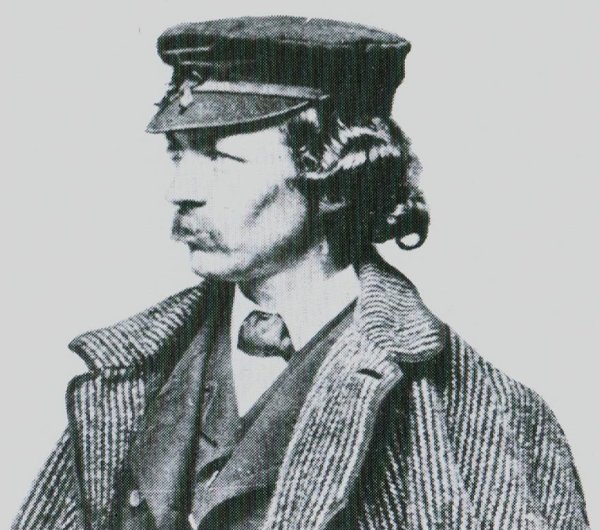
It is interesting to remember that Olmsted started his park-planning career not as a designer, but as what we would now call a construction manager. Engaged to oversee the construction of Manhattan’s Central Park, he managed what was one of the largest public works projects in the country at the time. His experience with the land up to that point had been limited to caring for a small farm. We have no evidence that he was interested in design, and it was by happenstance that he entered the competition for the design of Central Park (construction had already begun). Architect Calvert Vaux cajoled him into partnering on a submission because of Olmsted’s knowledge of the parkland. It was also Vaux who, in 1865, persuaded Olmsted to return to New York and park planning for the design of Prospect Park, in Brooklyn. Finally, a landscape architecture career stuck, and Olmsted was on his way. But this, too, appears to have been not by design, as Olmsted was carried along by a surge of demand for his and Vaux’s services (Olmsted Vaux and Company). As with most of what he did in life, his park-planning career might be said to have occurred out of a sense of duty and responsibility rather than any personal vision or drive.
There are even some who question Olmsted’s reputation. In 1982, M.M. Graff, a writer who is described by her critics as a fine horticulturist and an eminent park historian, authored a 42-page booklet, The Men Who Made Central Park, which contended that Olmsted’s legacy is vastly overblown. It was sent to members of the Greensward Foundation, a New York City organization committed to parks. In it she wrote, “Horticulture is a profession in which no unqualified person ever hesitates to meddle, and Olmsted was no exception. Central Park still suffers from the effects of his ignorance of the nature and habits of plant material.” (In fairness, it should be noted that horticulturists are often at odds with landscape architects).
Olmsted is also, from time to time, called out for being elitist. In 1984, historian Kenneth Lynn wrote that Olmsted and Vaux built into their plans for Central Park an “elitist disdain for the tastes of the common man.” It’s true that Olmsted was trying to “elevate” the common man in thought and deed, and perhaps that is elitist. The “common man” would certainly have preferred racetracks and beer gardens in the Manhattan and Brooklyn parks.
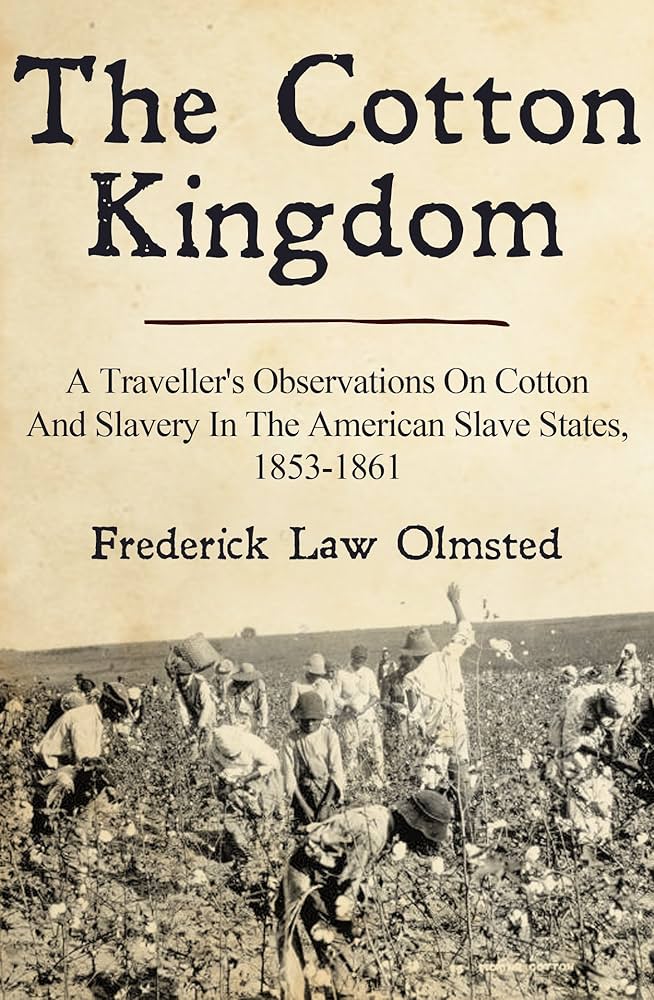
More recently, Olmsted has been called a racist. Many of these charges are based on his writings in The Cotton Kingdom and his interviews and observations of enslaved men and women. In a 2021 interview landscape architect Sara Zewde, who runs her own practice and is also an associate professor at the Harvard Graduate School of Design, puts forth a nuanced view, stating that “in his personal letters Olmsted was much more ‘forthcoming and explicit’ about his objections to slavery, but in his public writings was ‘more subversive in order to not lose his southern audience.’ ”
According to John Stauffer the Sumner R. and Marshall S. Kates professor of English and African and African American studies at Harvard, “Olmsted was anti-slavery, but he also wrote statements that are understood to be racist. While in his reporting he sought to be balanced— reporting both the perspective of the white landowner and the slave—he made comments such as ‘some slaves prefer being slaves.’ But in his writings, he was also sympathetic to Black yeoman and subsistence farmers.”
Regardless of his motivations, there is no denying that Olmsted changed the face of America’s cities, parks, campuses, and other institutional landscapes. What is often overlooked is that he also democratized these spaces by insisting that they be open to everyone, not just the privileged few. From New York’s Central Park to the grounds of the U.S. Capitol, his design legacy remains immense.
Like all great people, Olmsted’s motives, qualifications, demons, and legacy will always be questioned. Much of history is forever contested. So, who was Frederick Law Olmsted? It’s complicated.
Featured image of Central Park courtesy of the author.