
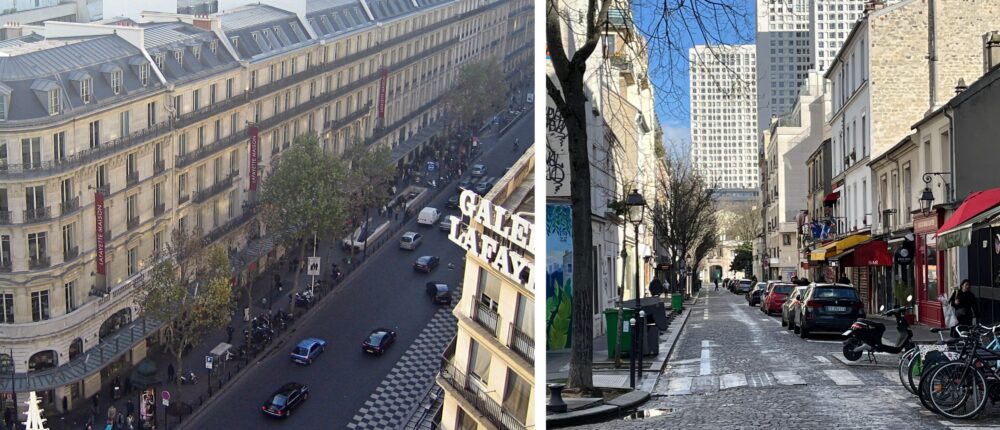
Urban Lessons From the Paris Perimeter
The urban form of Paris is more than the Haussmann blocks that are associated with its formal character, or the quaint scale of the older Marais or Latin Quarter that provide much of the city’s advertised charm. One understands this when wandering around the perimeter of the city, where those qualities dissipate, become piecemeal and more varied, and a disjointed urban texture takes over. My recent trip to the city’s 13th and 14th arrondissements illustrates this and perhaps serves to trace the formal evolution of not only Paris, but of other European cities—and, by extension, those of the U.S.
In the middle of February, I strolled past the Boulevard de Port-Royal, which forms the edge between the single- and double-digit arrondissements of the Left Bank, and beyond the Boulevard Auguste Blanqui, the old edge of the city during the waning periods of monarchical rule. As a reminder of this, Ledoux’s custom house, where entry taxes were once levied, still stands on that boulevard at the intersection of Avenue Denfert Rochereau.
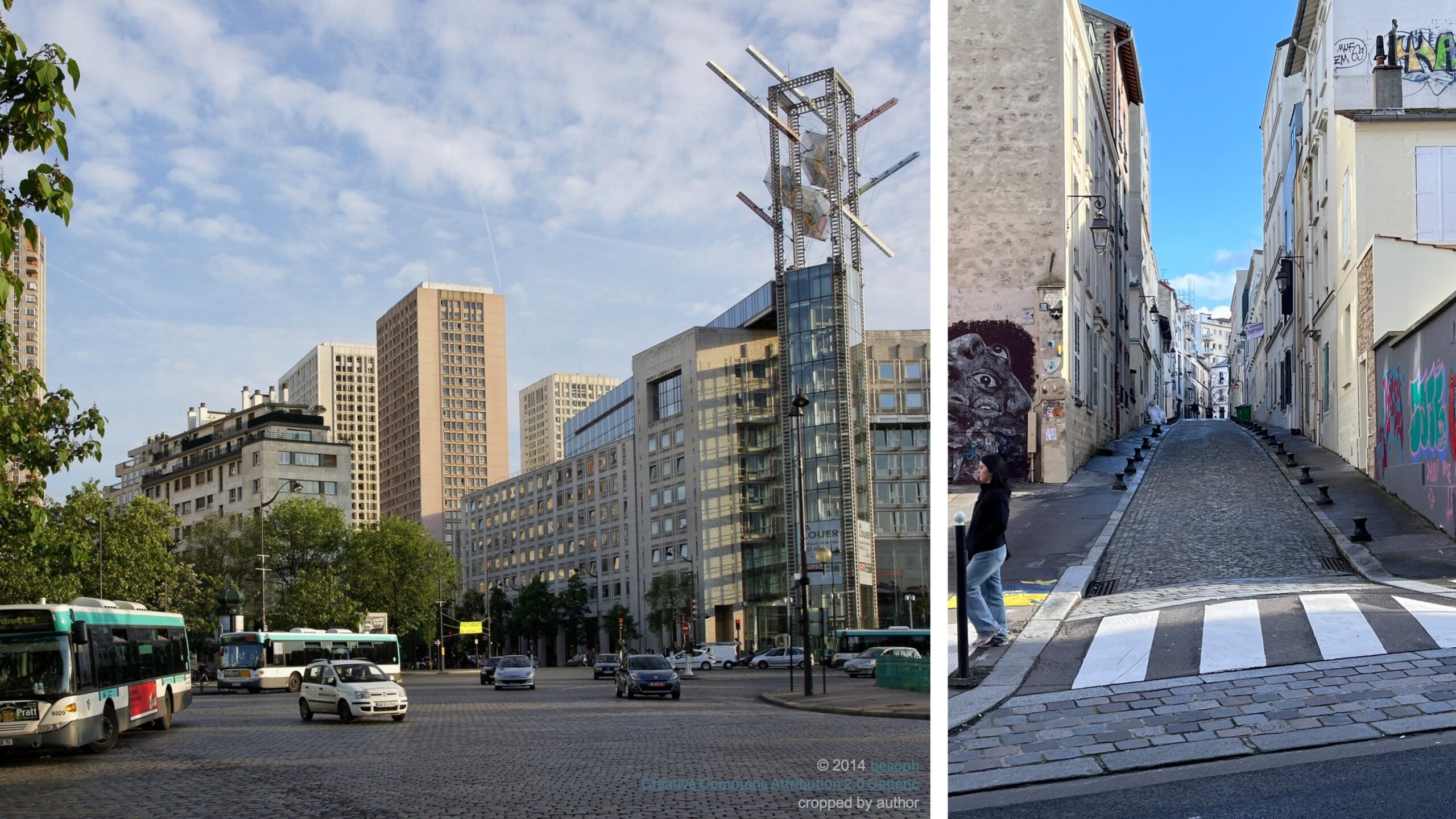
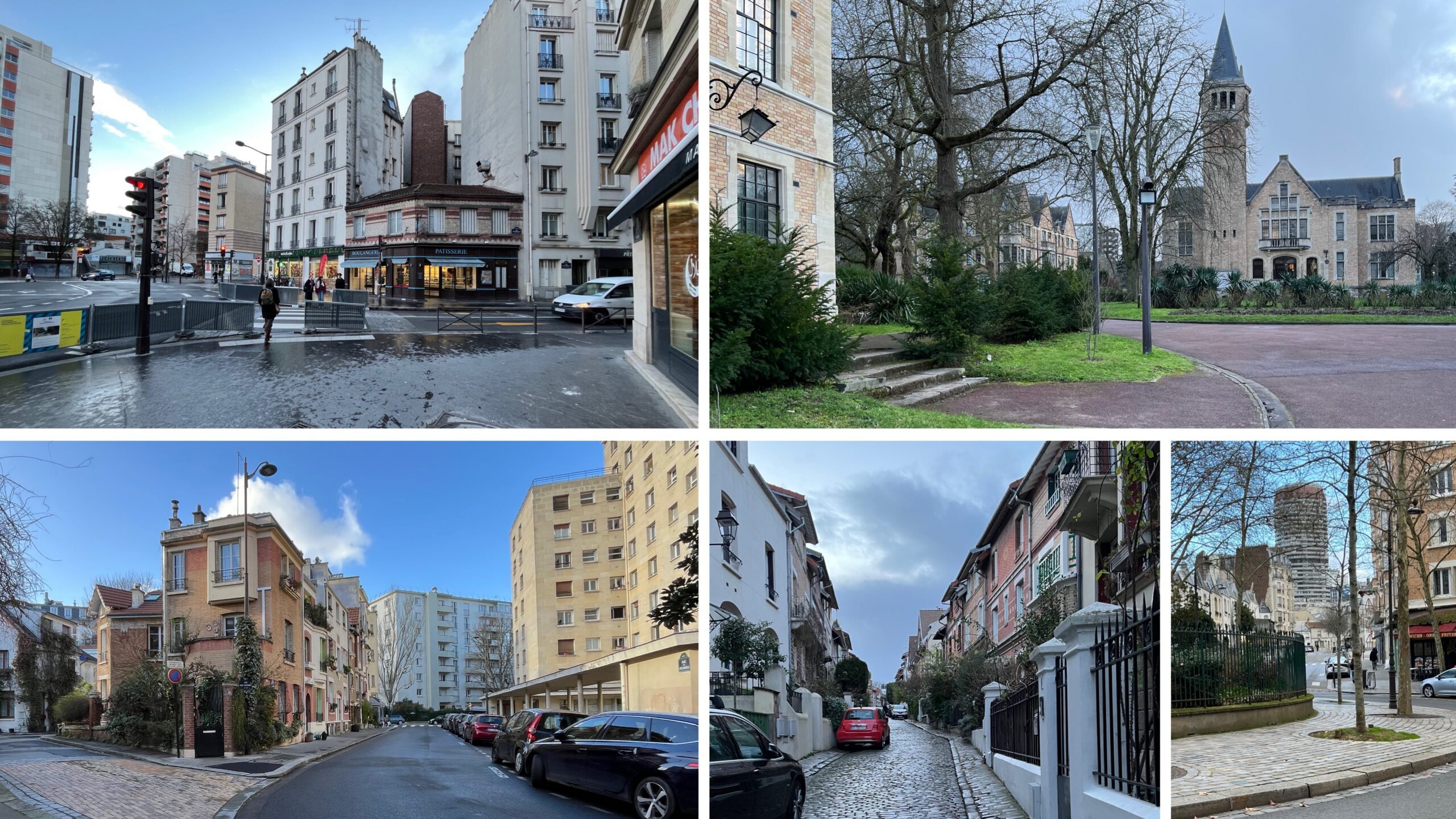
From the outside, the area beyond Auguste Blanqui appears to be dominated by mid- and late-20th-century housing towers, and the more recent mall developments around Place D’Italie, an expansion of the oblivion characterized by the much-maligned Tour Montparnasse. But in the cracks between the commercial and housing slab buildings, and the tall storefront glass displays, the street wall architecture of Paris snakes through, attempting to absorb these invasive scales, Here the architecture of conformity and hierarchy that characterizes much of central Paris morphs into a place of tension and juxtaposition. My discovery of a micro-neighborhood of tiny houses buried within a sea of residential high-rises in the 13th highlights this conflict of scales.
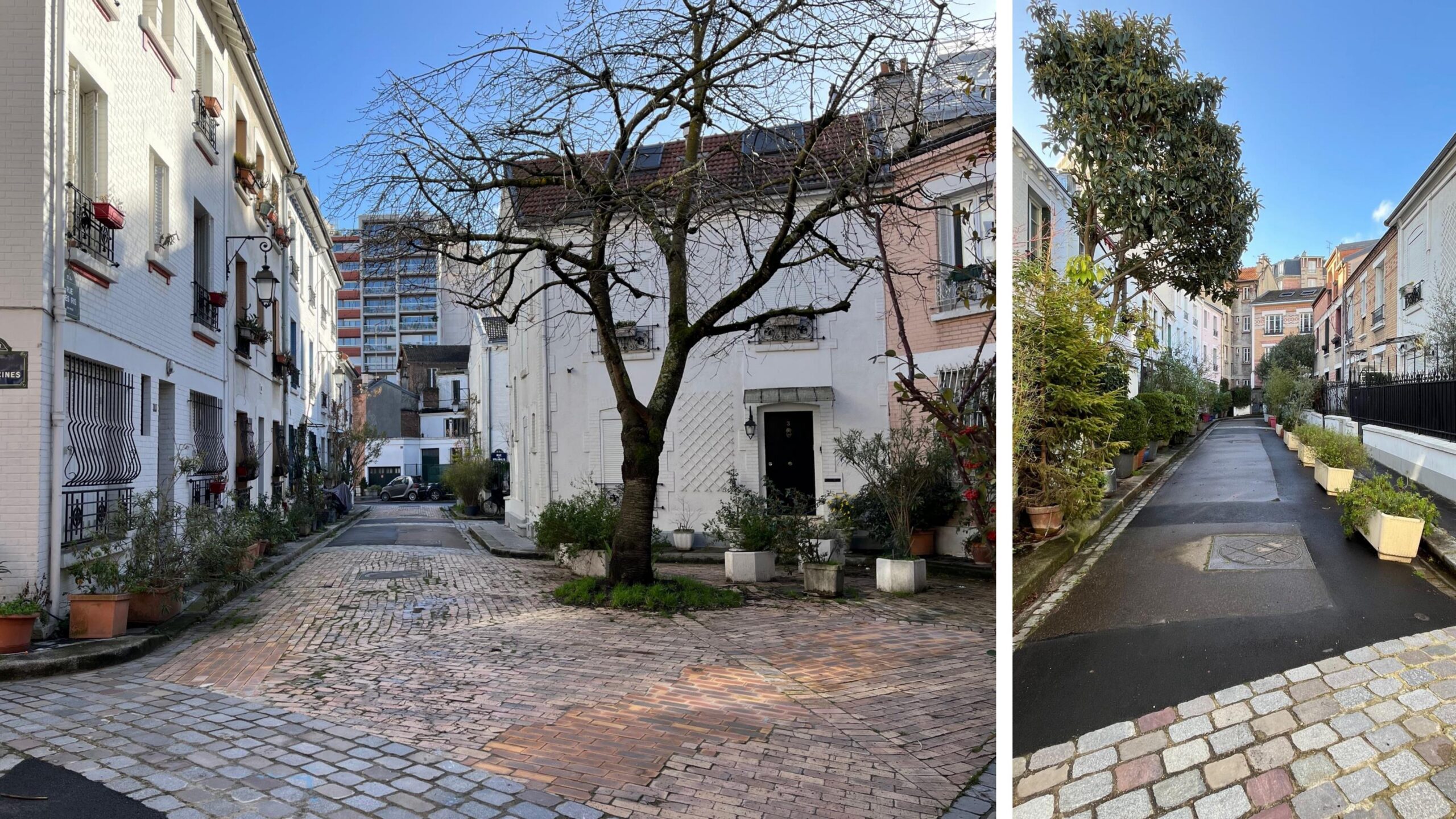
Named La Cité Florale for its flower-named streets, this hamlet is composed of two- and three-story attached houses lining cobblestone-accented paths. Once within it, due to how perspective alters sightlines, one is seldom aware of the towers beyond. This is an intimate scale of Paris living. It’s peaceful here. Seeing my amazement at this discovery, a Parisian couple befriends me and informs me that the locals refer to such places as îles (islands), and that there are many more in Paris, over a hundred. They offer to show me a few more in the 13th.
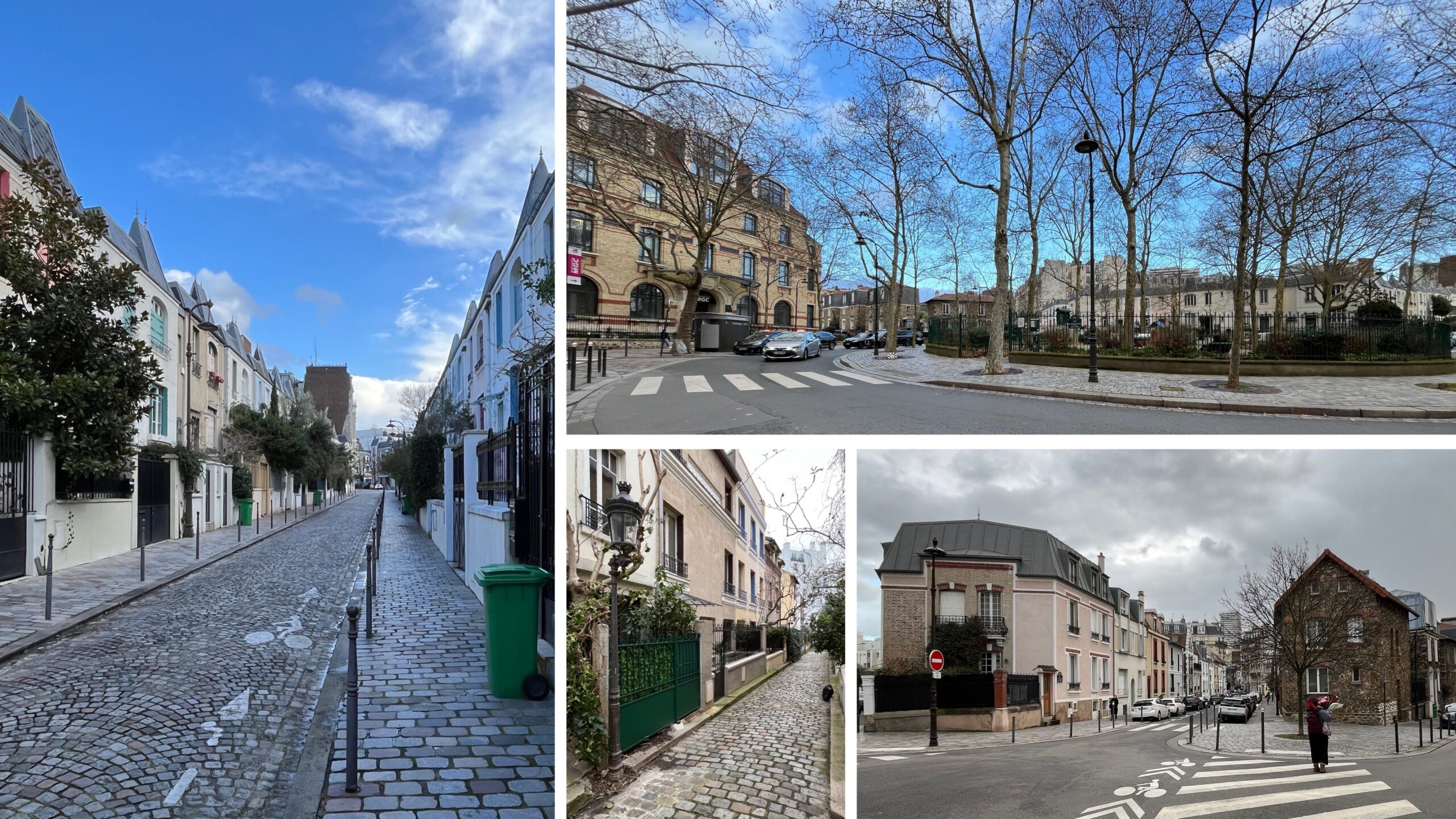
Bordering the Place de l’Abbé Georges Hénocque is a larger district of small houses, the Quartier Peupliers. The cobblestone street of Rue Dieulafoy harks to London and rowhouses with repetitive forecourts, but only the mansard roofs here defy that reading. The character of the Place de l’Abbé also has a scent of London, its perimeter fenced neighborhood park nested within low-rise housing. But in the nearby Square de Peupliers, the façade dominance of Parisian urbanism reasserts itself, complete with accompanying lampposts. The husband points out a plaque that commemorates the deaths and injuries that occurred because of a massive explosion in 1915 of an ammunition plant that once stood nearby.
These places were built after that explosion, shortly after World War I, in the 1920s and ’30s. Some of the land beneath once held quarries where limestone used to construct Haussmann’s Paris was mined. It is also where the Bièvre River valley once ran, before it was enclosed by a culvert and covered over with debris, some from Haussmann’s clearing of medieval Paris. These two factors led to unstable ground, limiting the size and number of stories that could be built upon it. Even though these neighborhoods were removed from Haussman’s Paris, they were still affected by it. And because these were constructed as worker, and in some cases middle-class, housing, the ground floors were not designed for commercial uses, giving these neighborhoods their quiet, pastoral character. But as is the case with most metropolitan cities, what was once workforce housing has become upscale residences.
Studying the growth of cities is akin to examining a tree trunk, each successive ring telling a story of the city’s evolution. In Paris, that analogy is quite literal, as the oldest parts of the city are at its center, and each period of expansion grew more or less concentrically from there; land for cemeteries, quarries, and ammunition plants that were once outside the city eventually existed within. These layers of development not only help one read the pattern of urban growth, but they also set up the context for which interventions into that pattern find their power. This is why Haussman’s replanning of central Paris was so radical—not just in the way it reframed the city center, but because it altered that pattern of development.
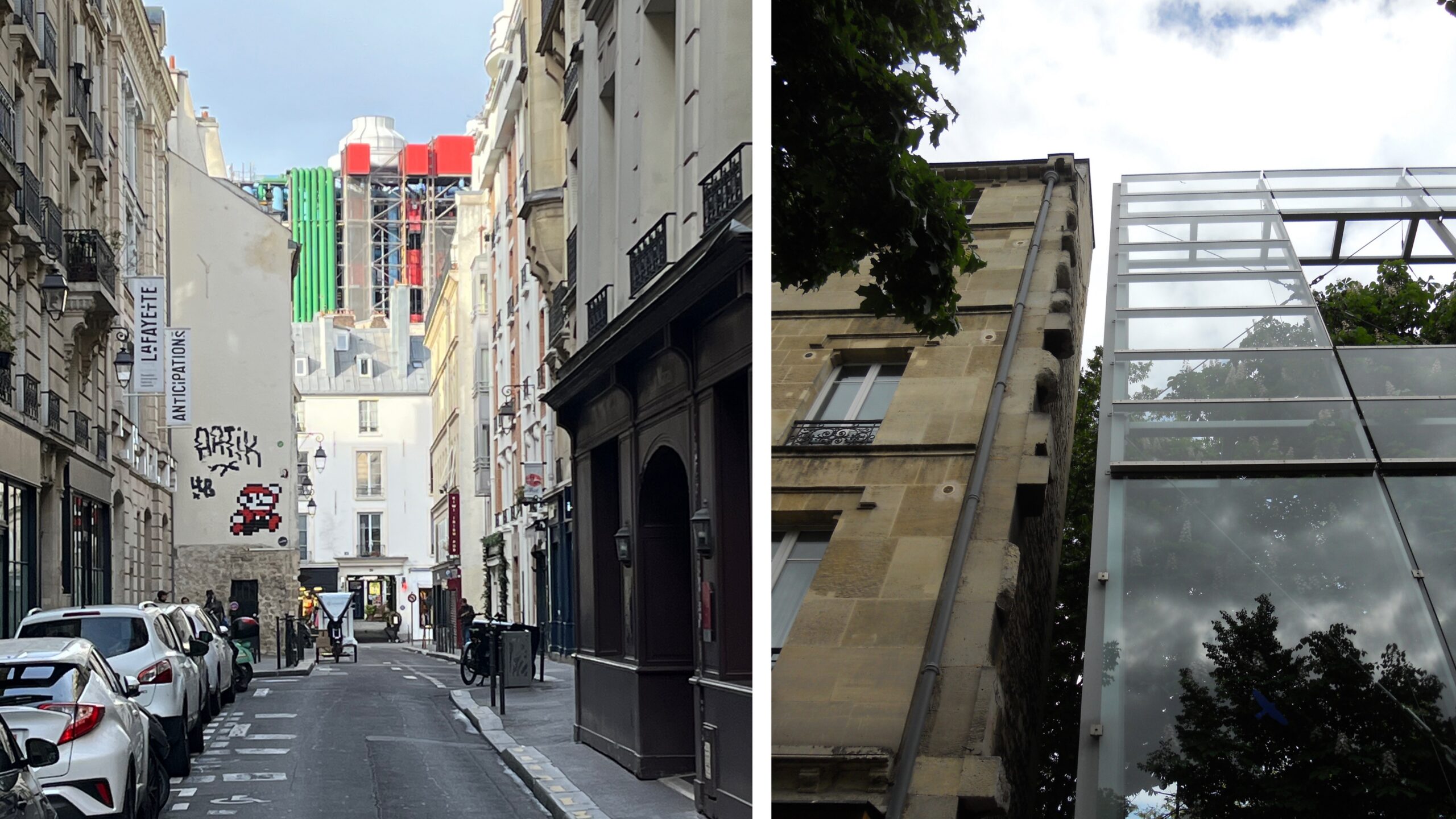
And at the scale of buildings, it’s why the Centre Pompidou or the former Foundation Cartier are so striking, no different from the impact the Seagram’s building and Lever House had on Park Avenue when it was defined by a wall of stone buildings. This raises the importance of historic preservation of context in the making of a place’s urban identity. “Contrast supports meaning,” Robert Venturi wrote in Complexity and Contradiction in Architecture (1966), and that applies to form and time. The strength of these contemporary examples lies not solely with their design and planning, but in how they convey the culture of their respective times while respecting their surroundings from other times—how well the different times dance together. As an ensemble, they provide the larger story of a place for all who work, live, and visit there. This is the cultural power of cities.
And in Paris’ 13th and 14th arrondissements, the remnants of various times may not always dance well, but all are invited (even the ugly). Urban grandeur is replaced by messy vitality, choice. And herein perhaps lies a key to tracing the formal evolution of urban development in the Western world, both politically, socially, and formally. Haussmann’s centralized planning was an extension of the political power of Emperor Napoleon III, much like the monolithic medieval town grew from authoritarian rule. But as the building of cities has become more democratized, the variety has increased, often eroding formal cohesion. That evolution is evident in these two outer arrondissements developed later, on what was a dumping ground. But what was once waste became opportunity, and the variety of styles and scales in this quarter of Paris reflects the various battles for control that ensued when the overlord was no longer: tall government housing projects, resistant neighborhood businesses, the sprawling Cité University campus, peaceful residential enclaves, not adorned in similar dress, but all expressing their individuality.
Through this lens, one could argue that it is through the house that many Western cities grow. The house is individualism manifested but requires more space per person and thus its development at the perimeter of cities, to only in time be absorbed by the very density from which it was initially distanced. Thus it should not be a surprise that rowhouses exist on the edges of Paris, on the outer ring of its tree where growth has been more recent, just like the earlier Georgian rowhouses that formed what was once the outer domains of London migrated further out and became detached. Moving to the new world of the U.S. and its surfeit of land, having most of its postwar cities primarily composed of vast aggregations of detached houses now seems like an inevitable step in that evolution, as is the detachment of all building types given the developments in mobility. Though the current rise of “mixed-use” projects is a recent attempt to reverse that trajectory, an urbanism of detachment already characterizes the context of many American cities.
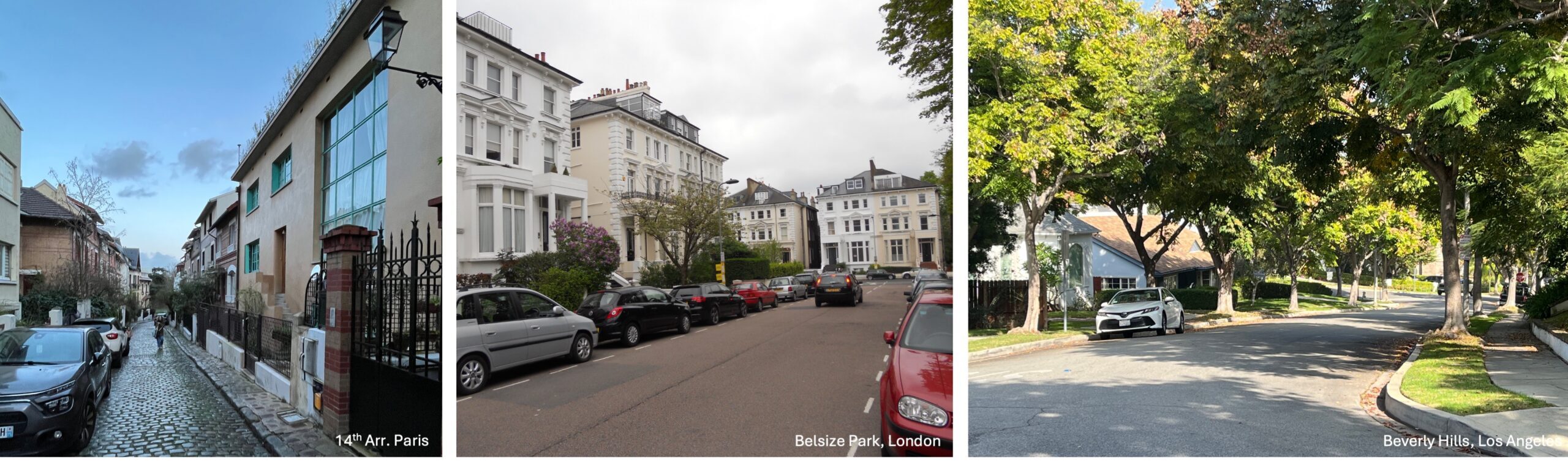
So, what were once outlying villages in Europe, and sprawling suburbs in the U.S., have become in many cases urbanized. But it took time. Much of what is London today originated from a series of villages that grew together; similarly with Los Angeles. Such urban growth patterns can also be found in the southeast of France, where the coastal towns and villages stretch to absorb the single-family developments at their edges, forming an almost continuous urbanized coast from St. Maxime to Nice. About the only resistance offered is from the topography and numerous coves that form a semblance of thresholds. Though Paris grew more from its center out, these houses in the 13th—and their more upscale cousins in the 14th, 16th, and 18th—are earlier evidence of this form of hopscotch growth, where houses are the players.
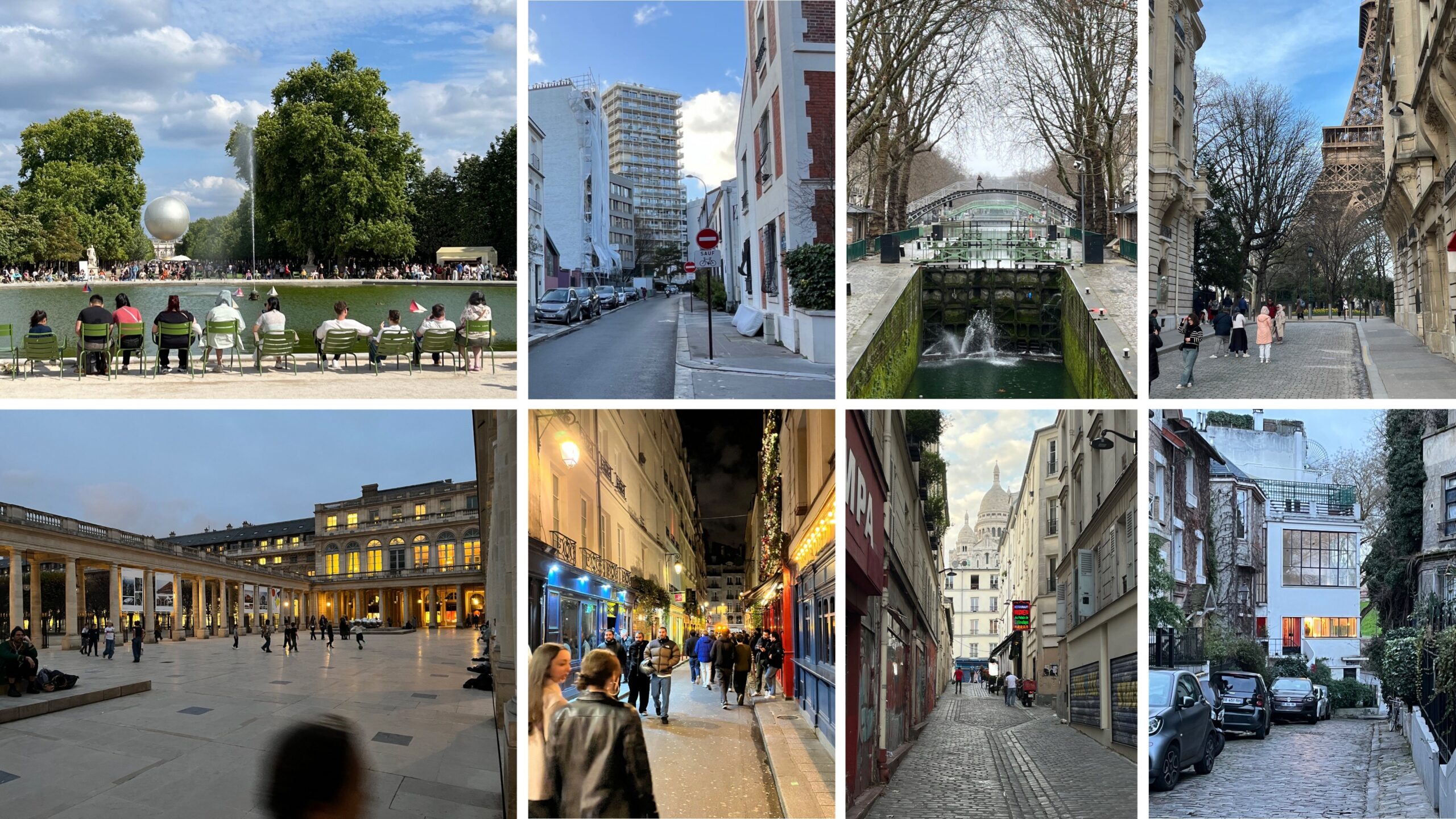
With its various historic layers, the city of Paris tells us this story about urban growth, granting us lessons in its embodiment of Colin Rowe and Fred Koetter’s Collage City (1978). Paris does have centuries of time from which to compose its story, the U.S. far less. But the relative youth of American cities does not grant them immunity from the lessons. Historic preservation should be more critically applied not only along material and aesthetic values, but to the built form of places that record community stories; these places of yesterday are the canvas upon which we paint the future. Simultaneously, zoning that typically outlines size, height, and mass should be relaxed. The micro-neighborhoods of Paris demonstrate how careful consideration and clever design of sightlines can alleviate scale disparity concerns. And as to zoning uses, except for incompatible health and safety adjacencies (e.g., a polluting factory next to a school), these should also be minimized. The conforming nature of many zoning codes does much to make their urban results feel overly curated and dull, stunting the experience of urban serendipity and authenticity. The beauty of Paris is that the whole city feels like a very large “mixed-use” environment, some of those mixes having been designed, others resulting from conflict among competing forces over time, together forming an endless place of discovery. The conformity of Haussmann’s standardized building models gains meaning from the bricolage of Paris’ other textures and would probably be oppressive without them.
With these lessons learned, we could be less apprehensive of future urban developments. Yes, some will still be regrettable, but we can gain solace in knowing that in the bureaucratic process that characterizes democratized city building, few projects are too big or so different to not eventually be absorbed by the city’s time. This is how cities endure and grow vibrant.
Featured photo (left) by Thierry Bezecourt, (c) 2025, cropped by the author. All other photos by the author unless otherwise noted.