

Indigenous Design and the Intelligence of Water
Water is not a passive element but a living intelligence. Water moves dynamically—swelling with the tides daily, rising with the moon monthly, replenishing the land through seasonal floods, withdrawing in times of drought, and, when displaced, returning to restore lost connections. Recognizing these patterns requires deep observation: a practice cultivated by Indigenous communities over centuries.
Across time and territories, civilizations have worked in close commune with water. The Aztec capital of Tenochtitlán once flourished atop an intricate system of lakes, chinampas, and canals by evolving a blueprint for building with water. When colonial forces drained the capital’s lakes and forced its rivers underground, they turned a thriving, water-adapted civilization into a city (Mexico City) now sinking under its own infrastructural load. The story of once saturated settlements—like London, Jakarta, and Venice—now swollen into sinking cities has repeated across the globe. Water’s absence has fostered urban instability, ecological collapse, and widespread water insecurity.
The climate crisis is amplifying these consequences, as rising sea levels threaten entire nations, droughts devastate food systems, and aging urban infrastructures fail under the impact of extreme weather. These conditions were not unforeseen. Long before climate science developed predictive models, Indigenous prophecies warned of this moment—the Hopi spoke of a time when water would turn against humanity, while the Anishinaabe’s Seventh Fire Prophecy described a crossroads between renewal or destruction.
Water has always carried these warnings. It does not die alone; when it is poisoned, obstructed, or exploited, it takes entire ecosystems and communities with it. The question is whether humanity will listen in time to restore its balance.
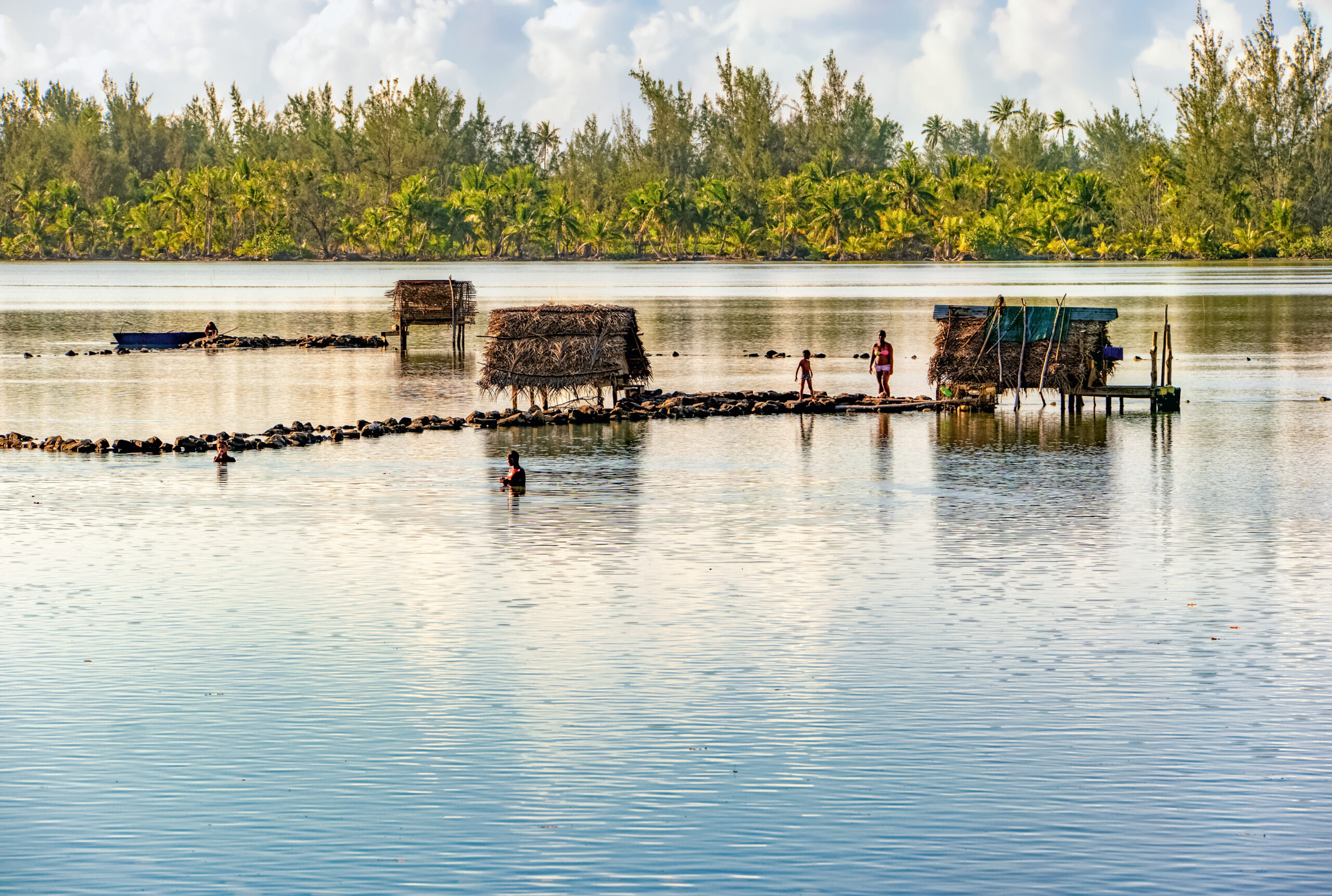
Horo i‘a Fish Weirs of the Mā‘ohi, French Polynesia. The lagoons of Huahine Nui in the Society Islands are shaped by solar, lunar, and wind-driven tides. Built from volcanic rock, these labyrinthine walls funnel fish into circular basins, where haapua enclosures and stilted houses once supported generations of fishing families. Photo by Wesim Muklashy.
An Epoch of Ancestral Intelligence
Alongside big tech, the Age of TEKnology—synthesizing traditional ecological knowledge with contemporary design—is arriving, offering a critical yet missing alternative to industrialized approaches. This epoch will not reject contemporary innovation, but redefine technology as an entity that coexists with and enhances natural systems rather than destroying them. My recent book, Lo—TEK Water, serves as a field guide for this time of TEKnologists—practitioners who apply TEK to solve environmental, agricultural, architectural, and social challenges. Indigenous water technologies have sustained human settlements for thousands of years. It’s time to explore contemporary architectural and ecological projects that integrate TEK into modern climate adaptation strategies, providing structured frameworks for integrating it into policy, planning, and education.
Lo—TEK. Water begs the question—what if cities could remember? The principles that once shaped Tenochtitlán—its floating gardens, permeable landscapes, and water-woven design—offer more than a relic of the past; they present a blueprint for the future. Rooted in Lo—TEK, these ancestral technologies did not seek to control or conquer water but to exist in reciprocity with it. They embraced porosity over pavement, adaptation over rigidity, and regeneration over depletion. The chinampas of Tenochtitlán were not just agricultural fields; they were living infrastructures, filtering water, sequestering carbon, and sustaining entire ecosystems. Across the world, Indigenous settlements have been built on these same foundations—from the stilted homes of the Wale I Asi people of the Solomon Islands to the tidal rice terraces of Ifugao, Philippines—each a testament to an urbanism that thrives in sync with nature’s rhythms. In reclaiming these principles, as exemplified in the contemporary TEK-infused projects presented in this book, a glimpse is offered to how cities today can evolve beyond extraction and crisis toward a model that is resilient, biocultural, and alive.
The ancestral technologies and contemporary TEK-infused projects profiled are deeply rooted in their local landscapes, yet they share fundamental patterns that define Indigenous nature-based technologies. As Tyson Yunkaporta highlights in Sand Talk, true understanding lies not just in individual elements but in the relational forces that connect them—patterns that exist beyond linear time and offer insight for sustainable design.1 By recognizing these ancestral patterns as a set of industry specifications, designers can shift from extractive practices toward relationships of reciprocity and regeneration. The following specifications synthesize these underlying principles, framing them as living, coevolutionary, symbiotic, co-energetic, and cyclical ancestral renewables.
TEKnology Is Living
Technology is composed of complex, responsive, and emergent interactions between biological organisms and their environments, sustaining life through entire material cycles. This aligns closely with Indigenous perspectives, where technology is viewed not as a collection of tools but as a dynamic process deeply interconnected with the natural world. For Indigenous peoples, these systems are manifestations of a vital life force—a continuous flow of energy that shapes relationships and fosters balance between people, land, and ecosystems. This force, known by many names worldwide, is integral to how human societies interact with and adapt to their environments.
In Melanesia and Polynesia, this life force is called mana, a sacred energy that binds all aspects of existence, from the natural world to the human spirit. Mana emphasizes the interconnectedness of all things, where power is not isolated but shared between individuals, communities, and the environment. Similarly, the Haudenosaunee (Iroquois) understand this force as orenda, a dynamic energy that exists in all living things and the world itself, requiring balance and respect to maintain harmony. The Lakota refer to this energy as wakan, meaning sacred or imbued with power. Wakan is a vital force that exists in everything—from stones to skies—and is central to Lakota ceremonies and essential for maintaining harmony.4 The Anishinaabe recognize this force as manitou, a pervasive presence that connects all aspects of the natural world. Manitou guides actions and decisions, with respect and reciprocity being fundamental to maintaining life’s balance and ensuring sustainability.
This understanding of technology as living, dynamic, and interconnected is fundamental to Indigenous ways of relating to the earth. Indigenous technologies are not static but living systems that evolve in response to environmental, social, and ecological changes. These technologies foster resilience by adapting to their surroundings, ensuring sustainability and long-term balance with the natural world. These technologies are living, breathing systems, flowing with the rhythms of place, weaving a continuous thread of connection that carries communities into a future rooted in wisdom.
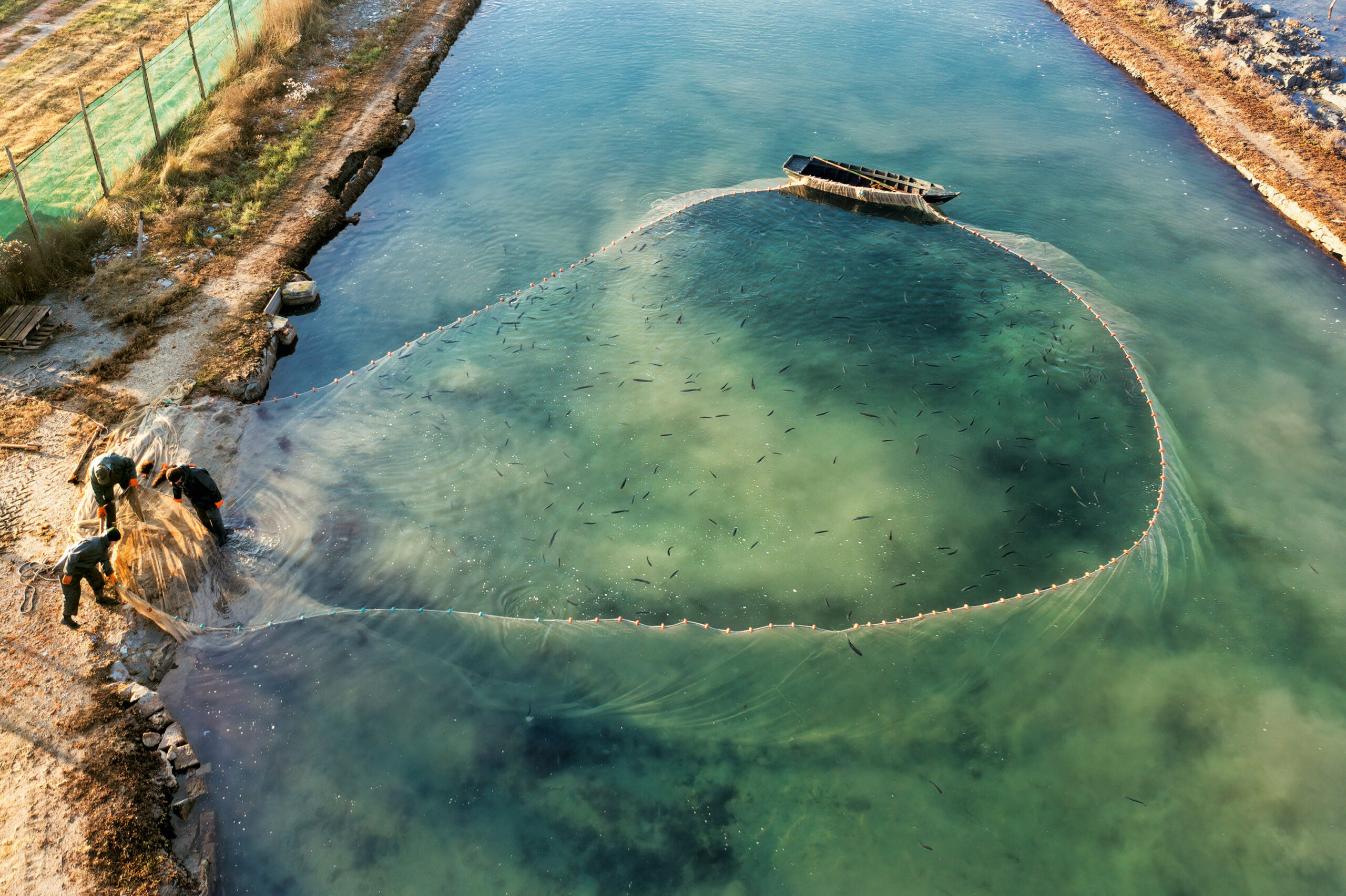 Valli da Pesca dikes, ponds, and canals of Venice. Photo by Valentina Rocco.
TEKnology Is Coevolutionary
Indigenous water technologies are intentionally designed to persist across generations by adapting to environmental extremes. These systems are coevolutionary, developing in continuous relationship with both their ecosystems and communities, influencing ways of living, knowing, and adapting. In contrast, modern infrastructure and fossil fuel–based technologies resist adaptation, disrupt ecological balance, and become obsolete over time. While industrial systems degrade and contribute to environmental collapse, coevolutionary technologies foster resilience, guiding human evolution toward reciprocal and regenerative relationships with the earth.
A coevolutionary system is exemplified by the chinampas agricultural floating gardens, constructed on shallow lakes by the Nahua, and designed to adapt to fluctuating water levels, ensuring productive land during flood and drought. Over time, this technology evolved to meet these environmental challenges, continuously adjusting to the needs of the people and the land—playing a crucial role in the growth of the Aztec empire. As the empire expanded, these agricultural islands became vital for supporting large populations in cities like Tenochtitlán. The resilience of the chinampas was key to sustaining the food supply for this urban center, which relied on the continuous production of crops from these adaptive gardens. The relationship between the people, the technology, and the ecosystem was deeply integrated, with each influencing and shaping the other. The chinampas showcase the value of coevolutionary systems, which foster long-term sustainability through adaptability. The Nahua’s Indigenous water technologies embody how human societies can work in harmony with their environments to ensure resilience.
TEKnology Is Symbiotic
Symbiotic systems optimize reciprocal relationships to sustain and regenerate ecosystems, leveraging biological interdependencies to create exponentially generative networks. For instance, wetland filtration systems integrate microbial, plant, and animal interactions to cleanse water while creating biodiverse habitats. Floating agricultural islands harness symbiotic exchanges between crops, aquatic organisms, and microbial communities, forming self-sustaining nutrient cycles that increase fertility over time.
Indigenous knowledge systems encode these complex symbiotic relationships within myth, storytelling, and ritual, offering a framework for ecological sciences that extends beyond empirical observation into lived experience. These narratives function as ecological blueprints, guiding communities in their interactions with the environment. By embedding ecological science within mythology, Indigenous cultures ensure that symbiotic design principles are not just understood but revered as practices that harmonize human activity with the self-organizing intelligence of nature.
By designing with symbiosis, ancestral innovations demonstrate how architecture and infrastructure can move beyond extraction and depletion, instead cultivating regenerative, self-perpetuating ecologies that expand in productivity, resilience, and biodiversity. These systems are not built to dominate nature but to participate in its intricate web of relationships, allowing humans to function as cocreators within ecosystems that thrive through mutualism, adaptation, and balance.
TEKnology Is Coenergetic
Unlike industrial systems that extract, consume, and deplete, ancestral water technologies harness nonexploitative, reciprocal energy flows—working with, rather than against, natural forces. These systems are coenergetic, meaning they opportunistically integrate human ingenuity with ecological intelligence to create infrastructures that generate, rather than exhaust, resources. From the gravitational pull of the moon that maintains tidal rhythms to the metabolic cycles of microbial communities that purify water, Indigenous technologies are designed to work in close choreography with the earth’s dynamic energy systems.
By aligning with natural energy flows, these infrastructures operate through passive hydrodynamics, biological filtration, and solar or geothermal interactions. Agricultural islands regulate nutrient cycles through the exchange of organic matter, fish, and crops. Tidal weirs synchronize with the lunar cycle, allowing water levels to replenish fish stocks without over extraction. Each of these processes mirrors the principles of coenergetic exchange found in ecosystems—where energy is cycled, transferred, and regenerated rather than lost.
Beyond the physical structures, Indigenous knowledge encodes these coenergetic principles within oral traditions, ceremonies, and place-based mythologies. Stories of water deities and ancestral spirits often correspond to precise hydrological and meteorological patterns, serving as reminders to guide sustainable water management. By embedding environmental energy cycles into cultural mythologies, Indigenous communities maintain a long-term, adaptive relationship with their ecosystems, ensuring that technologies work opportunistically with climatic changes. By designing with coenergetic principles, regenerative, self-sustaining systems can amplify the living landscapes they inhabit—where interconnected cycles fuel abundance rather than exhaustion.
TEKnology Is Cyclical
Time in Indigenous systems is not linear but governed by the rhythms of nature. Seasonal flooding renews soils, tidal flows shape fishing and farming cycles, and intergenerational stewardship ensures longevity. These practices align with the cyclical patterns of the earth, where life is constantly renewed and replenished. In stark contrast, industrialized water management systems operate on a linear model of extraction, leading to overconsumption and eventual collapse. This linear approach disregards the natural cycles that sustain life, focusing instead on never-ending exploitation and depletion.
While modern societies view time as a linear progression from past to present to future, Indigenous knowledge systems recognize time as cyclical—a sequence of renewal, measured by celestial movements and ecological rhythms. Ancestral civilizations coevolved technologies with these cycles, attuned to the ebb and flow of oceanic tides, the daily shifts of solar rays, the seasonal pulses of monsoonal rains, and the metabolic rhythms of living organisms. These technologies do not seek to control nature but coexist in dynamic equilibrium, respecting the natural world’s self-regulating forces.
Linear time, a concept born with the Sumerians and further amplified through colonialism, shifted human progress away from cyclical regeneration toward unrelenting extraction. This shift birthed industrial infrastructures that severed humanity’s connection to nature’s regenerative cycles. Yet Indigenous knowledge, passed down through myth and oral traditions, offers a different understanding—one where humans are not superior manipulators of nature but equal participants in an unfolding, interconnected creation. This view emphasizes balance and reciprocity, offering a holistic framework that aligns with the natural world’s inherent rhythms.
Many Indigenous prophecies, such as the Anishinaabe Seventh Fire and the Hopi Fifth World, reflect this cyclical understanding of time. These narratives, born from millennia of careful observation, echo the predictions of modern climate science, recognizing that humanity stands at the crossroads of either renewal or destruction. Water, the carrier of memory, has witnessed past mass extinctions and planetary recoveries. It teaches that survival depends on aligning with its rhythms—listening, adapting, and ultimately returning to the role of protector rather than exploiter. Today’s move toward renewable energy sources like solar, wind, and tidal power signals a shift toward hybrid-time technologies, where industrial systems begin to reconcile with nature’s cycles. Indigenous infrastructures, already built on principles of regeneration, offer sustainable solutions for surviving and thriving in a warming world.
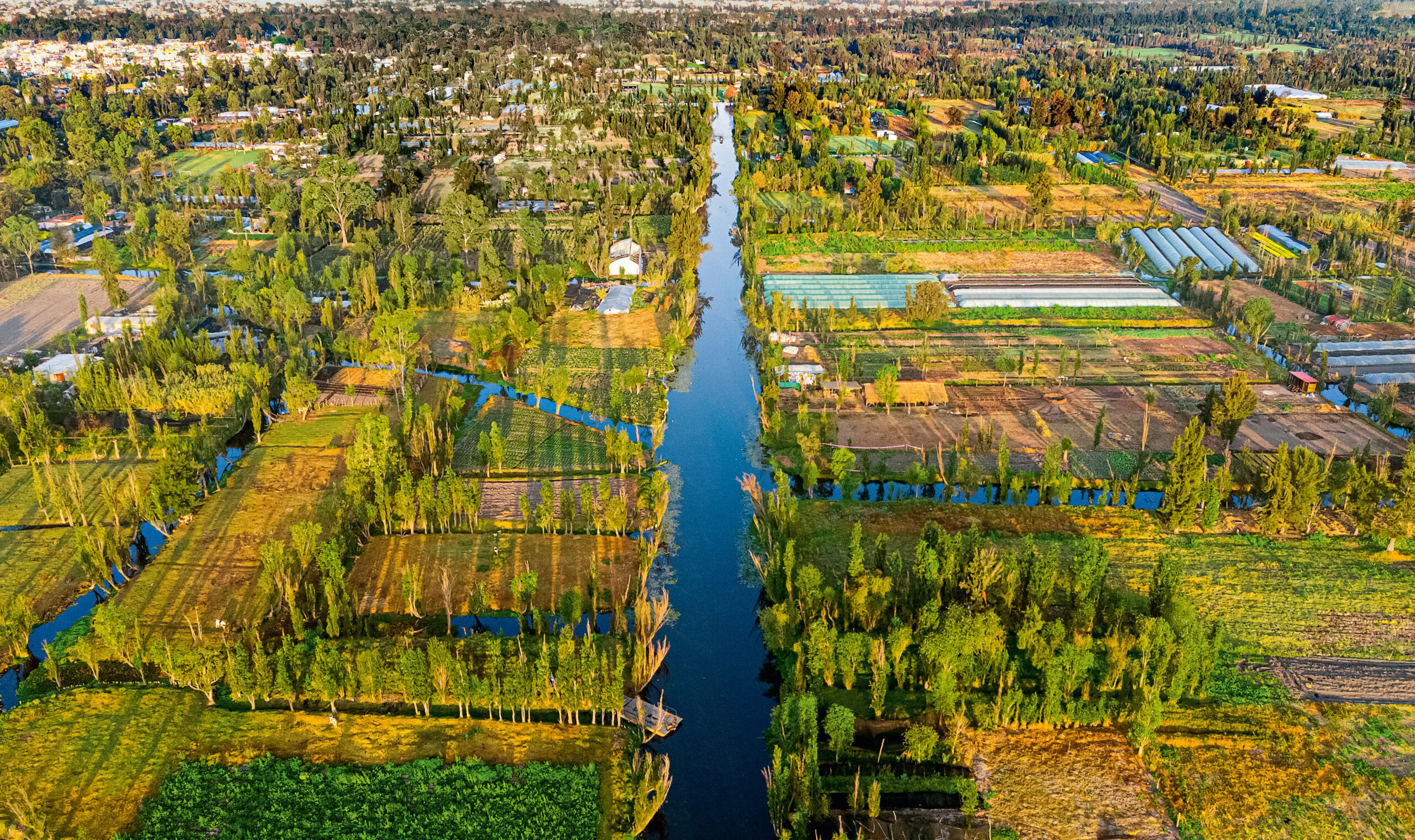 Chinampa Islands of the Nahua Xochimilca, Mexico. The patchwork of chinampa islands on the lake area of Xochimilco are composed of raised fields surrounded by canals and ditches. Photo by Joaquin Enriquez.
The Urgency of Protecting Indigenous Intellectual Property [IIP]
If TEK is to inform contemporary climate solutions, its knowledge holders must be rightfully recognized and compensated. IIP cannot be safeguarded by Western legal systems alone, which prioritize written agreements over oral traditions and collective obligations.
The Symbiocene project, commissioned by the City of London for the Barbican’s Our Time on Earth exhibition in 2022, introduced SOU [Smart Oath of Understanding] as a legal and technical innovation to protect IIP. The SOU is a nine-part oral contract designed to replace traditional legal frameworks like memorandums of understanding (MOU) with a more culturally aligned, ethically grounded approach. It ensures that Indigenous cultural and intellectual property remains with its rightful owners, emphasizing consent, self-determined value, reparations, and collective obligation rooted in oral traditions.
Inspired by “smart contracts” stored on public blockchains, the SOU envisions a future where oral oaths are transformed into binding agreements through blockchain technology, ensuring security, transparency, and sustainability. By integrating policy-related provenance-tracing tools, it aims to create a new standard for ethical design collaborations with Indigenous communities and their TEK. These open-source oral contracts serve as a template for designers and organizations seeking to engage with Indigenous communities in a just and reciprocal manner.
As we shift towards honoring IIP through models like the SOU, we begin to recognize that protecting this knowledge is not just a legal or ethical obligation but a call to reconnect with the earth’s rhythms. This reconnection extends beyond intellectual property; it’s a call to honor the wisdom that has sustained ecosystems and human societies for millennia. Integrating TEK into contemporary climate solutions protects not only the knowledge but also the life-giving relationships that sustain planetary systems. In doing so, the potential is unlocked for a future where technology, culture, and nature coevolve in harmony, and the survival of our cities and ecosystems becomes a testament to the power of collective, regenerative cocreation.
Water has always remembered. It recalls the buried waterways that once sustained cities, the farming of its fertile floodplains that nourished civilizations, and the ancient aquifers that have cradled communities for millennia. It also recollects a time when it was cared for, when it was respected, when it was understood.
Now, it is humanity that must remember.
We stand at a branch in the river of time—one stream runs blackened with the filth of extractive, short-term technological solutions, while the other channel flows toward a return to water’s intelligence. These TEK-infused projects and ancestral technologies are not merely examples; they are blueprints for survival, forged from the understanding that humanity’s future depends on reconnecting with the earth’s regenerative rhythms. Yet these technologies, often rooted in reciprocal care and mutual respect, are absent from the curricula of architecture, urbanism, and engineering schools around the world. Instead, the prevailing pedagogy more often disregards the wisdom that could guide designers toward a regenerative future—keeping ancestral technologies from shaping imaginations of world dreamers, shapers, and leaders. This is a call to reawaken the knowledge that has always been present, protected by the practices and stewardship of Indigenous cultures.

There are profound lessons to be learned from the absence of a singular word for nature or the earth in many Indigenous languages—an absence that reflects a worldview in which humans are inseparable from the living systems that sustain them. Rather than an object to be owned or exploited, the earth is simply called mother or home, a source of life and renewal.
With the ocean as the mother’s amniotic fluid, cradling generations within her currents, water is not merely a resource but a guiding force—one that calls for reconnection and reawakens custodianship. Indigenous cultures have long recognized water as a living entity, shaping landscapes, nourishing all beings, and flowing through the cycles of time as an ancestor rather than a commodity. Yet the dominant extractivist paradigm, which seeks to control and exploit water and land for short-term gain, disrupts this enduring balance, severing the relationships that have sustained life for millennia.
In contrast, the survival of cities, coastlines, and ecosystems will not be secured by concrete dams, steel seawalls, fortified barriers, and high-tech industrial systems alone. It will require a radical reengagement with ancestral wisdom—living, regenerative, and deeply embedded in place. Moving beyond the extractivist mindset, a model of custodianship emerges that recognizes the earth’s intrinsic value, not as a commodity to be consumed but as a collaborator
in coevolution.
The solutions have always flowed beneath our feet, murmuring in the tides and echoing through the currents. Water is not merely a resource, nor a force to be feared—it is living, calling for us to remember, to reclaim our role as its guardian and renew the bond once meant to be honored.
Featured image: Loko i‘a Fishponds of the Native Hawaiians, Hawai’i. Stretching along Hawai‘i’s coasts and inland waterways, the Native Hawaiian fishponds, range from two-thousand square meters to two square kilometers, blending fresh and saltwater into brackish habitats favored by herbivorous fish. Photo by Mark Lee. All photos courtesy of Taschen.