
Letter From Biddeford: ICE Threatens Small Town America
When you live in a small town, you never expect its name to pop up in national news—nor, to be honest, do you ever really want it to. Anonymity can be a comfort, especially for Mainers. The Pine Tree State has long been a beacon for people from all walks who, while not exactly recluses, simply want to be left alone. Maine lends itself to such tendencies. Just look at a map: we live beyond where the sidewalk ends. In my town of Biddeford, I’m not sure I fully appreciated that part of our legacy until this past week.
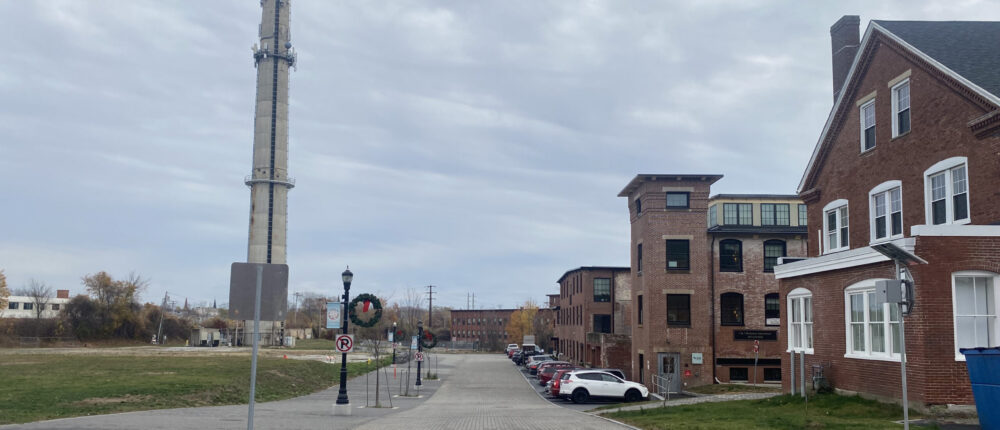
When I first lived here, at the turn of the century, Biddeford still bore the unfortunate nickname of “Trash Town USA.” This once thriving textile manufacturing hub, dating back to the 1840s, began to founder in the postindustrial era, with mills closing one by one in the latter half of the 20th century. In the late 1980s, to save its declining tax base, the town permitted a company to build a waste-to-energy incinerator in the heart of downtown. I didn’t purposefully avoid downtown Biddeford then, but there was certainly little reason to seek it out. Beyond the church steeples and City Hall clock tower, our most prominent landmark was a 240-foot exhaust stack that once belched out plumes of smoke, the residuals of burning citizens’ trash. Main Street, an extended dogleg framed by century-old commercial and civic midrises, was marred by empty storefronts. Only the echoes of a bustling company town remained.
Talk of a town renaissance was near constant—or, at the very least, it came in phases. A bakery, a diner, a barber shop, a theater, and a couple of banks provided Main Street with steady anchors through the years, but nothing else stuck around. Revitalization efforts continually started and stalled, well after I moved away in 2002. The last of the mills closed in 2009, and nine years later the energy recovery plant closed. Both deaths were merciful in their own way.
When I moved back to Biddeford, now with my family, in 2023, the promise of renaissance was at long last being fulfilled, especially along Main Street and the larger downtown business district. The old textile mills, of which there seem too many to count, had reinvented themselves as tenant spaces for studios, popups, breweries, and more. Eateries, retail shops, coffee houses, and community spaces now lined Main Street. Mechanics Park, a small city green at Biddeford’s northern terminus, overlooking the Saco River, hosted free weekly music events in the summer. The towering relic of a smokestack, which now functioned as a cell tower, seemed to loom gently over the city. It’s mere steps from the community art studio where my wife volunteers and our kids attend afterschool programs, and I have come to find it charming, like an urban scar with character that no tale of woe could diminish.
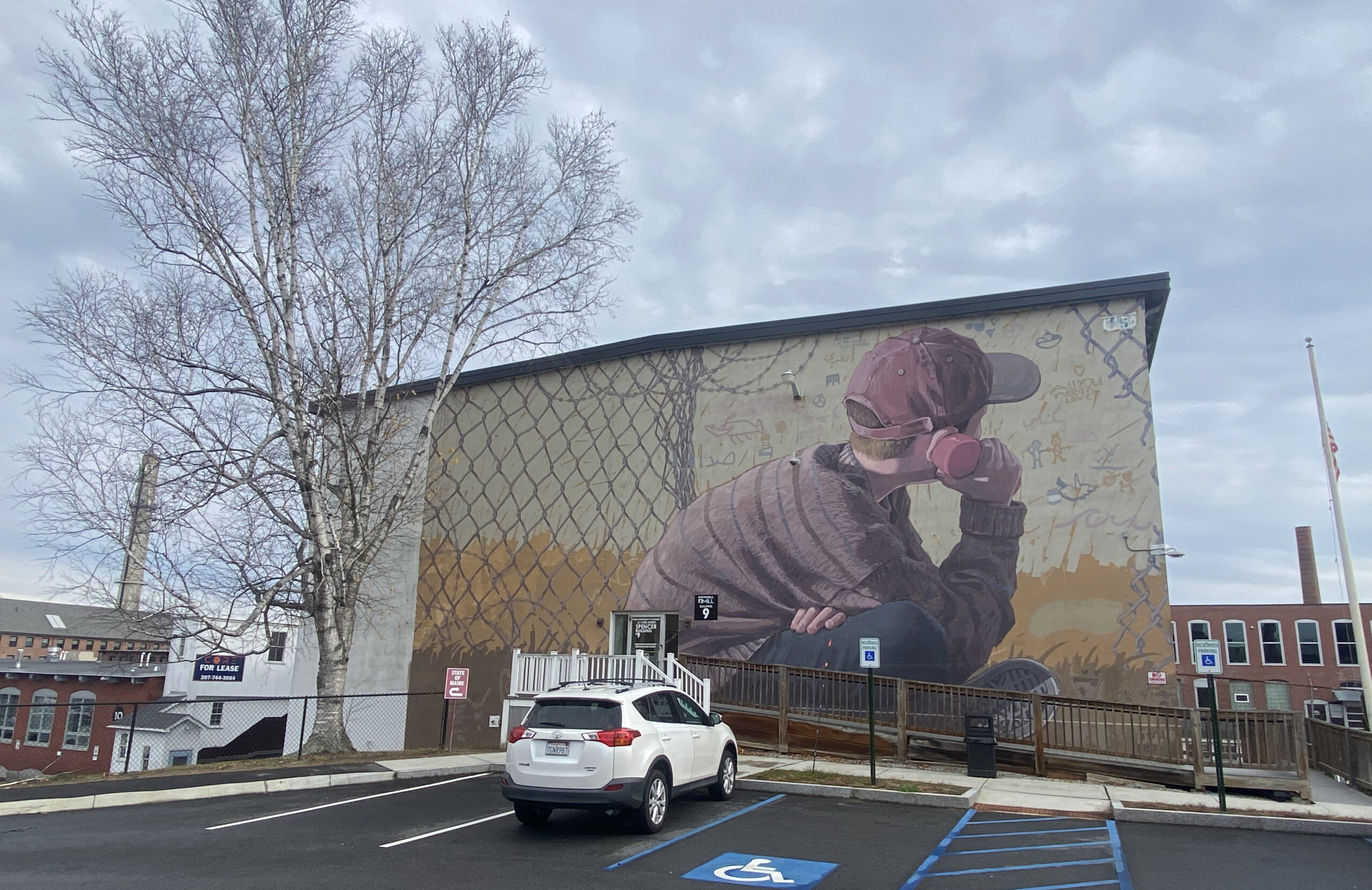
Biddeford is a unique place for several reasons. It’s geographically diverse, casting a wide band that includes rural farmland to the west, suburban and urban settlements in the expansive middle, and vast stretches of beaches and scenic coastline that stretch into the Gulf of Maine, looking out onto Wood Island. For a city of just 22,000 people, it’s remarkable at times to feel like you can experience three or four different towns in one. Additionally, Biddeford’s history as a working-class mill town, largely built and sustained with immigrant labor, makes it distinct among coastal towns in the state. Maine has the oldest population in the nation; ours is the youngest city in the state.
Why this historical sojourn into small town USA? Well, about six years ago, in the very first piece I published for Common Edge, I reflected on the alleged death of American small towns and wondered how a lucky few might reinvent themselves as resilient and economically viable hubs in the post-industrial and post-pandemic era. (I lived in Minneapolis at the time.) I was playing a bit of what if, but some version of what I outlined in the piece also felt inevitable. It still does.
Upon returning to Biddeford, part of me felt like I was stumbling into that fantasy in real time. We immediately discovered community and relished each new connection, both firm and passing, be it our librarian, fellow parents, a daycare worker, a barista. Everyone felt like a neighbor. (Incidentally, we soon discovered that our favorite cashier at our regular grocery store, a sharp-tongued septuagenarian, lived down the street from us.) Of course, Biddeford’s story is far from complete, and there’s no shortage of issues that need addressing. Evidently, the town has been mismanaging its finances for years. Still, it has the makings of our forever home.
To follow up the 2020 article, I had considered penning a “My 15-Minute City” piece to highlight downtown Biddeford’s walkability and varied amenities. I even mapped out my walk, starting at my regular coffee house and ending at Mechanics Park, with a few detours along the way. I wanted to write a love letter.
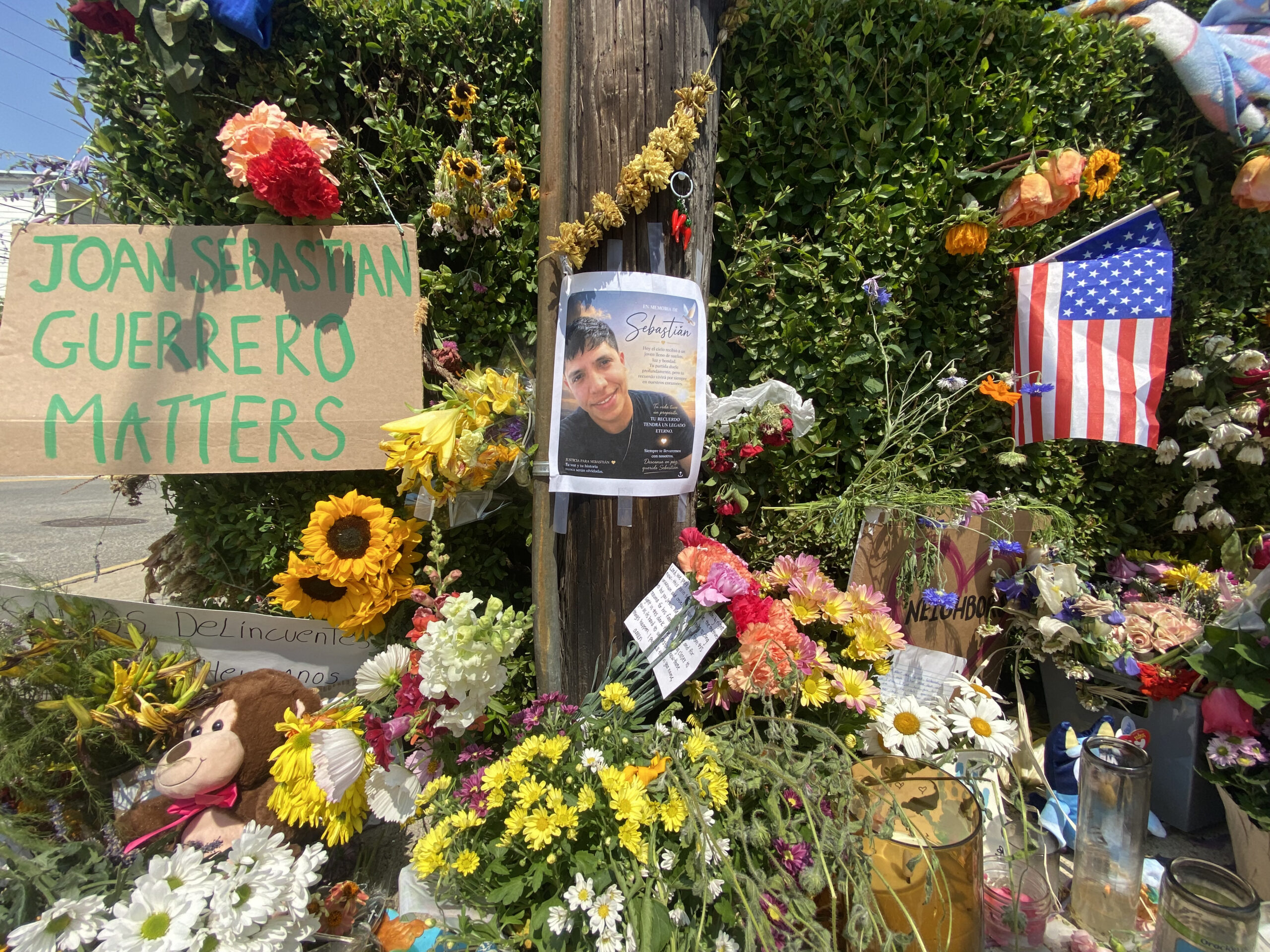
A few days ago, 26-year-old Joan Sebastian Guerrero, a father, husband, and Biddeford resident, was gunned down by ICE agents at an intersection near his home, an intersection I pass through almost daily enroute to friends’ homes or the beach or my son’s school. In the hours following this completely avoidable tragedy, I witnessed many of my neighbors assemble peacefully in Mechanics Park, but with a spirit and quickness and social cohesion that filled me with pride. The resulting show of love and anger and disbelief somehow made our town feel three times its size. Unfortunately, this latest in a string of civilian killings by federal agents has drawn the nation’s gaze our way. It has been disconcerting to hear “Biddeford” uttered repeatedly on national news shows, the announcers barely hiding their unfamiliarity—it sounds like they’re phonetically sounding out a foreign word.
Biddeford has come a long way since “Trash Town USA.” The nice restaurants and the microbreweries and the designer hotel are the dividends of our newfound prominence, but in many respects, it’s all window dressing. We fell in love with this town because of the community we’ve built and the community that welcomed us in. Speaking as someone who has lived in more than a few states and towns, that’s a rare thing. I didn’t personally know Mr. Guerrero. But then, Biddeford is a small town. My daughter is slightly older than his daughter, so it’s entirely possible their paths crossed more than once at the library, a playground, a park, or just walking down the street. He was taken from her. He was a fellow member of this community; he contributed as much as anyone to Biddeford’s continued resurgence as a place for families and businesses and supportive neighbors. He was our neighbor, and he was taken from us.
Featured image: Biddeford, Maine. All photos by the author.