
What’s the State of ‘Out There’ Architecture Today?
Any survey of the best of contemporary American architecture would be a daunting task. How do you define that, exactly? What are the major themes of laudable environmental design trends emerging right now? Certainly, you would promote architecture that strives to be sustainable and environmentally responsible, one tied closely with nature and landscape; design focused on nurturing community; expressive uses of materials; the creation of memorable urban places and neighborhoods with an emphasis on human scale.
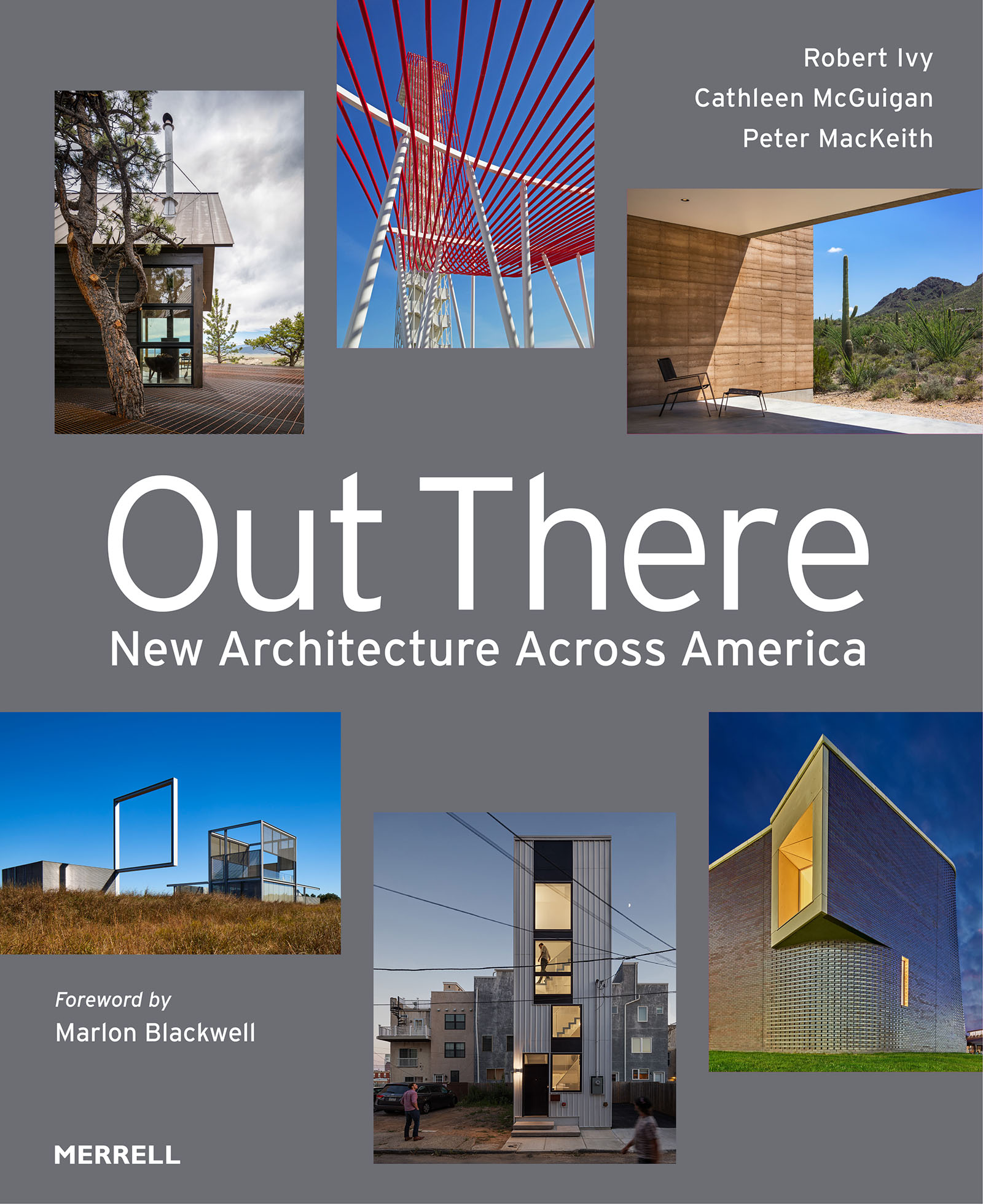
The newly published Out There: New Architecture Across America (Merrell Publishers Limited) generally delivers a cogent picture of what’s going on in American architecture today. This ambitious book presents the work of 50 firms, covering 170 projects in 500 pages. It’s a doorstop! But its architectural agenda has a particular focus on architecture that belongs “to specific places and contexts,” according to writer Robert Ivy, former editor of Architectural Record, in his introduction. “‘[O]ut there’ architecture anchors its designs in the realities of time and space, striving to relate to, and belong in, a specific place.”
Ivy is joined in this editorial effort by Cathleen McGuigan, another former Record editor, and Peter MacKeith, former dean of the Fay Jones School of Architecture and Design at the University of Arkansas, who notes that “a place-centered ethos stands at the core” of the book, and at “the heart of much that is good and worthy in American architecture today.” AIA Gold Medalist Marlon Blackwell, in a helpful foreword, sketches some of the history behind this collection of “out there” architecture. Twenty-five years ago, Blackwell was one of several architects whose work was profiled in a special issue of Architectural Record that sought to shine light on the work of “out there” architects (Ivy’s parlance) that were doing interesting work rooted in the spirit of place, but not getting much attention—practitioners such as Rick Joy, Brian MacKay-Lyons, Julie Snow, and Tom Kundig.
McGuigan’s essay in the book is an excellent examination of how many of these “out there” architects had in turn been influenced by such designers as James Cutler in the Pacific Northwest, David Lake and Ted Flato in Texas, and (perhaps one of the most pivotal practitioners of the latter 20th century) Samuel Mockbee. Even earlier, E. Fay Jones, Harwell Hamilton Harris, and O’Neil Ford were experimenting in their own ways with “regional modernism” inspired by the vernacular architecture of their rural project sites. Out There is careful not to confuse the work of the current generation with the “critical regionalism” theories of Kenneth Frampton, Alex Tzonis, and Liane Lefaivre that appeared more than 40 years ago. Echoes of those ideas surface in contemporary work, but I’d say the current generation’s approach to regionalism is richer and more inclusive.
Out There has its weaknesses. It lacks an upfront, cogent definition of what “out there” is. According to Ivy’s introduction, “the fifty firms showcased … work primarily outside our largest cities, in the ‘ill-named’ flyover states.” That doesn’t really jibe with the work shown or the practices profiled. Of the 50 firms, more than 40 are headquartered in medium- to large-sized cities, places like Chicago, Minneapolis, Albuquerque, Memphis, Houston, Phoenix, and Denver (not to mention major metro areas such as Los Angeles, Philadelphia, and Raleigh). Granted, a few of these practices and some of the projects are in small cities, towns, and rural areas. But most of the practices are in large urban places. This works against the idea that this is the architecture of “flyover country” that the book promotes.
Another odd item at the front of the book is a map of the continental U.S. indicating where the architecture firms are located (sorry, Alaska and Hawaii, you didn’t make the cut). In a book dedicated to architecture of “specific places and contexts,” wouldn’t it make more sense to include a location map of the 170 projects? In documenting architecture grounded in place, not practice, one might expect to find the presentation of works organized by regional themes or building types. (Record built its editorial identity on building-type studies.) It would make it easier to compare projects and how they express place and context. Instead, the book is organized according to an alphabetized list of firms, which has nothing to do with context, place, or comparative design. I suspect that the decision to group projects according to architecture firm had a financial motive: it makes it easier for the publisher to offer each firm an opportunity to purchase reprints of their work.
Out There focuses on how architecture is shaped by—and consequentially expresses—the place in which it lives, the community that it serves. But contemporary architecture is shaped by other factors too, such as internet images and critiques of architecture and urban design around the globe. The book doesn’t explore these factors, but you can find them in the work presented. There are many formalistic moves in overall design and details that crop up in projects from one end of the continent to the other. At one point while absorbing the book for this review, I quickly flipped from front to back, one project to the next. Patterns emerged: black gable forms; black and gray boxes on skinny slanted stilts; black and gray cubes with dunce caps; expressive interior wood framing; vertical metal siding in various states of oxidation; black window sashes; Barcelona Pavilion knockoffs; vertical wood siding; vertical wood fins; vertical metal fins; large expanses of glazing (there goes the sustainability checked box). My point here is not to diminish the work presented: much of it is poetic, beautifully crafted, sensitively sited, contextually grounded. But there’s an ulterior “Instagram factor” at work here that shapes the architecture, which has nothing to do with regionalism and is, alas, not addressed.
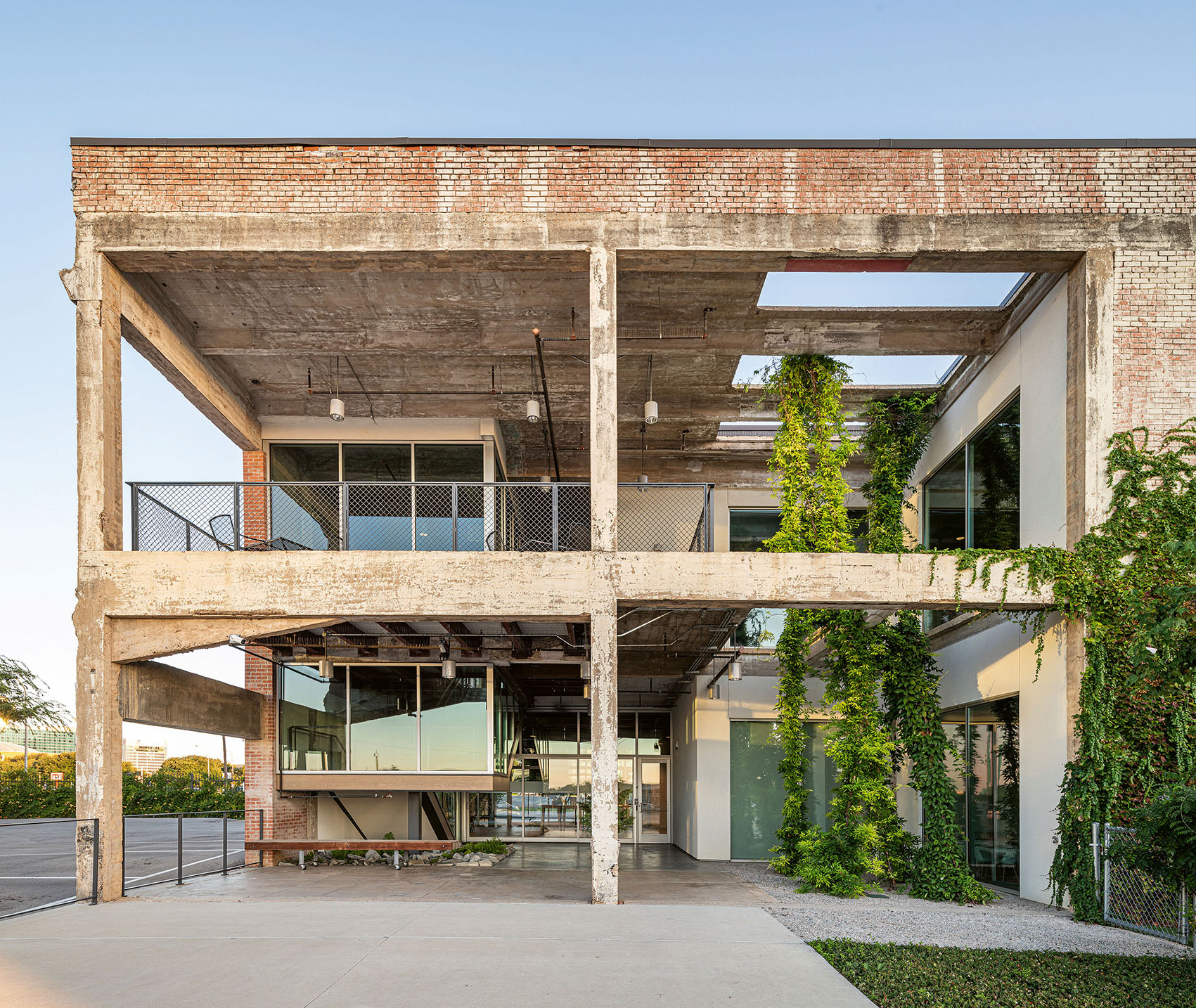
Quietly, in the background of this book, there are projects that truly belong to place. In many cases, they have been there for years. These new places have been created through truly inventive design that gives new life to old architecture that a decade ago might have been bulldozed for a clean slate. These projects contain a certain reverence for what was, while demonstrating the remarkable ways in which existing structures can be part of a truly Earth-centered architecture. “Working with existing buildings requires far fewer new materials, avoids adding waste to landfills, uses significantly less energy” in material production and construction, Ivy notes. “Reusing the structures we have inherited—and then rethinking or renewing them—emerges among ‘out there’ architects as a vibrant and sustainable strategy.”
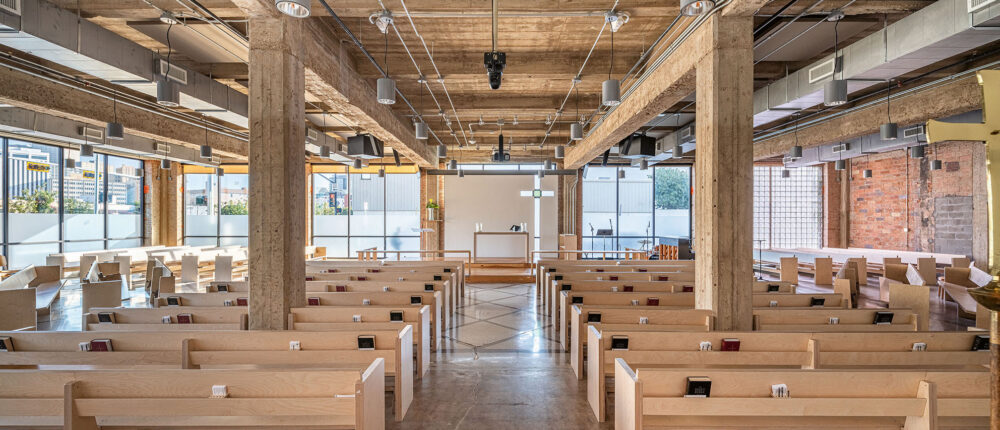
In downtown Dallas, Cunningham Architects took the masonry framework of a 1920s Chevrolet car dealership and transformed it, miraculously, into a new Anglican church. All Saints Church purposely expresses its passage through time. Its century-old concrete and brick frame was not scrubbed clean and refinished. Rather, it serves as a time machine. To me, it communicates a Christian ethos that no thing or no one is beyond help—redemption is always possible. That’s a message also found in the work of NICK DEAVER JES DEAVER architecture of Austin, which transformed the interior of a 1930s bungalow into a contemporary home for a retired couple and created a meditative garden behind. Architecture that builds upon the past, that responds to what was there and shows what might be, can be found among the strongest and most reflective projects that Out There offers.
Featured image: All Saints Church, a 1920s car dealership transformed into a church, in downtown Dallas. Designed by Cunningham Architects. Photo by Robert Tsai Photography..