
Architecture Is Bored, Boring, and Self-Serving
In 1937, when Gertrude Stein visited her Oakland childhood home and neighborhood, both had been torn down. “There is no there, there,” she famously said. After traveling through the 21st century for a couple of generations now, I think that we’re increasingly realizing that, culturally, “there is no there, there”—including in the realm of architecture.
The profession has fallen back into an aesthetic dead zone of fear and loss of hope. The culture’s broad dispiriting confusion has spawned political division, social fear, and, yes, the defensive response of hopelessly bland aesthetics. We can decry “style”—or its absence—for being a perverse betrayal of moral values, whether it’s Trump’s insane arch, the endless mushrooming of boxy buildings, the profit-derived gigantism of needle towers, or the dystopian scale of looming data farms. Yet buildings are not—or should not be—made out of a desire to control our future, but to define our moment. And our moment has been sent into uncharted waters by a technological revolution only just coming into apprehension in its vast consequences.
Rewriting the rules of social interaction, spiritual expression, and the definition of our values—all of this has a broad impact on our society. We’ve been culturally numbed and exhausted by the unceasing noise of the internet. In the U.S., organized religion is waning. There has been a loss of invention in music, caused in part by the way we listen to it. The online beauty site Dazed has declared that people look the same as they did 20 years ago. Business Insider has noted that food trend research reveals that we are losing our appetite for experimentation in what we eat.
Architecture never leads culture; it expresses who we are, when we are. And we’re in the middle of a collapse of 20th century institutions and hope. Our politics is reactionary and thought-adverse. This anti-intellectual basis has been manifest in an aesthetic absolutism: either “tradition” in civic design is governmentally “correct” (i.e., mandated), or design becomes inherently political. Even though amorphous in meaning, Harvard is basing urban design courses in part on Marxist theory. These large, publicly facing declarations are obvious symptoms of our fractured outlook.
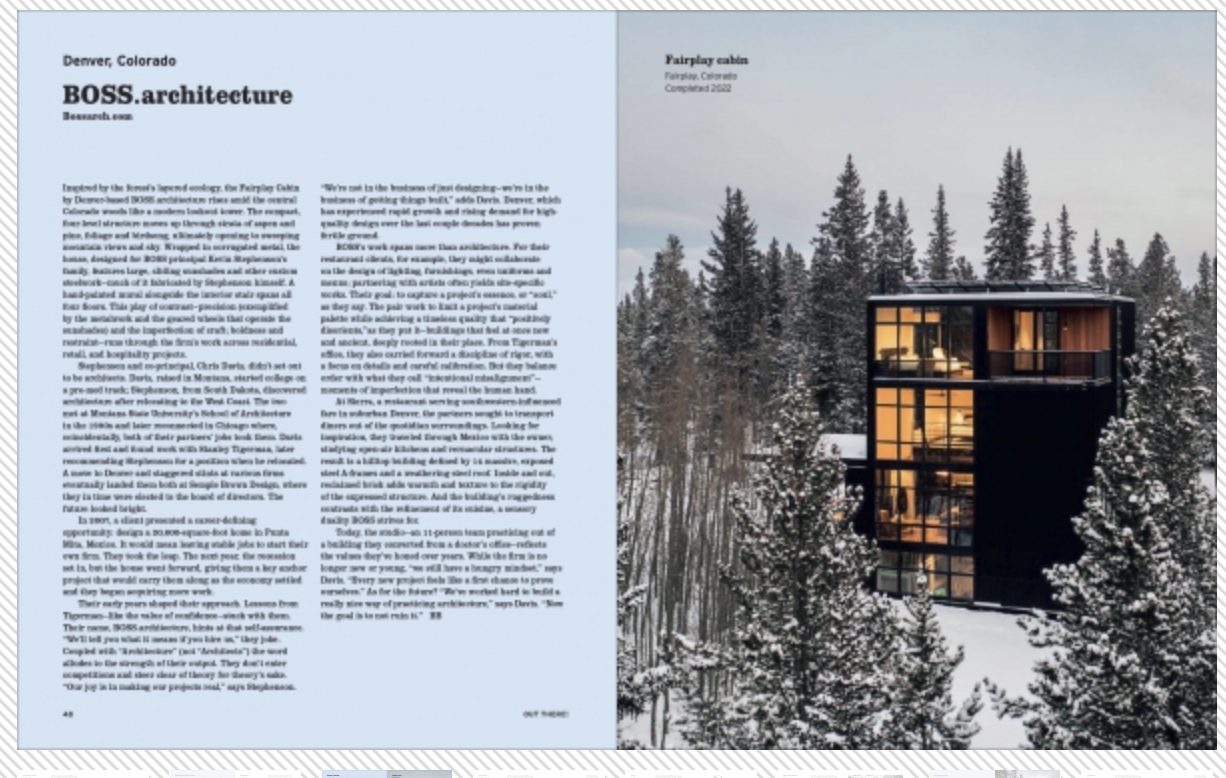
These fringes of polemically projected aesthetics may generate the most noise in our culture, but our society has been flooded with an architecture of risk-averse blandness in response. A book recently reviewed by Michael J. Crosbie on Common Edge, Out There: New Architecture Across America, edited by the old guard of editors from Architectural Record and other establishment stalwarts, aims to focus on where we are in architecture. And it does: the projects surveyed have the spicy frosting of expressive design, but the entire cake is a texture-free, safely Modern-faux tech, allusive picture of a profession without clear direction.
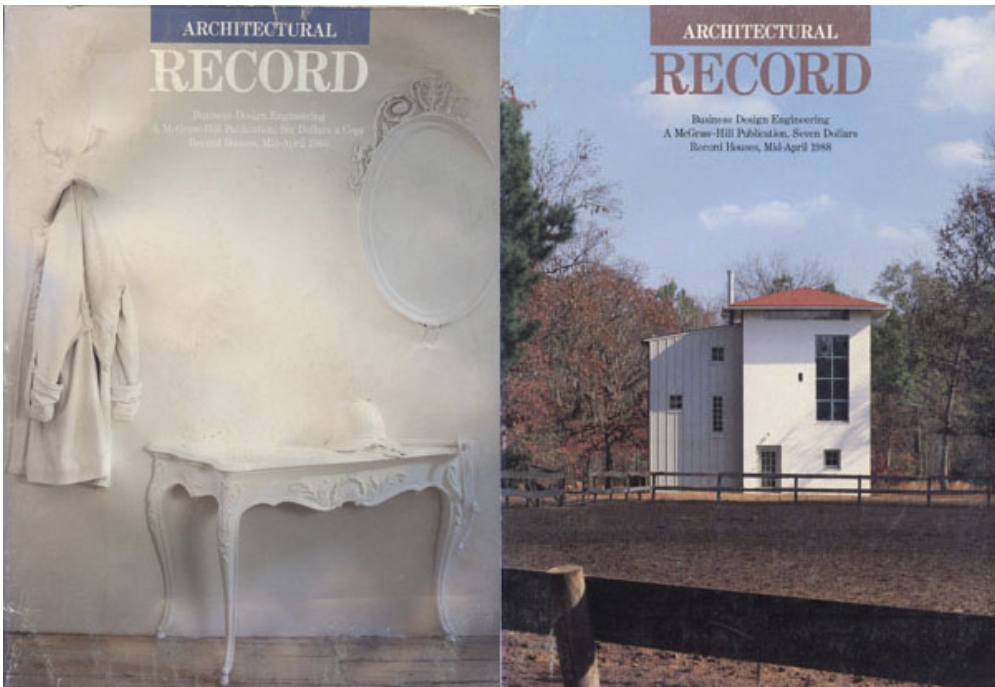
Compare this with compendiums of design in times of exploration: Architectural Record’s Record Houses was intended to provide that. The 1980s had a vitality and diversity in its pages that is unseen today.
The profession responds to the moment. In the nuts and bolts of making buildings, the changes architects face are daunting. First, how the work is done is about to be completely revised—AI’s new world will make CAD look like a scene change. Second, how we find clients has been fundamentally altered.
I am meeting a couple who found me from 100 miles away by asking ChatGPT. This potential connection happened not through anything I did, just the robots assembling what the culture conveys of my life. In a distant town, a Facebook chat room extolled my virtues when someone asked about what designers are out there, and I got a project from that word-of-electron source last month. And an AI Google search brought my name to the top of a very short list when “Christian architect” was typed in as the selection criteria.
It’s easy for anyone to be bewildered, enraged, and afraid when the rules are changing without a sense of purpose or direction. Perspective will generate hope, and hope will validate risk. We need to see where we are, but it’s a time of isolated and impersonal contact: one-to-one connection with zero intimacy, no institutional blessing, and no editorial analysis, all subjectively offered and received.
All of this bewildering change has happened to a calmer world. The last half of the 20th century had an optimism and zest for experimentation that has been leached by our culture and killed by fear. These days, there are no celebrated renegade contrarians in architecture, such as PoMo, to love or hate; no Zaha to debate; no Gehry to channel outrage or awe. Most of us are left just loving (and pitching) our own stuff. Pretty self-serving. The narcissism of the architect is nothing new, but the extreme isolation is oxymoronically fed by the potential for unlimited digital exposure.
Architecture had a pull back in celebrated aesthetics before this time: the 1990s. It was a decade after PoMo and before Hadid’s and Gehry’s starchitect era. It was a time of Corporate Modernism (Kevin Roche, I.M. Pei), a time when Boomers ruled the culture, George Bush (the elder) was president, and Martha Stewart was a cultural beacon. The internet existed, but in nascent form. Cable TV was exploding, but broadcast TV still ruled. “Global warming” was a warning, not an existential crisis. Gay marriage was thought impossible, and gender roles were centered on feminism. In a decade, the internet ravaged all things analog, architecture became sculpture, Ross Perot revealed an unheard alternative to policy (raw personality), and, ultimately, we elected Barack Obama and celebrated Caitlyn Jenner. And out of all that, perhaps in counter-reaction, Donald Trump.
The digital world is revealed by its outcomes to be an undifferentiated swarm of infinite expressions and ideas, competing for a spark, in a cacophony that momentarily draws eyes and ears. Absent circumspection, we can only be subjected to distraction.
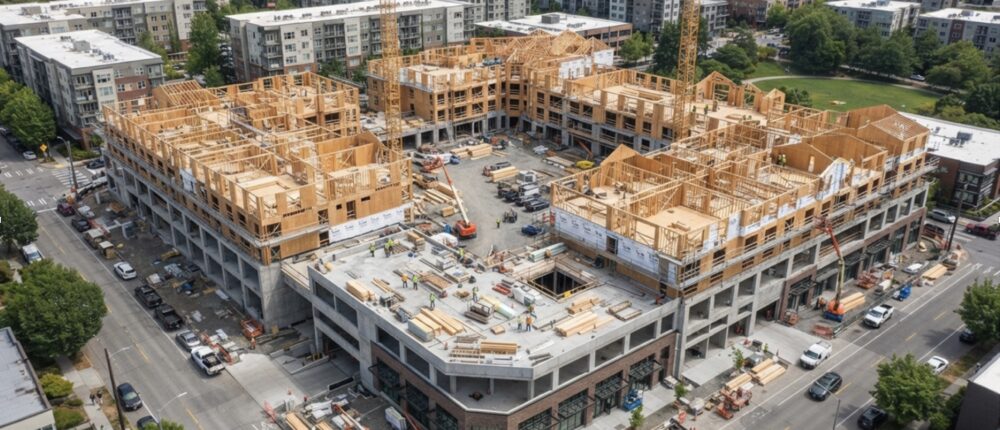
The result of the fear and noise? In architecture, it’s the embrace of gutless, safe design, typified by the ubiquitous “box” that is what gets built for profit and gets recognition. Architects who work for individuals are now connected to those who want to create in dating site anonymity, and those who work for profit generation find patrons wanting the least risk and the best net dollar outcome. It is the architectural age of “no there, there.” It will change.
Featured image via Wikipedia.