
A Conversation With James Wines: “Put Art Where You Least Expect It”
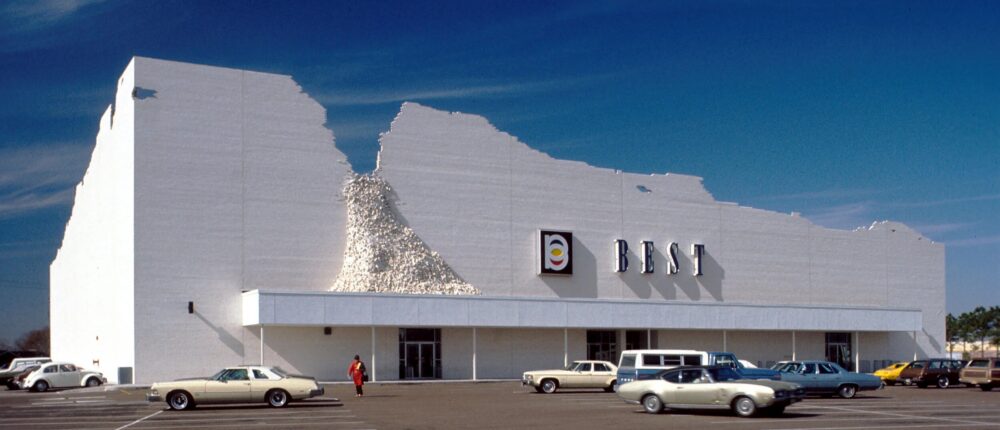
Recently we had the honor and privilege of interviewing James Wines for Our Buildings, Our Selves: Humanity in Architecture, the podcast produced by Common Edge, the Connecticut Architecture Foundation, the Connecticut AIA, and Bridgeport public radio station WPKN. The 93-year old Wines is a legendary figure in the worlds of art, architecture, and design. Trained as a sculptor, Wines founded Site, his award-winning studio, in 1970. Deftly blurring the disciplinary lines between art and architecture in ways that were years ahead of its time—an approach for which he coined the term “de-architecture”—the firm designed everything from department stores and fast-food restaurants to parks and public spaces. Wines describes himself as an “environmental artist,” which hints at the probing and incessantly curious nature of his careerlong explorations. Here are some highlights from our inspiring conversation with the great artist and designer.
On the importance of drawing: “We’re all part of the digital world to some extent, but there’s now an entire generation of young architects who can’t draw. They can’t scribble. And without the thinking and scribbling, you don’t have an idea.”
On the flexibility of the human brain: “I do a lecture on drawing, in which I make the point that the human brain is apparently millions of times more complex than the most complex computer. So obviously the computer is linear, digital. It has to go on a straight line, no matter what, no matter how much information it gathers. But conceptual thinking, hunches, attitudes, the brain can go in all different directions simultaneously. It can’t go as fast as a computer, but the flexibility of the brain—and the hand—is infinite.”
On a life- and career-defining moment: “Ideas are very important. I was probably more interested in how ideas transform things than anything else. I was also the beneficiary of the wisdom of Frederick Kiesler, who admired my sculpture because it was architectonic in nature. But one day, he came to my studio. I was still doing these giant sculptures, and he said to me, ‘James, aren’t you a little tired of this abstract art stuff? It’s 100 years old.’ This was the 1960s. He said, ‘Modernism/constructivism, all the best work, has been done. Don’t you want to look at something else?’ It struck a bell, and I began to rethink everything.”
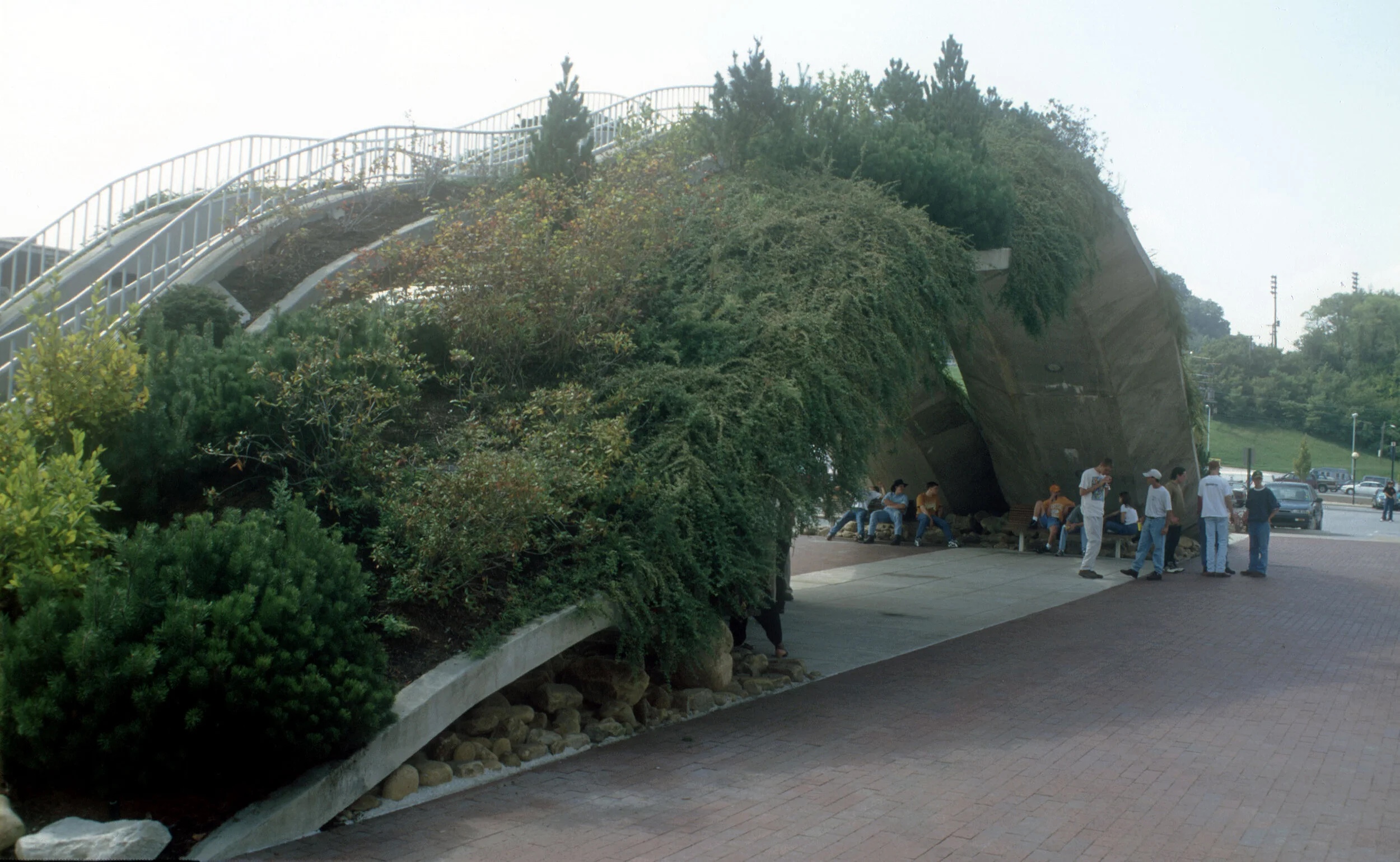
On being dismissed as an “artist”—mainly by architects: “When I first began really looking at buildings and taking them seriously, I’d already had a history. I’m not an architect, I’m an environmental artist. When I was a kid, my father built summer homes in the winter, and he had his sons helping him. So from 7 years old through my whole life, I was always building things. Architects have always said to me, ‘Well, you’re not a real architect.’ Real or unreal, I knew about building. Anyway, I always circled back to the idea. Does it make you think about something? Neil Rauschenberg said it very well. He said, ‘If you walk up to a work of art that you’ve never seen before, and it doesn’t change your mind about something, there’s either something wrong with you or something wrong with the work of art.” There’s a lot of truth in that.”
On what he brought to architecture, as an artist: “I was very familiar with all the avant-garde movements in the 20th century and had a pretty broad vision looking at art in general. I lived in Italy for 10 years. And the one thing that impressed me most in Italy was, I talked to the buildings, and the buildings talked to me, and that’s a very powerful force in life. And another thing is, the actual fundamental architecture is quite simple, basically big boxes, but the iconography, the richness of the surface, whether it’s inspired by religious or civic values, was powerful. It sucked people in, no matter what. And so Italy made me think a lot about the qualities of architecture, of getting people both mentally and physically involved.”
His advice to artists and designers starting out today: “I wrote an essay for a book, asking the question: How do you survive? It really depends on what you want to do, because you have to choose a territory. And that can be difficult at the beginning because you’re selling something that’s ephemeral. I think it’s basically about settling on something that you feel really strongly about. That you believe in it so much that you end up being persuasive about some category that you can own. I think that’s what it is, a determination. Don’t give up. I always tell students when you’re in school, always look at things critically and objectively and ask questions, because in a way one of the worst things in the world is to go through architecture school and be continually told how wonderful you are, because you probably aren’t. At least not yet.”
The full conversation is available wherever you get your podcasts:
For Spotify users, listen in HERE.
For Apple users, listen in HERE.
Featured image Best Department Store, Houston, TX, 1975. All photos courtesy of Site.