
Architecture Shouldn’t Require an Explanation
Architecture has a relevance problem. Not within design schools, juries, awards programs, or the pages of professional publications—architects remain very good at talking to one another. The problem is whether architecture still speaks clearly to the people who must use our buildings, live beside them, worship in them, govern through them, and look at them every day.
More than two millennia ago, Vitruvius described architecture through three obligations: firmitas, utilitas, venustas—strength, usefulness, beauty. A building must stand. It must work. And it should be beautiful. This standard is not complicated. Meeting it is.
For centuries, classical architecture gave architects a disciplined language for doing so. Its orders, proportions, hierarchies, details, and building types were based on the human body, the natural world, craft, precedent, and long experience. Architects from Vitruvius to the present have understood architecture as an inherited language, one capable of adaptation, but dependent upon recognizable forms, proportions, and types. This language was never fixed, but changed from place to place, generation to generation. Architects adapted it to new programs, materials, technologies, and ways of living.
During the 20th century, however, much of architectural education stopped teaching classical and vernacular architecture as living practices. They became subjects to study in history courses rather than bodies of knowledge to use in the design studio.
Architecture began to treat rupture as progress. The past was something to overcome. Tradition became suspect. Invention increasingly meant rejecting whatever had been handed down. We should ask what that rejection has produced.
Many of the buildings most admired within the profession are conceived as isolated objects: abstract compositions of glass, steel, concrete, and technical display. They may photograph well. They may win awards. They may make an architect famous. But many of them seem to have little to do with the place where they stand. They could be in Columbus, Los Angeles, Dubai, or almost anywhere else.
The profession often calls this originality. The public, however, often treats it with indifference—and, occasionally, even hostility. If architecture wants to matter beyond its own professional circles, practitioners must reconsider the idea that a building is primarily an act of personal expression.
Architecture Is Not Sculpture
A building is not an artistic form enlarged to civic scale. It has a site, use, client, budget, climate, street, community, and life that will continue long after the architect has moved on.
Architecture Is Closer to Cooking
Cooking is creative, but a good cook does not begin by rejecting everything that has previously been learned. Recipes, techniques, ingredients, and standards of judgment are handed down. The cook learns them, masters them, adjusts them, and sometimes improves them. The recipe does not eliminate creativity; instead, it makes meaningful creativity possible. Architecture should work the same way.
Traditional architecture is not the copying of old buildings. It’s not the application of columns, arches, or ornament to make something look historical. It is a technical and cultural practice grounded in things that do not become obsolete: human scale, movement, shelter, ceremony, memory, dignity, proportion, and belonging.
It works through recognizable building types and through formal languages that people understand, even when they cannot name every part. Classical and vernacular traditions are not the same. They differ in proportion, material, detail, construction, regional character, and level of ornament. But both give the architect a grammar.
Grammar Matters Because Buildings Communicate
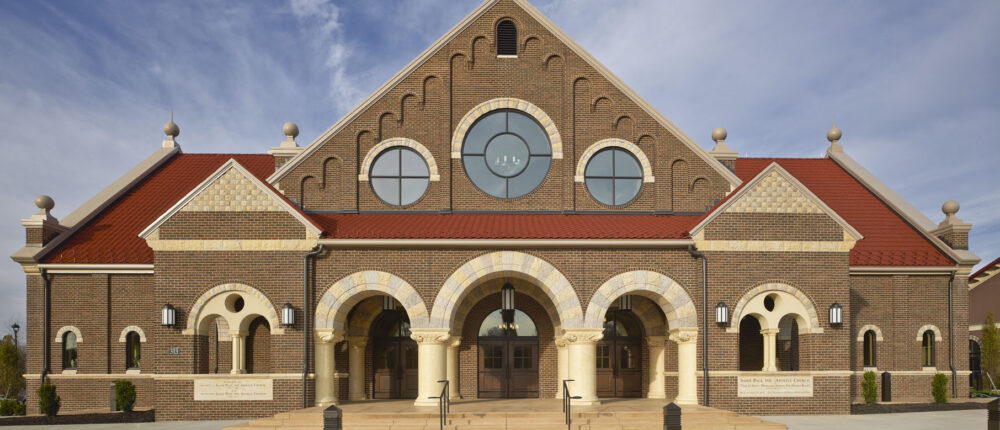
A church should not look like a warehouse. A courthouse should not look like a shopping center. A school should not look like an office park. These distinctions are not merely decorative. A building should tell us something about what happens there, what is valued, and how we are expected to enter and use it. If a courthouse cannot convey civic authority, if a school cannot convey welcome, if a church cannot convey sacred purpose without a sign explaining what it is, then architecture has failed to do a vital part of its job.
Buildings give institutions a physical presence. They can communicate permanence or disposability. They can express dignity or indifference. They can make people feel welcome, intimidated, protected, excluded, or inspired before anyone says a word.
This Is Not Theory—It Is What Buildings Do
Modern architecture has produced important and beautiful work. Any serious architect should acknowledge that. Also, modernism is not one single style or belief. But its more doctrinaire forms deliberately rejected inherited architectural language, recognizable building types, and traditional symbolism. That rejection came at a cost. When architecture gives up a shared language, it has fewer ways to communicate with the public. It then tends to rely on other devices: it can shock or surprise; it can take on a strange shape and attract attention through novelty; or it can embody a private theory that is perfectly clear to the designer and almost no one else. A building may satisfy the architect’s theory and still say very little to everyone who must live with it.
Architecture has always communicated through form. An entrance can announce welcome or authority. A tower can mark importance. A dome can gather people beneath a shared center. A stair can create procession. Materials can suggest permanence, warmth, gravity, or craft. Proportion can make a room feel calm or unsettled. These things are not accidental. They are architecture.
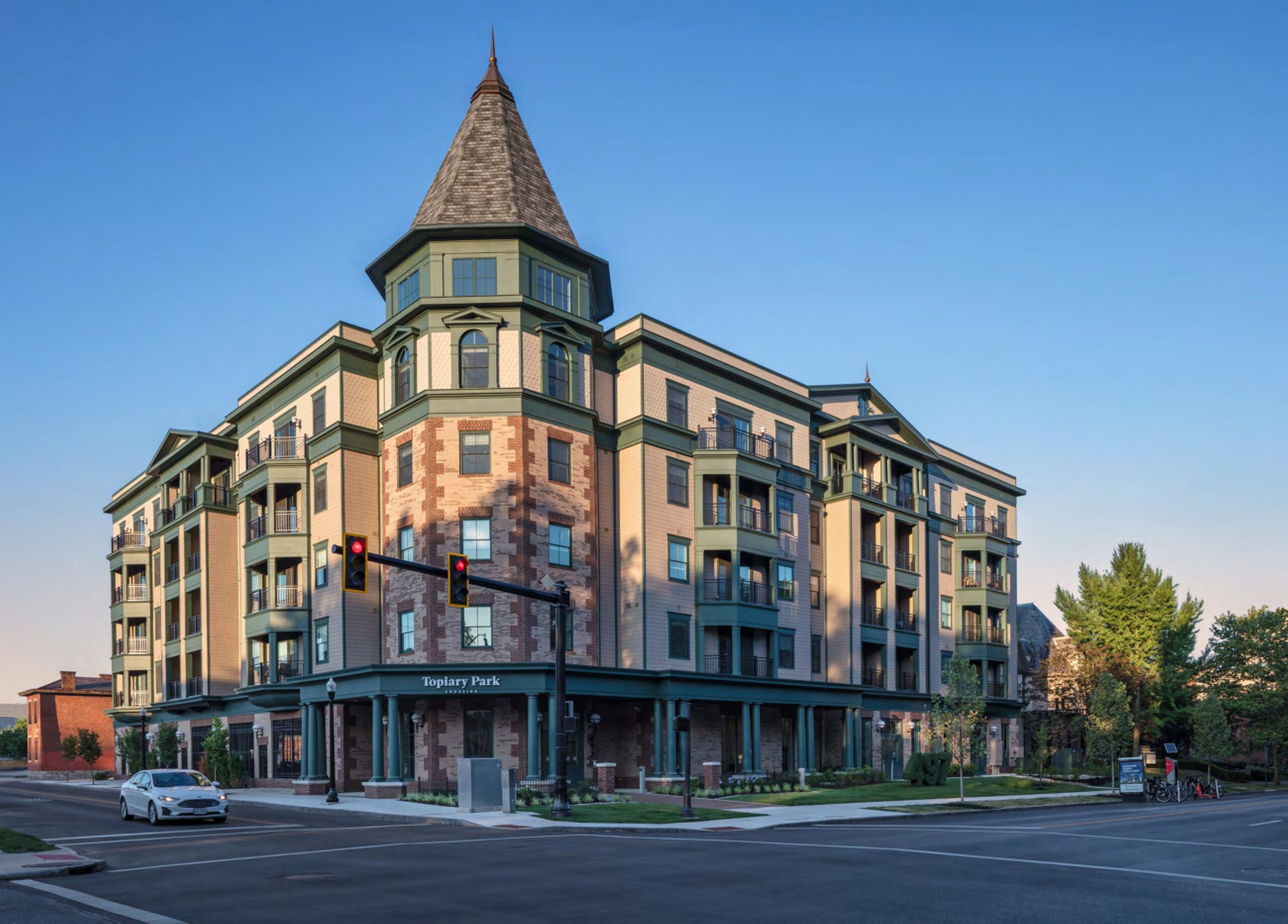
A Building Shouldn’t Require a Lecture To Be Understood
This is not an argument against complexity, technology, experimentation, or invention. It is an argument against confusing obscurity with intelligence. When the public does not understand a building, architects too often assume the public is uneducated. Often, the simpler explanation is that the building is not communicating very well.
Traditional architecture remains capable of communicating because it remains a living language. Like any language, it has vocabulary, grammar, precedent, regional variation, and room for invention. Language does not prevent originality. No writer proves originality by abandoning words and grammar. Meaning comes from using a language well.
The Renaissance did not produce great architecture by pretending nothing had come before it. Renaissance architects studied ancient buildings, measured them, drew them, interpreted them, corrected them, and used what they learned to make something new. They were not turning back the clock, but extending a tradition. Every generation has that same opportunity.
The choice is not between copying the past and inventing the future. This is a false choice. The real choice is between working within a body of accumulated knowledge and assuming that architecture must begin again with each architect.
Traditional architecture asks the architect to join a conversation larger than the individual. It reminds us that buildings do not belong only to their designers or even to their first clients. They also belong to streets, neighborhoods, institutions, communities, and future generations. This is why architecture is an act of stewardship.
Beauty is part of that responsibility. But beauty is not an extra element applied after the structure works and the program fits. It is not merely decoration, and it is not simply a matter of professional fashion. People care for beautiful buildings. They identify with them. They fight to preserve them. They continue to use them. They pass them on.
Nothing is more tiresome than ugliness. What finally matters in architecture is not how sophisticated the architect’s explanation may be. What matters is the building. What does the eye see? What does the hand touch? How does the body move through the space? How do the materials age? How does the building meet the ground, turn the corner, frame the door, hold the street, and complete the room? Does the detail support the whole? Does the building feel as if it belongs where it stands?
Architecture must be judged by the experience it creates, not merely by the theory written about it afterward. The profession’s failure is not that architects began designing modern buildings, but that too many architects stopped believing that public understanding was part of the job. Recovering that responsibility does not require retreating from the present. It requires recognizing that inheritance and invention are not enemies.
Tradition Is Not Nostalgia
Tradition is the language through which architecture remains understandable. Traditional architecture has served human life across centuries, cultures, technologies, and political systems. It has survived because it can change without losing its memory, its meaning, or its human scale. There is no reason it cannot continue to do so. There is every reason it should.
Featured image: St. Paul the Apostle Church, in Westerville, Ohio. All photos courtesy of Moody Nolan.