
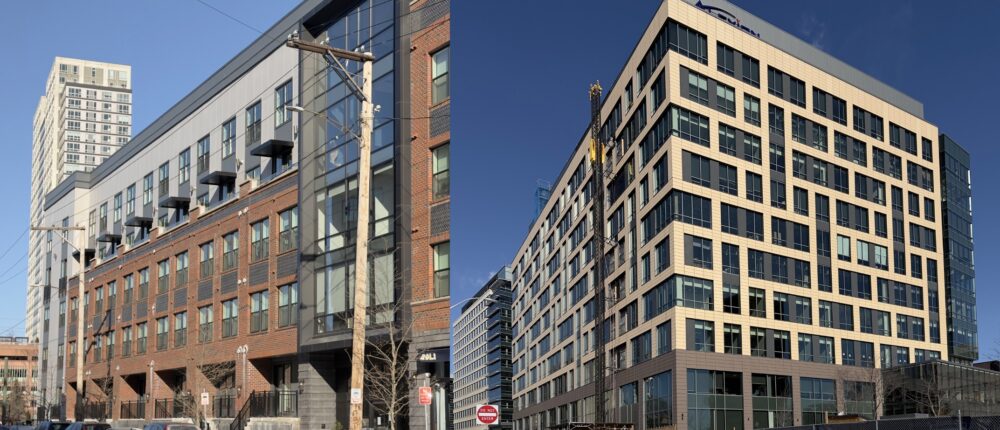
Bring on the Exterior Decorators!
Have you noticed them? Whether it’s stick-frame-over-podium buildings (above, left) or conventional midrises (right), facades are now canvases for the shallowest of decoration. While most single-family homes are still wrapped in stock siding in imitation of old-timey shingles and clapboards, these new facades have one critical difference: the rejection of past precedent.
The agent of this change is a new generation of siding materials: “cladding,” “rain screens,” “ventilating facades,” and the newest versions of paint: “acrylic/urethane/silicone/elastomeric” coatings. Architects can’t avoid the relentless, full-court press from product manufacturers, and this new exterior window-dressing now extends to the wide use of “exterior cladding consultants,” who shoulder the liability of the architect’s ignorance of these products.
One manufacturer, Prance, uses archispeak to weave a rationalization for this skin-deep collage-cum-patchwork quilt aesthetic: “Large-format panels and fine, purposeful jointing communicate precision, while nuanced metallic and textured finishes provide subtlety. Another trend is layered façades, where recessed planes and projecting elements create shadow play at multiple scales. These trends offer direction, but they should always be interpreted through the project’s narrative so the exterior wall supports identity [!] rather than follows fashion.” This is of course fashion, in its shallowest implementation.
Aesthetic codes can mandate “breaking up the facade,” and this has been true since those codes were created a couple of generations ago. However, the changes fueled by the new technologies do not respond to anything but architects battling The Box. There are three ways these new approaches have been used to transform buildings that are more about exterior decoration than form or structure.
Stick Frame Over Podium
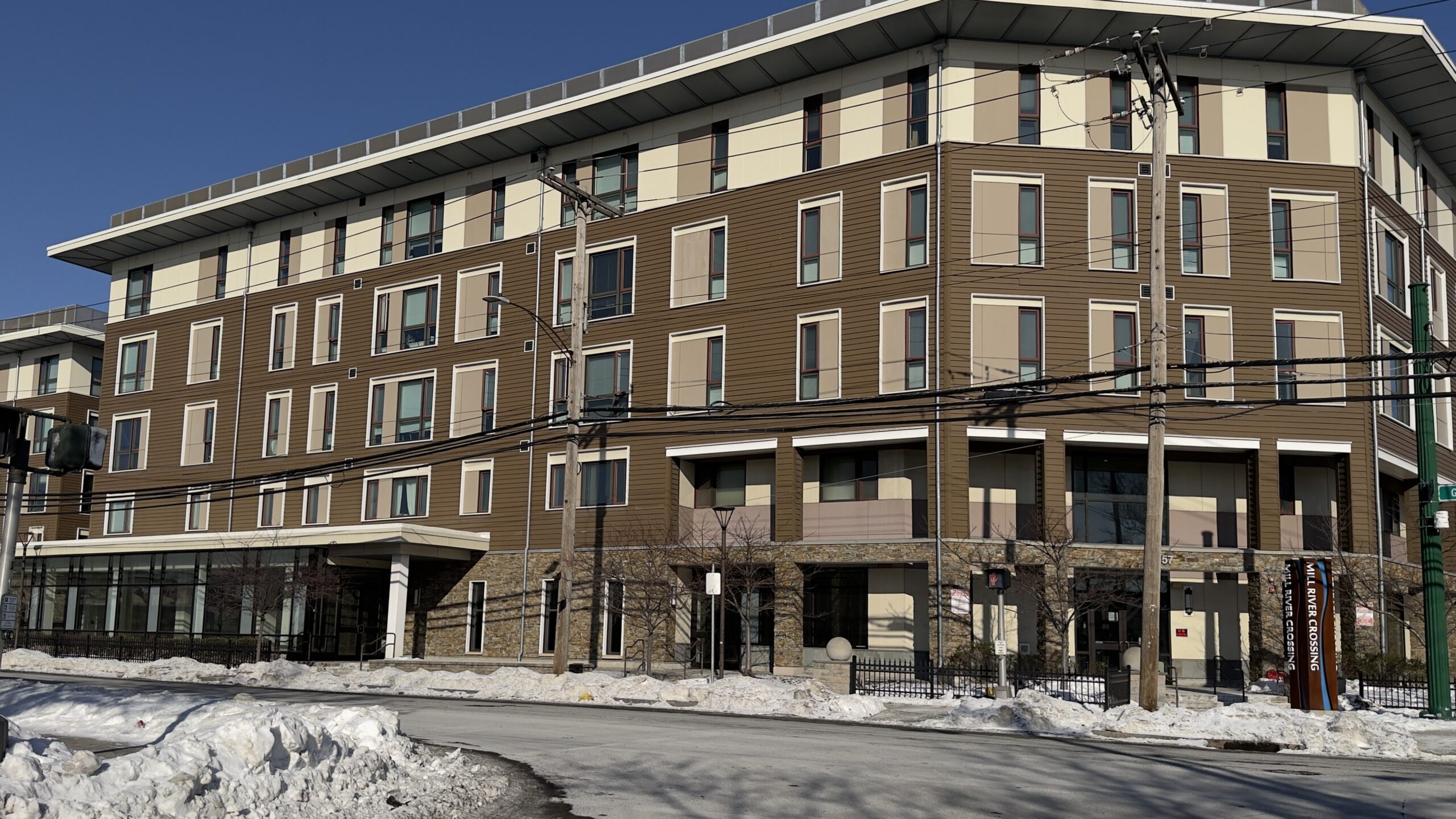
A stick-frame-over-podium affordable housing project in New Haven uses stark color contrasts, graphic abstraction, and arbitrary alignments to zest up a box.
All those stick-frame boxes strewn all over the landscape desperately need wrapping (just ask any birthday present). So they’re accessorized with the surface obsession of a 1957 interior decorator, transforming building facades into a series of fashion model’s outfits that can never be changed. Since we live in a culture where “new” is the ultimate sales tool, the major aesthetic calling card for these boxes is the sex-appeal of tarted-up banality. But a box is a box is a box. My conceptual art professor in college, Norman Daly, would regularly utter the phrase, “A less kind person than myself would call this boring.” And they are.
The marketing of cheap-thrill facades has huge long-term implications, according to the Building Envelope Professionals Group, a consulting firm that specializes in roofing, waterproofing, and exterior wall systems: “The underlying problem is that most building envelope (BE) systems and materials used in these projects lack redundancy. In other words, there’s little margin for error. If one component fails, the system as a whole is compromised. To make matters worse, many standard materials—like OSB sheathing—are not water-resistant.”
It’s a world of plastic and metal, with some glue-bonded sawdust added for “greening.” This flood of product is the Mississippi River of architectural delineation: a mile wide and a few feet deep. Shallow is the base description, despite the theatrical posturing of the often completely arbitrary compositions. Needless to say—although it must be said—these buildings will not age well.
Color
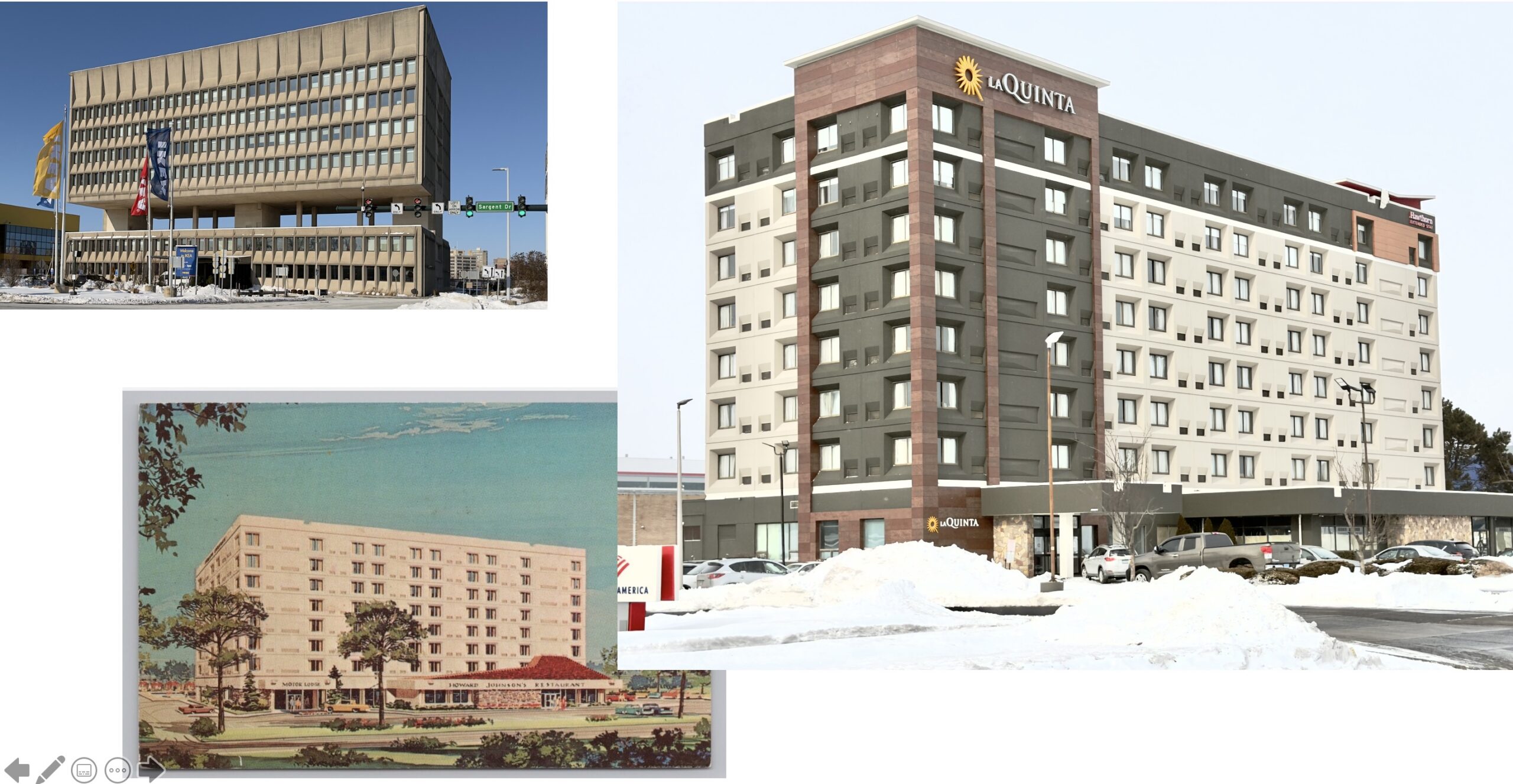
Marcel Breuer designed the Armstrong Rubber Building (upper left) in New Haven, Connecticut, in 1970. Almost immediately, a Howard Johnson Hotel (lower left) popped up directly to the building’s west, using precast concrete panels that alluded to Breuer’s building. Then, in 2025, that hotel received major cosmetic surgery (right) using new technologies of coatings and cladding.
Bland facades are not limited to stick-frame-over-podium construction. In the last century, the intelligentsia of academic, journalistic, and institutional judgement declared Modernism as the reigning aesthetic, and the vernacular or crafty creations of the 19th century illegitimate. In Europe and America 20th century Modernist architecture was not happy with the use of color. The stark, sun-parched, wind-eroded white classicism of ancient Greece and Rome was seen by Corbusier and others as the model of architectural truth (when, in truth, these buildings were exquisitely colorized.) Later, Postmodern buildings were deemed to be heretical. It shocked the architectural cognosinti when Richard Meier added color to the People’s Bank in Bridgeport, Connecticut, in 1984. Then Frank Gehry exploded “modern” to include color, material contrast (and shape.) As the 1972 Howard Johnson hotel in New Haven shows, institutional modernism has now been crudely reinvented by the cosmetic surgery of new technology.
The New Curtain Wall
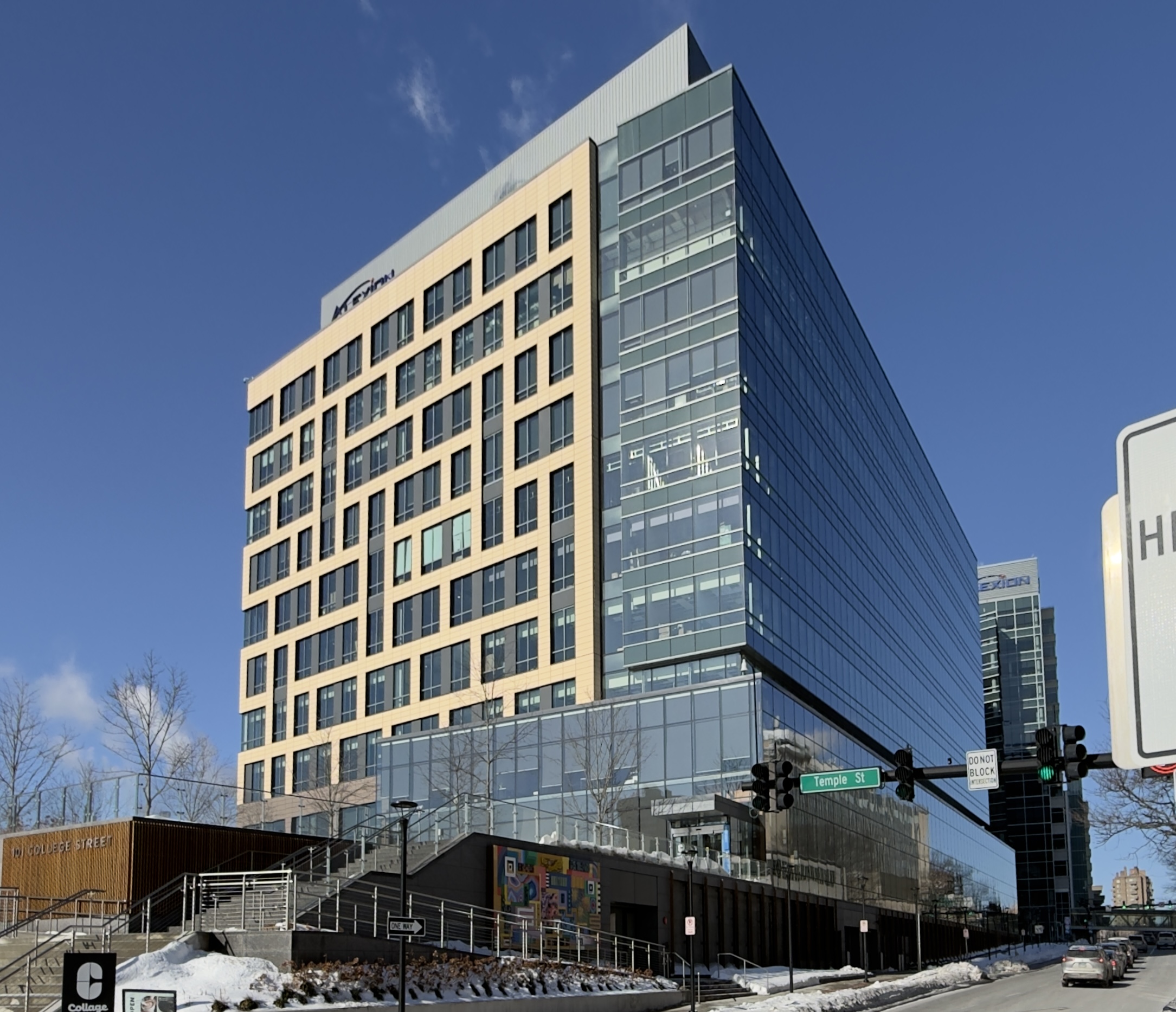
The Elkus/Manfredi-designed building in New Haven contrasts the traditional glass curtain wall (right) with the new technology of panelized color composition.
In every American city, the corporate modern office had a 20th century prototypical manifestation: the curtain wall, usually glass, sometimes stone or brick. Thin layers of glass, metal, and colored panels were hung from steel structure (color was applied in panels as a spice). Despite employing calculations proving energy efficiency, curtain wall architecture is a skin-deep blanket of banality in the modern form. The new cladding technology allows for frenetic graphic expression, as the structure is largely disregarded. Often, floor lines are ignored, along with any reference to interior spaces or structure. The traditional interior decorator’s superficialities were only imposed on those who decided to enter the home. This architectural posturing is unavoidable to all who live near it.
In this stage-set world, contrast triumphs over composition. There is no scale, only size: large planes, sly shadow lines, pops of color, or applied detail. This cloak of pattern has virtually nothing to do with floor plans, structural grids, or the different spaces within the building. Because those boxes are purely profit driven, the human joys and idiosyncrasies are left to the inhabited rooms.
Distinction has value. Cars come in different colors. Restaurants offer different cuisines. We listen to different genres of music. We swipe right or left on dating sites. So we design gratuitous and pretentious variations in the facades of the boxes to create marketing allure.
Artifice and caprice may make for fashion’s allure, but once built this clothing is effectively permanent. Will we grow as sick of this cynical exterior decoration as we did of shag rugs, popcorn ceilings, and knotty pine paneling?
Featured image: These buildings are all in New Haven, Connecticut and were photographed by the author.