
Colin Rowe and the Impact of Great Teaching
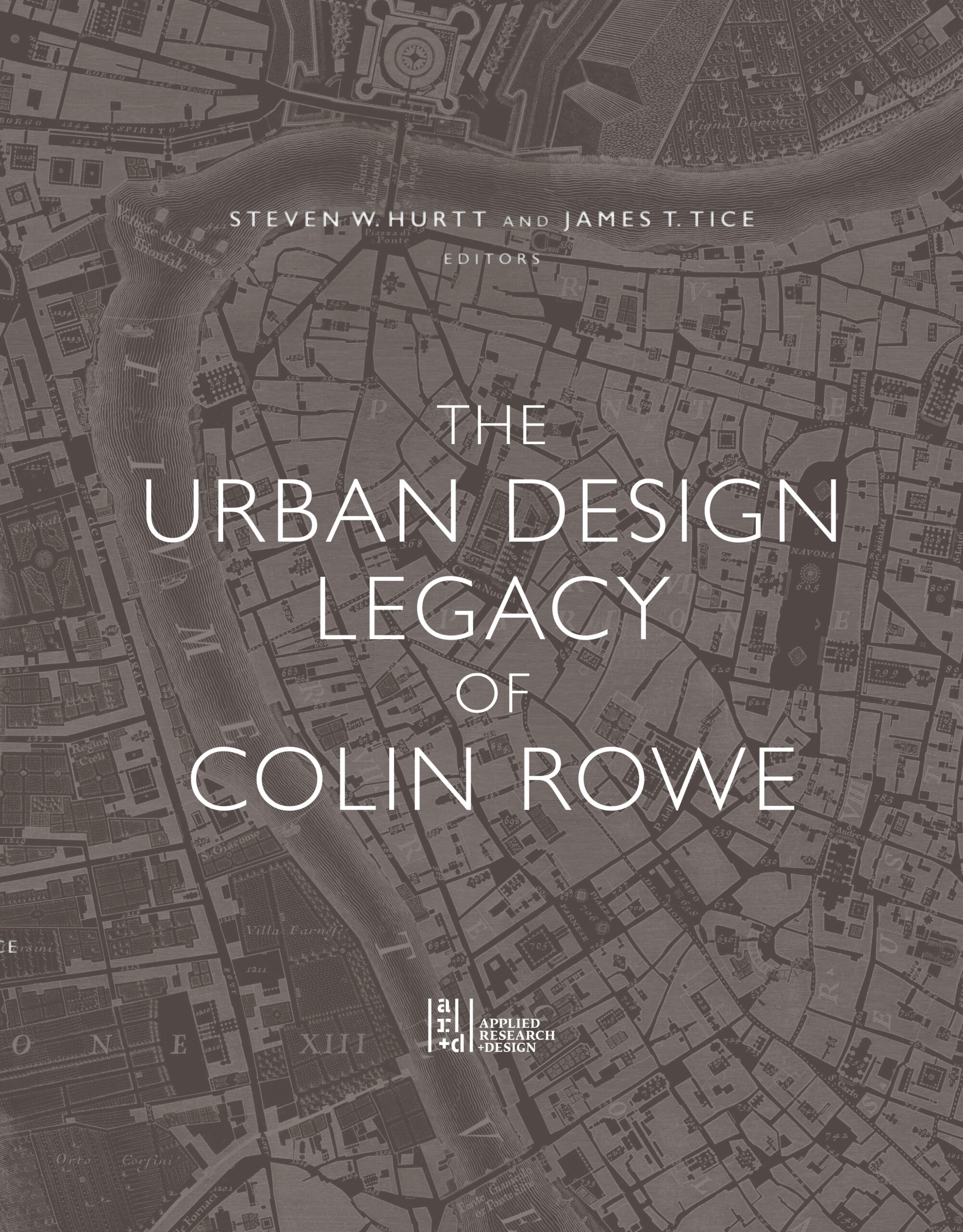
Colin Rowe was an inspiring teacher, lecturer, studio critic, and design colleague for a significant group of Cornell graduates over several decades. Many of the members of that cadre contributed essays to a recent book, The Urban Design Legacy of Colin Rowe (ORO Editions/Applied Research + Design), which I recently wrote about on Common Edge. Rowe’s influence was wide in both Europe and America. How did he communicate ideas to students? Though he did not publish extensively during his career, how did his ideas enter the design discourse and so effectively change establishment structures in academia and the profession? The second half of the book addresses these questions.
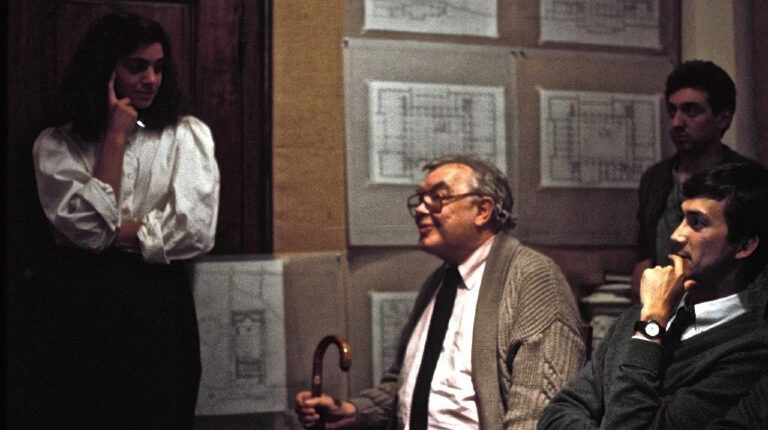
As Stuart Cohen, one of the contributors and an emeritus professor at the University of Illinois, Chicago Circle, told me in an interview, “For Colin, teaching was just a conversation,” echoing his fellow student, Steven W. Hurtt. In one of the book’s lengthy central essays, Hurtt, a former dean of the University of Maryland’s architecture school, explains that quasi-Platonic dialogue in great detail, always stressing that there was little or no formal syllabus or methodology in the studio. Rowe would simply begin with the study area—say, the Buffalo waterfront—and direct students to begin drawing. Lectures were ad hoc, depending on what he thought would stimulate his young charges. Readings were often copies of his unpublished essays or books that seemed to be circulating for students to pick up. He would often come to studio late at night and offer cryptic questions about work in progress, perhaps sending a student to the library to find a painting or work of architecture that the professor believed contained the answer.
Rowe’s style of teaching was not for everyone; some left the studio, while others tolerated his eccentricities because they knew the value of lessons others had learned. Older students mentored younger ones, as the studio was offered each year to all in the upper years of the B.Arch. (and, later, to M.Arch. students). Ultimately, the goal of each project was to fashion a critique, an alternative vision for the modern city, that addressed the “Trad vs. Mod” dichotomy. During the 1960s and 1970s, that debate was the crux of Postmodernism, and the Cornell-Columbia axis was one center for heated discussion, while another was the Yale-Penn axis. When Five Architects: Eisenman, Graves, Gwathmey, Hejduk, Meier was published in 1975, the “Whites” and the “Grays” polarized the debate, with Peter Eisenman jousting with Charles Moore. Rowe stayed on the sidelines, but his students were in the thick of things, particularly in New York City’s planning office and at the Institute for Architecture and Urban Studies. There were regular exhibitions in New York of Cornell Urban Design Studio projects.
A central event in this larger narrative, and one that had real consequences, was the feud between Rowe and Oswald Mathias Ungers (1926–2007), the German architect who arrived at Cornell in the late 1960s and headed the architecture program from 1969 to 1975. Jerry Wells, who taught with both men during that time, admitted to having a hard time mediating amid their increasing hostility toward one another, though they shared a disdain for the sins of orthodox Modernism. When Ungers fired several of Rowe’s key supporters—Roger Sherwood, Alan Chimicoff, and Fred Koetter—by denying them tenure, Rowe was incensed. A key ally, Klaus Herdeg, left his tenured post for one at Columbia, where he preceded Jim Tice on James Stewart Polshek’s faculty. Though Ungers left for Germany in 1976, Colin Rowe reduced his teaching at Cornell and began running summer programs in Rome for other universities. As Blake Middleton explains in his contribution to the book, “Disseminating an Idea: The Cornell Journal of Architecture,” the 1982 volume 2 edition of the journal celebrated Rowe’s work from the previous decades. And Thomas K. Davis reveals how his 1980s students gained from his more focused approach to smaller urban design problems. But Rowe clearly felt alone without his trusted lieutenants, as he could no longer do large, ambitious projects.
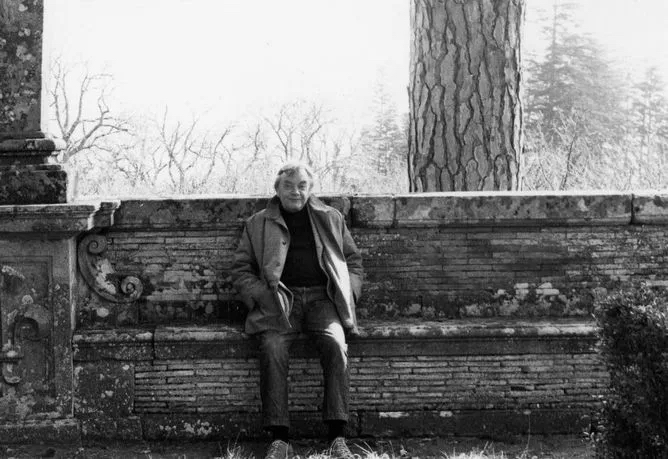
It isn’t a stretch to say that the essays in this massive, 682-page book offer a worm’s eye view of a myriad of historical events over the period from 1960 to 2010 that helped shape American urbanism, architecture, and landscape architecture. The editors identify the practitioners who left Cornell to pursue public service, academic careers, professional offices, and community organization, as well as where they made their greatest impact. By diving into key projects, theoretical debates, and academic programs, the essays make a strong case for the eventual reach of Rowe’s teaching. His best students went on to lead architecture programs at major universities, become city planners, and head top-drawer design firms. After reading the essays, it’s clear that all found Rowe’s guidance to be essential to their careers.
A few of the essays repeat material published elsewhere (Michael Schwarting, Koetter and Kim, Peterson and Littenberg, and Antonio Latini), several in books from ORO Editions. Terry Williams, who was active in New York City for more than a decade, gives an excellent account of how Rowe and his followers changed Manhattan for the better in projects such as South Street Seaport, special district zoning in the 1969–70 Plan for New York City, and Manhattan Landing, the precursor to Battery Park City. Neal Payton writes persuasively about Rowe’s positive influence on the Congress for the New Urbanism, though none of its founding members were his direct students. Kevin Hinders provides a detailed account of his teaching according to Rowe’s principles at the University of Illinois at Champaign-Urbana. Elio Pirrodi writes poetically about the continued relevance of Rowe’s urbanism everywhere.
Jim Tice’s and Judy DiMaio’s pieces on Rome were particularly diverting, but probably too specific for those less entranced by the Eternal City than I. Matthew Bell and Stephen Quick were also effective in translating some of the jargon of Collage City for a lay audience, and explaining its wide legacy throughout the world.
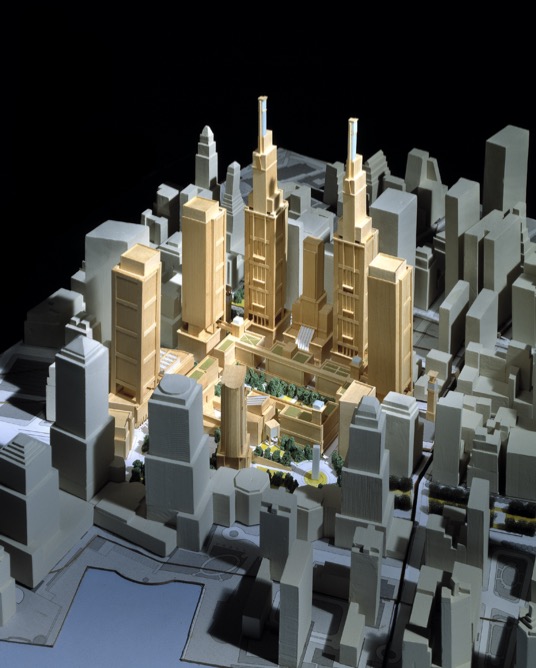
The essay that excited me most was “Urbanism at Ground Zero: The Colin-ization of Lower Manhattan,” by Barbara Littenberg. For the first time, one can read a kind of back story of what occured during the lengthy, confusing, and ultimately disappointing attempt to rebuild the World Trade Center site after 9/11. Following a 1994 planning study for all of Lower Manhattan, Littenberg and her husband and partner Steve Peterson (Peterson Littenberg Architects) were hired by the Port Authority to study alternatives for the vacant site. Their analysis was persuasive enough to convince authorities to commission them to design two detailed urban design proposals, which were presented with four others (also by prominent NYC firms) to the Lower Manhattan Development Corporation in July 2002. A public poll indicated that their “Memorial Promenade” scheme was the favorite among all six schemes, which were presented in identical, stark-white models.
Most architects know what happened next. Herbert Muschamp, the architecture critic of the New York Times, condemned the designs as dull and uninspiring and initiated an informal competition among his favorite starchitects. Following the publication of these schemes, seven contestants (PLA included) were chosen for an official competition between mid-December 2002 and mid-September 2003. Littenberg correctly emphasizes that of the seven, six produced “anti-urban” schemes with object buildings and theatrical gestures aimed at expressing public grief and profound emotional loss. Daniel Liebeskind was declared the winner of that competition, and the story of his failure to build his design is a familiar one.
The focus of the design was a pair of quasi–Art Deco towers that were scaled to the plaza and not intended to rise to record-breaking heights; Rockefeller Center was the prototype.
Few urbanists and sympathetic place-oriented architects were aware then of the truly extraordinary significance of the PLA Master Site Plan and why it satisfied all the requirements of the Ground Zero program. Using every trick in the Rowe handbook, the architects connected the site east west to Battery Park City and Wall Street, and north-south to the Battery using West Street as a Parisian promenade. The sunken central plaza saved the footprints of the two towers while also creating a rectangular public space ringed by four towers on the north and south sides. The focus of the design was a pair of quasi–Art Deco towers that were scaled to the plaza and not intended to rise to record-breaking heights; Rockefeller Center was the prototype. Littenberg is correct to argue that, if built, the complex would have been the first successful large-scale urban design project since Battery Park City, and a tribute to those who lost their lives in the disaster that also re-established urban coherence to that portion of lower Manhattan.
Littenberg’s essay puts an exclamation point on the stated goal of the book: to honor the legacy of a great teacher, critic, scholar, and public advocate for beautiful cities and buildings during a turbulent, confusing period. Rowe was not the only idealistic proponent of an alternative to Modernist architecture and planning, but he may have had the most profound impact on the environment through his many followers. Robert Venturi and Denise Scott Brown, who were equally persuasive theorists, failed to nurture the careers of their key followers, many of whom became traditionalists. Peter Eisenman was too acerbic and confrontational to draw a following. And Frank Gehry was a brilliant individualist who made art, not urbanism, his calling. As I have written on this website, the Revolution of 1988 changed things for all Postmodernists, and we are living with its detritus today. It is time we looked back to the leaders of that progressive, humanistic, and ultimately altruistic generation for lessons to guide us forward. The Urban Design Legacy of Colin Rowe book could be a beacon.
Featured image: Photo by Wilvan van Campen.