
How Home Design Can Break the Housing Crisis
We are told, unendingly, that there is a housing crisis. People cannot find homes they can afford in places they want to live. Unfortunately, the major obstacles are deeply entrenched. The motivations of big real estate are purely profit-driven, while the government alienates and imposes more than it innovates. I believe the solutions are found in the human world of custom construction on tight budgets.
I know this because I have helped build cheaper custom homes every day for the last 40 years. Even though my architectural fees are over 5% of the building cost, people continue to use my firm’s services because, unlike the builders, land flippers, and real estate brokers, we have zero profit motive beyond our fee, which is generated in full transparency of what we do and how much it costs.
I work for those who not only struggle with the housing crisis, but who want beauty to be part of the place they call home. Their discontent forces them to violate the norms of the choices imposed on homebuyers by big real estate. While higher price point stick frame over podium housing is available pretty much everywhere, including my market, this form of development is set up to deliver the highest return on the investment, whereas my clients’ custom homes’ value goes beyond dollars and cents.
But compromises are necessary to break those stubborn assumptions that price most people out of the housing market. Hard decisions must be made, but a few hundred homes I’ve built over the last four decades have defined some points of value.
Smaller = cheaper, but rightsizing is not a formula: Beyond a campsite on Walden Pond or a tent, most families need two places to sleep plus a third sleeping place option. The goal is to accomplish that in under 2,000 square feet, balancing the points that follow.
Bathrooms and kitchens are as personal as people are different: The simplicity and size of the priciest spaces in the home have to be designed in ways that individuals use them.
Living space must be adaptable. This means that rooms are open, with direct access. Such openness feels—and functions—larger than the cells-type stock plans frequently used by developers.
Natural light matters. Higher window heads bounce light off the ceiling and into the house. Higher ceilings cost more but make the space that is built more expansive.
Roofs protect and express. Modesty in size does not mean building an architectural apology or a cliche. Flat roofs, however, will in most climates leak early and often, and the cost of repairs will eventually exceed any initial savings.
Garages don’t just happen. Lower costs cannot accommodate car storage in a built part of the home, so storage has to be thought of as essential in the house proper.
Here are three types of houses illustrating this approach. Each had a different funding model, but all were affordably priced and are happily occupied.
Simple Is Not Stultifying

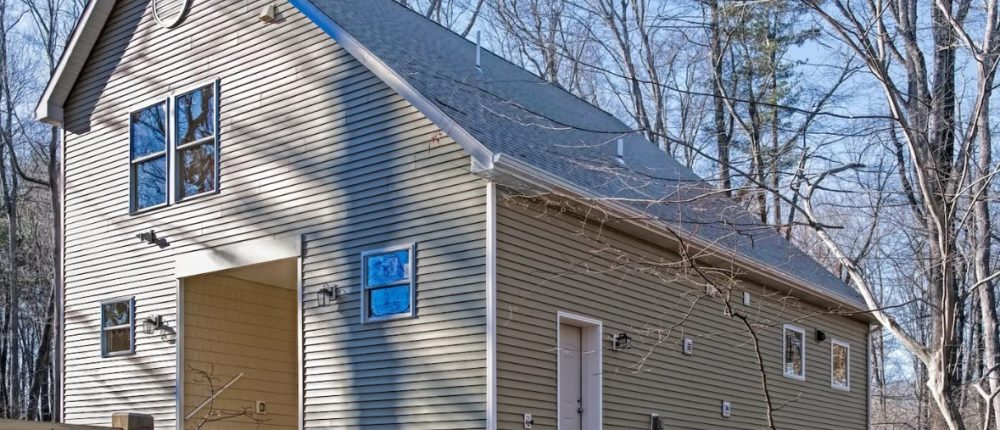
This Habitat for Humanity home in Madison, Connecticut, shows how cost containment does not mean soulless aesthetics. We have helped make 150 new homes that are based on three basic criteria: traditional framing (largely by volunteers); stock windows and doors; and vinyl siding/roof trusses/asphalt shingle roofs/straight-run stairs. Here, we had to have a two-story home because of the site’s limited buildable area: located in a flood plain and required to have an on-site septic system and well, plus a mandated recessed entry, with no full basement. As a result, the house had a tight footprint and a partial second floor—a “salt box” shape. This house was built for under $300 per square foot, excluding site development.
Tough Sites and ADA Can Be Affordable
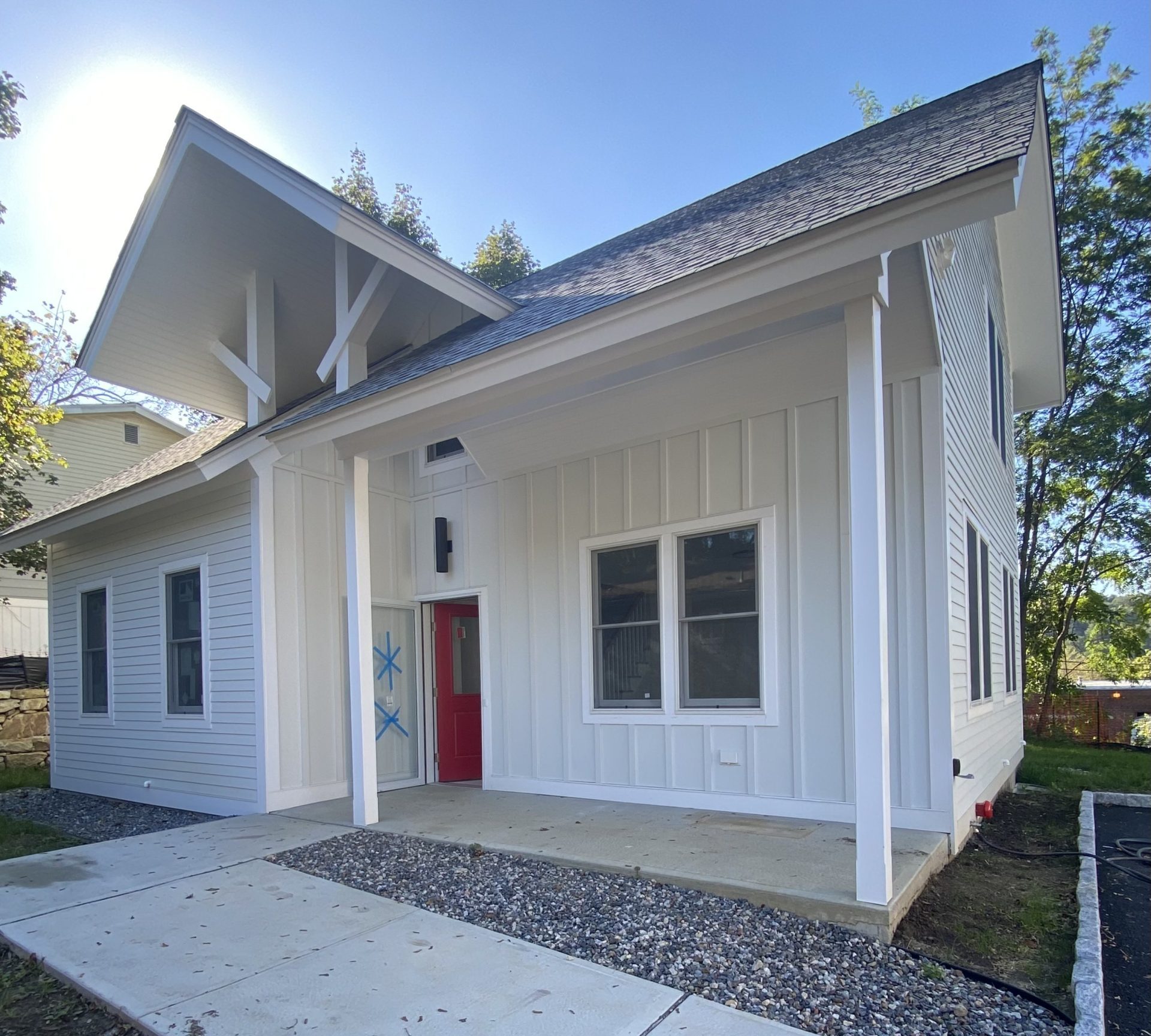
We helped create two homes for the formerly homeless using federal funds. Each was under 1,400 square feet with a primary bedroom and bath downstairs; both are ADA compliant, including full basements that were modified to fit into a rocky site. Built in Westchester, New York, for $400 per square foot, these homes use the following space and shape condensations to minimize the mass of construction: minimum exterior wall heights and a symmetrical exterior, including a recessed porch with a common roof; use of the two-story stair space at the entrance to bring light into the house; open interiors that allow shared cooking/eating/living spaces; and four HVAC zones, providing cost controls. The need to place the houses at the rear of the sites meant long driveways and entries designed to be visually congruent with an existing residential neighborhood.
On an Existing Foundation for a Family

A 1,400-square-foot, 3.5-bedroom, 1.5-bath house was built last year in Guilford, CT., for a young couple and their two children. Reusing all of an existing foundation and some stone walls saved some costs, but provided a tight sense of rigor in planning. The home’s engineer-owner designed superinsulated walls with tight, insulated windows. When the solar array is installed, the result will be a net-zero home. The house was owner contracted, with much of the labor done by the family. It used these cost strategies: symmetrical design, one central bearing line, and simple framing; stacked plumbing/electrical utility connections; trimless windows/superstock detailing; and a greenhouse that faces due south and can heat the home on a sunny day, with a wood stove as backup.
The real obstacle to making houses cheaper is the profit-producing rules of big real estate that requires a prescribed size and financing model, which is geared to the ease of buying existing products, using conventional funding, with compensated brokers marketing, and controlling the sale.
If these rules are circumvented—as the houses described above did—things get cheaper. Assuming that homes are just commodities is lazy and fear-based. The choices of individual custom home creators are more than courageous acts of bucking the mainstream. They demonstrate ways to break the cycle, where what is offered is automatically more expensive than it needs to be. Homes can be smaller, living spaces more open, kitchens and baths tighter and more efficient, all using stock materials and technologies. Using these commonsense values can make a cheaper, better product. I know, because I help build them every day.
Featured image: photo by Bob Gundersen. All other photos by the author.