
In Architecture, What’s Old Is New Again
In 1997, architecture critic and theorist Charles Jencks published a short but influential book titled New Science = New Architecture? His premise was that new developments in complexity science signaled a profound shift in humanity’s understanding of the structure of nature. If the scientific picture of reality was changing at a fundamental level, he asked, shouldn’t architecture change with it, as it had throughout history?
For Jencks, the answer was yes. The new sciences offered to liberate architecture from the rigid mechanistic logic of earlier modernism, opening the door to a new formal vocabulary of fragmented geometries, dynamic compositions, and daring sculptural novelty. He pointed to works by architects like Frank Gehry, Peter Eisenman, and Daniel Libeskind as exemplars of this emerging paradigm—buildings that embodied, at least in metaphorical form, what he described as a new scientific cosmology.
I think Jencks, whom I regarded as a friend, was right in one sense and profoundly wrong in another. He was right that the science was genuinely changing, and that architecture could not remain untouched by that transformation. But the new sciences were not merely offering metaphorical fodder for imaginative artistic expression. As Jane Jacobs and others recognized, those sciences carried important implications for the actual organization of human habitat—for how we might promote, or inadvertently harm, human and even planetary wellbeing.
The problem with Jencks’ reading was this: the formal languages he championed as responses to complexity science turned out, in practice, to reproduce many of the same failures they were meant to transcend. The Bilbao Guggenheim is a masterwork of sculptural daring, but it’s also a building that offers almost nothing to its surrounding streets. Its titanium surfaces have no relationship to pedestrian scale, and its interior wayfinding is notoriously disorienting. It represents complexity as spectacle rather than complexity as habitat. Simply “complexifying” the formal result—adding metaphorical expressions of dynamism and chaos—did not address the underlying structural poverties of the earlier modernist paradigm. It only relocated them inside a more exciting form of artistic packaging.
That “new paradigm” was not in fact new at all, but merely another guise for the old one.
What is that paradigm? It is a persistent model from the early 20th century that, above all, conceives of architecture as a project of visual culture, applied to an unquestioned, indeed celebrated, industrial regime.
Mechanization will “take command” (Sigfried Giedion), ornament will be a “crime” (Adolf Loos), and new industrial engineering will guide us inexorably “towards a new architecture” (Le Corbusier).
This new architecture was rooted in the era’s geometries of relatively primitive industrial production—flat planes, relentless lines, pure volumes—producing what might fairly be described as a “geometrical fundamentalism”: formal impoverishment dressed as moral discipline and artistic valor, and promoted relentlessly through stupendous salesmanship. It combined the excitement of powerful industrial novelties with the drama of bold artistic abstraction and the allure of fine university pedigrees. It was impossible for the old architectures of that day to complete.
The founders of this paradigm were not without humanistic intentions. The early industrial cities had produced genuine crises of sanitation, overcrowding, and environmental degradation. The architects of that early modernism were responding to real problems with real seriousness. In stripping away the accumulated ornamental excesses of the 19th century, they recovered something valuable: clarity, honesty of structure, attention to light and space. That inheritance deserves acknowledgment.
But their conception of the solution was filled with hubris and insufficiently attentive to the dynamic and complex characteristics of human nature, and human settlements. Most critically, they confused the individualistic expressions of historical styles—the unique features of a Corinthian capital or a Tudor gable—with the deeper geometric intelligence so often embedded within those traditional environments. In discarding both wholesale, they threw out a treasury of embodied wisdom that, as the new sciences are beginning to demonstrate, are still highly relevant, and even essential, today.
What was that wisdom? Over centuries, and often through processes that were more unconsciously evolutionary than intentional, human societies developed ways of constructing environments that mediated between public and private space, that created coherent street walls and legible pathways, and that achieved complexity without chaos, variety without fragmentation, and enclosure without monotony. These were not merely aesthetic choices. They were spatial solutions refined through long feedback between cultural norms and lived experience. They were instances of complex adaptive systems at work—in this case, the evolutionary systems of human societies, and cultures of traditional building.
What, more specifically, were these structural capacities? Traditional architectures often embodied a remarkably sophisticated geometric intelligence, one that modern architectural discourse has too often mistaken for mere stylistic convention or ornament. Yet beneath the visible motifs lay recurrent spatial and formal properties that appeared again and again across cultures and centuries: layered scales of detail; coherent hierarchies of spaces and pathways; nested centers and subcenters; strong edges and thresholds; gradients between public and private realms; local symmetries embedded within larger asymmetries; and richly articulated patterns of repetition and variation.
These environments frequently achieved what might be called “deep symmetry” or “compound symmetry”: not the simplistic mirror symmetry of a rigid classical façade alone, but multiple interacting symmetries distributed across scales, subsystems, and spatial relationships. A medieval square, a Georgian terrace, an Islamic courtyard, or a Japanese street may each contain numerous local symmetries, broken symmetries, rhythmic repetitions, nested proportional relationships, and coherent figure-ground groupings, all interacting dynamically within a larger whole. The result is not monotony, but organized richness: environments that are full of information without becoming chaotic, and varied without becoming incoherent.
At the same time, these environments typically display what mathematicians and physicists would recognize as forms of recursive or fractal scaling: detail and structure recurring across multiple levels of magnification, from the scale of a window mullion or paving joint to the scale of a street network or skyline composition. Such geometries are not arbitrary embellishments. They provide what cognitive scientists increasingly describe as structured informational fields that the human perceptual system can efficiently process, navigate, and inhabit.
Equally important are what we might call “legible groups”: coherent clusters of forms, spaces, and pathways—achieved through articulated street walls, layered thresholds, and positive outdoor spaces—that allow humans to orient themselves cognitively and socially within a larger environment.
By contrast, much contemporary architecture and urbanism often display a kind of geometrical impoverishment. Large blank surfaces, abrupt scale discontinuities, weakly defined edges, fragmented object-buildings, underarticulated façades, and disordered spatial fields may achieve dramatic visual effects from afar or in photographs, but they frequently fail to provide the coherent informational structure required for comfortable human habitation at everyday scales. In many cases, they actively undermine orientation, attachment, and ease of use.
Increasingly, the implications are understood to extend beyond aesthetic appeal alone (though that is certainly important too). Research in environmental psychology, neuroscience, and cognition suggests that human beings possess evolved responses to particular kinds of spatial and geometric order. Studies by Roger Ulrich, Stephen Kaplan, Ann Sussman, Nikos Salingaros, and others suggest measurable relationships between environmental structure and stress recovery, attention restoration, cognitive mapping, emotional regulation, and social behavior. Researchers are now examining how poorly structured or chronically disorienting environments may contribute to cumulative stress burdens and elevated allostatic loading—the physiological “wear and tear” associated with chronic environmental stressors.
In this light, many traditional architectures begin to appear not as nostalgic stylistic artifacts, but as repositories of accumulated adaptive knowledge: long-evolved experiments in the construction of environments compatible with human perception, cognition, sociability, and wellbeing. Their enduring appeal may not arise merely from sentimentality or historical association, but from deeper correspondences between their geometric structures and the structures of human neurophysiology and social life.
As Jacobs argued, this visual and spatial order is inseparable from the social and economic life of cities. When it is absent, the consequences are not merely aesthetic. Streets empty, retail fails, social interaction retreats, and community attachment attenuates.
Into this void the simulacra rush in, propelled by the relentless logic of constrained real estate markets, consumer manipulation, zoning rules and codes, and all the other interlocking elements of an “operating system for growth” that delivers something few find satisfying or enduring. The architects rightly decry this failure, but the profession too often fails to acknowledge its own complicity. Indeed, it seems more stubborn than ever in maintaining its own antiquated status quo, updated only with exciting new visuals.
Over the past half-century, the sciences have deepened our understanding of this predicament: game theory shows how players short-circuit the deep feedback cycles of cultural wisdom and degrade the commons of the public realm; the social sciences demonstrate how institutional systems display a rigid form of “lock-in”; and social psychology reveals how artist-architects and their fine-art connoisseurs insert their own “construals” in place of what actual users need and desire.
Preference surveys add a further dimension: they reveal a remarkable consistency in public preference for the formal qualities most commonly seen in traditional architectures, with remarkable convergence across divisions of ideology, ethnicity, age, sex, and income. The standard professional response—that the public simply lacks the sophistication to appreciate contemporary design—deserves more critical scrutiny than it usually receives. After all, the public appreciates Bach and Shakespeare, who had no problem serving both highbrow and lowbrow tastes. Perhaps the poverty lies with the artist-architects themselves, who cannot or will not do what so many artists in history have done: serve a broad cross-section of humanity.
More to the point, surely the architecture profession, unlike other fine arts, carries an obligation to serve the needs and desires of those who will actually live within and among their creations. In light of our understanding of impacts on well-being, that amounts to a professional duty of care, not so different from that of any medical professional.
But above all, say architects, we must not “copy the past”—never mind its collective intelligence, its embodiment of centuries of refinement and learning, about how to structure successful environments that humans will find beautiful and enduring. Le Corbusier, in particular, was remarkably dogmatic, speaking in his 1943 draft of The Athens Charter: “Neither the continuation of such [revival] practices nor the introduction of such initiatives will be tolerated in any form. Such methods are contrary to the great lesson of history. Never has a return to the past been recorded, never has man retraced his own steps.”
This would, of course, come as a surprise to the architects of the Renaissance, or to Thomas Jefferson, who recapitulated the architecture of Palladio, who had also recapitulated the architecture of Vitruvius, who had also recapitulated the architecture of the Greeks … and so on. To them we could add the fusion of the Arts and Crafts, or the eclecticism of the Vienna Secession, or countless other examples.
Indeed, revival has been a constant in the history of architecture, at least up to about 1930, forming a kind of fugue of patterns and motifs, weaving in and out of history, building and enriching human habitat. The result has been nothing other than some of the most successful, well-loved, and enduring architecture of human history.
But, apparently, we must never, ever build anything like it again.
And thus, instead, we have the world we have: one that is industrialized, ugly, and full of discordant works of gigantic sculpture, or else sprawling monocultures of tract houses and big-box arterials. It’s also a world that is increasingly unwalkable, unfriendly to pedestrians, unfriendly to ecosystems—in spite of abundant greenwashing gestures—and, on the whole, astonishingly resource-inefficient. It’s a world that looks increasingly to be, in a word, unsustainable.
So we see that these issues are intimately connected: ugliness on the one hand, unsustainability on the other.
This issue matters urgently now, because the world has entered a new urban epoch of breathtakingly rapid urbanization, and one that is accompanied by converging crises of climate disruption, environmental degradation, resource depletion, and geopolitical instability. Our settlements—the structures we build, and the ways those structures impact the natural world, and the world of human nature—have always had a profound impact on human wellbeing, and never more so than today. This new era demands more than exciting new metaphorical expressions. It demands useful applications of scientific insight to the growing challenges facing human settlements, and human civilization.
To be fair to the profession: many architects do earnestly seek to address issues of energy use, environmental impact, climate adaptation, and human well-being. Passive house designers, biophilic architects, and practitioners of community-centered design have made genuine contributions. These efforts are real and should not be dismissed. The question is whether they are adequate to the scale of the challenge, or whether they remain, however sincerely intended, too-modest adjustments to an amnesiac paradigm whose underlying assumptions are themselves the problem.
Here is where the scientific evidence points toward a remedy, or at least constrains the range of defensible ones. If we can demonstrate that certain spatial configurations reliably support cognitive restoration, social interaction, physical health, community attachment, and more ecologically benign lifestyles—and that others reliably undermine these outcomes—then the choice of formal language is no longer purely a matter of artistic liberty. It becomes, at least in part, a professional and ethical responsibility.
This does not mean that science dictates a single design language, and certainly not a particular historicist style. It means that designs must be evaluated against a richer set of criteria than formal novelty—and that formal novelty, as a value in itself, must have no privileged claim on our priorities.
Here also is where the work of Christopher Alexander, Nikos Salingaros, and related thinkers— mathematicians, physicists, philosophers and only then environmental designers—becomes relevant in ways that the profession has too often ignored or dismissed. Their project was and is much deeper than a simple nostalgic revivalism. It is, rather, an attempt to recover and articulate the recurrent geometries and generative logics underlying successful historical environments, and to develop effective methods by which such logics might be reapplied under contemporary conditions.
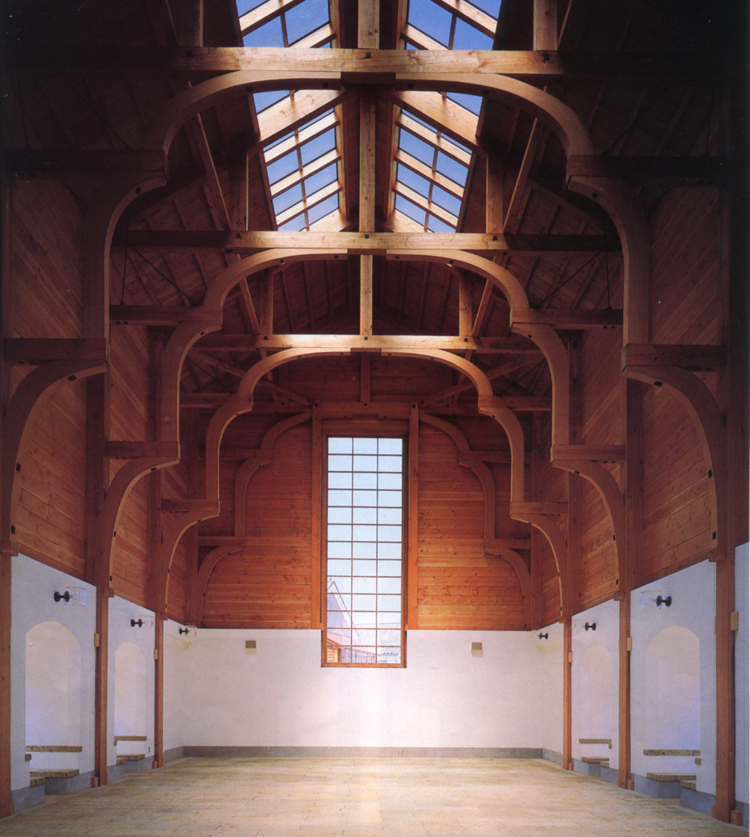
Alexander’s well-known “15 Properties” represent one of the most systematic attempts to identify these recurring structural characteristics: strong centers, levels of scale, alternating repetition, boundaries, local symmetries, gradients, positive space, roughness, and other interrelated properties that frequently appear in environments humans experience as coherent, life-giving, and enduring. Importantly, these are not stylistic prescriptions but relational geometries—patterns of organized complexity that can manifest across many cultures, materials, technologies, and historical periods.
And we can reuse this generative information freely, without having to reinvent from scratch. This is precisely the value of Alexander’s “pattern language” approach: to capture the genetic material from past structures without literal copying. Instead, the approach has the infinite extensibility (and creative possibility) of language itself.
These questions bear directly on one of the most ambitious policy commitments of our time. The New Urban Agenda, adopted by acclamation by all 193 member states of the United Nations, commits the global community to cities that are inclusive, resilient, safe, sustainable, and socially connected. These are not goals that can be achieved independently of urban form. Streets and public spaces that repel rather than invite, buildings that fragment rather than reinforce coherence, environments that fail to generate attachment and care—these actively undermine the human outcomes the agenda seeks to advance.
On the other hand, the collective intelligence embodied in centuries of adaptive evolution and refinement offers us something irreplaceably precious: a kind of “repository” of genetic information that is still useful today, not merely in its symbolic associations, but in its deeper structural capacities. The properties of fractal scaling, of multiple forms of symmetry, of symmetry-breaking and complex order, are on exhibit in traditional architectures throughout history. They offer us a grand kind of library from which to read and study its lessons.
The task before architects today is therefore not to revive stylistic precedents for their own sake—although we should note that this is not in itself a problem, but it does not take us far enough. The overriding need is to recover and extend the geometric intelligence that allows environments to function as coherent, adaptive, life-supporting systems that are enriched by, and not displaced by, a life-enriching form of architectural art, supported by a full complement of enriching geometric responses.
To be sure, in this work there is still an essential place for creative expression and dynamism, but the new must be rooted (as it always was) in the reality of nature, culture, and history. In the end, architecture is not merely gigantic sculpture; it is, first and foremost, human habitat, whose impact on daily life is continuous and profound. As Jacobs urged, we need art in cities, but it is an art that has a job to do: to enrich the meanings of city life, and not to subjugate or displace them in favor of the artist’s private predilections. The practitioners of architectural science and art have a professional responsibility to learn from and to apply the accumulated knowledge of tradition, just as do the scientists and practitioners of medicine, and other fields that profoundly affect human wellbeing.
In that light, the prohibition against architectural recapitulation and revival—against the regeneration of inherited forms of spatial intelligence—may prove to be one of the great cultural blind spots of our era. If so, the genuine avant-garde task before us is not to create ever-more-extravagant neoplasms, nor to create literal simulacra of other eras. It’s to recover, extend, and reanimate the living patterns that have long sustained human civilization.
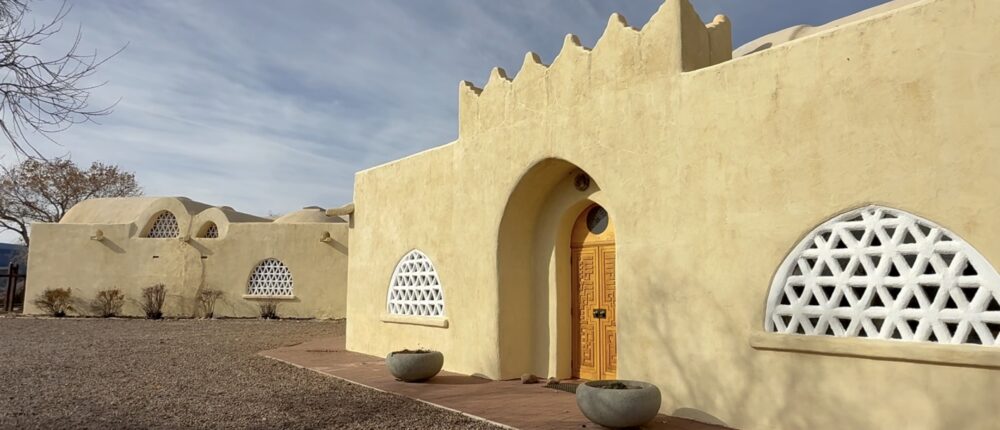
Feature image: The exterior of the Dar al Islam retreat in Abiquiu, New Mexico, by Hassan Fathy. Photo by the author.