
Layers of the Past: What Stories Our Buildings Tell Us
Buildings have long memories. They are intimate witnesses to virtually all of our lives. And after those many decades of collective use, they have stories to tell. Especially the old ones. The Wyckoff House, constructed in Brooklyn at the edge of the Jamaica Bay salt marsh, weathered this winter’s snowstorm—and its first in 1641. The stones of the U.S. Capitol remember the hands of the enslaved people who put them there.
What is lost, then, when a building is torn down? New York City, where my firm is based, has a dismal track record of preserving its buildings. Thanks to 20th century urban renewal projects, many of the city’s greatest architectural achievements no longer exist; in the past couple decades alone, New York has torn down dozens of century-old buildings. Longtime residents of downtown Brooklyn no longer recognize their neighborhood, once rich with cultural and architectural heritage. Eclectic swaths of Williamsburg, Greenpoint, and Harlem have been erased and redrawn, their stories lost.
Yet we’re at an inflection point. Our country desperately needs to build roughly 3–4 million homes beyond normal construction in order to reach affordability, according to a report issued by Goldman Sachs in October 2025. In cities, many decisionmakers still see demolition as a prerequisite; they are incentivized to. A luxury highrise is worth far more than a five-story prewar apartment building. While I don’t begrudge real estate owners for building luxury condominiums (they tend to hire architects), choosing to erase our collective history comes with consequences—for those who live and work here today, as well as the inhabitants of tomorrow.
When I was a student in the late 1970s, architecture training was rooted in modernism. Originality was the hallmark of “genius,” and a building’s success was measured by formal aesthetics. A few early voices—Ken Yeang, Sim Van der Ryn, and Edward Mazria among them—advocated for architects to consider ecological impact, environmental performance, and community engagement in design, but they were on the fringe. It would be years before those terms entered the profession’s general lexicon.
Having practiced architecture for over 40 years, I’m encouraged to see the discipline moving in the right direction. Advanced city-mandated sustainability requirements are now commonplace, and certifications like LEED and WELL push the marketplace toward designs that are better for the environment and for people. Our generation redefined quality to include not just Italian marble and fine decor, but energy efficiency, sustainability, and wellness. Today’s early voices are advocating for nature-positive cities, another term I hope soon enters the dialogue. This doesn’t change the fact that global warming–fueled disasters cost the U.S. hundreds of lives in 2024, not to mention the extraordinary economic toll. We still have a long way to go. As New York and other American cities endeavor to build, those of us who are in the business of altering the city’s skyline and streetscape must act as stewards, not demolitionists. Preservation and adaptive reuse are essential to that ethic and should become central to the way we build.
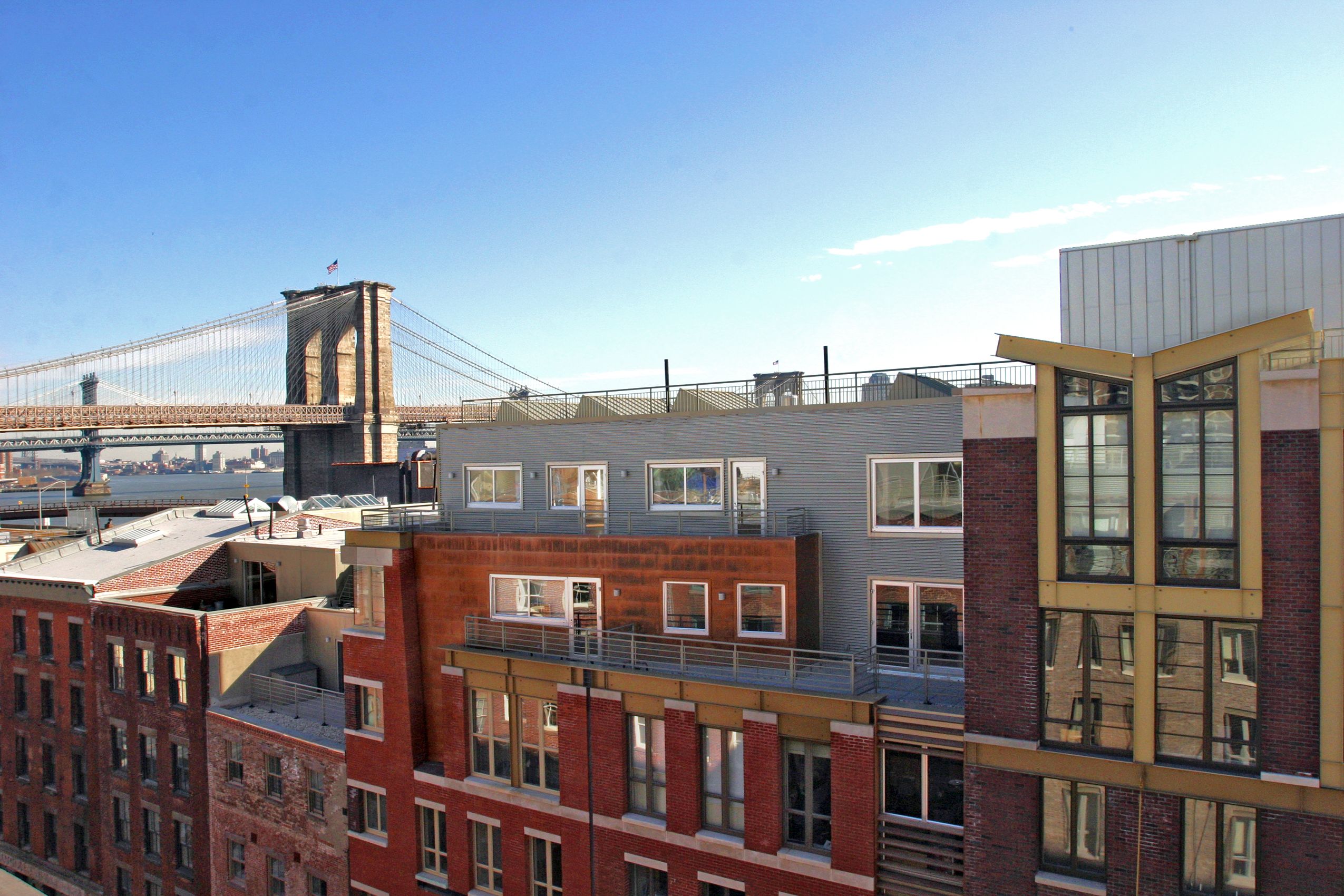
Our firm manifested that ideal two decades ago at Historic Front Street, in Manhattan’s South Street Seaport historic district. In 2003, 11 empty warehouses—dating to the 18th and early 19th centuries—were on the verge of collapse. Herman Melville set the opening scenes of Moby-Dick there, but when we made the first site visit, many had been vacant for decades.
Our approach prioritized both the buildings’ physical preservation, as required by NYC’s landmark preservation laws, as well as their nontangible assets. That meant keeping what others might have viewed as imperfections: chipped bricks, a patina of peeling paint, and “ghost buildings” inscribed on surviving facades. In other words, the qualities of a building that can’t be designed, that only accumulate over time. In addition to restoring the original warehouses, we added penthouses and three new buildings that were designed as modern interpretations of the site’s historic scale, texture, and proportions. Facade details recalled a whale’s tale, and lines from Moby-Dick were emblazoned on wall placards. The result was 95 apartments and over a dozen retail spaces that helped catalyze the area’s revitalization. Melville might not recognize the tenants, but he would recognize the streetscape.
At St. John’s Terminal, we achieved a similar transformation on a larger scale. The 1934 rail-freight terminal, once the terminus of the High Line, wasn’t historically designated, nor particularly beautiful. It was massive and obsolete—a prime candidate for demolition. But the huge floor plates were attractive to contemporary users, like Google, which ultimately purchased the development. Reuse was also the most environmentally sustainable option. By avoiding demolition, we saved an estimated 78,400 metric tons of carbon emissions, along with noise, dust, and other adverse impacts. We also unearthed train tracks that had been covered for decades, exposing the Hudson Square neighborhood to its own history.
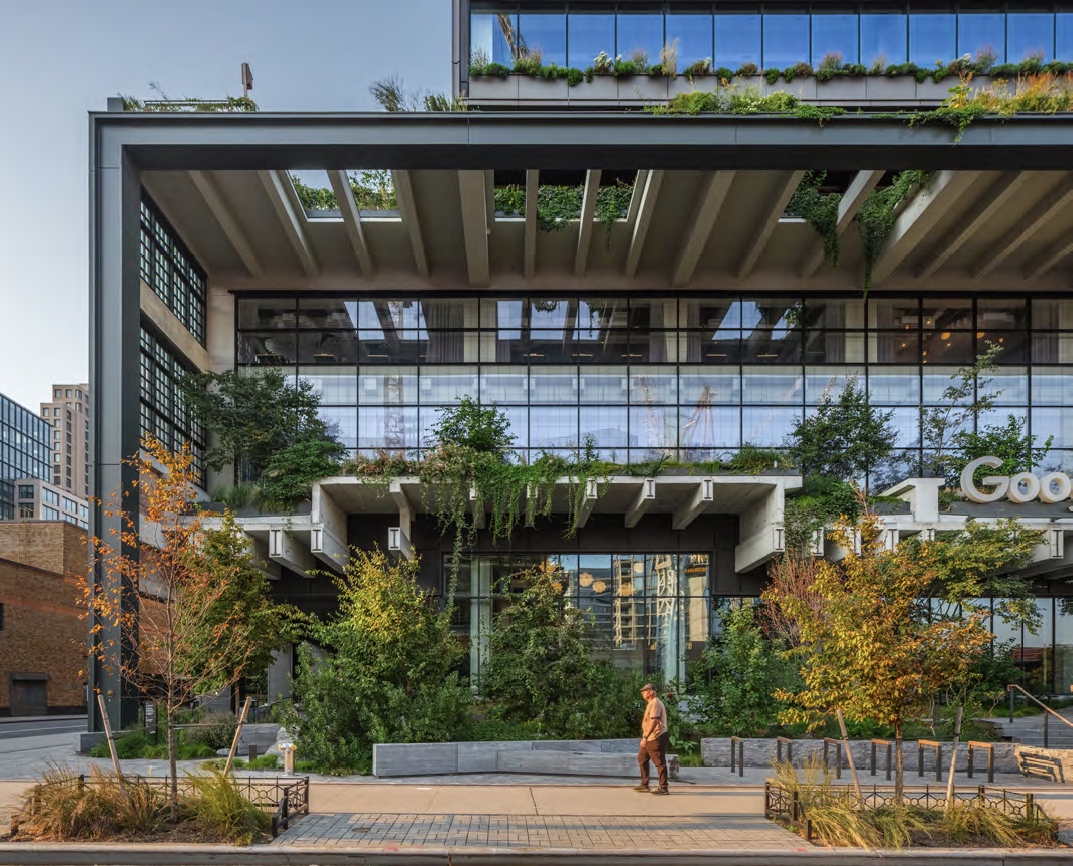
The developer, Oxford Property Group, wagered that the unique identity of the building would be a strong selling point to potential users, a bet that paid off. Google could certainly have afforded a new skyscraper, but it chose reuse because this aligned with its corporate identity and commitments to environmental and urban stewardship. Other corporations should follow Google’s lead if they want to call New York City home.
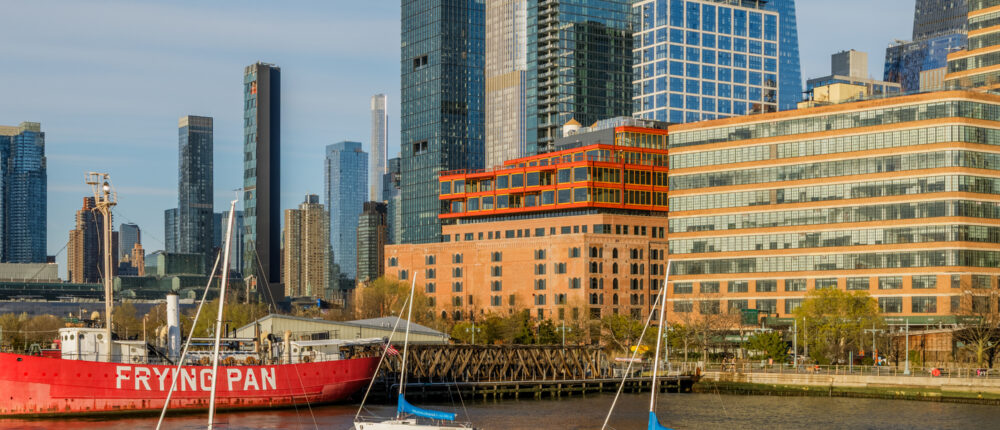
Two recent landmarked projects show how policy can influence adaptive design. Terminal Warehouse—a former 1890s freight terminal turned self-storage center and night club—has now become over a million square feet of workplace and retail. Nearby, Liberty Landing reimagines an Art Deco building that was once a sailor’s boarding house, then a women’s prison, as deeply affordable housing. These buildings serve contemporary needs while keeping the stories of our city alive: Liberty Landing was originally designed by Shreve, Lamb & Harmon, better known for the Empire State Building.
There are signs New York is inching in the right direction. The Adams administration helped establish tax incentives for conversions, new zoning tools under City of Yes, and an Office Adaptive Reuse Task Force. But Mayor Zohran Mamdani will need to be even more ambitious.
One policy City Hall should adopt are reuse-first development incentives. Implement a floor area bonus for all adaptive reuse projects. We should also be thinking of reuse in the broadest terms. Disassembly and reuse of materials should be incentivized to preserve a building’s embodied carbon while maximizing the range of possible new designs.
For much of history, when humans built, they built for posterity; they couldn’t afford otherwise. The Colosseum in Rome entertained spectators for centuries. Today, the latest “state of the art” football stadiums are considered obsolete after just three decades. Although we’re capable of incessantly rebuilding, the cost is enormous: buildings account for 39% of global energy-related carbon emissions. In cities like New York, that share is closer to 75%.
What will become of America’s skyscrapers, convention centers, and strip malls in a century? If we continue on the current cycle of demolition, many of those buildings won’t exist. That would be untenable. Those buildings still have stories to tell. Let’s think twice before consigning them to rubble.
Featured image: Terminal Warehouse, Photo by Alex Ferrec/COOKFOX.