
Letter From Malibu: City Balks at Creating a Disaster Registry For Elderly Residents
No surprise: According to a Malibu City Hall press release, the city’s 7th Annual Safety and Preparedness Fair was a great success, and residents apparently should look forward to the next fire with confidence. But don’t ask the home health personnel and others who have been unsuccessful in their efforts to get a recalcitrant city to cooperate in drafting a so-called Disaster Registry, which would identify vulnerable residents who need to be alerted and aided in the next calamity that is sure to come.
The hard fact is that seniors are now estimated at a stunning 60% of the 6,000 or so residents still persevering in Malibu; what is unknown is how many lack mobility or are dependent on medical hardware to survive. But they are here, in great numbers, neighbors all, and they remain at risk.
Of note, that population estimate of 6,000 is distressingly less than half of the number living in Malibu prior to the last two wildfires. And that’s no thanks to the city’s dismal rebuilding effort, which—for all the promises to fast track the permit process and the hiring of a cadre of consultants—remains an excruciating, costly planning charade.
Incompetence, boondoggling, whatever—that just one rebuild permit from the Palisades Fire has been issued in Malibu is shameful. In comparison, during the same time period, several hundred have been issued by L.A. in the Pacific Palisades, and construction can be seen everywhere there.
To be sure, drafting a registry would be an effort, but it would be vital in assisting people who need help when disaster strikes.
Malibu just does not seem to be able to get its act together to do something besides issue press releases and pad payrolls. To be sure, drafting a registry would be an effort, but it would be vital in assisting people who need help when disaster strikes.
According to home health specialist Kristin Thames, a registered nurse, these are people who cannot simply pack up and go: “Many rely on oxygen tanks, powered wheelchairs, medications, or caregivers who may not be able to reach them when roads are closed. Too often, they are left to wait, hope, and survive on their own. The results have been tragic.” Thames serves some 30 patients in Malibu (including this impaired author, approaching 90).
In our family’s long years in Malibu, we have survived five fires and two evacuations, each one harder than the last. After the last two devastating fires, it has been suggested several times that a neighborhood structure be established and manned by city personnel; that municipal staff should get out from behind their PCs and actually walk the streets of Malibu, knocking on doors to draft a registry.
Always quick to say why something can’t be done, instead of how it could, one of the excuses used by staff is that such a list would subject the city to liability. This is despite local governance’s prime legislative responsibility to the public being the protection of its health, safety, and welfare.
Meanwhile, the city’s bureaucratic bloated arteries may be hardening as the city population keeps shrinking. Most of the families whose homes were devastated will not return; their properties will likely get rebuilt as weekend party/trophy houses or pricey rehabs in disguise—much to the delight and profit of most of the city’s realtors.
Though it ignores calls for a needed Disaster Registry due to liability or cost, Malibu is quick to hire consultants to undertake suspect studies that distract and ultimately discourage residents. This includes the city currently proposing a questionable performing arts center while residents are still staggering from the fires.
Those funds could instead be used, of course, for the drafting of a Disaster Registry. Or maybe also for an expanded and revitalized senior center as part of a reimagined library expansion, lending some hope for a more communal city. A Malibu where one could look forward to growing old, instead of living in fear of being forgotten in the next disaster.
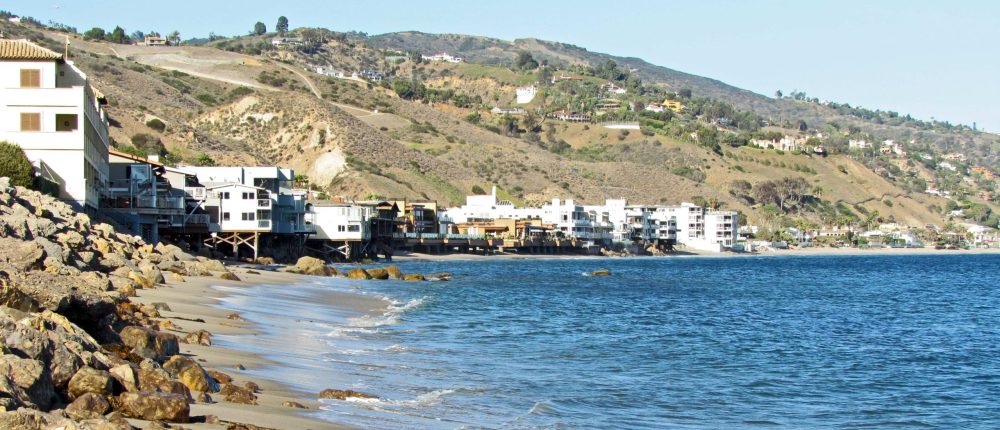
Featured image via Wikimedia Commons.