
Mayor Mamdani Already Has a Tool for Economic Justice
New York City Mayor Zohran Mamdani has committed to equitable and inclusive policies in his administration, giving us hope that planning and development might finally be based on community needs rather than real estate profits. But the prospect of an overriding plan—similar to the Comprehensive Plan prepared by Mayor John Lindsay in 1969—is daunting and probably unrealistic. However, the current mayor has at his disposal the permanent legacy of that plan, the community boards, and the planning mechanism they are empowered with under a fairly obscure part of the City Charter: Section 197-a.
The New York City Charter is the foundational legal document that establishes the structure, powers, and rules of city government. The charter’s planning chapter establishes the Department of City Planning’s (DCP) authority to oversee neighborhood planning processes, including Section 197-a plan review and approval. This section was intended to provide communities with an official process for shaping land-use priorities. The charter requires the DCP and the City Planning Commission (CPC) to formally recognize such plans. Under the 197-a process, communities can propose a plan for the development, growth, and improvement of their neighborhoods to CPC and then, if it approves, to the council for its review and approval.
A number of 197-a plans have been prepared and submitted to the CPC over the years, but they’re widely perceived as failures. The plans are advisory, not enforceable. The review and approval process is lengthy and onerous. In the end, the city has chosen to pursue its own agenda, and the 197-a plans have languished. In recent years, this has deterred community boards from undertaking the plans, largely because they lack both the necessary technical expertise and the funding to acquire it.
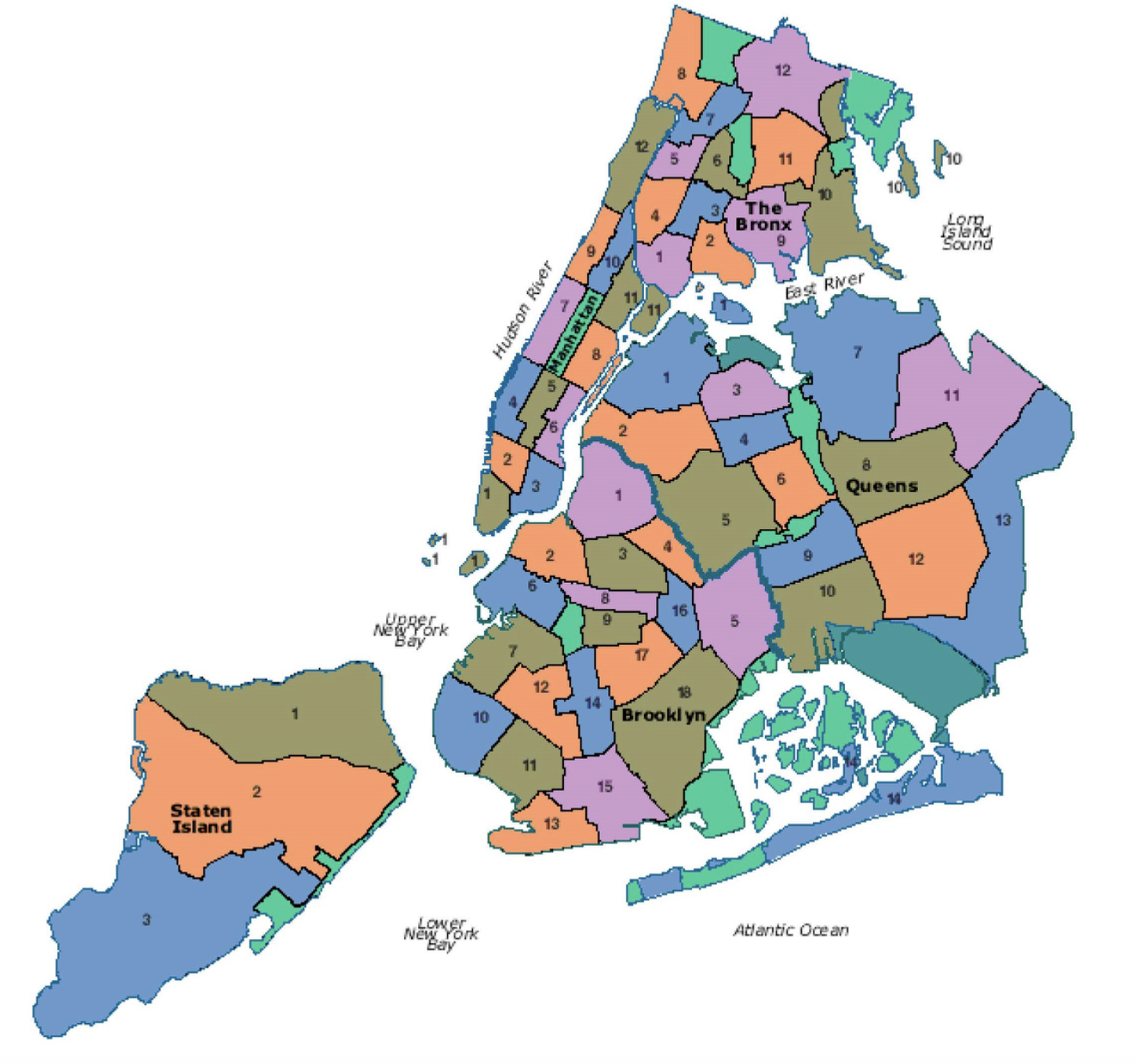
The idea that a large city like New York should have a comprehensive planning process to guide and coordinate its public policies and private actions is not new. Lindsey’s Comprehensive Plan in 1969 was an attempt to create such a process. Admirable as a land-use planning exercise, it failed to create a process that united the voices of local communities with the need for an overall strategy that is at the heart of any comprehensive planning process. It was opposed by both real estate interests and communities who saw it as a “top-down” exercise lacking their input. With the failure of the 1969 plan, New York City adopted a laissez-faire approach, using broad bulk and land-use regulations in its Zoning Resolution and taking a reactive stance toward large private land-use initiatives. Social services like health, education, and housing were siloed across different city agencies, with limited coordination.
We all know that the result is piecemeal planning by the city and rezonings that largely benefit private real estate interests, and result in housing that’s unaffordable to most local residents and the neglect of other essentials such as schools, healthcare, and recreation. We’ve also seen the consequences of this laissez-faire approach in a series of large-scale developments that have ignored the true needs of local communities in the pursuit of profit. The West Harlem expansion of Columbia University and the rezonings of Greenpoint and Williamsburg each brought gentrification and displacement with little recognition of the needs of local residents. Some major developments—Hudson Yards and Atlantic Yards, in particular—were delegated to the state, relieving these developments of even cursory review and input by the local communities affected. We’ve seen the City’s Economic Development Corporation (EDC) partner with private real estate to the virtual exclusion of any consideration of local needs.
Why have we not seen any attempt at comprehensive neighborhood planning for the city since 1969? Because the magnitude of such an effort is daunting and almost certainly takes more time to complete and implement than the duration of any political term of office, reducing the incentive for politicians to undertake it. So how can we give voice to the needs articulated at the grassroots level while also providing—and enforcing—overall principles that bring order and equity to a large and complex city?
We need both the political will to undertake comprehensive planning and a manageable mechanism that can accomplish it. The opportunity may be presented by Mayor Mamdani and his commitment to equity and inclusion for all New Yorkers. And that mechanism may lie in resuscitating Section 197-a. The failings of past 197-a plans are easily fixed. It won’t amount to a full Comprehensive Plan, but it would give communities a larger role in how their neighborhoods are developed.
Very few people even remember Section 197-a. It authorizes community boards and borough boards—along with the mayor, the CPC, the DCP, and any borough president—to sponsor plans for the development, growth, and improvement of the city. Once approved by the Planning Commission and adopted by the City Council, 197-a plans are supposed to guide future actions of city agencies in the areas addressed in the plans.
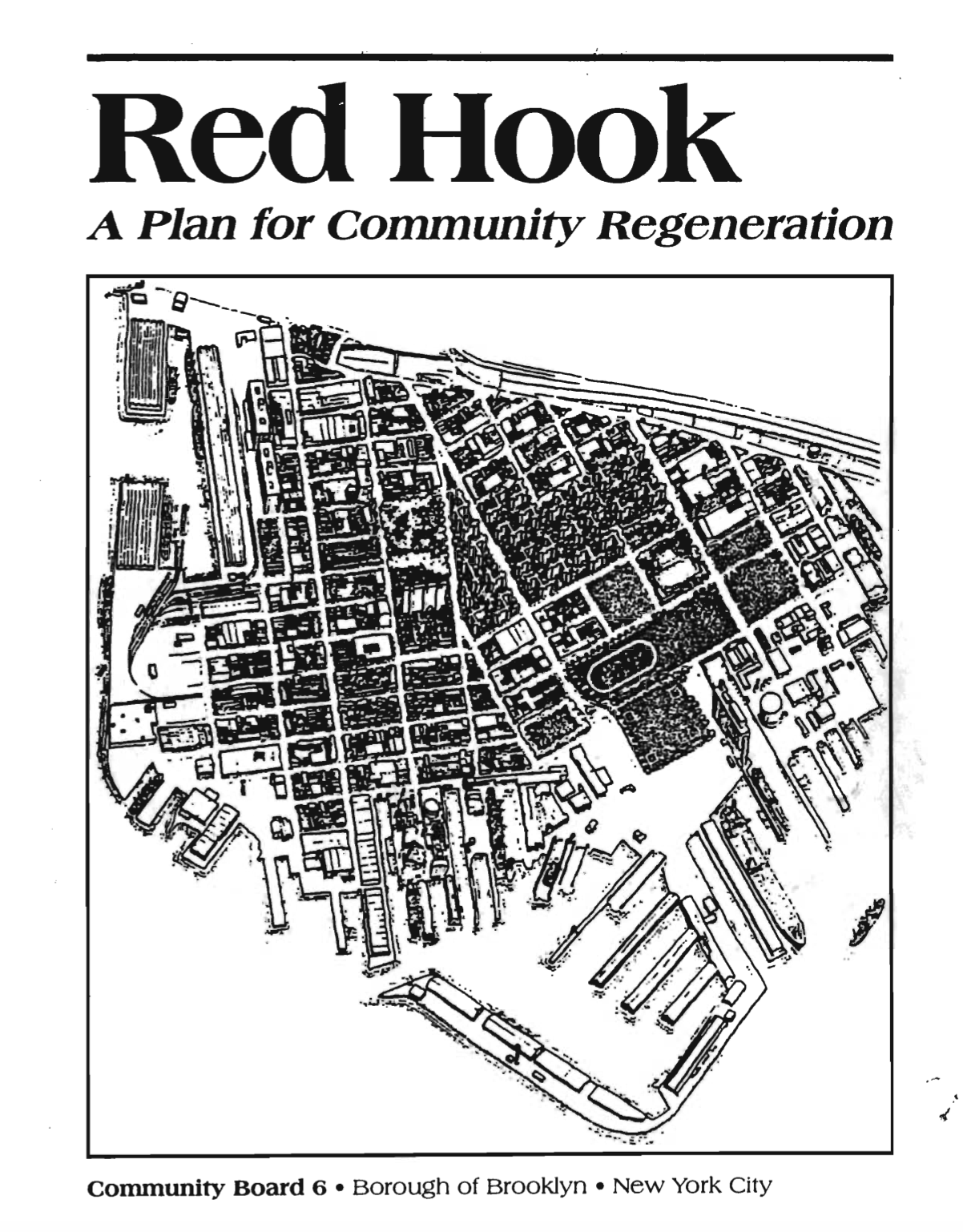
At least, that’s the intent. Reality has not lived up to that goal, largely for two reasons. First, most community boards (the most likely source for a community-based vision) lack the technical planning expertise to undertake the significant tasks of a 197-a plan; the charter did not address this by providing the necessary funding for the boards to secure that expertise. Nevertheless, 11 boards did produce plans—notably, the Red Hook plan of 1996, the Williamsburg Waterfront Plan of 2002, the Greenpoint Plan of 2002, the Bronx River to Reservoir Preservation strategy of 2003, and the Sunset Park Waterfront plan of 2009. These plans saw, at best, limited application of some of their recommendations. But the idea that they would form the basic template for future planning decisions was never realized.
Which leads to the second reason: The plans themselves may be completed, submitted, and approved, but they seldom lead to implementation by the city agencies. So we have seen development that not only fails to implement the intent of a 197-a plan, but often contradicts it. The plans themselves lack the force of law. City agencies like EDC and state EDC go about their business with little regard to any 197-a plan that might lie in their path. The Department of City Planning has not received any new 197-a filings since the Sunset Park Waterfront plan of 2009.
In recent years, the city has approved local neighborhood plans sponsored by the DCP, rather than the community board. For these proposals, such as their OneLIC Neighborhood Plan or the Midtown South Mixed-Use Plan, community boards have an opportunity to comment as the plans go through the Uniform Land Use Review Procedure, although such review is advisory only.
Under the 197-a process, communities can propose a plan for the development, growth, and improvement of their neighborhoods to CPC and then, if it approves, to the council for its review and approval.
So there is an opportunity to relaunch the 197-a process as a mechanism for the new administration to truly address the needs and aspirations of local communities. Such plans, once approved, should be binding on agencies like EDC and state EDC, as well as private developers. (A recent report by the City Council, submitted to the NYC Charter Revision Commission, recommends legislation to ensure that 197-a plans are adopted.)
The first issue to address is funding for the creation of a neighborhood 197-a plan. Depending on the size, a plan can cost between $150,000 and $250,000. This sounds like a lot of money, but it’s a fraction of the cost of development ($1.97 billion, in the case of the OneLIC Neighborhood Plan in Queens). The funds for the 197-a plan can be easily recouped from the taxes that accrue once the plan is implemented. Community boards should be invited to apply for planning grants specifically to complete a 197-a plan.
Second, once a plan is submitted, reviewed by city planning and approved by the City Council, it should become a part of the Zoning Resolution. Any development, either sponsored by EDC or by private development, should be required to incorporate aspects of the 197-a plan that coincide with the development project.
City agencies that are cited in a 197-a plan should be required to produce a proposal, in coordination with other related agencies, to meet the goals of the plan and submit that proposal to the city council for review and approval. In the Mamdani administration’s commitment to equity and inclusion, we may now have the political momentum for true neighborhood planning. In the city charter’s provision for 197-a plans, we have a mechanism that is available now and requires only the necessary funds to bring it to life.
Featured image via Education Images.