
No More Atlantic Yards!
New York City is the center of capitalism in the U.S., if not the world, with the churning of real estate deals being to New York what cars once were to Detroit. It is therefore no surprise that the City of New York makes use of public-private partnerships (P3s), in which the city invites private developers to undertake significant projects (unlike government-funded projects, such as libraries, schools, or firehouses). New York’s powerful real estate industry and the city’s Economic Development Corporation (EDC) dominate these projects, using return on investment (ROI) and “best and highest use” (a real estate term misused as a policy term) as the prime criteria for judging and awarding commercial and residential projects. Too often, maximizing financial value is prioritized over social benefits; closing the maximalist deal, not the full range of public and community purposes, drives projects.
The positive result is a larger incentive for developers and greater property tax revenue for the city—although New York typically offers generous tax abatements as part of the deal. Negative impacts include pressure on educational facilities, transportation, health, and public open spaces. Displacement of existing residents is often caused by ensuing gentrification. Almost always, there are missed opportunities to integrate additional public benefits into the project, as well as the lead agency’s willingness to scuttle those benefits as contingencies arise, even if it means breaking promises to the community. Worse, the probable long-term effects of climate change are barely considered.
Some of these negative effects are documented in an environmental impact statement (EIS), which is required for any significant development project. Developers and the lead agencies are obliged to identify any impacts and suggest ways to mitigate them, but not to carry them out, or they typically do so in a derisory way that goes unchallenged by the city.
Community input for most major New York City development projects (as well as for rezoning) is governed by the statutory timetable of the Uniform Land Use Review Process (ULURP), which provides advisory input from the local community board, the relevant borough president, and the City Planning Commission, subject to City Council revision and approval (which is sometimes followed by mayoral veto and City Council override of the veto). Charter revisions this year revised the process to provide for streamlined approval for affordable housing development. Even as amended, and despite the lack of real power for the community, borough, and planning boards, ULURP provides at least some opportunity for transparency and consensus-building.
When it comes to P3 projects, the city’s—really, the mayor’s—quasi-independent EDC typically manages the ULURP and rezoning process, determines the development’s characteristics, selects the development team, and enforces agreements with developers. The state’s—really, the governor’s—Empire State Development Corporation (ESDC) is sometimes engaged for large-scale projects of great significance. With EDC and ESDC often working in tandem on projects, state authority allows the project to bypass the typical ULURP process, further reducing public review.
When the EDC was first formed (as the Public Development Corporation), economic development policy was lodged in the mayor’s Office of Economic Development. This function was later transferred to the EDC. Since the revenue created by P3 projects is mainly independent of the budgeting back-and-forth with the City Council and controlled by mayoral appointees, the resulting pool of funds is a boon to the mayor’s agenda. The policy-projects relationship has consequently shifted: instead of long-term, publicly debated policy driving development decisions, the opportunity to maximize value drives policy, as determined by the mayor’s developer, EDC. This becomes apparent when looking at recent P3s in New York City.
The City’s Track Record
Take Atlantic Yards, a 22-acre megaproject in Brooklyn. The city and state development agencies largely ignored community concerns in their enthusiasm for a well-known developer to take on the risks and rewards of a complex project with the massive expense of building over rail yards.
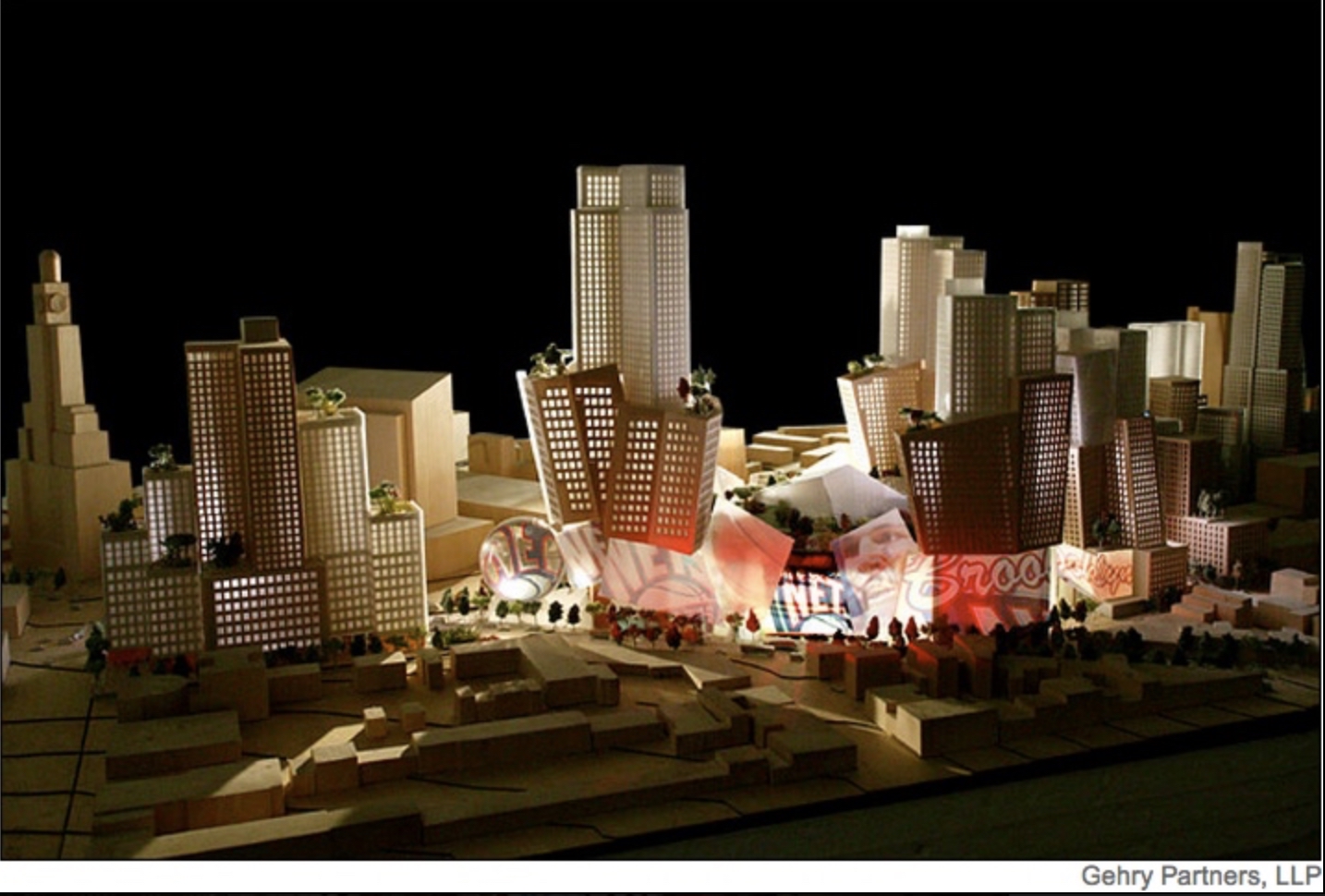
Now, more than 21 years after it was announced, with what was supposed to be a 10-year buildout, the project has delivered the Barclays Center and eight towers. But it remains about half-finished and stalled, and in default since November 2023, with ESDC seeking a new developer to take over the project. This is after two prior amendments to the plan, decided upon by the ESDC board of directors alone, with a third one looming. (The project has now been renamed Pacific Park, as though to distance itself from its original promises.)
Hudson Yards is another example. The most significant private real estate development in U.S. history, Hudson Yards was built over an active rail yard, with a new subway station (the 7 Line) built to make the development viable. Hudson Yards has emerged successfully as a real estate venture. As Mathew Haag put it in the New York Times:
“Five years after [its] grand opening, Hudson Yards has not only survived, but it has also emerged as perhaps the most dominant office market in New York City, a bright spot as companies across the country cut space in the shift to remote and hybrid work. The neighborhood’s glass-and-steel towers have attracted some of the most valuable companies in the world—including BlackRock, Pfizer[,] and Ernst & Young—to pay some of the highest rents in the country.”
Well, OK, but it is also an antiseptic luxury ghetto that few recognize as New York City; some have even dubbed it “Dubai on the Hudson.” Sure, the Shed is a welcome addition to New York’s cultural portfolio. Meanwhile, the unfortunate Vessel by Thomas Heatherwick gained notoriety largely because of suicidal jumps from its top tiers. The structure also cost $200 million, raising the question of whether it is an ego-driven folly ultimately built at taxpayer expense, thanks to billions of dollars of public largesse exceeding what was needed for project viability.
The Brooklyn Marine Terminal (BMT) looms as another doubtful use of public wherewithal. The 122 acres of Brooklyn waterfront was secured by the city from the Port Authority of New York and New Jersey in a land-swap deal. If built as EDC currently proposes, it would include nearly twice as much housing as Battery Park City—one of the most significant housing developments in New York City. Considering the past 50 years alone, it would be second only to Atlantic Yards once fully built out.
The project is being managed by EDC but is technically sponsored by the ESDC. The state enabling legislation requires that the ESDC prepare a general purpose plan, which is approved (or not) solely by the governor-appointed ESDC Board of Directors. Yet EDC is preparing the GPP, the necessary reportage and studies, the request for expressions of interest by developers, the transactions, etc.; the inference is that the sole purpose of state engagement is to avoid ULURP and the greater scrutiny it entails.
While the GPP establishes design guidelines for the proposed project that address use, bulk, and dimensional parameters, etc., applied in lieu of zoning, ESDC can amend that plan repeatedly, again bypassing ULURP—as has been the case at Atlantic Yards. In lieu of ULURP, EDC established a 28-member “task force” composed of local elected officials and a few local stakeholders identified by EDC, tasked with approving a “vision plan” for the site’s future.
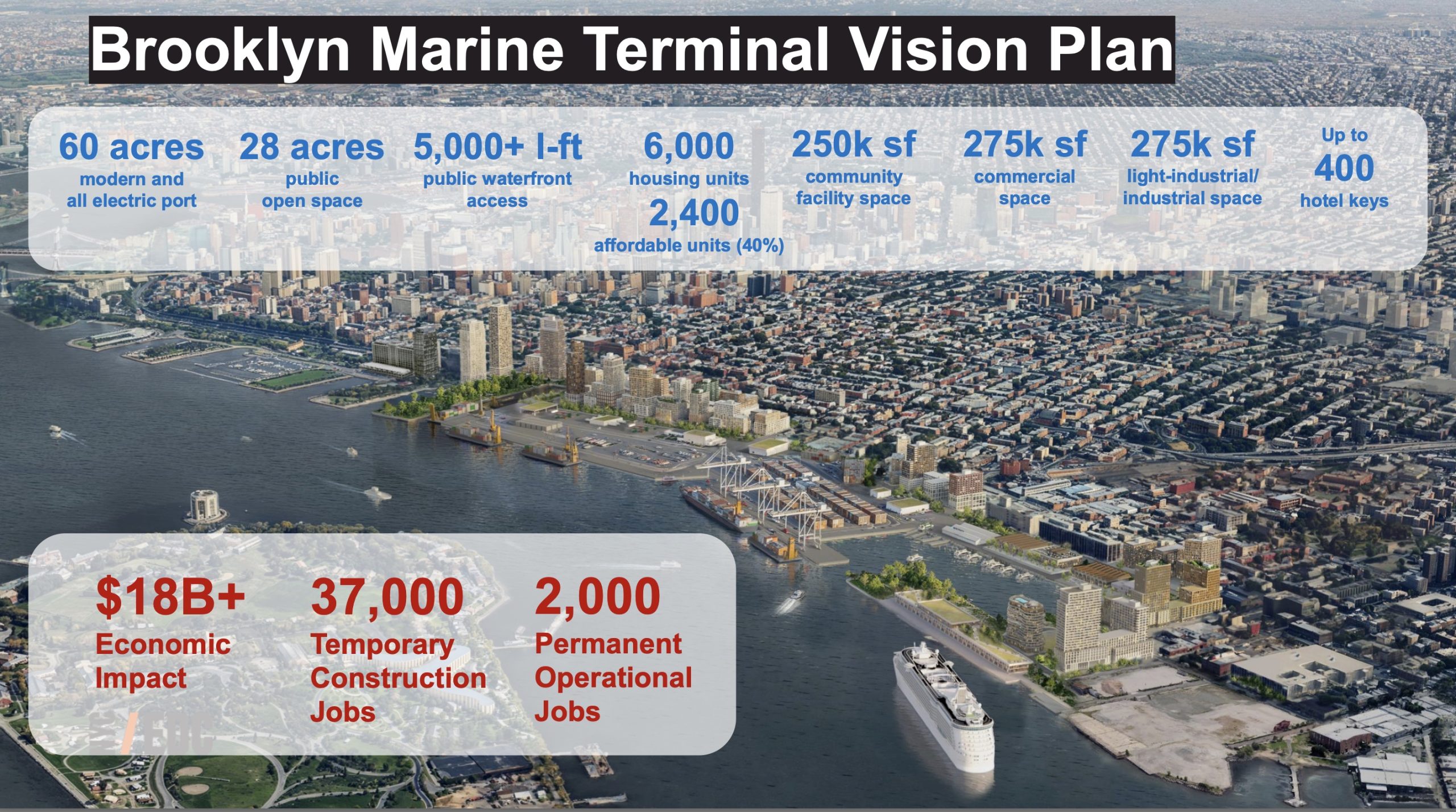
This usurping of public review has not gone down well with the local community. Even the EDC-hand-picked BMT task force stumbled through months of delayed voting, during which the vision plan would have been defeated. After intense lobbying by EDC, the plan was finally approved by the task force in a 17–8 vote.
Within the constraints of this autocratic process, EDC has, on the one hand, ignored genuine consideration of social impact, overpromising benefits to key stakeholders without explaining where the funding will come from; on the other hand, it has rested, as usual, on the “best and highest use” criteria, justified by saying that the development needs to be maximized to pay for those benefits, dubiously promised as they are. All this while evading public review as much as possible and relying on an environmental review process that inherently favors the plan they have proffered.
In each of these examples, representing the largest development projects sponsored by the city and state over the past 50 years, there are inevitably missed opportunities to factor in social benefits democratically, given the process and criteria by which the city undertakes large projects.
It does not have to be this way.
Precedents for a Better Way
It is time that social impacts be taken seriously in project determination, not as a cynical exercise to secure acquiescence without assurance of delivering those promises.
Even in the corporate world, the idea of social impact has been gaining traction in recent years. The idea of corporate social responsibility (CSR)—in which corporations set aside (an albeit small) portion of revenue to mitigate the negative impacts of their operations or simply to support the community in which they operate—is widespread. CSR has, more recently, been superseded by environmental, social, and governance (ESG) criteria, in which corporations weigh these concerns in their business practice. ESG has been shown not only to benefit local communities but to improve shareholder value. In just two decades, ESG has become a significant factor in financial thinking. Even if the big corporations still hold all the cash and pay next to nothing in taxes, this is clearly a cause for (mild) celebration: the fact that markets and investors favor responsible companies is welcome.
But while the corporate world is increasing its concern for social impact—or at least realizing the economic value of doing so—the city is stuck in the past, dominated by profit-maximization calculations rather than social value.
In the world of P3, the developer must get its profit, or there will be no project. Social value is, at best, a secondary consideration. In some cases, community benefit agreements (CBAs) are included in the process to address community concerns. However, CBAs are extremely difficult to enforce. If we are to continue with the P3 model, we must find a way to build social value as a baseline (and mandatory) criterion in these projects.
Social value can be challenging to measure and document, and often withers in the face of dollar calculations, unit counts, and other measurable outcomes. But that doesn’t mean that it is less important.
Social value means the sum total of all the positive effects deriving from an activity, project, or intervention of any kind. This goes beyond the direct economic impact that a project has (i.e., the income/ revenue it generates minus the cost of completing it) to factor in:
- Indirect economic benefits: the money recirculating through local supply chains, the upskilling of workforces, and job creation.
- Environmental benefits: reductions in carbon emissions, the restoration of natural environments, and the preservation of biodiversity.
- Wellbeing benefits: measures to support the physical and mental health of workforces and communities, providing well-paid, meaningful work.
- Community benefits: the provision of communal amenities such as libraries, playgrounds, and community spaces, and meaningful support and involvement of community groups.
In terms of social value, we might also consider the cultural significance of a place: its aesthetic, historic, scientific, and social importance, and how any new development might affect those aspects. Will any new development improve public places, places of meeting, places of resort and entertainment, communities, and places associated with significant events? What about jobs, affordable housing, and infrastructure? What is the social return on investment (SROI), not just ROI?
As further examples: In the field of construction and infrastructure, social value provides a framework for quantifying and ascribing a value to the positive effects that good design, reduced pollution, greater energy efficiency, etc., have on the lives of individuals and communities. Rather than simply ticking the compliance boxes, practitioners can focus on both organization-wide and project-specific improvements from their work.
Another approach, conceived by the nonprofit Full Frame Initiative, centers on the concept of wellbeing. The Full Frame Initiative defines wellbeing as the set of needs and experiences universally required, in combination and balance, to weather challenges and to have health and hope. These include:
- Connectedness. Relationships and belonging with people, nature, places, and experiences.
- Stability. Rhythms and patterns that help us feel rooted and confident that small things won’t snowball into big things.
- Safety. The ability to express our core identities without pain, shame, fear, or danger.
- Mattering. Feeling significant and that we can make a difference.
- Relevant resources. Access to external resources like food, shelter, air, and water, and experiences like rest and movement.
With a federal grant, Full Frame Initiative created a methodology for communities, government, and others to assess the social benefit tradeoffs of projects and policies. WIATT (short for Wellbeing Insights, Assets, and Tradeoffs Tool) aims to:
- Identify how implementing policies and projects affects different stakeholders’ wellbeing.
- Surface reasons why a policy isn’t having its desired impact.
- Predict where unsustainable tradeoffs might occur.
- Identify what mitigation is most needed to reduce wellbeing harms.
- Foster buy-in and understanding of differential impacts across stakeholder groups.
- Surface implementation challenges and potential pitfalls before they occur.
- Codify negative impacts for external agencies or upstream decision-makers who can make necessary changes.
If we look abroad, the Australian Heritage Commission suggests the following:
- Defining the “community of interest” (or enabling the community to define and identify itself), its values, and charting the meanings it attaches to places.
- Identifying and clarifying the nature and degree of significance of that place to the community.
- Preparing an agreed statement of the social value of the place.
- Understanding how the value of the place can be conserved.
In 2012, the United Kingdom passed the Public Services (Social Value) Act, which requires that 10% of evaluation criteria for public projects be devoted to social value. According to this legislation, local authorities must consider:
“(a) how what is proposed to be procured might improve the economic, social and environmental well-being of the relevant area, and
(b) how, in conducting the process of procurement, it might act with a view to securing that improvement.”
This legislation requires government procurement processes to consider several policy outcomes in their evaluation criteria, including:
- Create new businesses, new jobs, and skills.
- Increase supply chain resilience and capacity.
- Effective stewardship of the environment.
- Reduce the disability employment gap.
- Tackle workforce inequality.
- Improve health and wellbeing.
- Improve community integration.
Also in the U.K., the government’s Impact Evaluation Standard aims to add financial value to social impact as an additional way to quantify its impact on society. These calculators often include “proxy values” established by an “impact evaluation steering committee” and other working groups. The U.K. standards are specific to publicly adopted policy goals and cannot be put aside. The emphasis is on each community developing its own social impact evaluation.
Toward a Solution
Learning from these global examples, one can conceive of a process in which a social value analysis is conducted as part of the initial research and planning for a project and then included as a foundational component of any vision plan.
If the evaluation of public projects in New York City included the criteria outlined in the examples above, we might see different outcomes. At Atlantic Yards, the promises of affordable housing—the community’s top request—would likely have been fulfilled in the early phases, rather than left to the contingency of the last phase, when there is the massive expense of building over the rail yard. At Hudson Yards, it would have been about how the mega-development is part of a larger physical and social benefit plan for the far West Side of Manhattan, including Hell’s Kitchen and Chelsea. At the BMT, it would have involved ULURP to ensure transparency and a robust public discussion of whether the site is best used entirely for maritime purposes (the key policy decision) and how it fits in with neighborhood resiliency (the key long-term issue). While it’s true that in all three instances, the city’s revenue could well be lower, the benefits would have been far more manifold and authentic to the priorities of the entire community.
There are precedents: For London’s 2012 Olympics Park plan project, decision-making was multifaceted from the start, with fostering community engagement as one of the founding principles. For Philadelphia’s Schuylkill rail yard mega-development, each phase of new development is effectively conditioned on fulfilling the promises of the prior phase (including those in the community benefit agreements) as well as the promises for the next phase. In Battery Park City in Lower Manhattan, the promised park was built in the first phases, before the project generated revenue; it was not held hostage to future market conditions and negotiations.
For New York City, we might start by reforming the required EIS to more fully consider social value as a criterion. The EIS includes a review of the impact on “socioeconomic conditions” in its purview:
“The socioeconomic character of an area includes its population, housing, and economic activity. Socioeconomic changes may occur when a project directly or indirectly changes any of these elements. Even when socioeconomic changes would not result in impacts under CEQR, they are disclosed if they would affect land use patterns, low-income populations, the availability of goods and services, or economic investment in a way that changes the socioeconomic character of the area. In some cases, these changes may be substantial but not adverse. In other cases, these changes may be good for some groups but bad for others. The objective of the CEQR analysis is to disclose whether any changes created by the project would have a significant impact compared to what would happen in the future without the project.”
In New York City, the EIS is a legalistic “check the boxes” document employing a standard methodology, even when that methodology patently underestimates social and other impacts. What if it were transformed to meet its original planning purposes, with more democratic intentions and consideration of tradeoffs? This could include community board selection of an alternative scenario for testing, adequate time for thorough evaluation of the socioeconomic impacts of a project, writing the EIS in a way that nonprofessionals can understand, and incorporation of community-selected “mitigation measures” into the proposed action. It would be a way to incorporate social value into the process.
But wouldn’t it be better for social value to be considered at the outset, rather than as an afterthought? Could we conceive of a process in which major projects begin with an evaluation of social Value as part of the process’ scope? What if, every time we begin a project, we could start by employing methods like WIATT to:
- Define the ‘community of interest’ (or enabling the community to define and identify itself), its values, and charting the meanings it attaches to places.
- Identify and clarify the nature and degree of significance of that place to the community. Place? What if it is a policy or program?
- Prepare an agreed statement of the social value of the place.
- Understand how the value of the place can be conserved.
- Characterize the trade-offs.
And then, per the U.K.’s Public Services (Social Value) Act, proceed to consider—
“(a) how what is proposed to be procured might improve the economic, social and environmental well-being of the relevant area, and
(b) how, in conducting the process of procurement, it might act with a view to securing that improvement.”
All these and other potential reforms require aligned modifications to both the state and city environmental quality acts, policy/procedure shifts by the state and city development agencies, and the governor and mayor agreeing to more democratic processes, even at the risk of less revenue at their immediate disposal. What better time for these actions than when we have a new mayor who believes in community empowerment and addressing the full range of affordability, offering a comprehensive outlook? He also has first-hand experience in Albany—and, as recent news has revealed, the ability to work with even vociferous critics.
Our thought is simple: Start by challenging the city’s development agency (and its state partner) to do better toward building a New York City that provides social value and wellbeing for all.
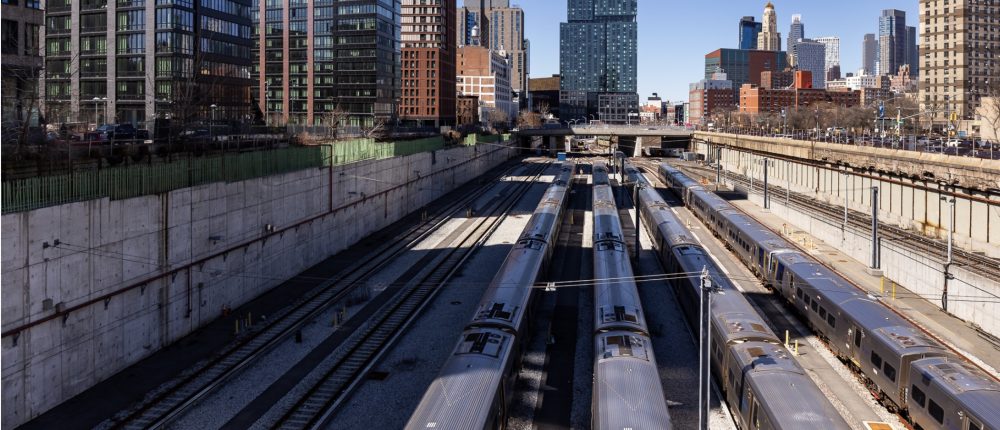
Featured image: the current Atlantic Yards site. Photo by Adi Talwar.