
Rebooting Downtown, America’s Most Underperforming Neighborhood
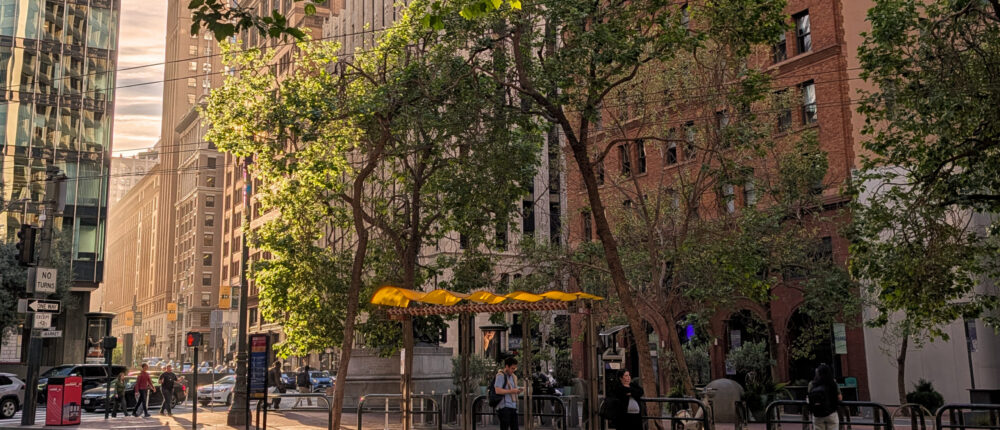
San Francisco, May 2022. Friday, 5:00 p.m. My first time visiting an American downtown. I had just landed, and my first instinct—having grown up walking, exploring, and working in European cities—was to go to the city’s urban center and start from there. And so I did. I took BART from the airport and exited at Montgomery Station, fully expecting to find a robust energy: people spilling out of offices, grabbing post-work drinks, the usual Friday evening scene in every major city.
What I found instead was silence. Beautiful silence, sure, framed by views of the Ferry Building and the hills beyond, but silence nonetheless. No cafés or bars. No shops. No restaurants. Just one magnificent lobby after another lining Market Street, each more impressive and more empty than the previous one. I walked the full stretch to the waterfront and stepped inside the Ferry Building, and there it was: life. I thought, So this is where everyone’s hiding. Activity and bustling energy existed, just not in the downtown or through the downtown. Whatever was happening in San Francisco that evening was happening around the downtown.
Four years later, the picture has shifted, but not fundamentally changed. Vacancy rates in downtown San Francisco remain stubbornly high compared with pre-2020 levels, around 34%. Foot traffic has returned in waves, but unevenly: a busy Tuesday morning or afternoon, a packed event concentrated in one street, a two-week festival that briefly revives the sidewalks. And then, just as quickly, the quiet returns. The energy is episodic, not embedded. The good news is that downtown is no longer entirely silent. The less good news is that it is still far from alive in a sustained, everyday way, including weekends.
San Francisco is not special in this regard. This is the case in most U.S. downtowns and central business districts around the world. Some are doing better than others, but the pattern is consistent: life during office hours, little to no life after that. And what makes it especially painful is how precious downtowns are. They sit on some of the most connected, most accessible, most infrastructure-rich land in any city, often wedged between vibrant, more-residential neighborhoods.
When COVID arrived, it made explicit what had been quietly true for decades: Downtowns have been putting most of their real estate inventory into one basket—office space—as opposed to other neighborhoods that often have more diversified portfolios, which has eased their post-pandemic recoveries.
The Neighborhood That Doesn’t Know It’s a Neighborhood
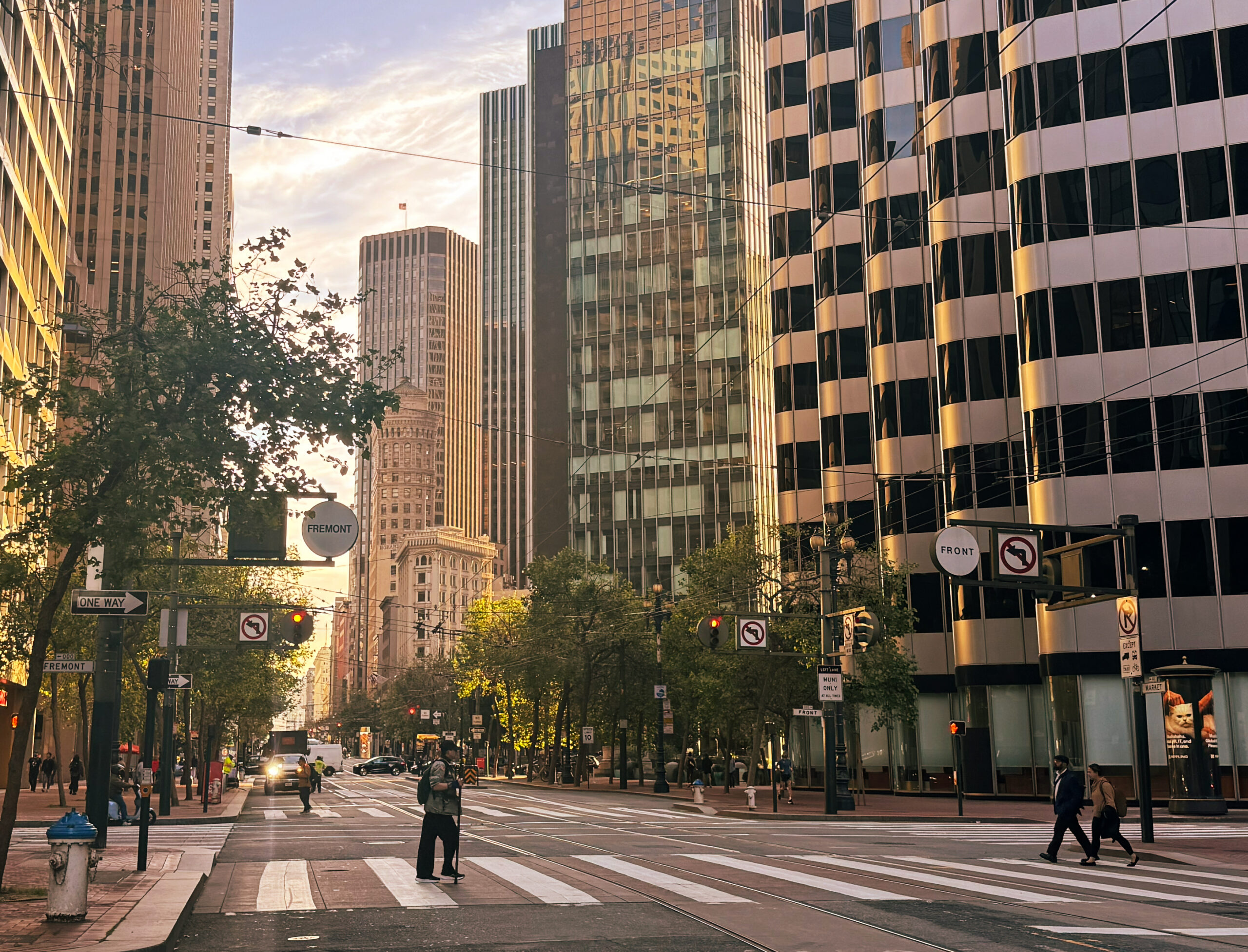
Downtown. A category unto itself. A place one commutes to and from—and maybe this framing is part of the problem. Downtown could be the ultimate 15-minute neighborhood: the transit, the density, the proximity to amenities, it’s all there. It could be a genuinely great neighborhood to live in, work in, play in. And what does a neighborhood need? A mix of uses, a diversified portfolio that ensures a downturn in one sector does not flatline the whole district. But what’s the right balance?
Cushman & Wakefield’s 2024 study Reimagining Cities: Disrupting the Urban Doom Loop (created in collaboration with Places Platform) puts real numbers to this question, arguing that an optimal real estate product portfolio mix does exist, and that cities, particularly downtowns, must rebalance their portfolios accordingly. This optimization would generate the highest real estate valuation price per square foot as well as the best gross domestic product. The suggested optimal mix: 42% work, 26% play, 32% live. Office still leads, but it no longer dominates.
To describe this in plain language: The transformation of downtown into a neighborhood isn’t just a romantic notion—it’s an economic imperative. Why? Because the built environment is the largest asset class in the modern economy, and although downtowns generally occupy a small fraction of a city’s total size, they provide outsize contributions to its economy. Generally speaking, downtowns are the largest asset classes in cities.
Vision First, Then Everything Else
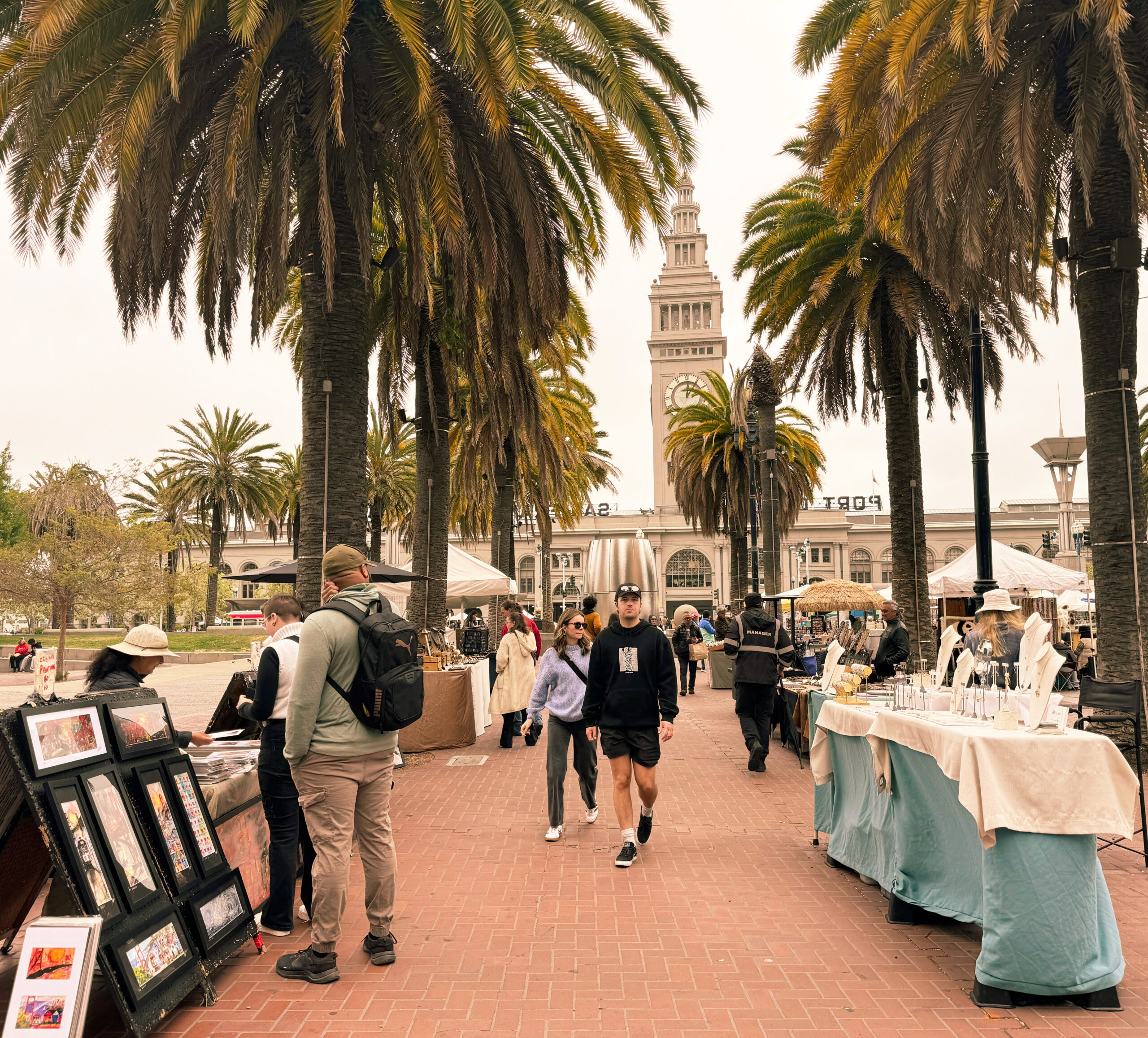
There’s a flurry of activity at every level: Business improvement districts managing urban spaces; public realm activations popping up; office-to-residential conversions underway; events drawing crowds for a night; design competitions generating bold ideas; regulatory tweaks loosening zoning. Separately, each is a good idea, and some are genuinely great. The nagging question: Where’s the glue holding them together?
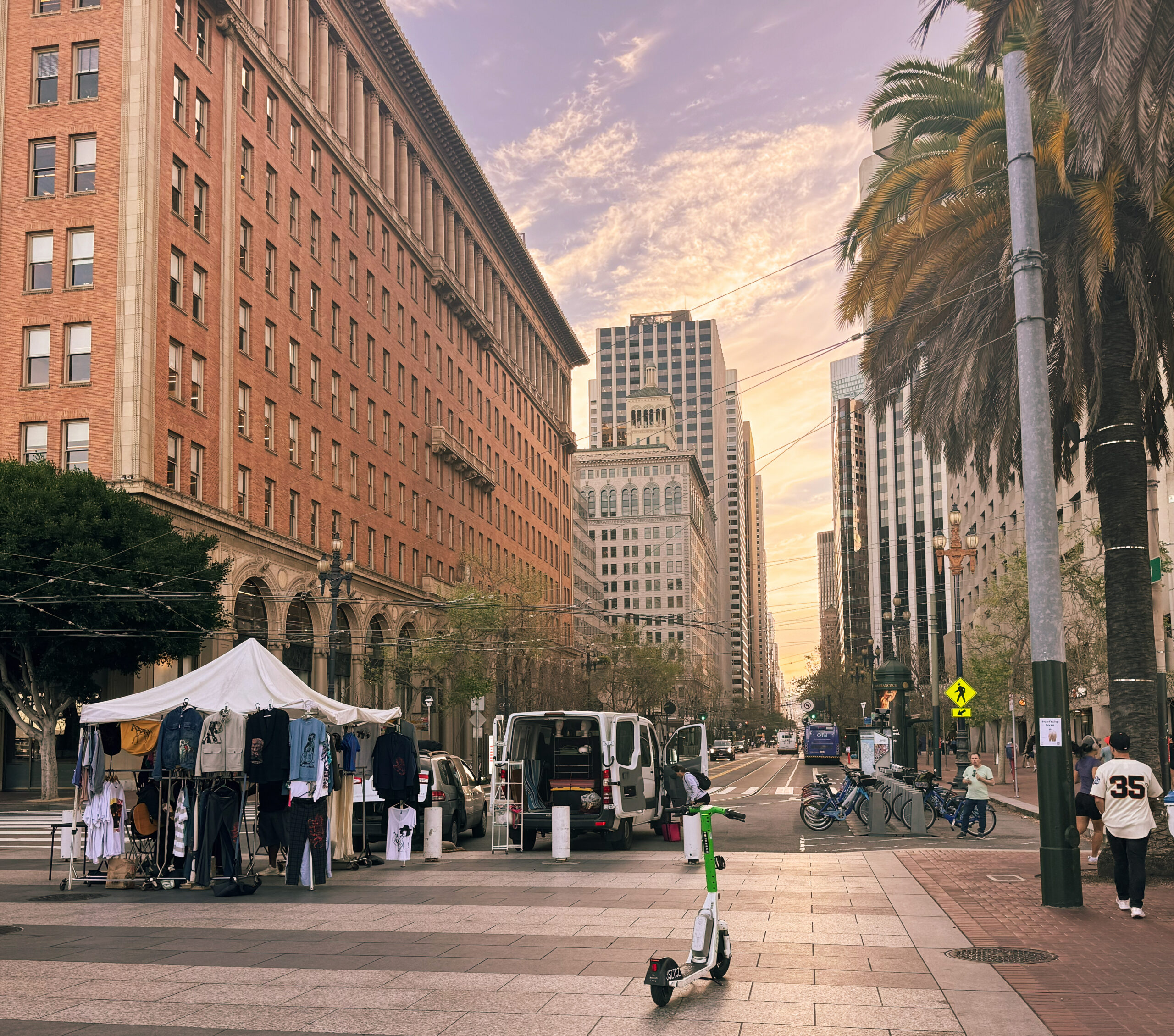
Events bring people downtown for a night, and then everything goes back to the way it was. A street gets activated, but was that the right street, the one that reinforces the future vision for the district? A building goes from office to residential (beautifully designed, of course), but how does it contribute to the wider environment? Has a strategy been put in place to take advantage of the momentum created by this conversion?
Each intervention makes sense in isolation, but without a unifying framework, they risk reinforcing the current status quo instead of building toward something new. The city has plans, the business improvement districts have plans, the developers have plans. Where are the guiding principles that everyone can reference?
Having worked as a master planner and urban designer for more than seven years in London, and having studied the architecture of cities in Europe for years before that, this is the question I have always started with, regardless of the project’s scale: What’s the overall vision, and how does this intervention serve it? I’m far more curious about why this building, why this location, how this intervention catalyzes a wider vision for the neighborhood, the district, the city. And for that to work, everyone has to be reading from the same page.
A Holistic Approach: What the Methodology Looks Like
What does a holistic approach to this transformation actually involve? I’d frame it as a scalable methodology that works for both a major metropolitan downtown and a small-town main street.
Start With the City, Not the District: A thorough analysis of the entire city (movement networks, history, culture, environmental challenges, green and blue infrastructure, land use, topography) gives you the real DNA of the place. When framing the vision, you’re responsible for surfacing the key characteristics that make the place what it truly is and enhancing them. Think of yourself as a proper tour guide: How would you show someone the city so they understand its full, authentic experience? Those qualities—some tangible, some intangible—are the ones you preserve, no matter what the future brings.
Zoom In: The citywide vision breaks down into sub-visions for each neighborhood, one of which is downtown. But now you’re using the larger vision as your guiding light. Another layer of place-based analysis at this scale ensures the sub-vision is grounded, not generic.
Identify the Flows: The most critical output of any vision is clarity on pedestrian flows, the routes that connect, the corridors that matter. In every neighborhood, you need people moving through and choosing to stay. The more flows you enhance, the more you dissolve the hard boundaries that make downtown feel like an island.
Choose Your Catalysts: Now that the vision is clear, you can identify where the catalysts should go, which buildings to prioritize for conversion, which intersections to activate, which blocks to prioritize, where periodic events could take place to set a precedent for the future use you are imagining for this space. Instead of explaining after the fact why a project will have ripple effects, you plan the ripple effects first and then position the project accordingly.
Think Across Scales: Everything is connected. What happens on one street affects the block; what happens in one district affects the city. A building conversion isn’t just about the building. Depending on its use, it could anchor an entire corridor.
What This Looks Like in Practice
If you’re curious how these steps play out, I developed a project during my time at UC Berkeley, which I also presented at last year’s California Main Street Conference, highlighting this approach. The project is set in downtown San Francisco, where—after completing the analysis described above—I identified my catalyst: the Embarcadero Center. The thesis project walks through each step, from citywide vision to site-level intervention.
Where Do We Go From Here, and Who Owns This?
In short: everybody. But “everybody” without a structure is just a crowd. Here are some steps.
First, the regulatory backbone. This effort has to live inside the planning system. It needs to be acknowledged and integrated into the general plan, or the comprehensive plan, or the master plan (depending on where you are). Because turning downtown into a neighborhood isn’t just a vibe shift—it means rewriting the rules: allowing residential uses in commercial districts; increasing density; permitting ground-floor retail with housing above. Essentially, dismantling the use segregation that created office-only districts in the first place.
And that’s just the land use layer. A real transformation touches the housing element: affordable housing requirements and adaptive reuse policies. It touches transportation: more pedestrian streets, safer bike infrastructure, reduced parking minimums, and transit-oriented development. It touches the public realm: streetscape redesign, ground-floor activation policies. And it touches social infrastructure, the stuff that actually makes a neighborhood livable: schools, grocery stores, healthcare access. None of this is optional. You can’t call a place a neighborhood if you can’t buy milk, or take your kid to school, or easily socialize there.
The office-to-housing conversion topic comes up frequently, but it should be considered as just one tool among many others. It is not a panacea in and of itself. Many assumed that office-to-housing conversions alone would solve downtown vacancy issues, but the math doesn’t support that. Studies in New York, San Francisco and Los Angeles have found that only about 10%–30% of office buildings are realistically convertible. The most successful strategies target specific building types—particularly 1960s–1980s structures with smaller, more adaptable floorplates—rather than assuming every tower is a future apartment building. And this is exactly why a holistic approach matters. The most effective downtown strategies combine conversions with new residential development, public realm improvements, cultural programming, institutional anchors, and economic diversification. No single tool does the job.
Which Brings Us to Who Actually Holds the Pen
Cities need an urban design and master planning team embedded within the planning department to maintain the citywide and districtwide visions, communicate it to the various stakeholders, oversee how projects at every scale serve it, and ensure the place stays true to its key qualities. Not a consultancy brought in for a one-off study, but a permanent entity that provides the framework that everyone else—developers, business improvement districts, nonprofits, community groups—plugs in to.
There are many who believe in transforming downtowns into livable, vibrant, fun places through a vision, a spatial logic, which ensures that everything happening in the city is aligned, complementary, and pointed in the same direction. The question is whether we do it together, with a shared vision, or keep doing it in fragments that, however well-intentioned, end up reinforcing the thing we’re trying to change.
It’s time to reboot. Consider this Downtown version 0.1.
All photos by the author.