
Remembering Robert A.M. Stern, Historic Preservationist
A lot has been written in recent weeks about Robert A.M. Stern’s immense impact as an architect, educator, writer, and historian. Stern, who passed away in late November, was indeed a trailblazer in each of these endeavors, but there was another equally important aspect to him that far fewer recognize: He was an active and passionate historic preservationist.
Stern understood the importance of historic preservation to the ambiance and appeal of cities, especially the New York he loved. More than any other contemporary architect, he acknowledged and celebrated the city’s iconic historic buildings, some famous and some less so. His hugely detailed books underscore the uniqueness of New York’s vast assortment of unique structures. He recognized that although less than 5% of the city’s buildings are designated landmarks, their existence was vital to the city’s continued appeal.
He also recognized something truly significant beyond the significance of the buildings themselves. He understood that it was the early preservationists and the equally early brownstone settlers—all those young, forward-thinking urbanists—who, by their direct actions, helped spur the rebirth of the city in the 1970s. When developers didn’t know where Brooklyn was, when everyone talked about New York’s failures, when President Gerald Ford told the city to drop dead, those young trailblazers—first in Brooklyn, then on the Upper West Side—bought and restored neglected brownstones, planted new trees and flower boxes, organized street fairs and night watches, and opened new businesses. They fought off developers who had no appreciation for the old, the well-crafted, the historically solid and just wanted to tear down whatever was in their way (much like today).
I was a young reporter in the 1960s and ’70s at the New York Post under Dorothy Schiff. At the time I knew very little about architecture or preservation, but I was following stories of the neighborhood battles going on around the city to stave off the demolition frenzy that was big in the 1970s, a relic from the Robert Moses era. I didn’t know him personally, but Stern would call me at the paper and implore me to write about this fight or that.
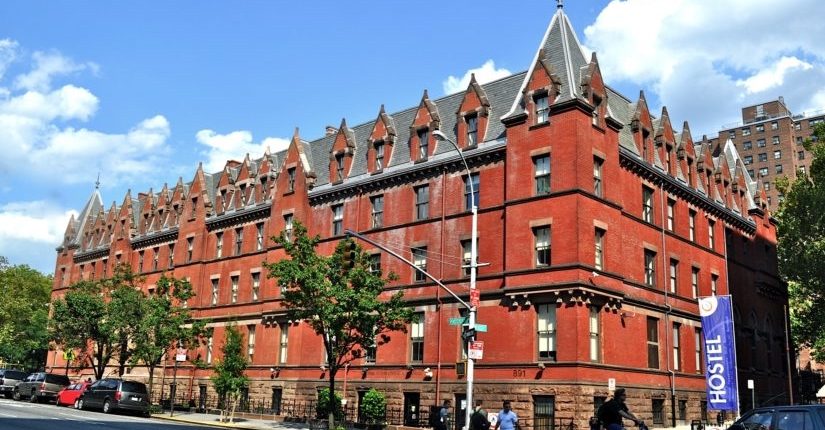
I remember his appeal to me in the early 1970s to write about the effort—led mostly by his Columbia students—to save the 1883 Association Home for Respectable Aged Indigent Females on Amsterdam Avenue and 103rd Street. At the time, most people didn’t feel safe venturing above 72nd Street on the West Side. Designed by Richard Morris Hunt, one of the greats of the 19th century (Carnegie Hall, Metropolitan Museum façade, Statue of Liberty base), the building was vacant and in danger of demolition. I wrote about the fight to preserve it. It was saved and converted into a youth hostel, which it still is today. “Red brick and brownstone, its busy, dormered, gabled roof lines are redolent of Victorian London,” says the AIA Guide to New York City. Few knew who Hunt was, including me, but we learned quickly, thanks to Bob Stern.
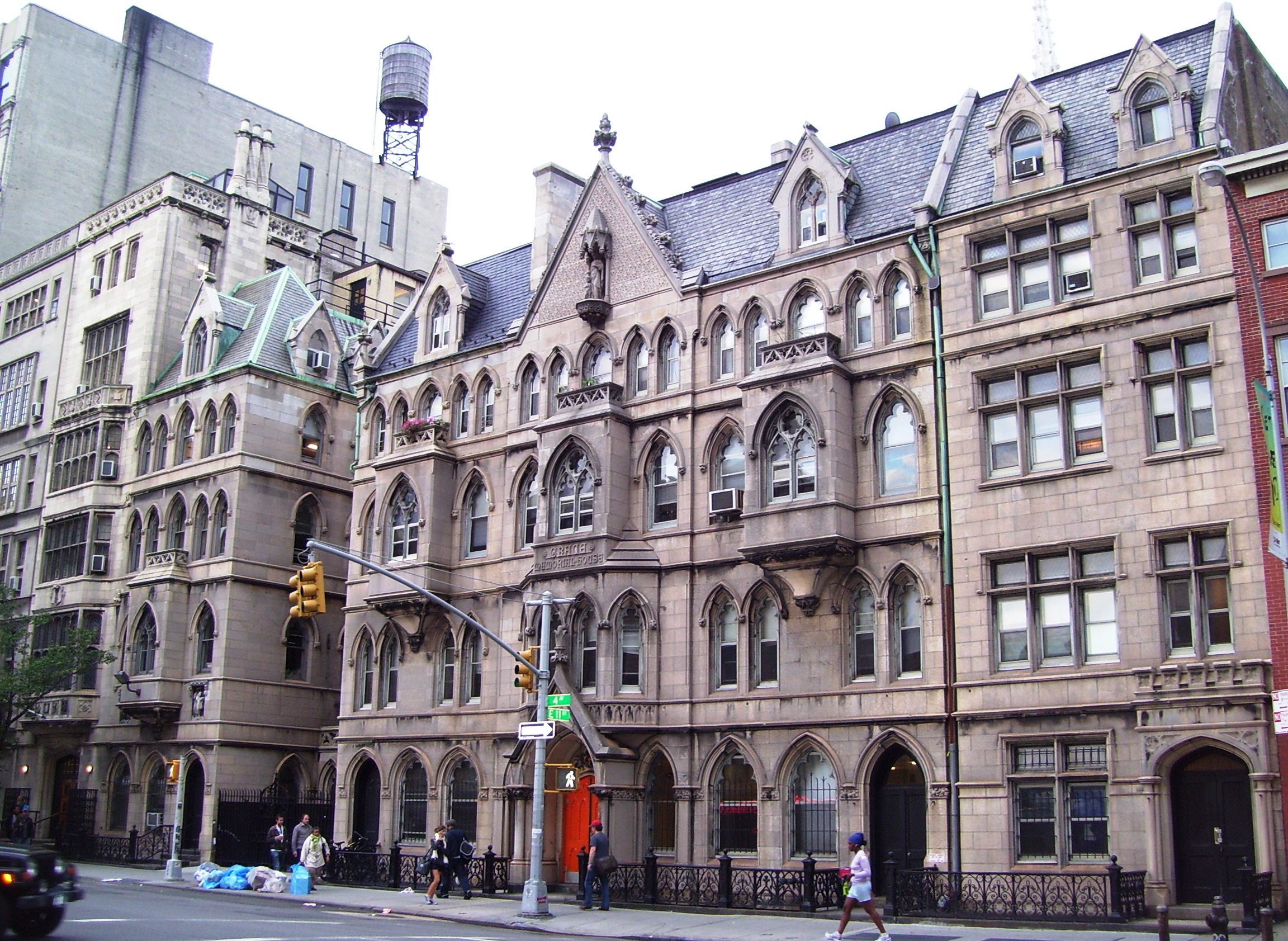
Stern was teaching his students not just about architectural history but about the importance of saving buildings. I next met those students picketing at the 1846 Grace Church on Broadway and 12th Street, designed by the well-known Gothic architect James Renwick (St. Patrick’s Cathedral). A trio of similarly Gothic row houses that stood adjacent to the church were threatened with demolition for a gymnasium for the Grace Church School. This was a big fight, involving some of the bigwigs in the preservation community, but it was Stern’s students who were picketing, and my editor sent me to cover the story. Articles like that helped the fight, and Stern was often the impetus for me to write them. As the AIA guide notes, “In this case landmark designation followed the threat of loss. Alspector’s addition amazingly fits classrooms and an entire new gymnasium underground, with no great loss of the charm of the original.”
As I covered many similar fights over the years, few architects came forth to offer their voice on behalf of threatened landmarks or to advocate for designation. For a while, the AIA New York Chapter was a regular at Landmarks Commission hearings. That is rare today. The power of the real estate community runs deep. The architecture community did come forth later on to stand up for threatened Modernist architecture. Stern was there as well. But his appreciation ran so much deeper than that. Few are similarly inclined. He will be greatly missed.
Featured image of the 1883 Association Home for Respectable Aged Indigent Females, via the New York Preservation Archive Project. In the 1970s, Stern and a group of his Columbia University students picketed on behalf of the house, which was threatened with demolition. Today it is a youth hostel.