
The Penn Station Announcement: What Did We Actually Learn?
On May 20, U.S. Department of Transportation Secretary Sean Duffy and the Amtrak Board of Directors announced the selection of Penn Transformation Partners (PTP), led by Halmar and Skanska, as the private master developer team to lead the transformation of New York’s Penn Station. The original plan—the New York State General Purpose Plan proposal of 2020, which included extensive demolition of much of the real estate around the station and rebuilding it with large office towers—fell victim to the pandemic.
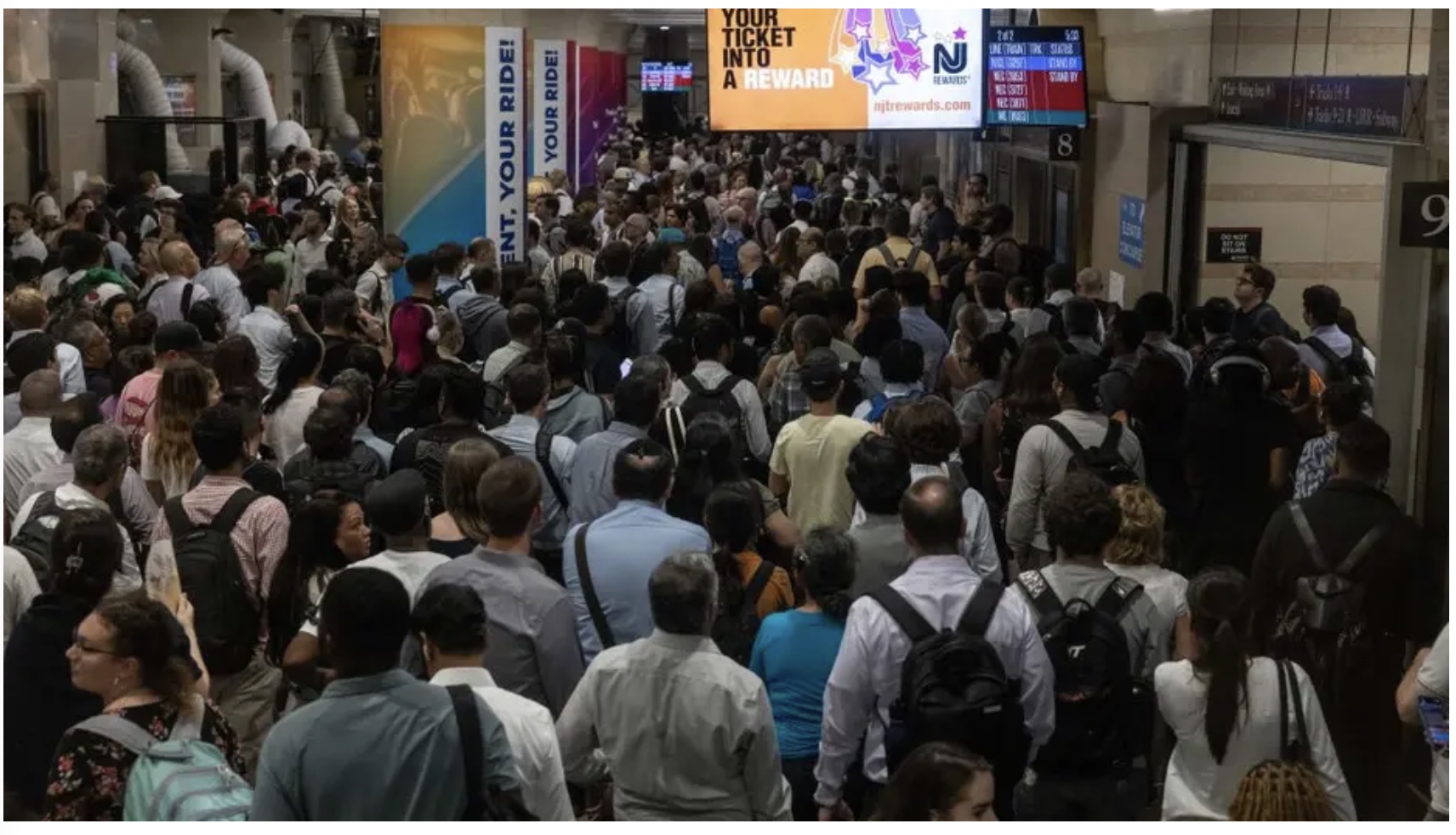
The subsequent years have seen several design proposals by different interest groups aimed at improving the current nightmare customer experience for those forced to use the subterranean maze that is Penn Station. Since 2020, the New York State Economic Development Corporation (EDC) has remained on the sidelines, and none of the subsequent proposals have gained traction or funding. Several minor improvements to the station have been implemented by the MTA and by Long Island Railroad (LIRR), but the major overall improvement that is so badly needed remains unrealized. Much of the discussion has focused on the question of “through-running,” a rather wonky issue that has been hotly debated by transportation experts. Through-running basically means that instead of entering Penn Station and then turning around to go back, trains can keep going through to Grand Central Terminal or even Sunnyside Yards and beyond.
ReThinkNYC, a nonprofit headed by Sam Turvey, offers a detailed proposal for converting Penn into a through-running station, an idea that Andy Byford—AKA “Train Daddy,” the man hired in May 2025 to lead Amtrak’s effort to fix the station—has strongly supported in principle. (When Byford was hired, most were optimistic. He had earned a stellar reputation working for the MTA to improve New York City subways until he was summarily dismissed by then-Governor Andrew Cuomo, apparently for taking too much credit away from his boss.) ReThink proposes reducing the number of tracks from 21 to 12, a change enabled by sharply reduced dwell times, as routes would no longer terminate at Penn but would extend to Queens and beyond. This would reduce the need for passengers to change trains and improve the efficiency of service. The problem is that it requires far more extensive track work, complicated by the hundreds of columns supporting Madison Square Garden (MSG), and needs more cooperation between the three main users of the station: Amtrak, LIRR, and NJ Transit. That cooperation has been sorely lacking so far.
While the new PTP proposal does seem to support through-running, the MTA, at least, has said that it has not been consulted, and it seems neither has LIRR, the station’s heaviest user. Most transportation advocates see through-running as a necessary component of any long-term solution.
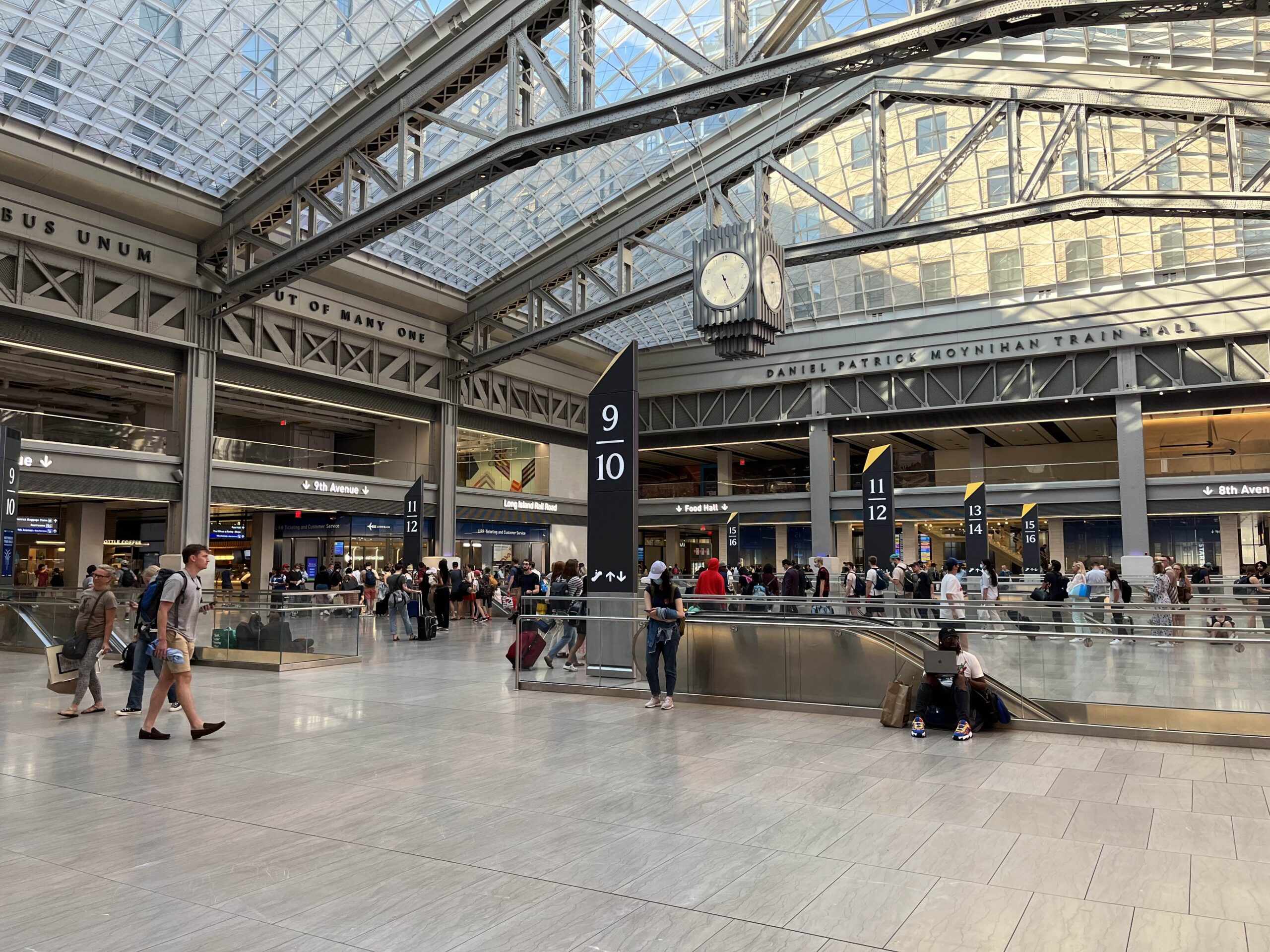
Another thorny issue is the future of MSG. Long seen as the elephant in the room in any discussion of the station’s future, MSG is the primary culprit in driving down ceiling heights and basically crushing the station below into a dark and claustrophobic experience. The contrast between Penn Station and Amtrak’s newly renovated Moynihan Train Hall to the west simply reminds us just how bad Penn Station is.
The Grand Penn Community Alliance, a nonprofit funded by Trump donor Thomas Klingenstein, envisions relocating the arena to a vacant site one block east. In its place, the group proposes, would be a steel-and-glass train hall, in the spirit of the McKim Mead and White original, facing a spacious park that would cover the station’s concourse.
Even though MSG is on a time-limited special permit that could be revoked by the City Planning Commission at renewal, the permit has been renewed with little opposition every time it expires. The lobbying by MSG’s owners, led by James Dolan, appears insurmountable. It’s a major disappointment that the PTR proposal leaves MSG in place. Any design improvements will therefore have to contend with the elephant still firmly in the room, dramatically limiting the possibilities.
The PTR proposal was announced with great fanfare. Secretary Duffy noted that $8 billion in federal funds would be allocated to the project. With Andy Byford at the podium, we can feel assured of some technical expertise behind the decision-making to come. But aside from that, the announcement provided scant information.
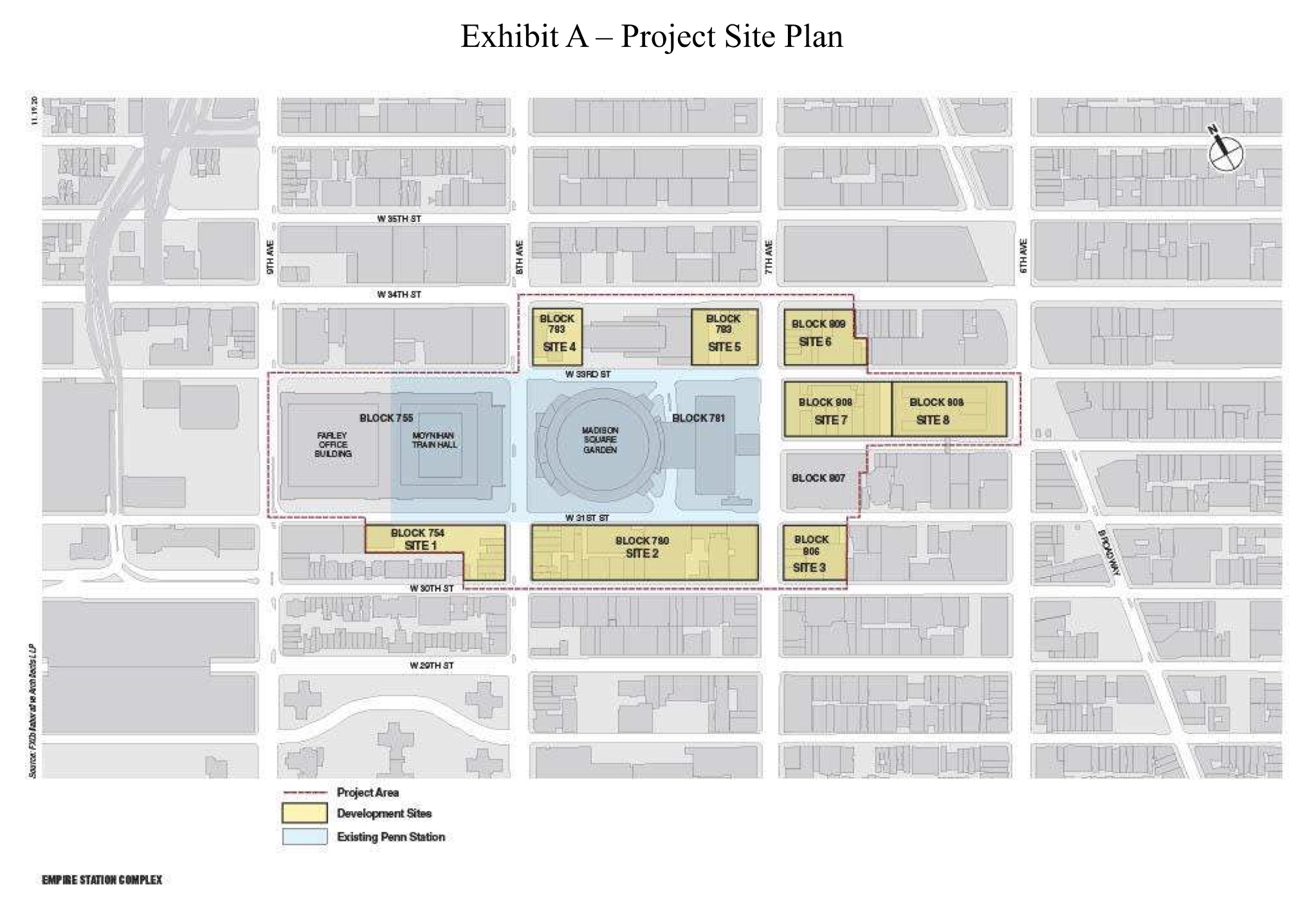
Will through-running be fully implemented, and if so, why are NJ Transit and LIRR not in the room? And what of the broader context—the streets surrounding the station? Even the EDC proposal envisioned a public realm plan that would consider all the surrounding streets, from Broadway to 9th Avenue and 30th to 34th streets. There is no mention of that in the new proposal.
The EDC’s General Purpose Plan of 2020 relied heavily on revenue generated by Vornado Realty’s redevelopment of many of the lots on those surrounding streets to contribute to an estimated cost of $30–$40 billion. Vornado’s proposal was distinguished less by its focus on improving the station and more by its ambitious plan to develop over 10 million square feet of new office space in seven new towers from the ashes of the demolition of the surrounding neighborhood. Despite the Covid-era collapse of the office real estate market and the withdrawal of EDC’s proposal, Vornado proceeded to demolish—unnecessarily—the Pennsylvania Hotel, which could have served as much-needed residential accommodation. The site has lain vacant ever since. So one is wary of Vornado’s interest in, and influence on, the new project proposal.
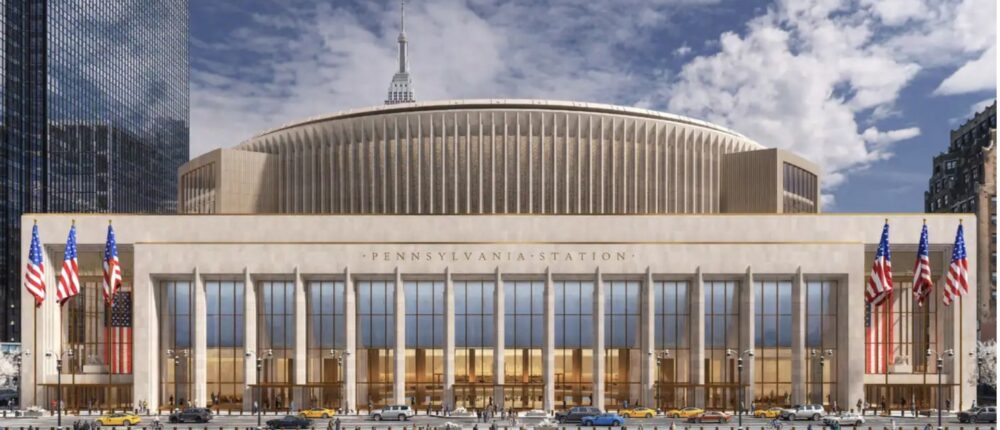
We are told they will have a “classical” look. What does this mean? One fears that Daniel Patrick Moynihan will be rolling in his grave if some neoclassical fakery is applied to the station.
What exactly are the design improvements proposed? We are told they will have a “classical” look. What does this mean? One fears that Daniel Patrick Moynihan will be rolling in his grave if some neoclassical fakery is applied to the station. In his Guiding Principles for Federal Architecture, Moynihan stated, “The policy shall be to provide requisite and adequate facilities in an architectural style and form which is distinguished and which will reflect the dignity, enterprise, vigor, and stability of the American National Government. Major emphasis should be placed on the choice of designs that embody the finest contemporary American architectural thought.” (Emphasis added.)
One can only hope that the Italian influence of the developer Halmar, whose parent company is the Turin-based ASTM Group, will prevail in bringing contemporary design to the project. This would be helped if Vishaan Chakrabarti of PAU continues as the design architect, although early design images obtained by Gothamist show the distinctly neoclassical treatment favored by Trump.
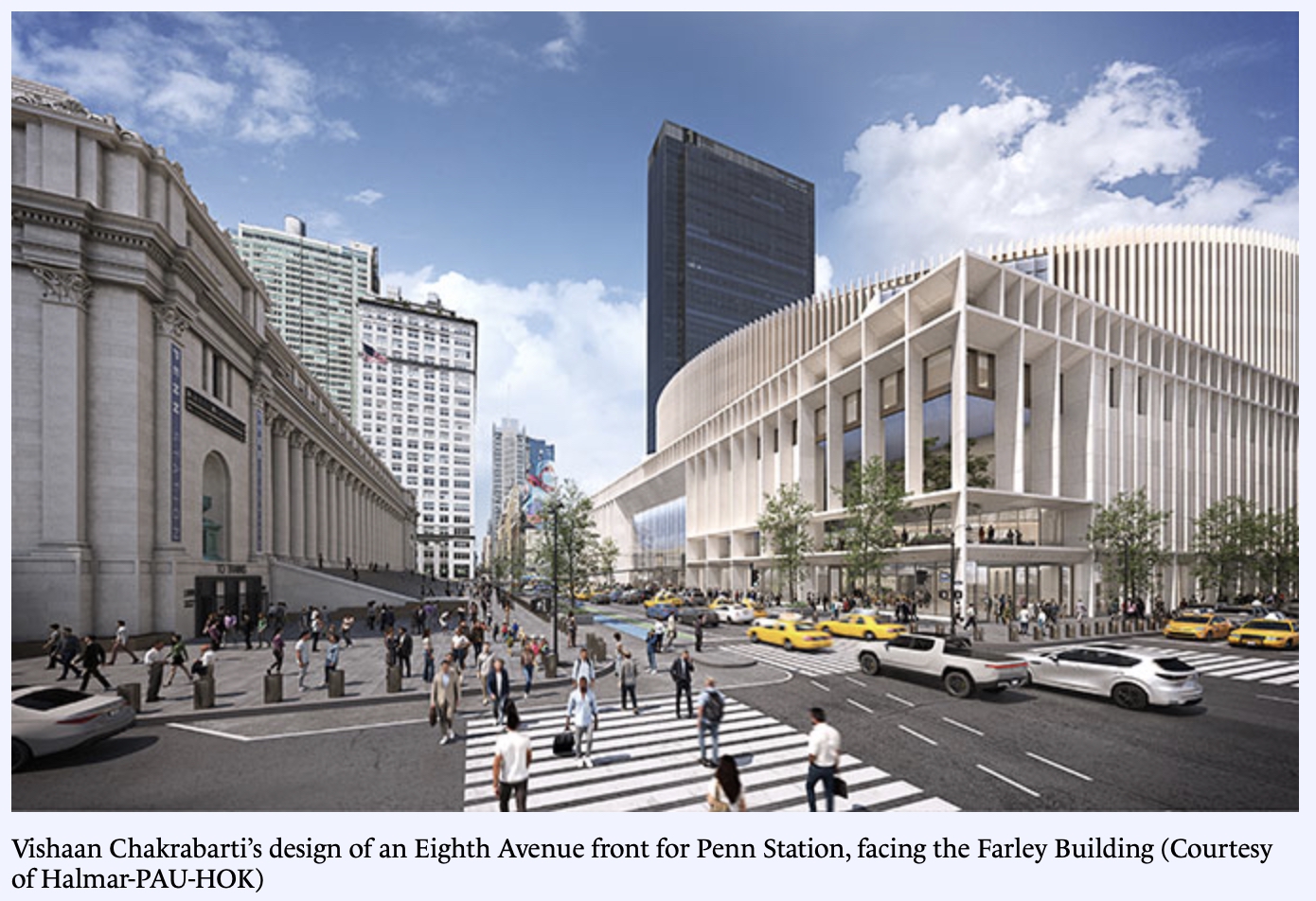
PAU’s design of an 8th Avenue front for Penn Station, facing Moynihan Station. (Halmar-PAU-HOK)
But, overall, we were told very little about Secretary Duffy’s intentions and how the new project will proceed. Billions of federal dollars are promised, but funding is also needed to complete the tunnel work under the Hudson River (for which the government has promised more money) and for the additional cost of through-running. What of the balance of the $40 billion in the EDC estimated cost? How will NJ Transit, MTA, and LIRR be involved? Can we expect Vornado’s plan for demolition and redevelopment of the surrounding buildings to be included? What of the public realm and the surrounding context? Will the project be subject to city review? What of the Community Advisory Committee Working Group, the consortium of local stakeholders that was active in advising the EDC back in 2020?
Perhaps Secretary Duffy has the answers. We should be told.
Featured image: Proposed Penn Station Renovation, via Halmar-PAU-HOK.