
The Three Lessons of My Failed Homestead
I graduated from architecture school brimming with optimism. But the self-sufficient homestead my wife and I tried to build failed in several ways. That broken dream burdened us for 16 years. I hope the story of our travails helps someone avoid the missteps we made.
Original Choices
I grew up in Rocket City USA, otherwise known as Huntsville, Alabama. Jan Davis, one of the first American women in space, graduated from Huntsville High School seven years before me. Within this atmosphere where anything seemed possible, my parents ran a groundbreaking health food store and brought in a steady stream of speakers about all things natural, holistic, and sustainable. Their principles became strong ideals for me in my teen years.
My work in architecture school built on these principles. Two years before graduation, I discovered the beginnings of New Urbanism, and so began thinking about the sustainability of a community, not just the buildings. Upon graduation in 1983, I realized I had a choice to make: focus on the urban scale or building scale. After much deliberation with my wife, Wanda, we chose to build a self-sufficient homestead and practice these principles at the level of the family and the scale of a single plot of land.
We found an acre in a rural community marketed as family farms, but which in reality became an exurban subdivision. We thought we’d follow the original promise of the place and not only live on the food we raised there, but also reduce our resource consumption to unheard-of levels. This was our first mistake.
The Appraisal Problem
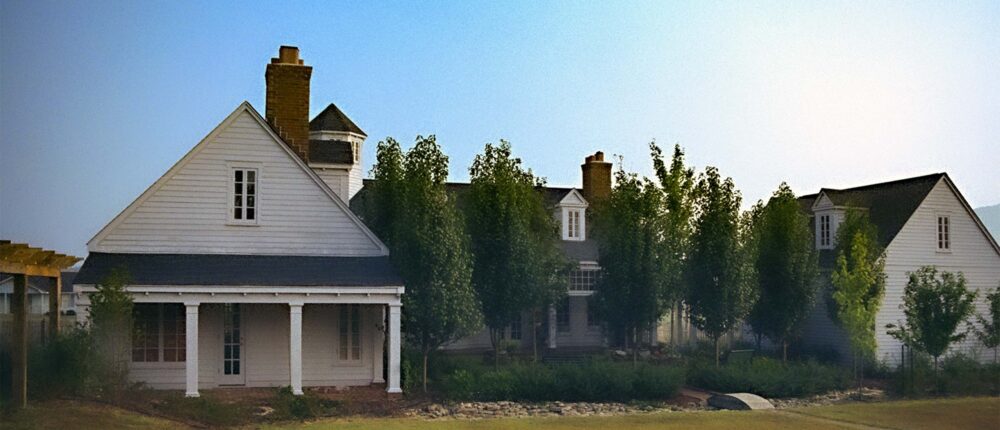
We designed the house around a central courtyard shaded by four maples in summer, but which admitted full sunlight after they dropped their leaves in the fall. The house did all the right passive solar things and was superinsulated, with 12” double walls and 16” of insulation in the roof, plus lots of thermal mass in the floors and two Russian fireplaces. In other words, it was built far better than almost everything around it—and at greater expense. Banking was much different back then, and the early 1980s were frothy days in our area, so the banker made the original construction loan based on my too-optimistic estimate (having never estimated a job before) and my job with a prominent local architect.
When we inevitably had to go back for more money, the bank sent out the appraiser that would change our world. By this time, the house was pretty far along but by no means finished. And when he took a look at everything we were doing, he had no idea how to process it and started discounting all the things that were actually extras. His appraisal came back at $27 per square foot, a ridiculous number by any standard. Regular subdivision sprawl houses were selling for at least twice that amount at the time.
But by that point we were stuck. And so we did the only thing we could: keep doing as much of the work as possible ourselves and get a bunch of credit cards to finish the house. It was brutal. We and our parents would work on the house until after midnight most nights to save money. And after we moved in, I remember knowing for several years exactly what I’d be doing as far into the future as I could see: working as many overtime hours as possible get to keep the credit card companies at bay. (Read more about the house here.)
The Time Problem
As anyone who has ever had a garden knows, fruits and vegetables don’t grow themselves. We had a double row of apple trees and plum trees around the outer courtyard, and they took some time, but the vegetables obviously took much more effort.
And then there was the problem of living 20 minutes from work, on a low-traffic day; the round trip was usually more like an hour. But it didn’t stop there. When we moved into the house in April 1987, there were still many things unfinished, and there wasn’t a bit of anything other than grass and gravel once we stepped outside. When you’re young and building things you’ve never built before, trips to the lumber yards 30 minutes or more away are likely to produce about half of the parts and tools needed to eventually finish the job. During those years, we totaled about 50,000 miles per year between our two cars. You do the math.
The Culture Problem
Add up all that time, and you can probably guess what happened to the garden we planted each spring. I had counted on our two young sons helping a lot, because I remembered how much I and my sisters loved working in our family’s garden as kids.
But one thing I missed was the fact that our parents had created a culture of loving to raise fruits and vegetables since the three of us were very young, and they did it with us. Growing up, our garden was by the lake on a nearby mountaintop where they hoped to build someday, so we were never there without them, and it became a family thing.
But we weren’t all just working together; they laid out a plot for each of us within the garden that became our own, and that’s where we spent most of our time. So we took ownership and learned to love it, and so when they needed our help in the larger garden they tended, we were happy to assist.
This is a far cry from what Wanda and I did, which was to tell the kids to “weed the garden” while we worked on one or more of the countless unfinished house projects. You can guess how well that went, with garden work being nothing but chores to elementary school boys. Thus, by June each year the garden was choked with weeds. Years later, we finally gave up and seeded the area with grass.
The End of the Line
I opened my own firm August 1, 1991, and it immediately started sucking up 80-plus hours of my time each week. It quickly became apparent that our dream of a functioning homestead was over. Yes, the house still mostly conditioned itself, with utility bills sometimes as low as $17 per month. And yes, the poorly pruned fruit trees were still producing. But the ideal of living off the land just wasn’t going to happen; we would have died of sleep deprivation. We ended up selling eight years to the day later, on August 1, 1999.
What to Do Now?
One of the biggest changes in the professional world in recent years is the ability of some people to work from home. That’s mediated, of course, by whether young children are part of the mix. I’ve worked at home, or within walking distance of home, ever since 1999, and I love it. So some things work today that didn’t work then. But in any case, look at your life and try to figure out how to get as much of it as possible within the self-propelled distances of walking and cycling. Using biointensive methods, you can raise a lot more food on much less land than row-croppers ever dreamed of. These days, an urban homestead is no longer an oxymoron; it’s something you might actually consider.
Then, try to figure out how to begin with your home as small as possible. We built 3,000 square feet because the expectation back then was building your complete home, rather than starting small and adding on as needed. Through the Katrina Cottages Initiative and the subsequent Project: SmartDwelling, we’ve learned that the smarter thing is to start much smaller.
So it all comes down to this, three keys to homestead survivability: (1) Acknowledge the time it will take in real life to do the things you want to do on your homestead. (2) Build a culture in your family that will get your children involved as happy and willing partners. (3) Get the money correct, both on the income side and the expenses side. Our homestead dream was a comprehensive failure at all three. Get them right, and you can do far better.
Featured image by the author. More essays by him can be found here.