

The Trouble With Architectural Publishing
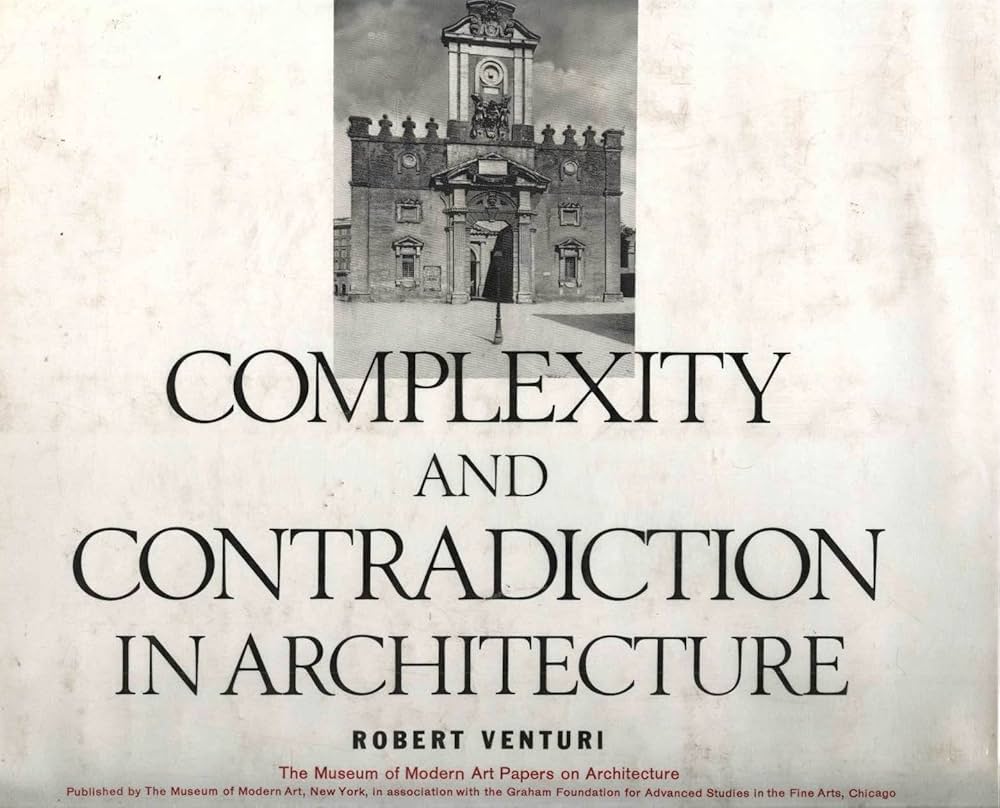
Robert Venturi’s Complexity and Contradiction in Architecture: A Gentle Manifesto, was published by the Museum of Modern Art in 1966. It is still in print. Le Corbusier’s Vers Une Architecture was published first in 1923. It, too, is still in print. Both books changed architecture profoundly.
During the 1970s, Postmodernism briefly put architecture on the front page of Time and caught the attention of many who had never considered how buildings change cities and people. Philip Johnson was, as ever, the messenger of the new trend, but it was short lived. Read my Common Edge essay “De-Coding Decon: How the Architectural Avant-Garde Became the Establishment” to find out what happened during the following decade.
Should a book with the import and impact of Venturi’s appear today, it would be a minor miracle—not because an architect might not write such a book, but because it could not be published. The Graham Foundation, which funded three of my books, as it did Venturi’s, will not give grants to unusual publications, as it did for decades. MIT Press, Yale University Press, Princeton Architectural Press (now an imprint of Chronicle Books), and Oxford University Press continue to print books on architecture and urbanism, but their output is a trickle of what it was during the 1970s. Rizzoli International/Electa has an extensive list of what can only be called coffee table books on architecture, and few are interesting to serious scholars or theory researchers.
More disturbingly, W.W. Norton, one of the most distinguished publishing houses, stopped publishing new architecture books more than a decade ago because they weren’t selling in the wider market. Two dependable publishers, Watson-Guptill and Whitney Library of Design, are not in business any more. Others, such as Phaidon, Routledge and Lars Mueller, charge prices that most students cannot afford. Authors understand that any big project will require subventions paid directly to the publisher to offset publication costs. Larger firms can afford such fees. Smaller firms usually cannot.
Publisher’s Global lists a total of 251 publishers for architecture as a subject. Thames & Hudson tops the list as a British publisher of art books, and it usually has a U.S. partner for its titles. BISAC (Book Industry Standards and Communications) codes now track all subjects among book publishers. The trends tracked by Publisher’s Weekly indicate a significant rise in traditionally published books (hardcover and paperback) from 2024 to 2025. In 2022, during the tail end of the pandemic, there were only 2,459,367 books published, a low point now surpassed by the nearly 4 million published in 2025. Adult fiction is still the most popular subject, with about 39,000 books printed last year. No figures are available for architecture, but the likely number would be in the hundreds or low thousands.
The most significant players in the current market are “self-publishing” houses like LULU. With digital printing and design on the rise, and costs going down each year, authors now have an alternative to traditional scholarly or trade publishers, which accept fewer and fewer titles based on their own marketing projections. No longer will even a university press accept a scholarly title and print the requisite 1,500 library copies for a junior faculty member, usually a prerequisite for tenure. Like many small bands and individual singer-songwriters who record, self-produce CDs, and issue songs on streaming services, authors have taken to doing the heavy lifting themselves and hoping for exposure in their preferred markets.
Architecture books generally require high-quality illustrations—not only good color photos but also drawings and linecut diagrams. In the past, with standard offset printing on presses and required color separations, the costs for printing an art or architecture book were many times higher than most other press runs. Digital printing reduced costs, but not all publishers made the switch. University presses still print offset titles regularly. This means they accept fewer titles or require large author subventions.
Look at the current digital catalogue for Rizzoli International/Electa and you will see dozens of glossy, expensive architecture titles. You will not, of course, understand who paid to have these books printed; it is highly unlikely that the publisher absorbed all the printing expenses for a high-quality hardcover book with many color photographs. In the majority of cases, even a publisher like Yale University Press will demand tens or even hundreds of thousands of dollars from the author or sponsor of an art or architecture book. Money talks in this market, as it does in virtually all others.
In the past, it was possible for the author of an architecture book to present a proposal to a major publisher, as I did to Yale in 1988, and receive a contract requiring only a manuscript and photos before printing. Publishers routinely applied for grants to cover color printing, often from the Getty Foundation, and thus the author could plan to recoup their costs from royalties. Enter Amazon during the 1990s, and things would change for both authors and publishers. Though mom-and-pop booksellers bought titles on a 40% discount and thus preserved profits for both publishers and authors (say 5%–8% for the author and the other 33%–35% for the house), Amazon demanded a 50% discount. Later, they required even more.
Non-fiction, academic writers no longer receive significant royalties for their books. One famous scholar I know had routinely gotten his 5% royalties until the Amazon years. Now he gets pennies on the dollar for his old titles. Checks for less than $25.00 are routine, but mostly they’re a fraction of that. (Not unlike musicians who often receive “royalty” checks of under a dollar.) My 2011 title for Norton has not even paid back its modest advance of $2,500. Little marketing was offered when it appeared during a recession, so no wonder it has not sold well.
The situation for many prospective book projects today is daunting. Authors who may previously have published with MIT Press or Thames & Hudson are now routinely turned down by these and other houses. Their only recourse has been to pay for publication using a “vanity press,” as many smaller architecture firms have done for years when wanting a monograph documenting their work. About 15 years ago, Gordon Goff, an experienced book designer working mainly with Hong Kong presses, decided to create an alternative imprint catering to architects, landscape architects, and architectural historians. ORO Editions began its operations out of a San Francisco warehouse and is now one of the leading publishers of high-quality design books in the world. Look at its catalogue and you will see titles from many scholars, architects, and theorists who only decades ago were working with MIT Press or John Wiley & Sons. The prices for these books are reasonable, and often affordable for students. Wiley charges several times more for comparable books.
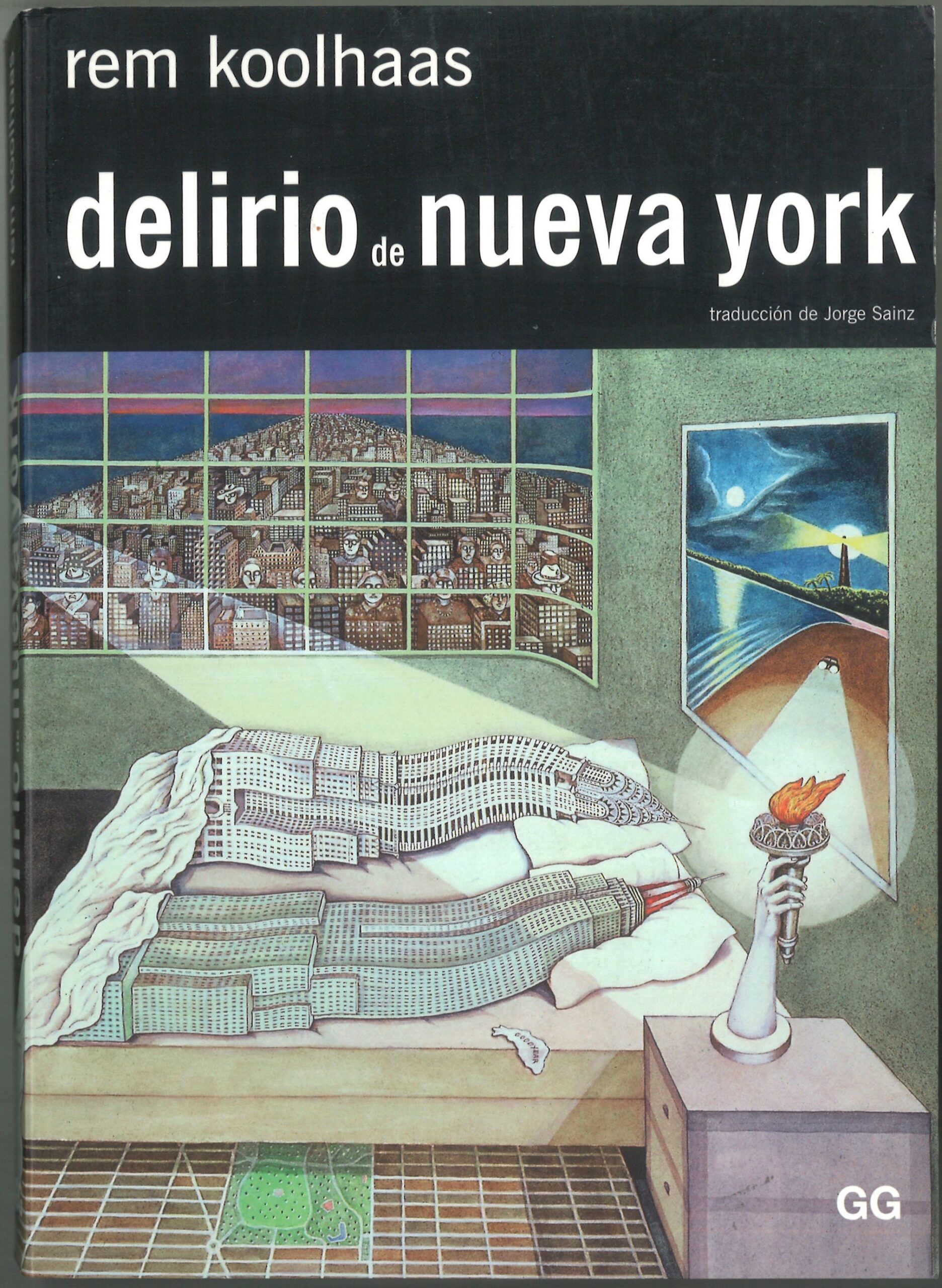
The bad news about ORO and other such publishers is that they charge significant publication fees that must be paid by the author or their sponsor. Should a writer not have deep pockets (as certainly young, adventurous ones will not), they will not publish. If teaching, they will likely “perish.” Subjects that challenge the establishment will also wither on the vine. Today, a weird manifesto like Delirious New York or The Sphere and the Labyrinth might not see the light of day. Even avant-garde journals will struggle to find sponsors.
If money dictates who can publish, as it seems to do in politics, the movies, and other media, the big players will control the discourse. In architecture, this means the biggest, most visible, firms and designers will continue to appear dominant, funded by big-money patrons and developers. The big museums will print glossy catalogues, as will the largest and most prestigious architectural programs. The establishment will tighten its grip on media exposure. Awards will go only to the best-known figures. Countervailing ideas and revolutionary discourse will be stifled. Welcome to Czarist Russia circa 1900. Burn down the palaces of architectural hypocrisy and give us the freedom to publish again.
Feature: photo by Nicolas Boullosa via Flickr.