
The Twilight of the Starchitect
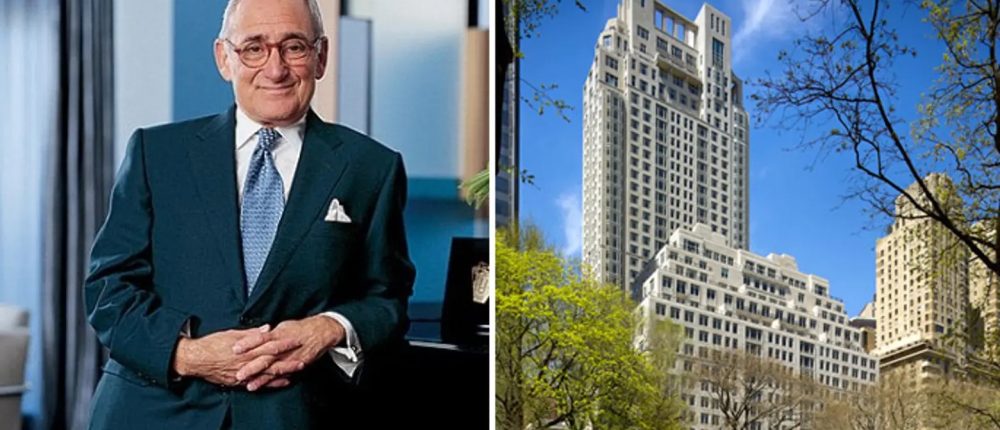
Robert A.M. Stern, one of the last starchitects, has died at the age of 86. He was a mentee of Philip Johnson, himself the very model of a starchitect: a designer who sought a cultural presence beyond his profession. It can be said that the term “starchitect” was birthed from the womb of the International Style. When the selection of an architect for a project was made a fine art exercise after the Industrial Revolution, designers such as Frank Lloyd Wright, Ludwig Mies van der Rohe, Le Corbusier, and Eero Saarinen became celebrated as both aesthetic and cultural leaders.
That legacy spawned countless others—I.M. Pei, Cesar Pelli, Kevin Roche, Charles Moore, Michael Graves, Charles Gwathmy, and many more—who have since passed. The premature death of Zaha Hadid was a reminder how old the survivors are: Peter Eisenman, Richard Meier, Tando Ando, and, of course, Frank Gehry, all well beyond the age of 80.
Hadid broke the chain of white male dominance; she also may have been the last celebrated starchitect before the term transitioned from crowning achievement to coded slur. The extreme affect of eponymous branding was hers—who she was became what she did.
Stern’s influence was vast: he built, he taught, he wrote. But what he did is done, and perspective is what we have left to consider. How was our culture enriched by his life as an architect? The river of obituaries has rightly focused on Stern’s incredibly prolific practice, his love of New York City, his role as an educator and mentor, and his unrelenting focus on history. But this phenomenon of designer celebrity—which morphed into the fine arts cause of Modernism—was largely unheard of before the 20th century, and it’s now vanishing because our culture has changed. The Kardashian model of style over substance is collapsing in favor of a million points of demi-celebrity. In other words, the influencer may have killed the starchitect.
The larger-than-life persona of the starchitect is now a shrinking island of public focus because of the internet’s dominance and ubiquity. Everyone, and no one, is famous.
What dominated the public perception of architecture and designers—the larger-than-life persona of the starchitect—is now a shrinking island of public focus because of the internet’s dominance and ubiquity. Everyone, and no one, is famous. Everyone now has the tools for the exposure that were once reserved for the select few—in all things, not just architecture. Mass media has fractured and flipped. There is no Walter Cronkite, Carl Sagan, or Jonas Salk. Sure, there’s Rachel Maddow, Bill Nye, and Anthony Fauci, but they are important to increasingly smaller groups of devotees. About 30 million Americans watched Cronkite every night; Maddow might get 2 million.
Outside of our cloistered world of architecture, can anyone name a “famous” architect? “Studio Gang” may be Jeanne Gang, but her persona is “studio.” Can any non-architect name a single building her firm has designed? She is indisputably at the top of her profession, but also part of a noisy world where a seemingly infinite number of voices are clamoring to be heard.
Before the internet, media and (by extension) democracy were connected through gateways; radio and TV, magazines and books, museums and schools—all had designated portals that directed us to see what was selected for us to see. Today, anyone can fancy that they’re the editors of their future. Architecture schools had a career goal for all its students to aspire to be a starchitect: now an evolving career has spawned any number of ways an architectural education can be specialized, only one one of which is designing buildings.
Publication has gone from mountaintops of approbation and exposure to an empowered but unedited stream of self-promotion. Beyond self-publishing (always available, but now mainstream), the free and open access widens the lens of cultural view to unlimited audiences. None of these architectural media autodidacts are starchitects: but they do get their stories told to a tiny world of those who “follow” them, who are “friends” with them, who occasionally “trend.”
There will never be another Robert A.M. Stern. In his place are websites, blogs, Substack feeds, crowd-sourcing efforts, and now AI. As the last of his tribe passes, those who are left and knew the vice grip fame had on how we saw buildings are left without celebrities or enemies: we may just have to confront the meaning of why we create, rather than what is built.
The clear-cutting swath of the 2008 economic convulsion that forced the inevitable end of analog dominance changed much of our 20th century life. There once was a curated catalogue of “good” works that was celebrated by a fairly tight circle of media participants, but that is gone forever. And this evolution is completely unresolved. AI will do what television did to radio, what movies did to vaudeville, what still photography did to painting. We do not know what ways we will touch each other, but starchitects will likely not be part of it.
Featured image via 6sqfeet.