
What Foreign Architects Get Wrong in the Global South
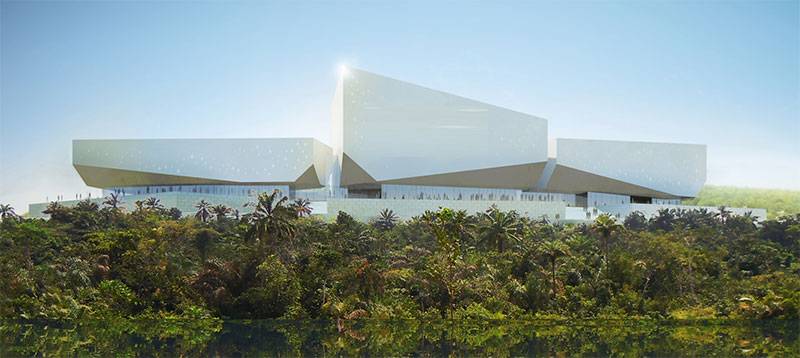
The Calabar International Convention Centre (CICC), designed by the Danish firm Henrik Larsen and completed for nearly $90 million, was intended as a symbol of progress. Commissioned by Nigeria’s Cross-River State government after an international competition, it has faced criticism for its high cost and cultural-deafness to its surroundings. The building’s form and materials bear little connection to the local landscape or the people it was meant to serve. Locals have also argued that the money could have been used far more effectively to improve healthcare, public schools, and other aspects of life for citizens. Since its completion in 2015, the building has been largely underutilized and even became a target of arson and looting during the 2020 #EndSARS protests, when parts of it were torched, leaving behind a hefty repair bill and a bitter reminder of the misplaced priorities that birthed it.
This building is not unique. Controversies surrounding vanity projects in the Global South have ignited a broader and long-standing debate about the influence of foreign architects in the region. The backlash against these projects highlights deep-seated frustrations, both within the local architectural community and among residents who increasingly question the dominance of external influences in shaping their built environments. While this issue has sparked industry tensions, its roots extend beyond professional rivalries. This is more than just a professional dispute among architects—it’s a cultural, economic, and ideological struggle over who gets to define the future of cities and communities in the Global South. And too often, when foreign architects dominate public commissions in these regions, what gets ignored are the very people who must live with the results.
Over the years, the Nigerian Institute of Architects (NIA) has campaigned against the use of foreign designers for projects when domestic expertise was more than capable. The issue is not specific to Nigeria; in India, the Council of Architecture has repeatedly protested the preference for foreign firms in high-profile public projects, often bypassing open competitions and transparent procurement processes. Similarly, the Ghanaian Institute of Architects has also protested the award of multiple public project briefs to a foreign architecture firm, while ignoring local architects. These grievances reflect a broader frustration across the Global South: the sense that local professionals are being sidelined in favor of global “starchitects” who bring prestige but often lack a deep understanding of the communities they’re designing for.
This is not about nationalism in its narrow sense, but about fairness, especially for countries where most architects often earn less than $400-a-month; the sight of foreign firms receiving commissions worth tens of millions of dollars naturally creates resentments.
To those left out, the message is clear: their ideas and labor, their very presence, are expendable. This exclusionary pattern often stems from opaque decision-making processes that prioritize global branding over local needs. In fact, foreign commissions often skip transparency altogether. Deals are struck in ministerial offices, sealed by handshakes with politicians who crave monuments to vanity and a cynical desire to burnish their tainted images. For them, a glittering new building designed by foreign architects offers international prestige. Whether the community actually needs or can afford that building becomes secondary.
Too often, these projects become conduits for corruption. Money meant for schools, roads, or hospitals is funneled into concrete and steel. In cities where running water is unreliable and power cuts are routine, governments spend millions on architectural spectacle. The gulf between need and reality becomes an indictment, not just of political leadership but of the profession itself. Beyond the financial misallocation, these prestige-driven initiatives frequently rely on superficial partnerships that fail to integrate local knowledge, resulting in designs that are out of touch with on-the-ground realities.
On paper, most Global South countries require foreign architects to work with local partners. In practice, these “collaborations” are tokenistic. Local firms are often little more than signatures on official documents. Designs are conceived in studios in London, Milan, and New York, with minimal input from those who understand the climate, culture, and daily rhythms of the people the buildings are intended to serve.
The results are predictable: buildings that look impressive in glossy renderings but falter in reality. Glass facades in tropical cities trap heat, demanding energy-guzzling air conditioning. Imported styles ignore indigenous wisdom and centuries-old techniques of shading, ventilation, and adaptation. A skyscraper might photograph well for a design magazine, but for the people inside, it can be a daily struggle against heat, inefficiency, and social alienation.
Some foreign architects attempt gestures toward local identity, weaving in motifs or patterns from indigenous art. But too often these flourishes are merely decorative. They don’t grapple with the deeper social and historical forces that shape communities. At worst, they come across as tone-deaf or even exploitative: cultural appropriation, stripped of context.
Architecture that fails to resonate with local realities risks becoming irrelevant or worse, oppressive.
Gleaming glass towers that ignore climate and culture send energy bills soaring. These inefficient buildings symbolize a disconnect between design and lived experience. And these practical shortcomings highlight a deeper issue: the superficial incorporation of local elements while in pursuit of aesthetic innovation overlooks the human impact of development practices and ignores the cultural peculiarities of the communities involved.
The scandal surrounding these projects offers a broader pattern. From Africa to Asia, foreign-led projects have been entangled in ethical controversies: exploitative labor practices and unsafe construction sites. Even more troubling, the land acquisition process for some of these projects often includes forced demolitions, where hundreds of families living in informal settlements are displaced without adequate compensation. These lots are then converted into high-end luxury properties, further exacerbating social inequality.
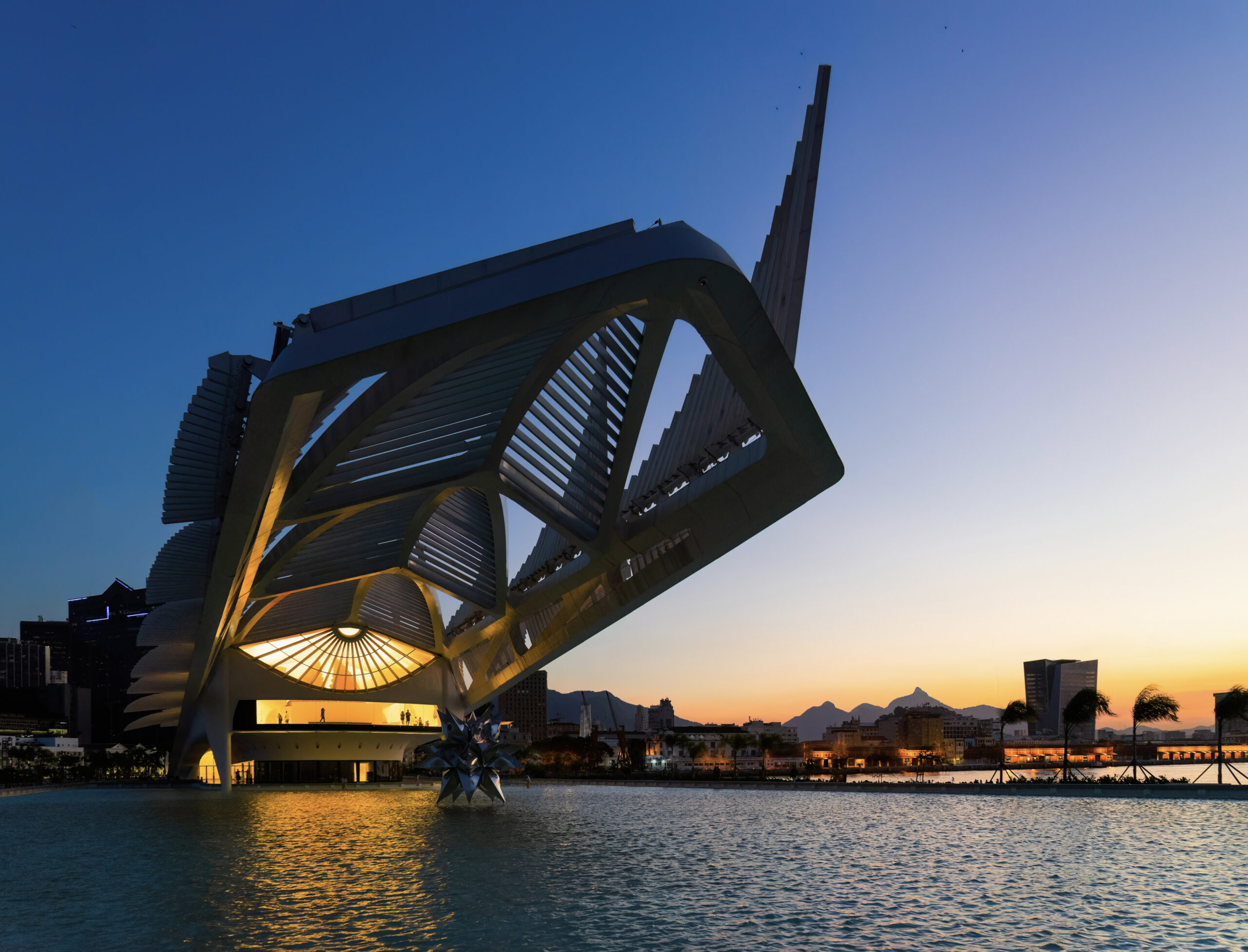
Several prominent projects across the Global South demonstrate how these inequalities play out in practice. In Rio de Janeiro, Santiago Calatrava’s Museum of Tomorrow faced similar outrage. Built in the heart of a favela, the museum displaced residents as city authorities failed to deliver on promises of affordable housing and community development. What was intended as a futuristic beacon of progress became, for many, a monument to exclusion.
In Baku, Azerbaijan, Zaha Hadid’s Heydar Aliyev Centre, one of the most photographed buildings in the world, embodies this contradiction on a grand scale. Praised for its unique form, the project has been condemned for the human costs behind it: forced evictions, exploitative labor, and its use as a soft-power symbol for an authoritarian regime. What should have celebrated cultural identity instead became an architectural smokescreen for repression.
These examples, amongst many others, expose a troubling pattern: global acclaim for architecture that alienates or displaces the very people it claims to represent. These abuses cannot be dismissed as unfortunate side effects. They’re baked into a system that prioritises prestige over people. Foreign architects may argue that they are not responsible for political corruption or land seizures. But indifference is complicity. To design a building without acknowledging the social cost is to abdicate moral responsibility. Architecture is about more than form and function; it’s also about social impact. Therefore, addressing these blind spots requires a fundamental rethinking of how global architectural collaborations are structured, shifting toward models that emphasize equity and genuine involvement.
In a globalized world, it’s unrealistic to expect architectural briefs to stay within national borders. Cross-border architectural practice has become a hallmark of globalization—our interconnected age, driven by the flow of ideas, capital, and talent across regions. Yet, global collaboration in architecture need not be adversarial. The point is not to ban foreign architects from the Global South, but to demand a different kind of practice, one built on humility, partnership, and accountability.
True collaboration means engaging local professionals from the start, not as an afterthought. It means listening to communities about what they need, not imposing imported visions of grandeur. And it means valuing knowledge that is often overlooked: the climate-savvy wisdom of traditional architecture, the insights of local builders, the voices of everyday users. It also necessitates a shift in mindset, moving away from perceiving Global South projects as jackpots, opportunities for unbridled artistic experimentation, or branding exercises.
Leading professional organisations like the American Institute of Architects (AIA) and the Royal Institute of British Architects (RIBA) must play their part, holding their members practicing overseas to the same ethical standards they uphold at home: no complicity in corruption, exploitation of labor, or disregard for local communities. Anything less undermines the credibility of the profession worldwide.
Governments in the Global South, for their part, must recognize these projects as spaces that must serve real communities with genuine needs, ensuring transparency, accountability in the procurement process. Genuine enforcement of collaboration requirements is also essential if architecture is to serve the public rather than the powerful. Ultimately, this fairer approach can transform architecture into a force for positive change, one that truly honors the humanity at its core.
At its best, architecture uplifts, embodying dignity and aspiration, creating spaces where people can work, worship, gather, and dream. This responsibility is too important to be left to vanity, prestige, or fashion trends. Foreign architects who wish to leave a meaningful legacy in the Global South must embrace this responsibility. They must learn to listen. They must understand that the true measure of their work is not in awards or magazine covers but in whether the communities they design for feel seen, respected, and served.
Globalization guarantees that architecture will cross borders. The question is whether it will accentuate pre-existing prejudices, hierarchies, and inequities, or evolve into a practice of cultural responsiveness, equity, and respect.
Featured image: Calabar International Convention Centre, Calabar, Nigeria. designed by Henrik Larsen, via Wikimedia Commons.