
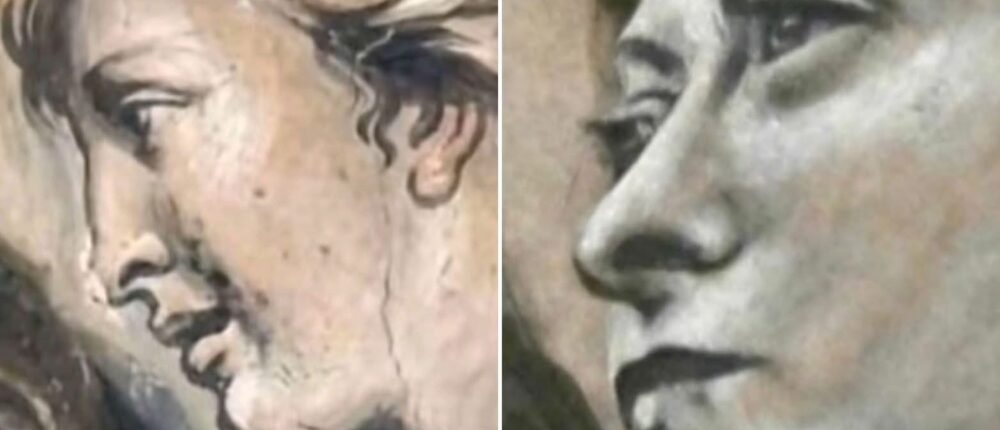
Controversy in Rome: “You Don’t Make History, You Are History”
Do not let us talk then of restoration. The thing is a Lie from beginning to end,” wrote the English art critic John Ruskin in his 1849 book The Seven Lamps of Architecture, which was inspired by years spent documenting the historic monuments of Italy. Today, a volunteer restorer at the medieval Roman church of San Lorenzo in Lucina seems determined to prove Ruskin right.
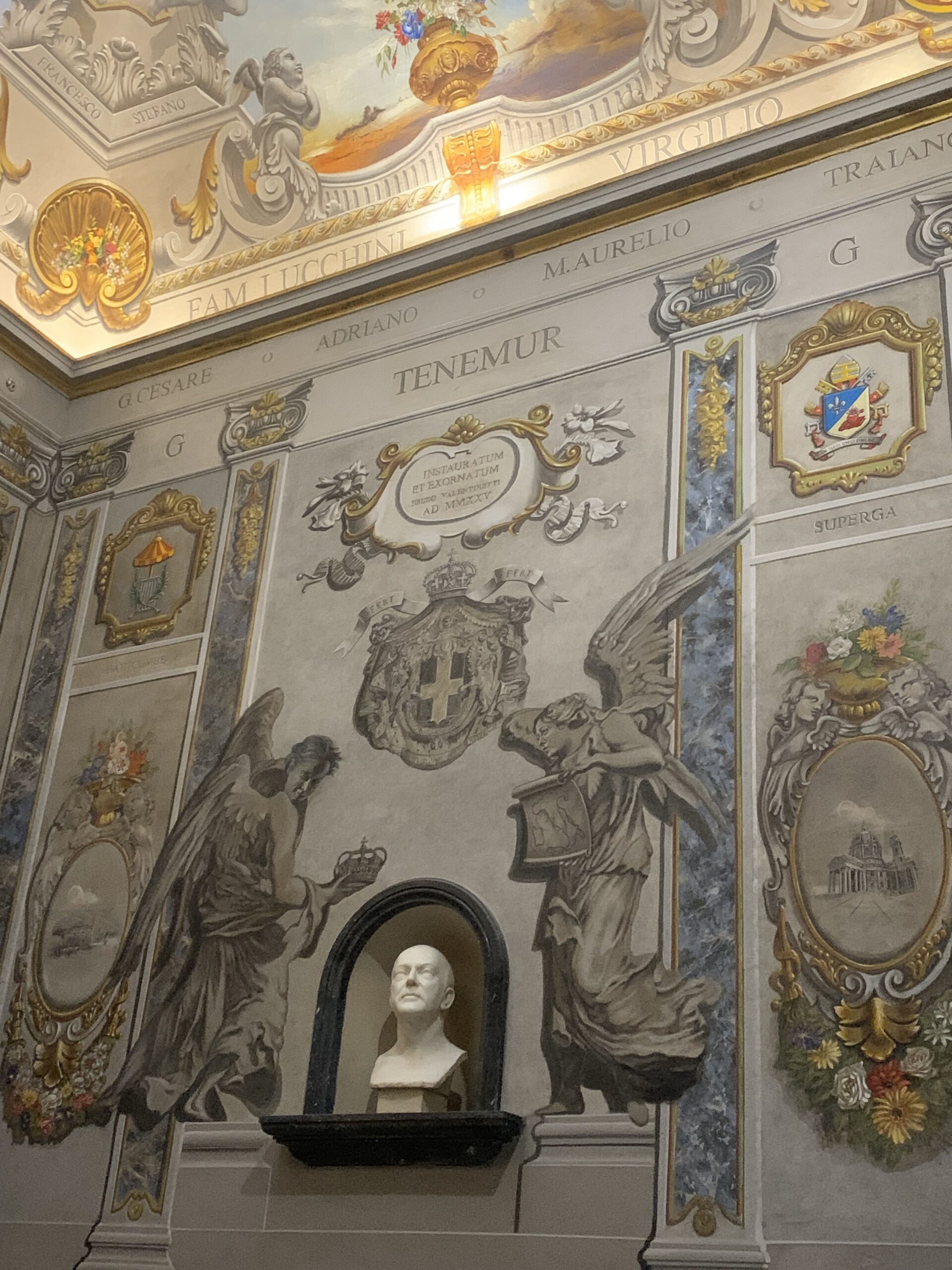
On January 31, the city of Rome awakened to local newspaper La Repubblica’s headline photo of a newly restored fresco: an angel bearing an unmistakable resemblance to Prime Minister Giorgia Meloni, glowering fiercely into the middle distance while presenting a scroll with a crude map of Italy to the funeral bust of the nation’s final king, Umberto II of Savoy. The chapel, located in the Basilica di San Lorenzo in Lucina, is a historic church, a mere five-minute walk from Meloni’s residence at Palazzo Chigi.
The response was immediate, prompting an avalanche of political backlash, unmanageable crowds, and, inevitably, memes. References to the viral 2012 botched restoration of an Ecce Homo fresco in Spain abounded. Even Meloni’s social media team quickly posted a photo of the image with the wry caption, “No, I definitely do not look like an angel.” I arrived later that afternoon to find clergy fending off the press and a queue of onlookers, who ranged from gleeful to indignant. What political message was the restorer trying to convey? How had such a desecration slipped unnoticed through the cracks of Rome’s formidable cultural heritage apparatus?
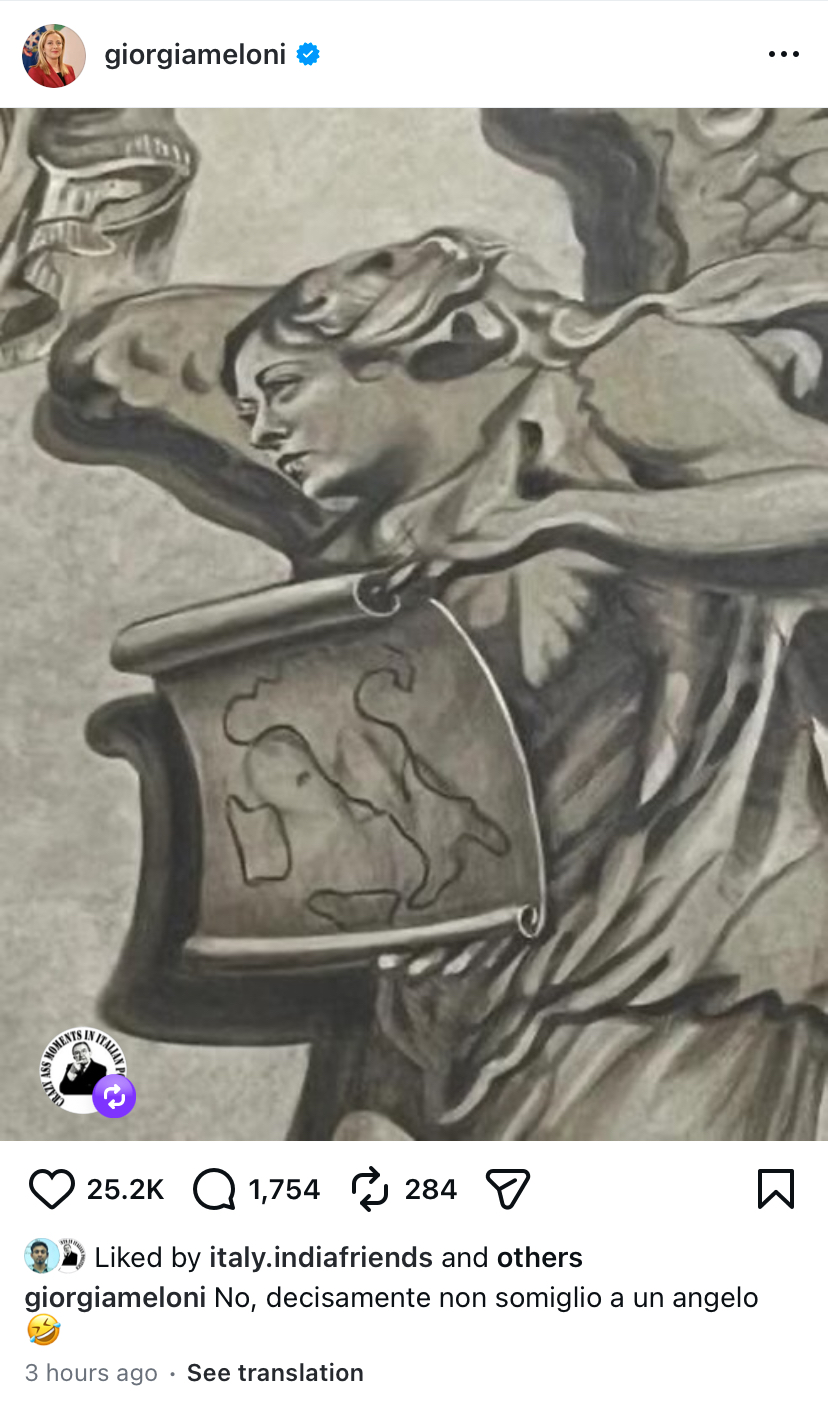
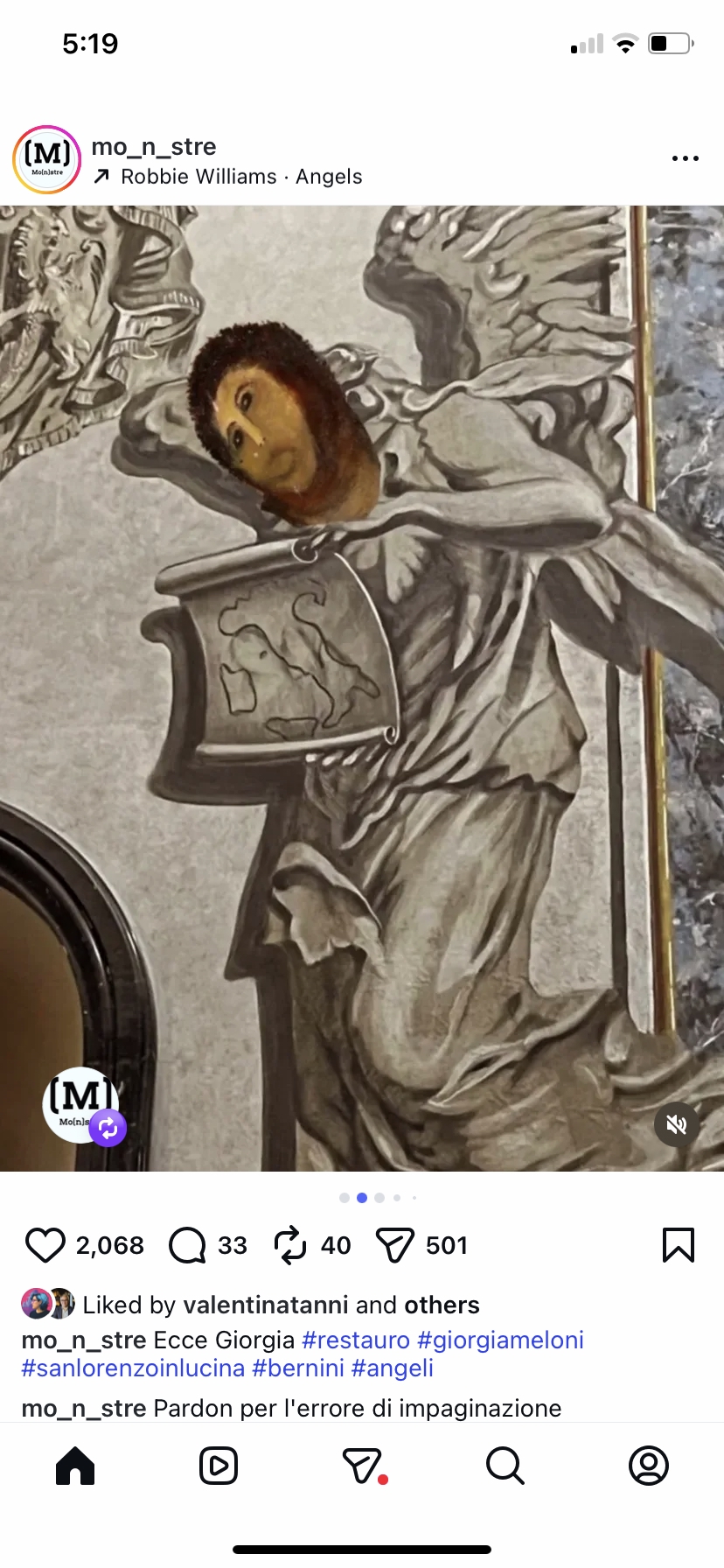
A good time was had online by all, including Meloni’s public relations team. Images: Giorgia Meloni official Instagram; meme produced by Italian arts and pop culture Instagram account Mo_n_stre.
Bruno Valentinetti, the restorer himself and an 83-year-old sacristan (read: church volunteer), was only too happy to answer. In an interview released later that day by the Corriere della Sera, he disavowed any political motive and scoffed, “Who says it’s her? I restored it the way it was before.” Valentinetti also happens to be the original artist, a rather unusual scenario for historic church restoration in Rome. Although San Lorenzo dates to the 12th century, with Renaissance and 19th century reconstructions typical of nearly any church in the center, the chapel in question is relatively new, dedicated to Umberto II shortly after his death in exile in 1983. Valentinetti added the frescoes, a phantasmagoria of monarchist sentiment, between 2000 and 2002. On the rear wall of the chapel, above the crucified Christ, reads the slogan, “Tu non fai la storia / Tu sei la storia” (“You don’t make history / You are history”).
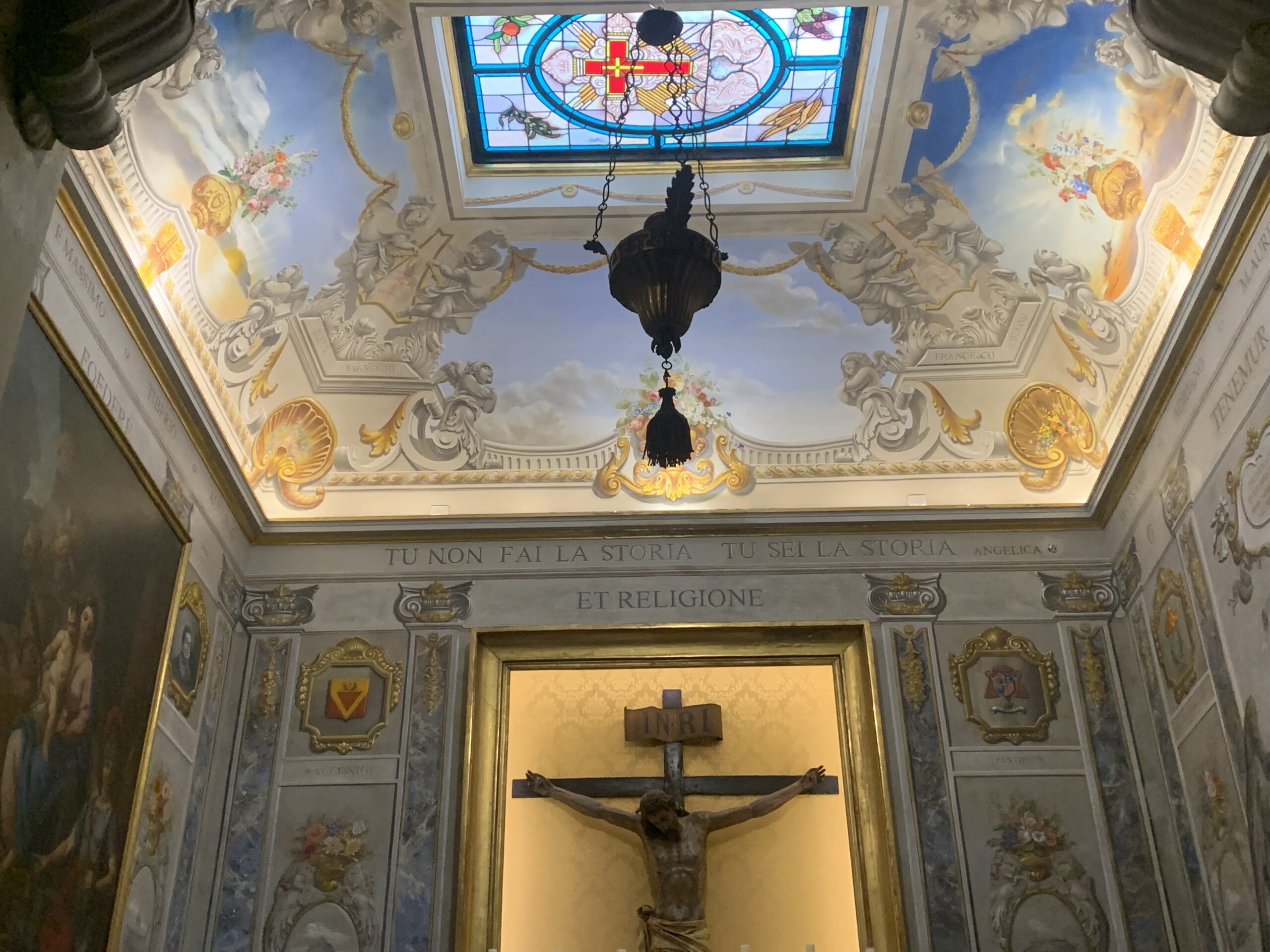
While municipal authorities and the Vatican have a long history of sparring over ownership of restoration projects throughout the city, both the Special Superintendency (the ministerial body responsible for cultural heritage) and the Diocese of Rome presented a united front against the project. Daniela Porro, head of the Special Superintendency of Rome, assured reporters gathered outside the basilica that although a fresco dating to 2002 “is not a cultural asset; in fact, it is not even protected,” the restoration would be subject to investigations by relevant technical experts. Parish priest Daniele Micheletti expressed exasperation at the “procession of people that came to see it instead of listening to mass or praying,” adding, “I don’t understand this fuss. Painters used to put all sorts of things in frescoes. Even Caravaggio painted the face of a prostitute. … I don’t want the parish to be considered Melonian.” Cardinal Baldo Reina, the Pope’s Vicar for the Diocese of Rome, quickly issued a formal statement, simultaneously denouncing the restoration and distancing the Vatican from Micheletti’s more laissez-faire approach to liturgical art: “It’s firmly reiterated that images of sacred art and Christian tradition cannot be the subject of improper use or exploitation, being intended exclusively to support liturgical life and personal and community prayer.” Certainly a fine sentiment, but the Vatican’s insistence on apolitical art rings a bit hollow in a chapel designed to honor the May King.
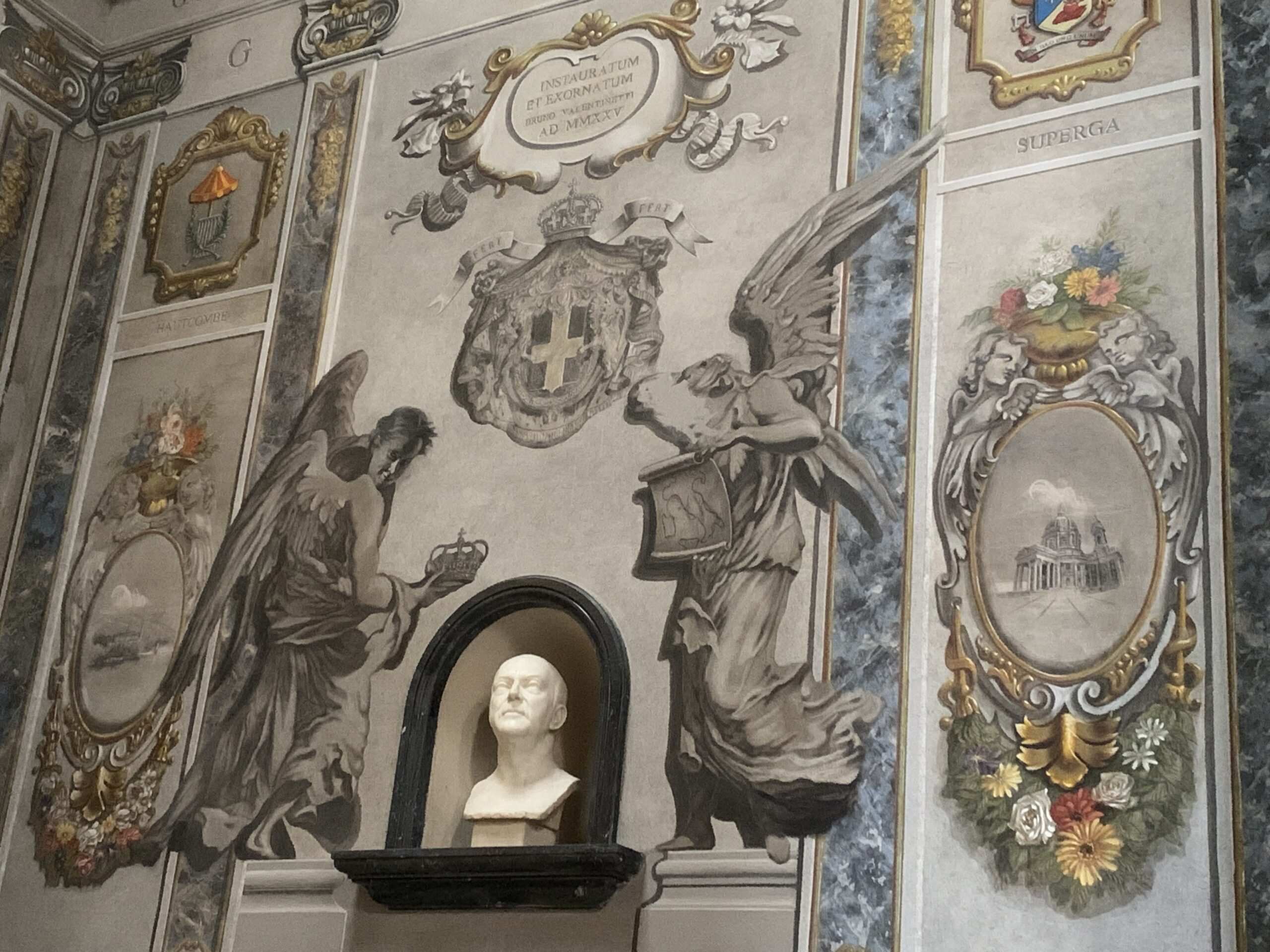
The offending fresco, still obscured by plaster in late March.
Eventually, Valentinetti confessed that his restoration was indeed intended to depict Giorgia Meloni and said to La Repubblica that the Vatican ordered him to plaster over the image a few days later, on February 4: “Yes, it’s the prime minister’s face … but it’s similar to the previous painting.” The Vatican has released no further comments, and the blank swath of plaster over the angel’s face has persisted into the Roman spring.
All photos by the author unless otherwise noted.