
The Car Trap and How I Escaped It
Getting rid of my car has been a long-term goal of mine, one I finally achieved a few months ago after moving back to what seems to be America’s only truly walkable city (more on that later).
Every news story seems to reinforce the rightness of this move. Gas prices are going up, and when that happens, they tend to stay up. Affordable cars are a thing of the past, at least in the U.S. And a growing number of car owners have negative equity in their cars—not so surprising when you realize that a new car loses 10%–20% of its value the moment you drive it off the lot. I’ve never liked cars, and I never aspired to own one. But, like most Americans, I’ve often found myself in circumstances where I couldn’t get along without one.
Most recently, back in 2013—a halcyon era of zero down and zero percent financing (I hope you read that in your best car salesman voice)—I had purchased a new Subaru Forester. I was not happy about it. But, back then, having moved from Manhattan to the suburbs, I’d accepted that much of my time would be eaten up by driving, an activity I dislike.
A Subaru is a decent car. And though I paid it off within a couple of years, my bank account suffered continued shocks: $130 a month for car insurance, between $80 and $100 a month on gas, $1,500 for brake pads here, $1,200 for new tires there.
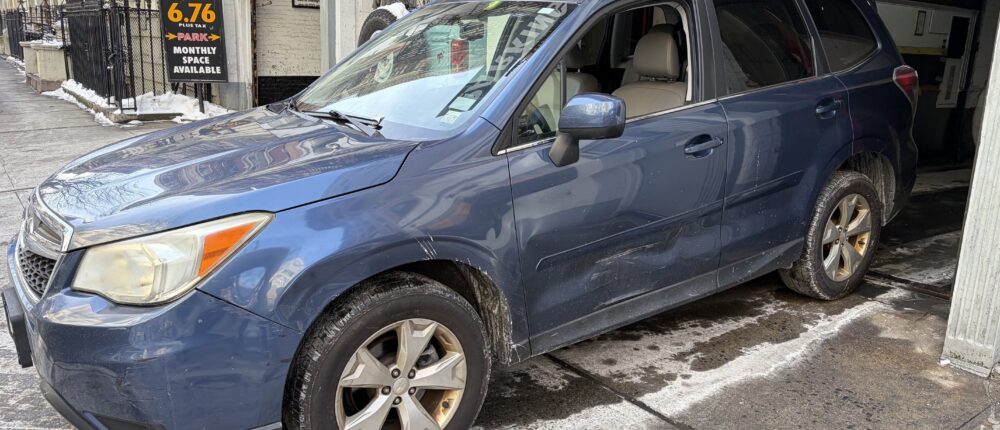
Those were the foreseeable costs, but various unexpected expensive things also happened on a regular basis: a lunatic from Boston rear-ended me at a red light in broad daylight; sideswipes took both side mirrors (on separate occasions); an unknown nocturnal incident while I was street-parked left the car with obvious, ugly body damage.
OK, I can hear the sound of a million car owners warming up their tiny violins. The truth is that none of this merits any extraordinary complaint, and all of it could easily have been much worse. And none of it is news to any car owner: expensive repairs and pricey fuel are a necessary evil of car ownership. Indeed, a truly savvy budgeter could probably have predicted some of the expenses that took me by surprise, something I never managed to do.
Maybe that’s because, deep down, I never really accepted my car-dependent state. Car dependency has always struck me as a trap. I like spending money as much as the next gal, but I don’t like spending money in endless, unpredictable intervals on something I would much rather live without. And having lived happily without a car before, I was always scheming to get there again.
Sustainable Cities Offer Robust Public Transit, and That Leads to … Fewer Cars
Cars do a lot of harm in U.S. cities. They make the streets less safe for pedestrians, cause noise and air pollution, make bus routes slower, and clutter public space with private property. But getting rid of them is a complicated puzzle. People invest heavily in their cars, and it can be hard to adjust to life without one. In some towns, it’s impossible.
Meanwhile, Paris, for example, is thriving after former Mayor Anne Hidalgo’s campaign to kick cars out of public spaces, with a 55% reduction in fine particle air pollution from 2005 levels, according to World Economic Forum figures. At the risk of sounding like someone who just wants an excuse to spend time in the City of Light, is it so wrong to want to live somewhere that’s tackling the car problem the way Paris is?
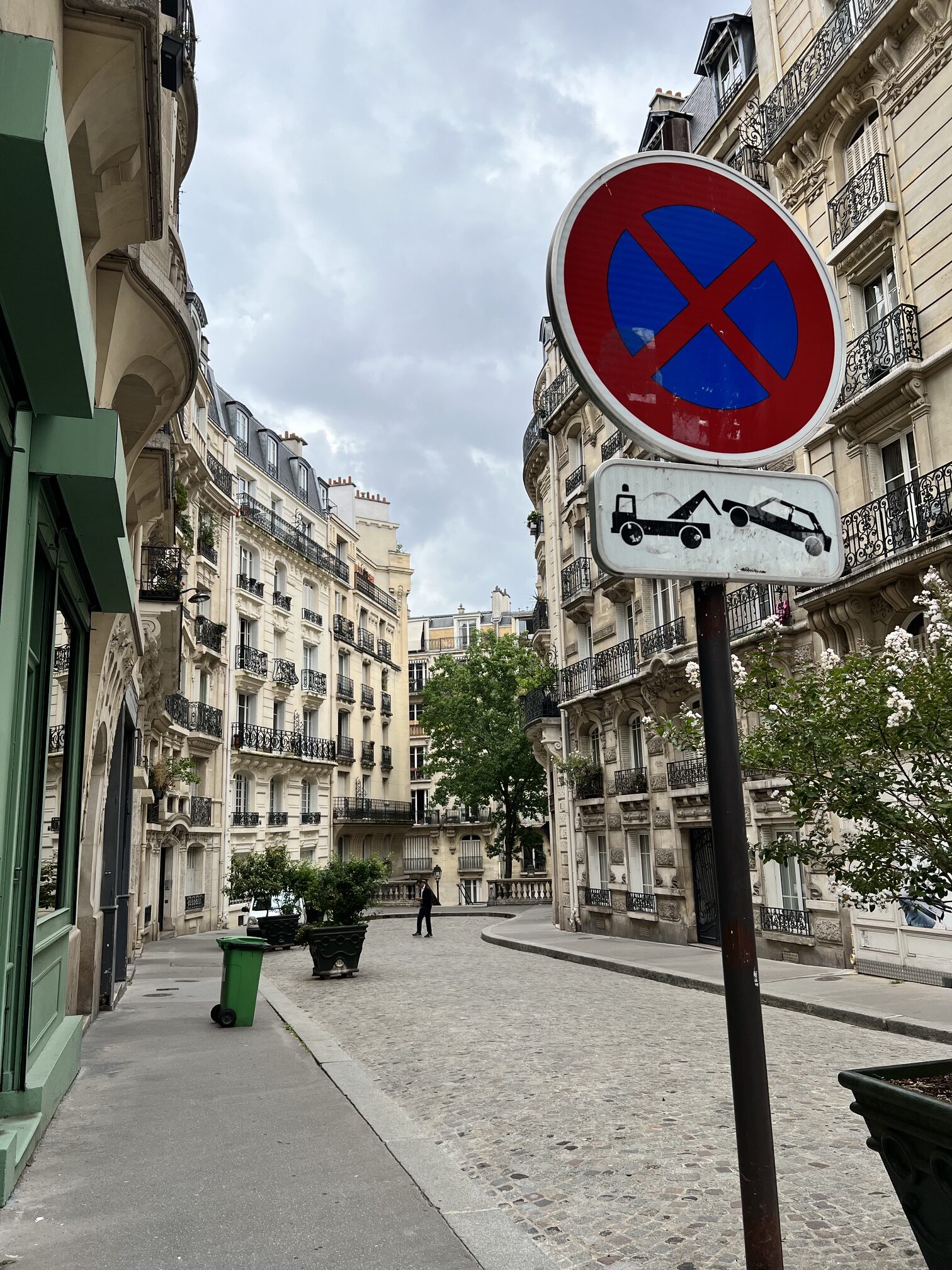
Dr. Norman Garrick, professor emeritus of civil engineering at the University of Connecticut, has devoted his career to the study of urban planning, transportation equity, and sustainable cities. I told him I worried most U.S. cities would have a tough time adopting the Paris model, and he agreed: “When you think about how we think about transportation, cars are the standard, and everything else is alternative, so it makes it really tough.”
Dr. Garrick happens to live in Zurich, one of the world’s most beautifully walkable cities. After several visits throughout his career, he spent a sabbatical there in 2017–2018 and never really left. He is currently writing about the history of Zurich’s trams and points out that, for any city, robust public transit is key to reducing car dependency.
“I don’t think that the way that Zurich planned was about getting fewer cars, necessarily,” he told me. “What they did do was to make public transit more comfortable, more efficient. And the way they did that was to take away space from cars. Of course, that helps over time to improve the efficiency of public transit, but it also discourages car use.”
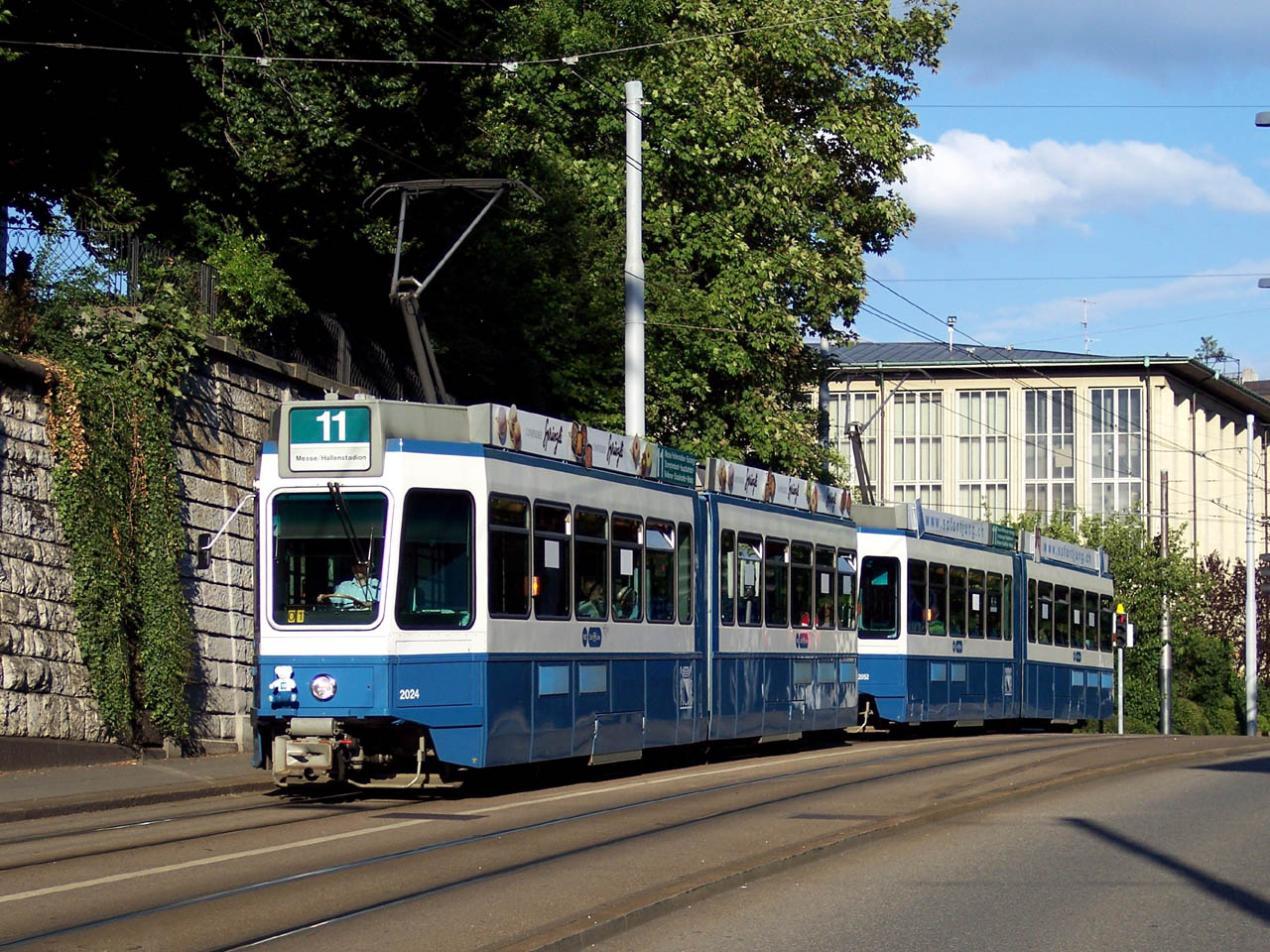
Zurich’s public transit includes trams, buses, and the S-Bahn (regional rail), as well as funicular rail and cable cars to surrounding mountainous regions; boats on Lake Zurich and the Limmat river; and various rail systems serving the region. Schedules interlock across the transit system, which can be accessed by tickets or one annual pass. Famously, in the summer months in Zurich and some other Swiss towns, residents have also been known to commute by swimming across the river.
Walking and cycling are also common, well-supported options, so tourists and residents alike have plenty of choices. “The focus was on public transit, and making it a viable way to go,” Dr. Garrick said. “And then over time, you saw car ownership decrease in the city, dramatically. There are, I think, 300 cars per thousand people in the city. That is back down to about the 1975 level of car ownership. They’ve done some other things, like they limit the amount of cars from the suburbs, or the rate at which cars get into the city from the suburbs, using just ordinary stop lights. But those measures came later. It was more the emphasis on public transit that worked here.”
I had imagined the trams as an example of the status quo taking hold for better or worse—better, in this case. But Dr. Garrick said that, while the trams aren’t new, Zurich was late to adopt them: “The tram system is in an old ancient part of the city, but Zurich was very slow in getting them, and it started long after other cities had trams.” Nearly 50 years after New York City had trams, Zurich got in the game with horse-drawn trams in 1892. “The year before, Berlin had inaugurated the first electric tram in the world, so that just shows how backwards they were,” Dr. Garrick said, laughing. “Zurich didn’t have electric trams until 20 years later.”
But while U.S. cities were getting rid of their trams in the 1930s, ’40s, and ’50s, Zurich kept theirs. In the ’50s and ’60s, when car use was rising in Switzerland, “there was a lot of pressure to get rid of the trams,” Dr. Garrick said. “They had to run in mixed traffic, so they were very unreliable, and they began to lose favor. But people voted against highway building, and against putting the trams underground in the ’70s, and that’s when the turnaround started.”
Later, in the ’90s, “there was a pact between the right and the left to get rid of surface parking,” and that helped to cement the transformation to the walker’s paradise Zurich is today. Much of what parking there is in the city center was moved underground, restoring public squares to the enjoyment of the public. As in Paris, cars were banned from the riverfront, which is now a scenic public promenade, with views of the river and the Alps beyond.
Today, Dr. Garrick said, Zurich residents are all-in on public transit: “When I talk to people, they love it. You don’t find anyone who wants to go back to more cars.”
In the U.S., of course, car dependency is a fraught topic. Even before I sold my house in Greenwich, Connecticut, I was scheming to get rid of my car, and I couldn’t stop talking about when and how I should do it. I was surprised how many people argued with me about that. “You don’t even know where you’re going to live yet,” one friend accused (justly). An L.A. friend forwarded me an app that finds parking spaces to rent in various neighborhoods “just in case.” When I eventually made an offer on a Manhattan co-op, even the contractors I got estimates from kept mentioning how abundant street parking is on the Upper West Side.
Getting Rid of Your Car Can Be Weirdly Controversial
Maybe I don’t always make the best case for going car-free. The massive downsides of car dependency are so obvious to me that I tend to forget how much some people really love cars. Car enthusiasts exist: people who’ve always dreamed of owning or driving certain cars, in much the same way I’ve always dreamed of never having to own or drive one again. We all spend money on the things we love, so the enthusiast won’t find my budgeting complaints persuasive at all. Then there are those who find that cars make their lives so much easier that the costs and inconveniences seem minor, and worth it.
But at the risk of annoying those people, there’s a strong case to be made that reducing car dependence is crucial to building a sustainable future for our cities.
The path to this future is not simple. When my kid left for college, I wrote in Common Edge about trying to figure out if I could live car-free in Greenwich. Ultimately, the answer was no. That is, it can be done, but you’d have to be willing to be pretty miserable. Add to this the fact that many residents there don’t want or support walkability, that Greenwich has no public transit to speak of, and that the pedestrian spaces that do exist feel hemmed in by cars and under attack, and you have the problem in a nutshell.
So, while I waited (and waited, and waited) to hear back about that Manhattan co-op, I knew I had to look elsewhere for temporary housing. I decided to take walkability scores into account.
Greenwich, as I wrote, scores (somewhat dubiously) as medium-walkable. But some parts of New Haven score in the 90s. What’s more, New Haven is all-in on pedestrian safety and is working hard at increasing walkability, with passive traffic-calming measures being added to many intersections, new pedestrian-friendly traffic signaling, walkable trails and bike paths being built all over town, and a whole new pedestrian corridor near the train stations.
I was both optimistic about New Haven’s walkability and very ready to part with my Subaru. I’m a determined pedestrian, having grown up in traffic-snarled Atlanta, and I lived there without a car for many years, which virtually nobody does. But despite the fact that I was dying to sell, a strange thing happened when I got settled in a New Haven rental: I realized I’d feel stranded without a car.
Dr. Garrick nodded when I mentioned this, noting that walkability scores only tell part of the story. “We actually did some research about that,” he said. “What they are doing there is counting the amount of amenities within a certain distance—and I think it’s ‘as the bird flies’ distance, which is already a problem.”
Exactly. Not being able to fly, as a pedestrian I need to think not only about how far I’m going to walk, but what I will encounter along the way. An accurate assessment of walkability would factor in some of these less measurable factors: “Think about the quality of the street, how interesting it is to walk in, how safe it is to cross the roads,” he said. Is it well-lit at night? Protected from speeding cars? Shaded when it’s hot? Cleared and salted when it snows? Does it flood when it rains? “All those things are parts of the puzzle that don’t necessarily go into the algorithm,” Dr. Garrick continued. “But in many places, those things do come together so that walkability is a fairly good measure of the walking experience.”
And New Haven points up one of the broader challenges of designing car-free cities: it can’t be done in a vacuum. As walkable and pedestrian-friendly as it is, New Haven is still in Connecticut, and Connecticut badly needs more public transit. One of Dr. Garrick’s students, Akira Dunham, wrote a paper on regional rail in Connecticut, which Dr. Garrick shared with me. I felt a genuine thrill to read a carefully researched argument in support of the point of view I’ve bored my elected officials with when given the chance: that frequent off-peak service is key to increasing ridership, and that investing in regional rail could be a lasting boon to local economies throughout the state of Connecticut.
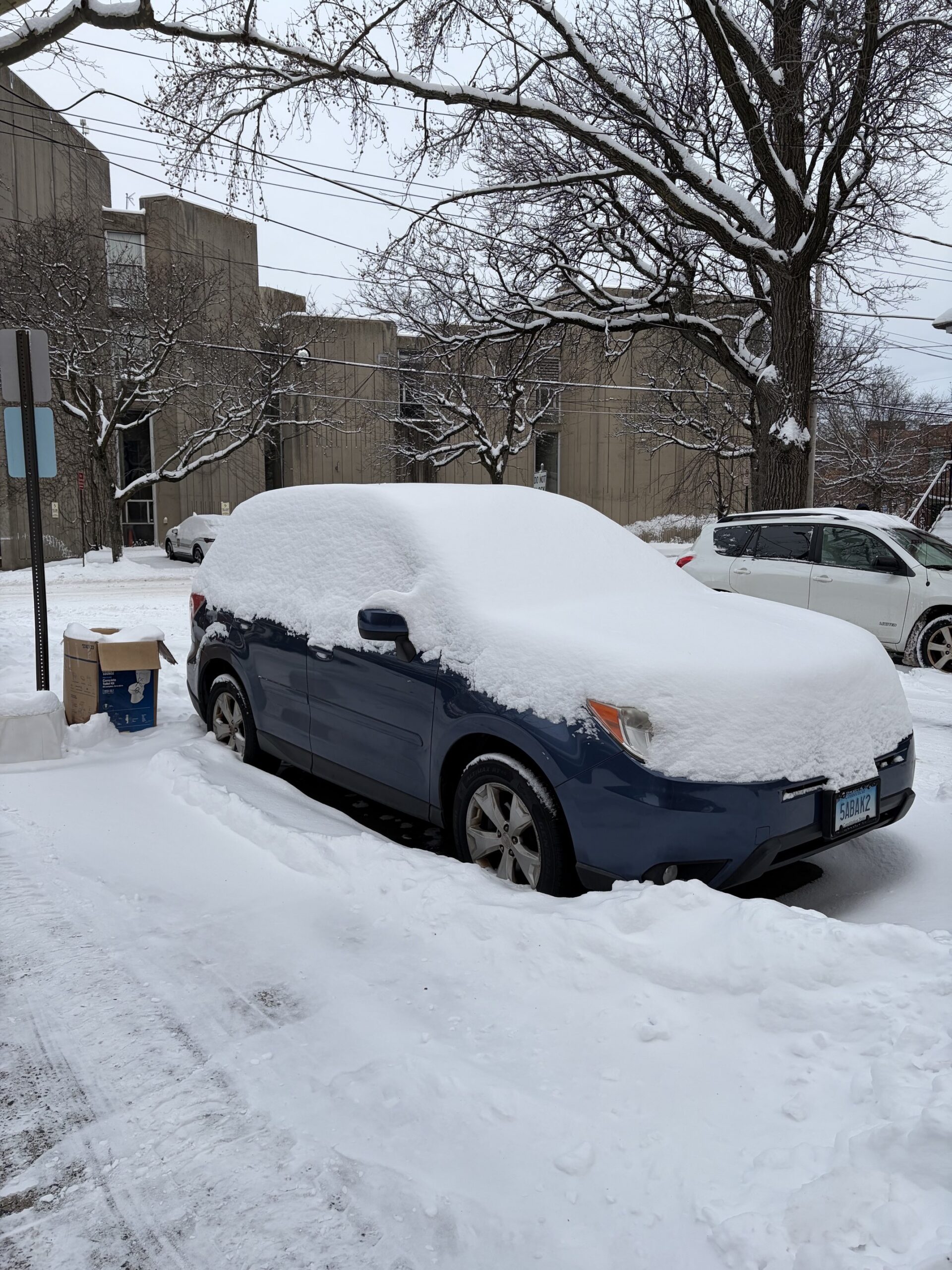
No doubt current world events haven’t made the puzzle any easier for the Connecticut Department of Transportation. As for me, my stay in New Haven, which started last fall, ended up lasting through the winter, much of which I spent working from my Airbnb, watching out the window as snow piled up on my car.
Car Free at Last
If you lived anywhere in New England this past winter, you may recall that a truly absurd amount of snow fell on the area. I finally closed on my co-op in mid-December, and on January 30—a rare clear day between two massive snowstorms—I drove down from New Haven to my new place in Manhattan. I double-parked, took my stuff upstairs, and ran back down, vowing to find free street parking. Confronted with massive stacks of uncleared snow, however, my resolve died instantaneously and I pulled into the first parking deck I saw, the fact that it cost $35 per day notwithstanding. I hoped it would be among my last unplanned car expenses.
The next week was busy, but the $35 a day I was spending to store a car I never intended to drive again was never far from my mind. It especially tended to occur to me in the middle of the night, since that’s when I could do exactly nothing about it.
One morning early in February I finally found my car title, uploaded it to Carvana and, using the prospect of several thousand dollars to motivate me, made my way through the snow to the garage where I’d parked it. I explained somewhat laboriously to the attendant that I needed to see the car—not to drive it away, but to take pictures of the front, back, both sides, and odometer in order to upload the images to list the car for sale.
The attendant, whose name was Marvin, said, “You’re selling your car?”
Here we go again, I thought, but I very firmly said, “Yes.”
Instead of arguing with me, Marvin asked me the make and model, then told me the garage owner, Roy, was on the lookout for a car to buy for his son. The guy wouldn’t care about the body damage, he explained, because he owned a body shop downtown.
Things moved fast from there, and later that day, I turned over the car in exchange for a stack of hundred-dollar bills. In a small stroke of luck that sweetened the deal, Roy decided not to charge me for the seven days I’d already parked there. Already in my first hours without a car, I’d retroactively saved $245 in parking fees.
Sometimes, lately, when I wake up in the morning, the first thing I remember is that I finally sold my car, and a feeling of contentment comes over me, the kind that might come from a narrow escape from a sinking ship, or cutting off ties with a toxic ex. Life doesn’t stay perfect for long, and I’m sure some other conundrum will soon be preoccupying me, the same way my yearslong battle to get rid of my car did. But until then, as the price of a gallon of gas creeps up to the five-dollar mark, I’ll breathe a sigh of relief to finally be free of the car trap.
Featured image: the author’s 2013 Subaru Forester. All photos by the author unless otherwise noted.