
The Transcendent Healing Power of Architecture
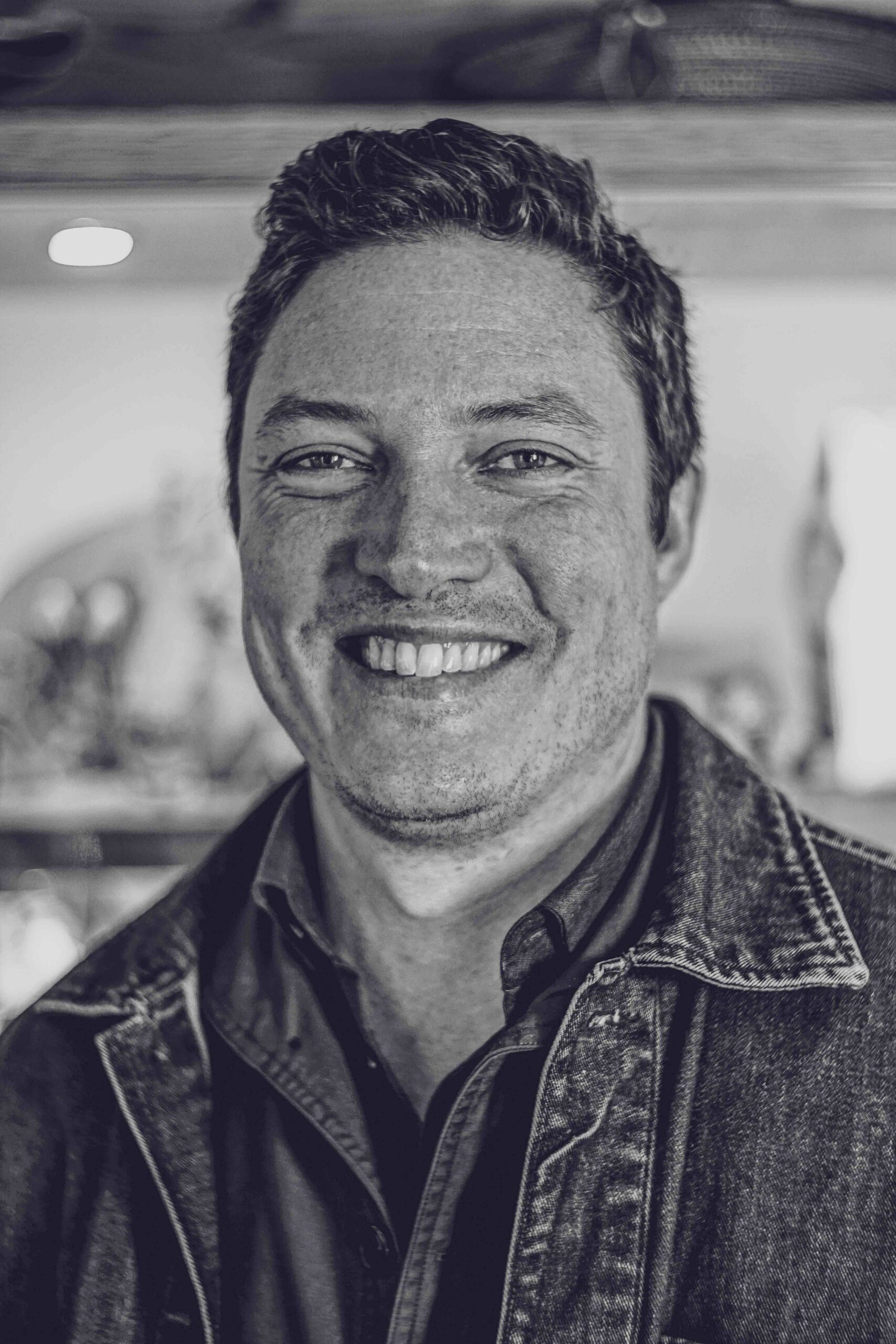
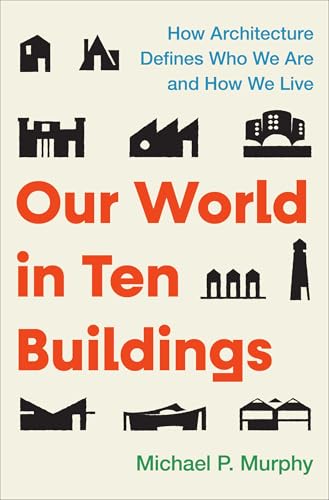
The new book by architect Michael P. Murphy—a founder of MASS Design Group and now head of AMMA—isn’t what I thought it would be. Every chapter focuses on an architectural project, each a different building type, that Murphy has worked on, and what he learned from it. I found the book’s title misleading. The full title, Our World in Ten Buildings: How Architecture Defines Who We Are and How We Live (Atria/One Signal Publishers), might suggest that the book explains how 10 structures across time and around the globe have shaped humanity—a bit like those books that purport to elucidate our history through a single artifact (like Coal, Salt, or Milk). But these 10 buildings are quite personal to Murphy, so it’s more about his world than each one of ours (and the building types might be quite different depending where in the world you are). The buildings are presented chronologically in Murphy’s experience with them, and each one links to the next. It’s an interesting structure for a book, but some of the building tales are more nuanced, developed, and detailed than others. I found the most engaging chapters at the front and the back, and these happen to be his most personal stories.
Murphy literally bookends the stories he tells with a transcendent architectural experience regarding his father, who at the time was dying of cancer. In the first chapter, “The Waiting Room,” Murphy relates the story of learning of his dad’s diagnosis while working in Cape Town, South Africa, at age 25. He was making his way in the world, still not sure of where to focus his career. A few days later, he arrives at his boyhood home in Poughkeepsie, New York, to be with his father. The late–19th century family homestead was a “slow, endless renovation,” Murphy writes, pursued over more than a dozen years by his dad on weekends and evenings after coming home from work. This is where and how his dad wanted to spend whatever few months he had left to live: scraping paint, refinishing woodwork, peeling wallpaper. Murphy decides to stay, apprenticing in “this purgatory, this endless waiting room.”
Days stretch into months. Father and son talk about life as they work together on the house. The conversations and the work light a fire in Murphy to perhaps study architecture. But as he tells this tale, working on the house reveals to him a certain therapy inherent in the work. Creating an environment, especially a home, is in itself an act of hope and transcendence. “Remaking the house left evidence of our own existence in the world,” Murphy notes. But it does more than that. He realizes that this restoration is what is keeping his dad alive past the handful of weeks allotted by his doctors: “The building was his legacy.” There is an old Eastern maxim: “A man builds his house; then he dies.” I’ve heard several interpretations of what this means. Murphy’s message (although he never mentions the ancient saying) is that the act—building, making, learning, reflecting—is a life-giving force. When the house is complete, death enters.
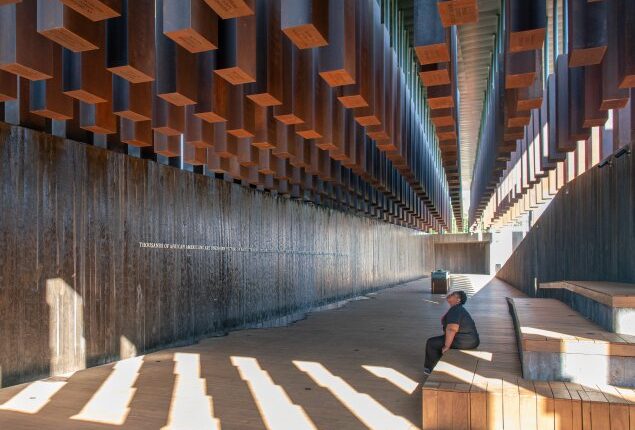
Murphy co-founded the nonprofit MASS Design Group in 2007 (the acronym stands for “Model of Architecture Serving Society”), while still in architecture school, and now heads AMMA, described as a “collaborative studio working across design, architecture, planning, and public art,” founded in 2024. While collaborative design is the bedrock of what MASS does, Murphy’s recognition of professional colleagues in this book is not effusive. Project scales are quite diverse, from exhibits about carceral design to designing bookcases for prisons, from MASS Design Group’s own spaces and how they changed during the pandemic to the colorful Oceana Innovation Hub in Barbados for collaborative learning, to the landmark National Memorial for Peace and Justice in Montgomery, Alabama, a memorial to the victims of lynching in this country that received global attention. For each of these, Murphy explores the process of what he learned as a designer and how these projects personally touched him.
Perhaps the best documented—and for Murphy the most pivotal in his education as an architect—is the Butaro District Hospital in Rwanda, one of the first projects by MASS Design Group. The book offers some excellent models of practice for young architects in training, particularly those who want to make some kind of positive difference in the lives of the people who will use their buildings. The Butaro District Hospital grew from Murphy’s serendipitous encounter with Dr. Paul Farmer when he attended a lecture on the Harvard campus (Murphy was still a student at the Graduate School of Design). Farmer had started Partners in Health while still a student himself; the organization focuses on “the right to health care regardless of means or location.” Inspired by the talk, Murphy chatted with Farmer after the lecture, asking what architects he was working with for the hospitals he was building. Farmer responded with a laugh, “What architects? I drew the last hospital we built on a napkin.” One thing leads to the next, and Murphy winds up on a summer internship in Rwanda helping Farmer “beautify” the grounds of an existing clinic: landscaping, paving walkways, digging a fishpond. Why, Murphy wonders, are we spending time on such mundane matters instead of designing a new medical facility?
Farmer tells him that, in treating disease, this is all essential work. He calls it the “construction of dignity,” providing the things that make people feel as if they matter, especially in a place of limited resources. Murphy learns an important lesson: the construction of dignity is essential work for any architect, in any place. It is one of the fundamental truths of Murphy’s book, and an idea often overlooked in architecture school and practice. Farmer eventually asks Murphy to help design the new Butaro District Hospital, to use architecture to help save lives. Working with his medical colleagues, Murphy discovers that it’s the hospitals themselves that are spreading disease. If patients were located inside poorly ventilated hospital spaces, they continued to get sick, and made others sick as well. Key design features were to create a hospital with no individual patient rooms, large windows with low sills on both sides of a narrow floor plan for natural ventilation, and no hallways (where disease could be passed from the sick to the healthy). Instead of facing into the ward, a single low wall down the middle of the space allows headboards to be pushed up against it so patients face the open windows with light, air, and views of the landscape.
The Butaro District Hospital teaches Murphy fundamental lessons that he has brought to other projects in this book: “architecture can both impede and advance our collective rights—such as the right to health care or the right to breathe.” Buildings, when made with great care, “can help us locate ourselves with the sometimes dizzying and alienating pressures of the world around us.”
Murphy closes the book as he opens it, recounting the culmination of his dad’s fight with cancer; the father chooses to spend his final days at a house in Barbados, in the company of friends and relatives, in the presence of sea, sand, and sky. In this chapter, “The Last Room,” Murphy ponders the environment his dad chose to inhabit, perhaps with the hope of constructing what I have heard others describe as “a good death.” Murphy reflects on the work of Dr. B.J. Miller, who coined the term “the Last Room,” who queries the architect on the design of such places. Hospices often do not quite deliver this atmosphere; their clinical nature intervenes. What might a Last Room be like? There’s a scene in the 1973 film Soylent Green, where an old man (played by Edward G. Robinson, who died 10 days after acting in this scene) chooses to end his life in a room specially designed to immerse one in videos of nature amid the strains of Beethoven’s Pastoral Symphony (Symphony No. 6).
Miller asks Murphy, “Why couldn’t we design centers where our last place to live or to die was a choice we made, of the types of spaces, services, and conditions we wanted before exiting this world?” Ultimately, however, Miller’s point is that such Last Rooms would build a design vocabulary, “a set of awarenesses and expectations of the built environments and sensory experiences we want to be in for all our days, not only at the end of life.”
What is architecture’s role here? For Murphy, it’s the recognition that architecture—as part of the material and natural world—has the potential to heal us, “to move from a sense of self to a sense of shared collective will.” The challenge is to create environments that deliver “a sense of awe,” notes Murphy, of transcendence, every day, not just our last.
Featured image: National Memorial for Peace and Justice, via MASS Design Group. Photo by Alan Ricks.