
Can NYC’s “Fast-Track” Community Districts Really Produce More Housing?
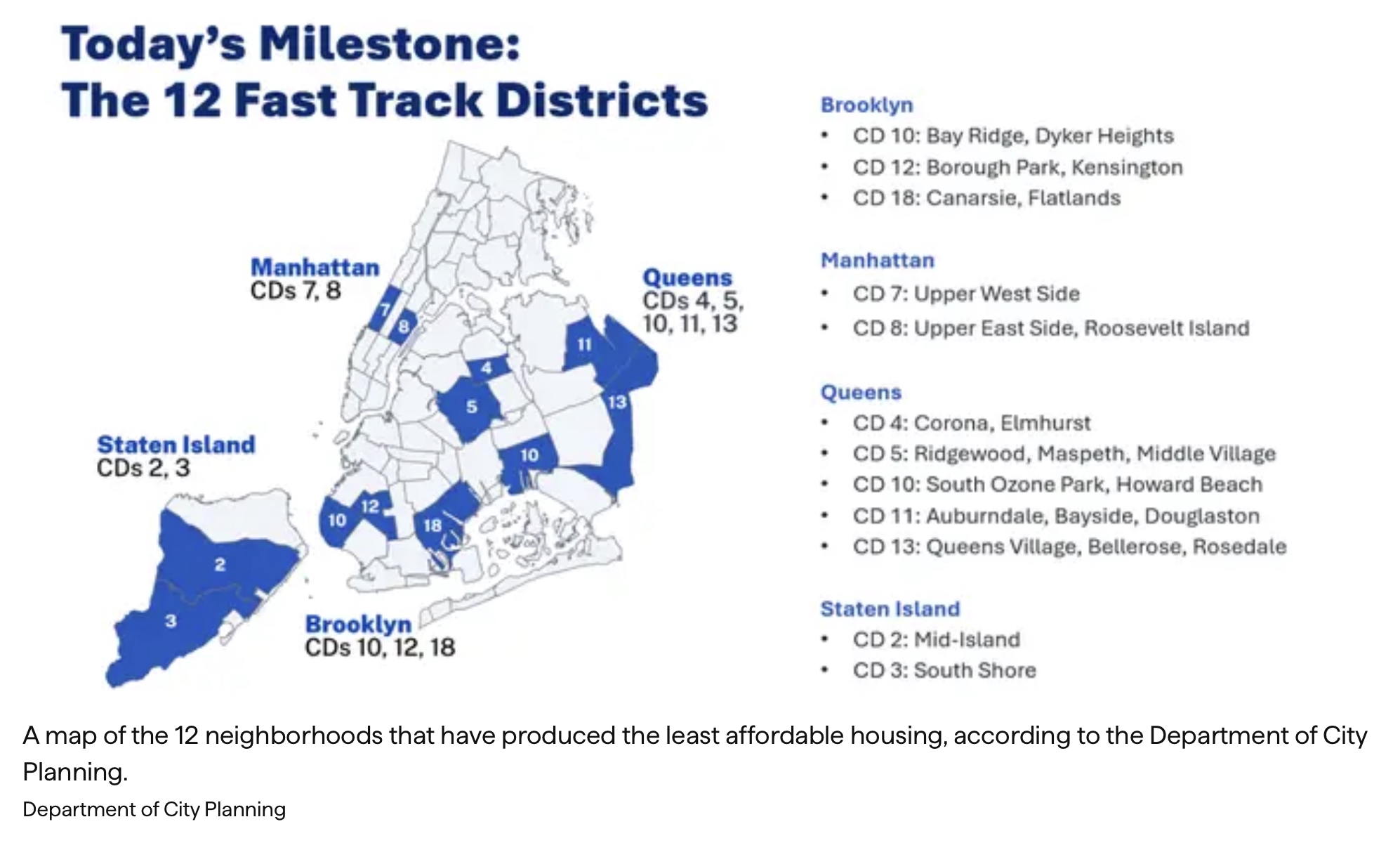
Under a charter revision that passed in the last election, New York City has identified 12 Community Districts that have historically produced the fewest affordable apartments in the city and will allow such projects to be “fast-tracked” through the city’s zoning approval process. The theory is that this expedited process, for which developers would receive both increases in the allowed building size as well as expedited approval, bypassing the City Council, will stimulate an increase in affordable housing construction.
Time will tell if this plan works. There is, of course, significant opposition from both the City Council and residents who feel that the change was smuggled through via an obscure ballot proposal that will deprive residents and their elected representatives of a voice in where affordable housing is built.
Will developers want to build in these districts? Even with the expedited review process, it’s not clear that they will rush in with new proposals.
To be eligible for the fast-track approval process, projects must meet or exceed the requirement of the Mandatory Inclusionary Housing (MIH) program of including at least 20% “affordable” housing. Developers depended on a good return from the 20% increase in building size that was permitted in order to pay for the 20% affordable portion, from which they made very little profit. As a result, most MIH projects were not built in the 12 districts identified in the city’s new proposal. These are not high-end real estate markets, so it remains to be seen whether developers will see them as strong enough to profit from the 20% bonus.
Two of what City Limits—a nonprofit news site that focuses on New York City civic issues, housing, and policy—calls “Naughty List” districts, Manhattan’s Upper West and East neighborhoods, are already dense, with relatively few available construction sites. Other districts, such as Howard Beach and Canarsie, have large areas threatened by sea-level rise, which makes many sites unsuitable for residential construction.
Even if we buy into the “abundance theory”—that by building enough housing, “supply and demand” will drive down the cost of housing for everyone—it’s not at all clear that the city’s proposal will deliver. Some economists question the idea that excessive regulation is what limits housing affordability. We have seen again and again that affordability can’t be bought by zoning incentives. And even if the plan succeeds, what will the impact be on the neighborhoods affected, which now have little power to influence the process? Before “abundance,” we should think about these neighborhoods and their needs in a holistic way. Perhaps the city should first invite the 12 Districts to prepare their own 197-a plans into which any new housing can be incorporated.
We Can Think Bigger
New York City needs a much more ambitious vision for housing. For too long, it has relied almost exclusively on zoning incentives like mandatory inclusive housing to spur housing construction. Even market-rate housing has struggled to meet demand, and affordable housing for both middle-income and lower-income New Yorkers has lagged far behind.
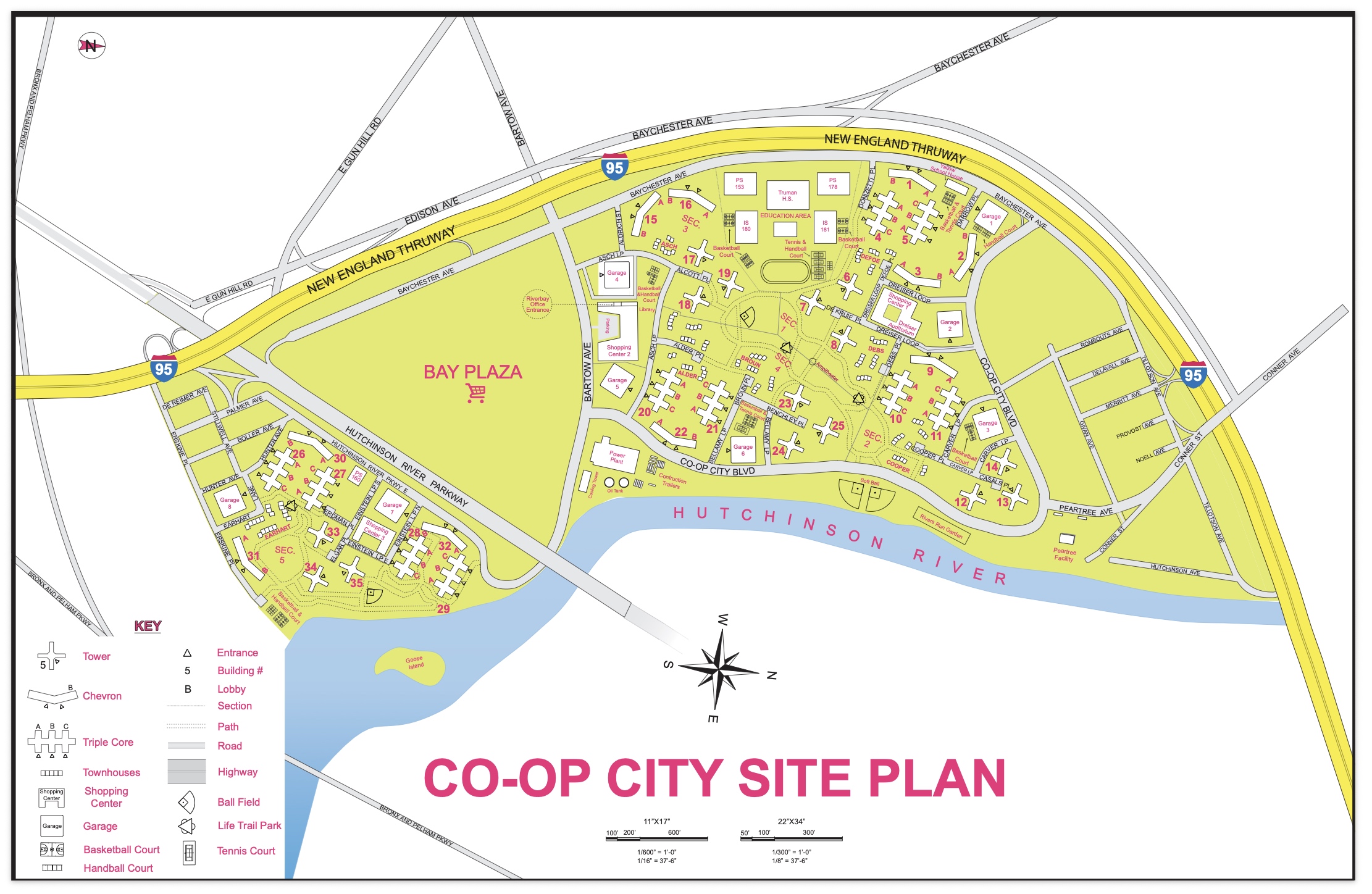
Between 1966 and 1973, New York City built 15,372 units of housing in what was then called Co-op City (now Riverbay). Financed by the state’s Mitchell–Lama mortgage program through the New York State Housing Finance Agency, Co-op City drained 320 acres of marshland north of the Hutchinson River Parkway to build 35 residential buildings for middle-income New Yorkers. Containing its own shopping centers, community centers with meeting rooms, parking garages, playgrounds, professional offices, restaurants, senior services, public library, firehouse and an education park with nursery through high school levels (most within walking distance), it was the largest residential co-op ever built in the U.S. Supreme Court Justice Sonya Sotomayor grew up there. It was also an example of planning holistically, rather than dropping new housing into existing neighborhoods with little planning or foresight.
Earlier, between 1939 and 1942, the Metropolitan Life Insurance Company (MetLife) built Parkchester Houses in the Bronx, housing over 33,000 middle-income New Yorkers in 171 buildings. Originally consisting solely of rental apartments, it began transitioning into homeownership in the 1980s. The neighborhood included commercial brands like Macy’s, Starbucks, and Chipotle. Congresswoman Alexandria Ocasio-Cortez grew up there.
Between 1945 and 47, MetLife also built the 11,250 apartments of Manhattan’s Stuyvesant Town and Peter Cooper Village. Constructed to provide postwar housing for returning World War II veterans and middle-class families, it replaced the industrial Gas House district. Unlike nearby New York City Housing Authority (NYCHA) developments, where Congress and the Department of Housing and Urban Development had prevented the agency from developing commercial retail space at Baruch and Wald Houses, Stuyvesant Town and Peter Cooper Village have retail along the avenue, as well as green space and playgrounds onsite.
In 1974, Starrett City, on the north shore of Jamaica Bay in Brooklyn, added 5,881 apartments in 46 buildings with its own power plant, two public schools, a shopping center, and a community center.
And let’s not forget NYCHA. The agency constructed 180,000 apartments in the decades since its creation in 1937, more than any private developer in New York City history. Who says the government can’t deliver?
Of course, all of these precedents were supported by significant capital funding. They came from federal money, the state’s Mitchell-Lama mortgage program, the New York State Housing Finance Agency, investment by insurance companies like MetLife, and even trades unions like the International Ladies Garment Workers, which sponsored the development of Penn South.
While the federal government has largely abandoned capital investment in housing, there is still federal money available to developers through the Low-Income Tax Credit program. It is remarkable that the demand for housing has not drawn more investment from both public and private sources. If MetLife saw housing as a sound investment in the postwar years, why not now? New York City manages $326 billion in its public pension fund, some of which could be invested in housing. And of course, we could reinstate the Stock Transfer Tax.
Another obstacle to housing growth is the lack of available land. The big sites that were available in the postwar years are largely built out. Where would we build another Co-Op City or a Parkchester? Using the piecemeal strategy of the city’s zoning incentives will not get us there. We need some big sites where we can plan complete neighborhoods, not just infill housing.
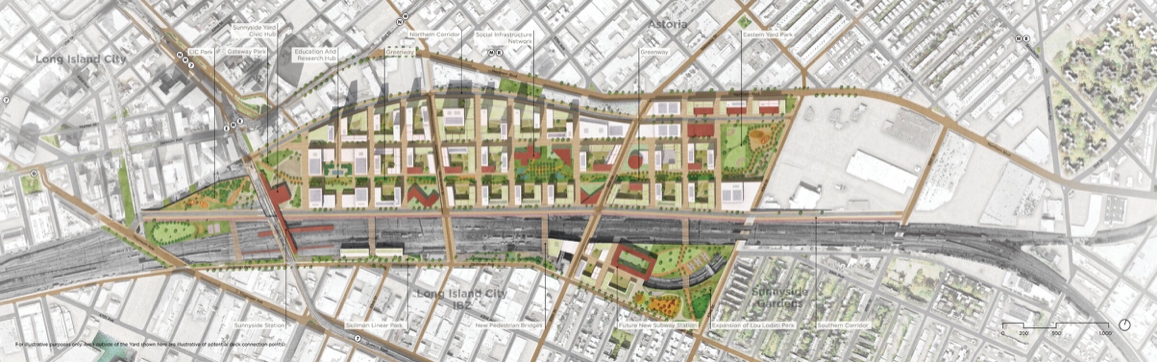
Several opportunities spring to mind. Sunnyside Yards promises 12,000 apartments over the 180-acre rail yard project, provided Mayor Mamdani can secure the federal funding promised by President Trump to deck over the rail tracks.
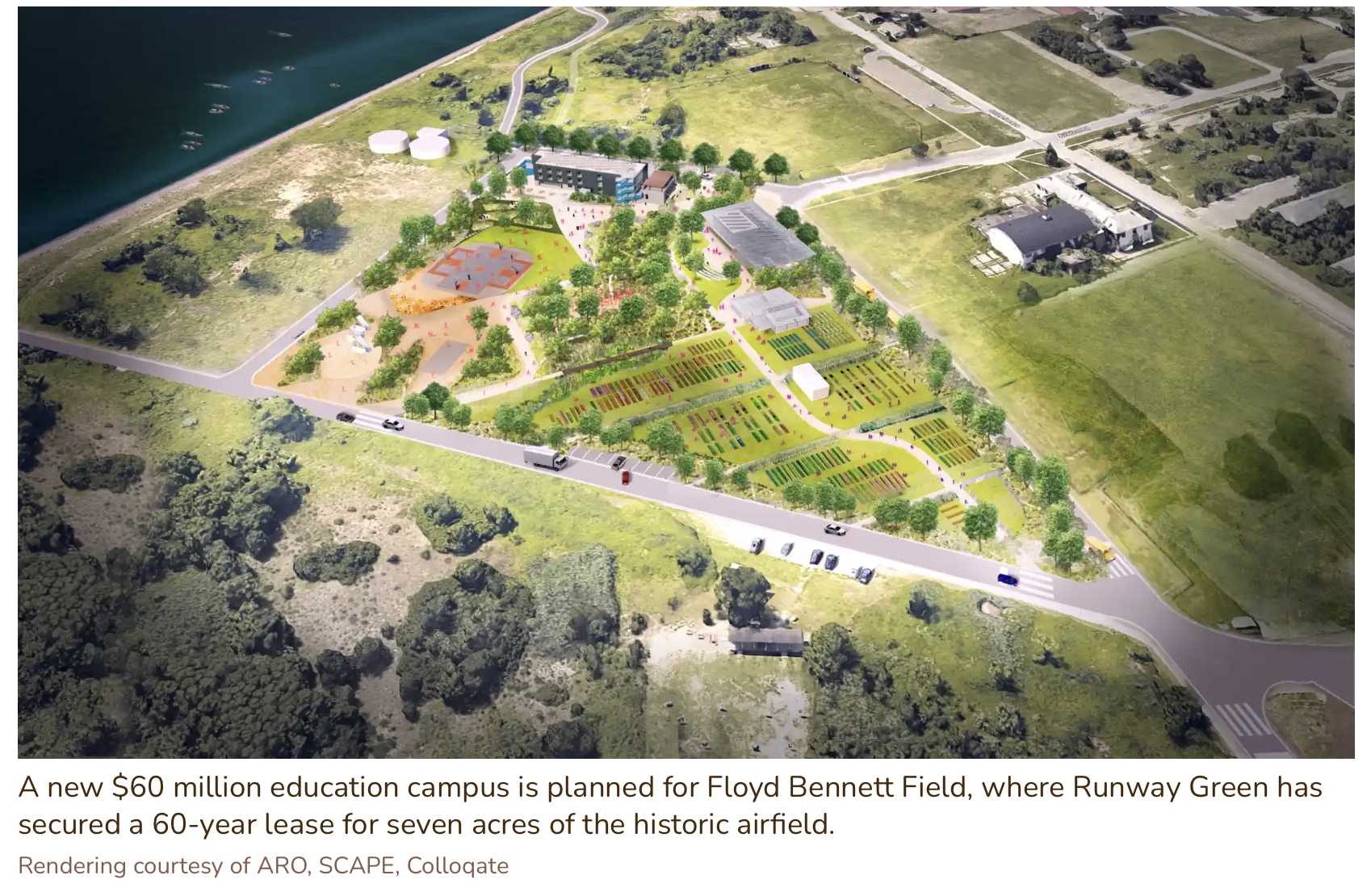
Floyd Bennett Field offers 1,300 acres of largely vacant land in Jamaica Bay, Brooklyn. The education nonprofit Runway Green has plans to build a $60 million educational campus and urban farm on 7 acres. That leaves 1,293 acres for other purposes. While much of the parcel should be preserved as a watershed and wildlife preserve, it should be possible to complement the Runway Green project with housing.
And then there are the golf courses. In a city as dense as New York, can we really entertain the use of so much land for so few people? There are 13 in all:
- The Bronx: Ferry Point, 222 acres; Pelham Bay, 200 acres; Van Cortland, 120 acres; Moshulu, 60 acres
- Queens: Clearview, 111 acres; Forest Park, 110 acres; Douglaston, 102 acres; Kissena Park; 90 acres
- Brooklyn: Dyker Beach, 217 acres; Marine Park, 210 acres
- Staten Island: South Shore, 147 acres; Silver Lake, 126 acres; La Tourette, 120 acres
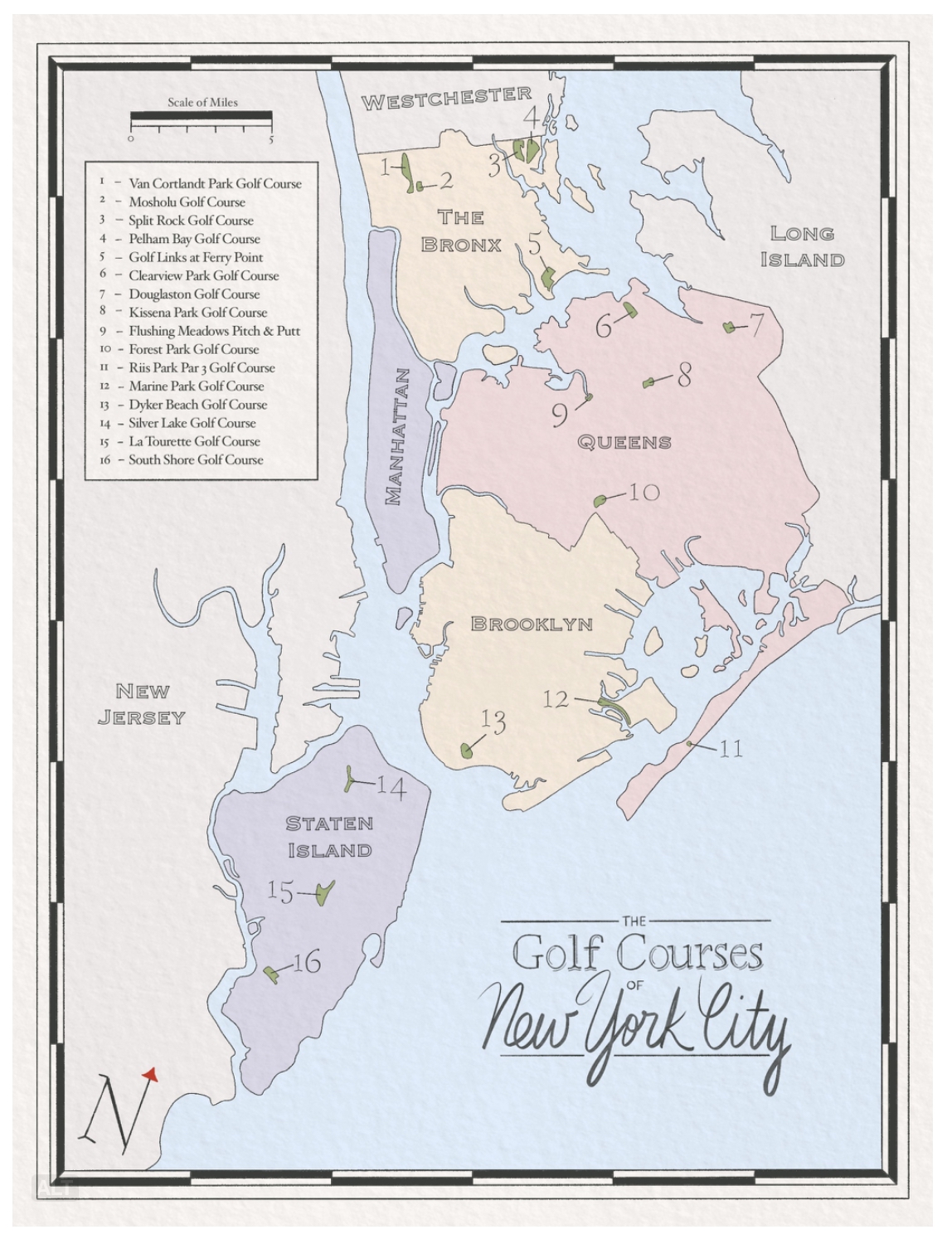
I can hear the cries of anguish from the golf lobby if these courses are threatened. But really, can we afford to devote so much land to so little utility? If we take just one course from each borough, there will still be ample golfing opportunities. (Manhattan has no golf course, which reveals that golfers will travel in order to play.)
We could then plan four new Co-Op Cities (32 acres). That’s 60,000 apartments in what could be developed as complete neighborhoods.
The city would need a project manager to develop all these projects. The Department of City Planning should restore its Urban Design division and work with HPD’s neighborhood planning staff on creating true neighborhoods for these locations. NYCHA, the country’s most successful housing developer, should develop and lease the projects, with a reborn development division like the one that brought us Harlem River and Williamsburg Houses.
The fast-track districts that New York City has identified may give us a trickle of new housing. But we will need ambitious plans and big projects to fulfill the goal of 200,000 new apartments.
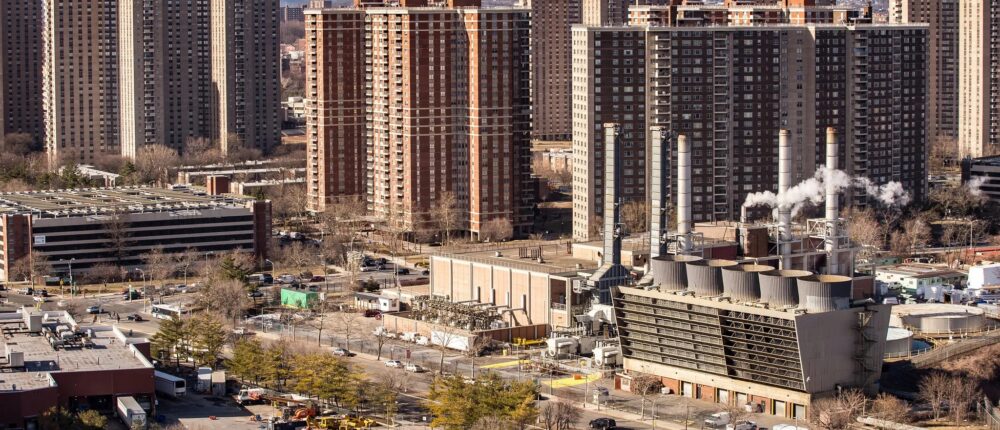
Featured image: Co-Op City in the Bronx, via the New York Times.