
Decades-Old Zoning and Building Codes Are Responsible for Our Housing Choices
The nation’s current housing crisis is more than a century in the making. Single-family zoning began shortly before World War I and was used primarily as a tool to exclude Black Americans from ownership. Later, as the automobile emerged and suburbs exploded, the single-family home became not only the American Dream, but the legal mandate in most municipalities. Much of that anti-urban inertia persists today.
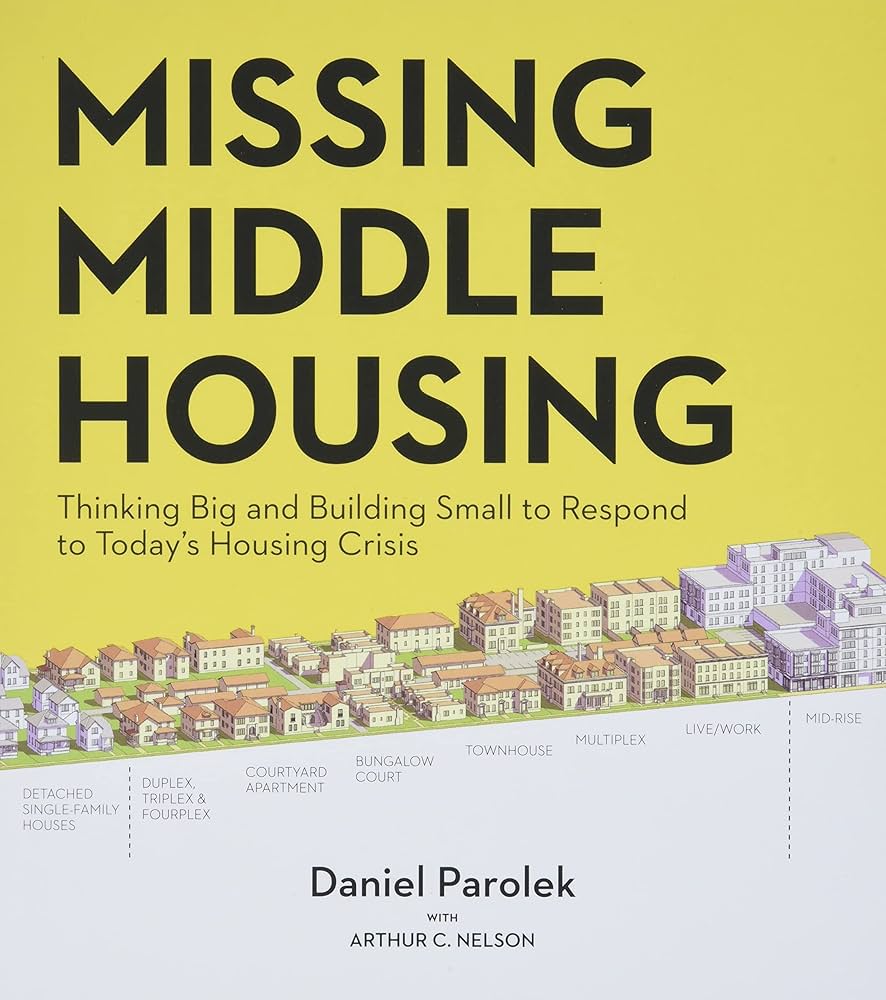
Architect and planner Dan Parolek, along with his business and life partner, Karen Parolek, have waged a 25-year battle against those entrenched forces. They founded Berkeley, California–based Opticos Design in 2000 (and have a second office in Chicago) and co-authored, with Daniel C. Crawford, Form-Based Codes: A Guide for Planners, Urban Designers, Municipalities, and Developers (Wiley, 2008), the definitive book on the subject. Dan coined the term “missing middle housing” to describe the lack of housing choices in the U.S and authored the seminal book on it, Missing Middle Housing: Thinking Big and Building Small to Respond to Today’s Housing Crisis (Island Press, 2020). Recently I talked to Dan about the crisis, his work in reforming codes and zoning across the country, and the crucial need for more missing-middle housing choices.
MCP: Martin C. Pedersen
DP: Dan Parolek
There’s a housing crisis in virtually every region, city, and town. How did we get here?
There are a lot of reasons for it. But one of the primary reasons is zoning and the added costs and expense associated with it. A core part of our work addresses the hundred-year-old zoning system that has never effectively delivered housing choice. The Euclidean zoning system was set up to deliver suburbs, mostly single-family homes. Most of the great examples of walkable neighborhoods—whether it’s Park Slope, Brooklyn; Westbrae in Berkeley; or Dundee in Omaha, Nebraska—were built prior to zoning. Which means there’s nine-plus decades of delivering the wrong type of neighborhoods with little choice, and not delivering what households need and want. It’s reached a tipping point.
A brutal supply-and-demand dynamic has kicked in.
We’re hugely short on housing supply. A lot of that has to do with the 2008 recession, when a lot of builders disappeared and the volume of building slowed dramatically. If you look at the numbers of units that we’ve delivered post-recession, we just never caught back up to the volume that we were delivering prior to that recession. And, unfortunately, the lack of missing middle housing predates that. For the last three to four decades, about 13% of all housing delivered was missing middle. It’s gotten worse recently.
I often start my presentations with this demographic data: a third of all households in the U.S. are single-person. Do you think builders are constructing a third of all housing units specific to the needs of single person households? Of course not. We’ve also got an aging population—it’s why AARP is such a big advocate for missing middle housing now. In the next few years, one in five people will be over the age of 65. But then there’s this: For the first time in the National Association of Realtors preference survey, more than half of American households said they wanted to live in a walkable environment and would trade a single-family home to live in one. They’ll pay more for missing middle housing, if it’s in a walkable neighborhood.
That’s a huge shift. The American dream was always a detached single-family home.
Yes, and it’s younger generations who’re driving that, partly, and then it’s the needs of the downsizing baby boomers, thinking about not being able to drive at some point. So there’s this tsunami of conditions that make this a crisis in multiple ways. It’s not just about affordability. But missing middle housing is not a silver bullet for solving our housing crisis. It’s one housing tool that every city needs in their broader housing toolbox.
I grew up in Nebraska—Columbus, Nebraska. Even this small, rural community has a housing problem, and if Columbus is talking about it, this isn’t a big city issue, this is an everywhere USA issue. My sister lives in a small town in Nebraska of about 2,500. Teachers there can’t find housing. And so, yes, it has touched, unfortunately, every corner of the country.
Is zoning primarily the obstacle?
Yes, zoning is the first barrier that needs to be changed in order to enable this. But, unfortunately, there are other barriers that also need to be addressed. In addition, the entire ecosystem related to creating housing choice needs to be rebuilt to deliver missing middle at scale. As a profession, we should pledge not just to change zoning, but to legalize walkable urbanism and missing middle housing in every city, giving it as level a playing field as suburban development.
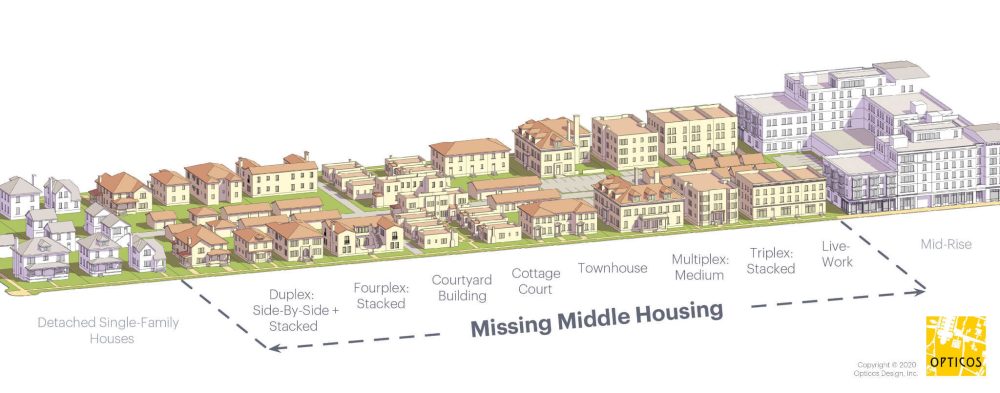
The term Missing Middle Housing was created by Daniel Parolek/Image © Opticos Design, Inc. For more info visit www.missingmiddlehousing.com.
Talk about the other barriers besides zoning.
The second biggest barrier is building codes. When a building goes from two units to three units, it goes from using the residential building code to the commercial building code, and costs go up as much as $30,000–$40,000 per unit. There’s essentially a missing middle building code, because the code treats a three-unit building the same way as it treats a 300-unit building. That’s also what pushes the market to deliver one or two big single-family houses or luxury townhouses, because that’s what’s least risky and where they can get their biggest return.
In September 2024, we completed a citywide missing middle strategy for Sacramento, California. It’s one of the most progressive that we’ve ever done. We did it in parallel with a general plan update, so the process was able to eliminate density caps citywide and introduced a sliding scale floor area ratio [FAR] system that gives developers additional development square footage—more FAR—for every additional unit they build. In terms of returns for developers, this enabled missing middle solutions to out perform luxury townhouses and McMansions. It also incentivizes the delivery of the most attainable housing choices. These nuanced approaches are rarely used, but are important to hitting what we call the missing middle sweet spot of feasibility, attainability, and livability.
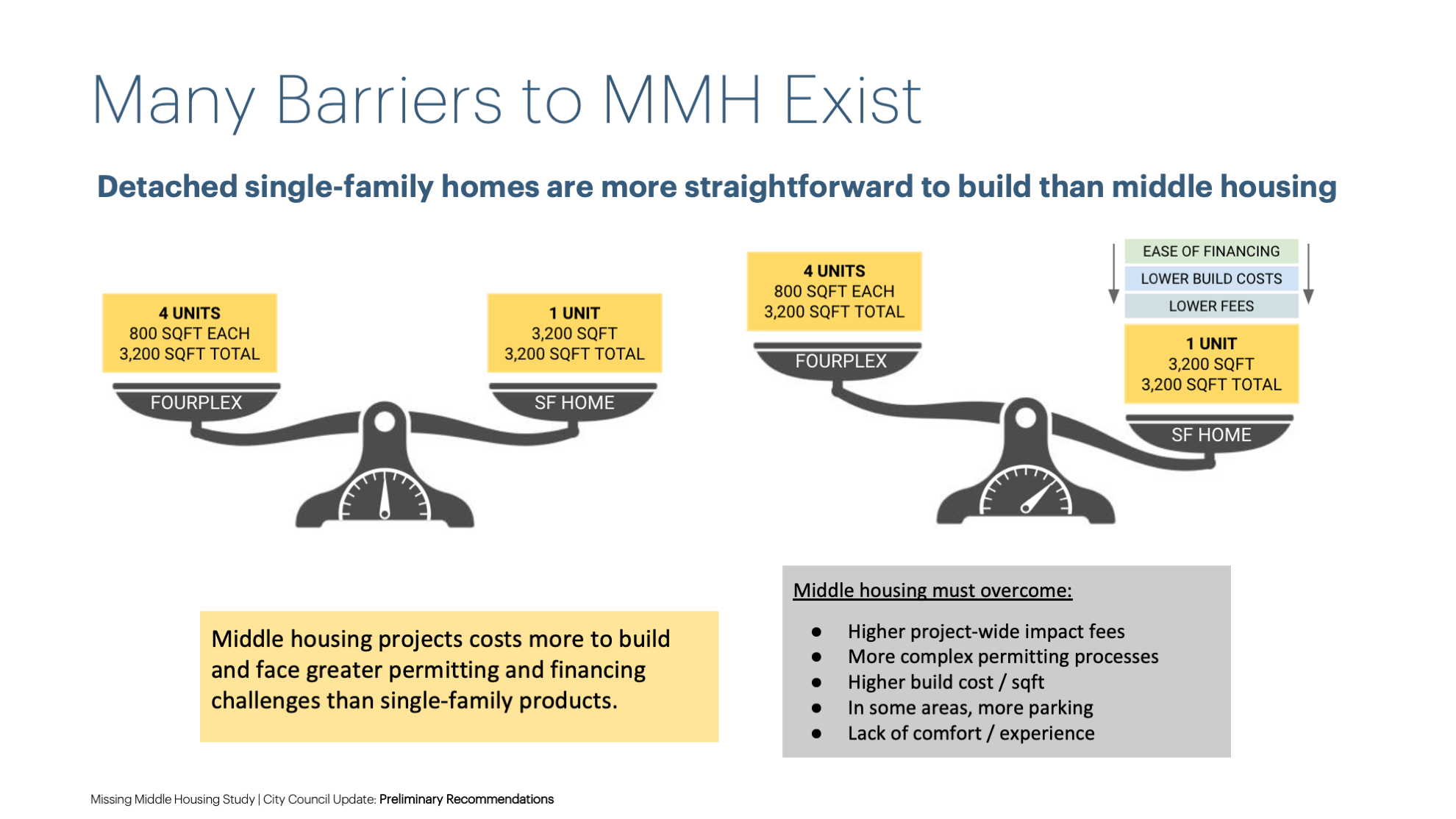
Part of a missing middle housing study done for the City of Sacramento.
What’s that strategy called?
We call it Test Fits. In Sacramento, we picked four zoning districts, and for each district found the four to five most typical lot sizes. And because we’re also an architecture practice, we can then visualize three or four missing middle buildouts, hypothetical buildouts, on those lot sizes. Then we have the development consultant come in and do the financial performance for those test fits.
Do you do that for every project?
A majority of our missing middle projects include this feasibility analysis, and the other projects that don’t should have it and probably will come after, funding permitting. It’s a new evolution of our planning and zoning practice.
Then you take those numbers to developers, or you’re doing this for developers?
No, we did it for the city. To inform their zoning. Then we engage developers, and say, “Look, this is how we ran the numbers.”
They must love that, because you’re doing a lot of work for them.
We’re doing a ton of work that should make their delivery quicker, easier, and less risky.
What’s another barrier to missing middle housing?
It involves condominiums. There’s a provision called “construction defect liability.”
What’s that?
If I decide to build a fourplex—two units on the ground floor, two units above it—and I want to sell those individually, as condos, I have 10 years of risk for any defects that happen. And so it’s become litigious. Attorneys will go to the condo association at year nine and a half, and say, “Well, what do we want to sue the developer for?” As a result, the risk is too high to justify smaller projects, unless you’re doing 20-plexes. The only state that’s fixed this is Utah, which recently did it. I’m not sure why more states haven’t followed suit, because otherwise they won’t get any condo missing middle housing for-sale options.
What are your hacks? Ways around existing policy, codes, and zoning?
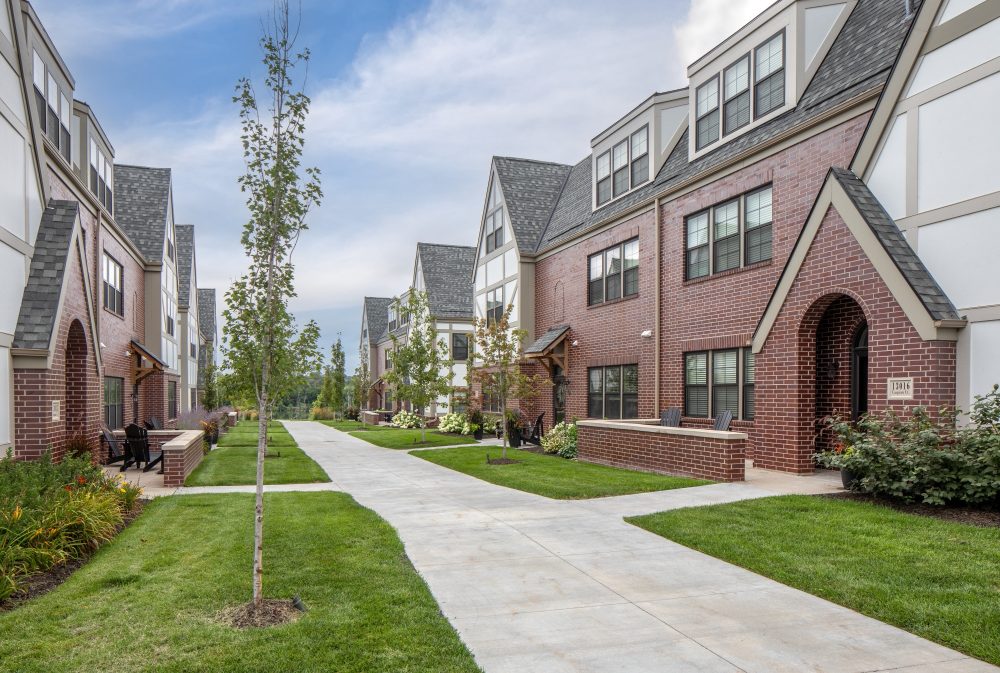
Our clients are finding creative ways, either in places that allow it, or projects that are of a scale that they can negotiate a new set of rules. For our missing middle neighborhood called Prairie Queen, in the Omaha metro, in a city called Papillion, we had to rewrite the zoning and negotiate pedestrian-focused street designs as part of the mixed-use development agreement. That project is 40 acres. The fact that it’s happening in Omaha is kind of a miracle. Our client had just the right skill set to pull this off, which is rare.
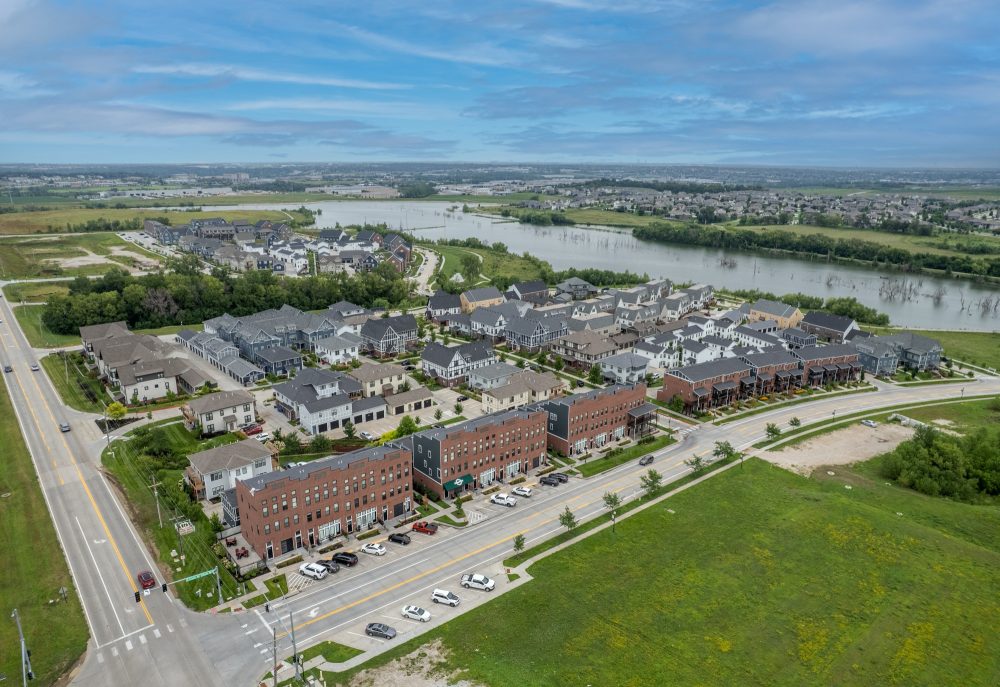
Prairie Queen is a 40-acre project, located in the Omaha suburbs, in the city of Papillion. Photo courtesy of Opticos Design, Inc.
What are the parking minimums?
Here’s one of the great things about this project: it’s in a suburban location; no transit; in an area where it snows a lot in the winter. But it’s only one off-street parking space per unit, and the rest of the parking is on-street. This blows people’s minds. They feel that you need more on-street parking, but this is now outperforming all other multifamily projects in the region, so it’s showing that people are OK with that. There are no parking lots. I can pull these photos up in any debate I’m having about parking and say, “This project demonstrates you don’t need more than one space per unit off-street.” I’m of the mindset, I don’t think any city should require parking. They should let the market decide, let developers be creative with that.
You do half of your projects with cities, half with developers. How do they differ?
I practiced architecture with Robert Stern for a number of years and enjoyed it, but then I realized I wanted to do more neighborhood scale and citywide scale. So I came to Berkeley to get a master’s degree in urban design. When I graduated, I was looking for a job in the Bay Area where I could do a little bit of both, dabble in architecture, but also do some planning and zoning, but nobody would offer me a job where I could do both. I was told I had to pick. So I thought, OK, I’m going to start my own consulting company. That turned out to be a smart thing, because our work for developer clients informs the work that we do for cities, and the work we do for cities informs the work we do for developers. But the overarching shared goal, the shared trait, of all those projects is geared toward delivering walkable, urban environments and housing choice within those walkable contexts.
So for city projects you’re aiming principally at zoning changes?
Our goal for those projects is to deliver walkable living choices. The projects range from area plans and comprehensive plans to regional housing and growth strategies. A service we created in the past four or five years called a Missing Middle Scan allows us over the course of three or four months to work with cities or counties to introduce the idea of missing middle housing, prioritize where it should be applied, and identify a detailed list of policy and zoning changes needed to enable it. Many of these projects, including the Missing Middle Scan, do end up including zoning changes to enable the implementation of the plan.
Unlike a lot of planning firms, my team at Opticos Design uses strong visual communication to get political and community support for the intended outcomes. That’s part of the reason missing middle has caught on so broadly. We’ve done a great job of using some really clear graphic communication.

When you look at the visuals, it’s obvious.
You’ll appreciate this, being from New York. My wife, Karen, worked for Pentagram, with Michael Beirut. She did information design for Pentagram when she was in New York, so that’s instrumental in how we communicate, critical in our planning and zoning work, and what ultimately led us to form-based coding/zoning.
It became clear, after a couple years of being in business in the early 2000s, that whether it was a city trying to deliver walkability or a developer, zoning was the shared barrier. Even cities that wanted to change didn’t realize how bad their existing zoning was. That’s when we started rethinking the way we approached it. There was a group of colleagues, mostly from the Congress for the New Urbanism, who were thinking in similar ways about form-based coding. We can’t take the credit for being the first ones to create form-based zoning, but we took it to scale and wrote the definitive book on the topic. We also founded the Form-Based Code Institute, which is now part of Smart Growth America.
You do get credit for coining “missing middle housing.”
I came up with the term in 2011 and then travelled the country giving presentations on this topic. In 2016 we launched missingmiddlehousing.com to provide a free online resource due to growing demand.
It’s really part of the zeitgeist now.
Yes, and as a reinforcement of that, the book is now five years old and selling better than it did in 2021. And a majority of planning documents include our missing middle housing diagram. A few years ago I was asked to join a working session for the Washington State Senate Housing and Local Government Committee. To kick off the call, [then-]Senator [Patty] Kuderer held up my book and said, “We’re talking about missing middle housing for state-wide application.” I thought, Oh, my God, this is amazing—we’re having the impact we’d intended. This makes all of the R+D time my team at Opticos Design and I have spent on this over the past 13 years worth the effort.
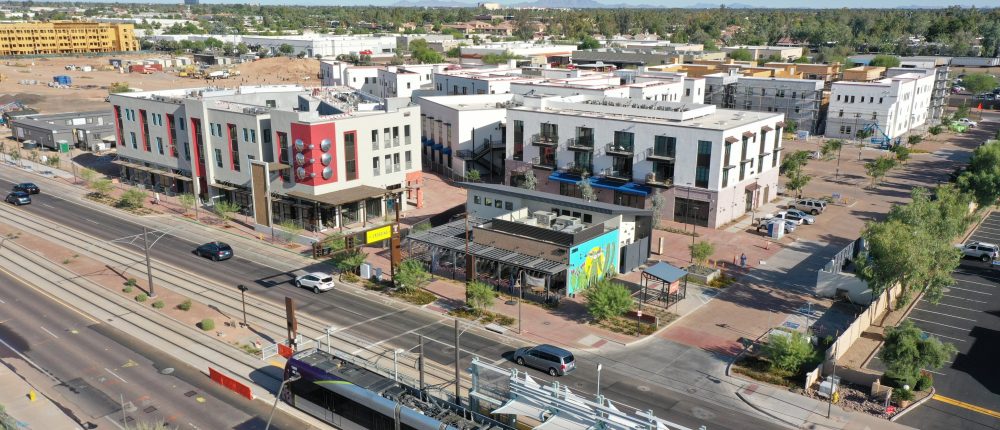
Featured image: Culdesac Tempe, Tempe, AZ. Designed by Opticos Design. Its developer claims that the 17-acre project is “the first truly walkable neighborhood built from scratch in the United States.” Photo courtesy of Culdesac Tempe.