

How U.S. Cities Lost the Economic Development Plot
In the 1950s, Robert Moses bulldozed a swath of the South Bronx to build the Cross Bronx Expressway, displacing an estimated 60,000 residents and gutting one of the most economically diverse urban neighborhoods in the country. The logic of the time was efficiency: move cars faster. By the time the expressway was completed, the same idea was imposed upon the entire city: rationalize land use and separate urban functions into legible zones. What was lost in the process was harder to quantify: the density of small businesses, the overlapping networks of suppliers and customers, the informal economic relationships that give neighborhoods their vitality.
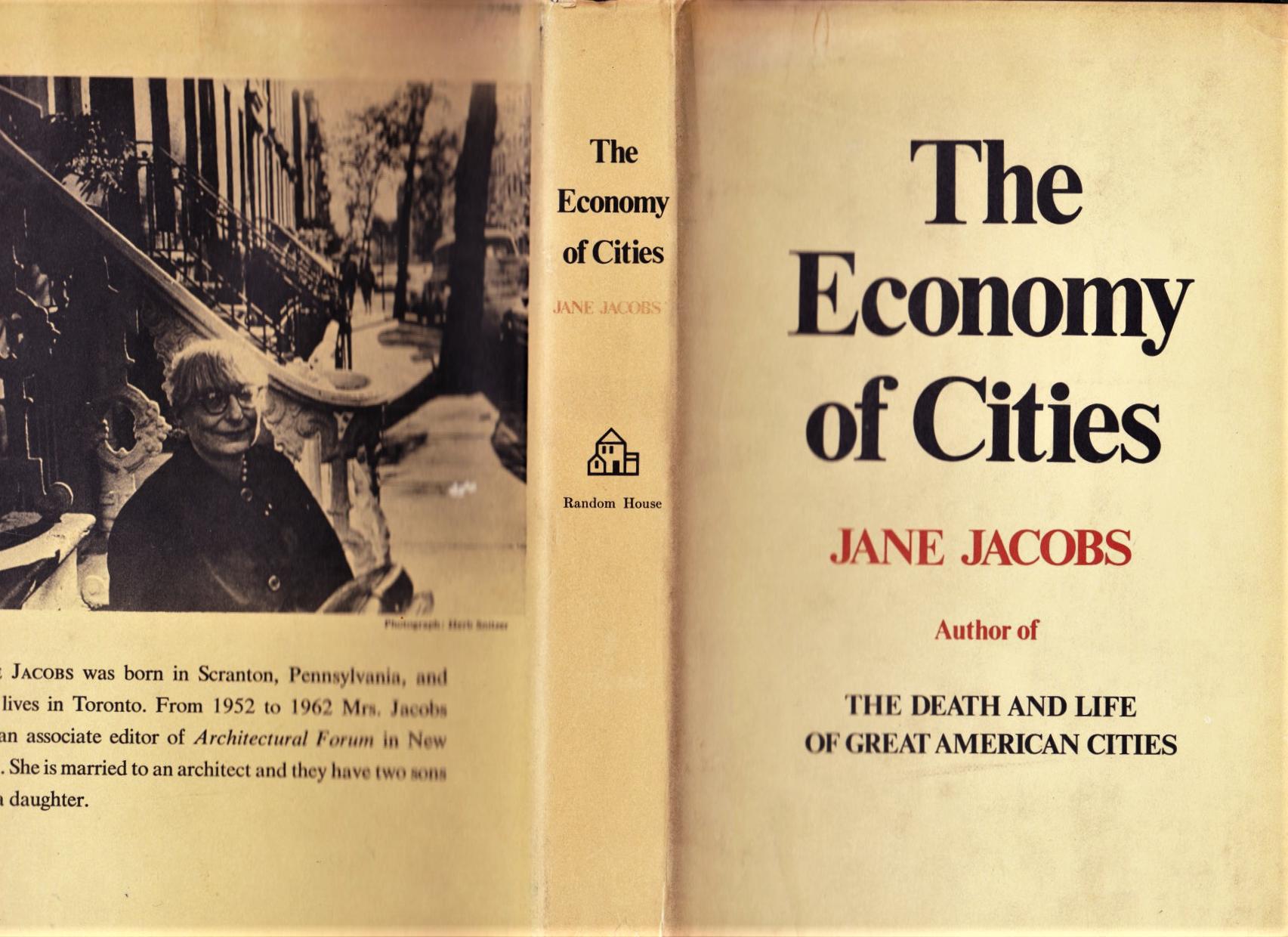
While Jane Jacobs is widely known for her critique of midcentury urban planning in The Death and Life of Great American Cities, she applied a similar analysis to urban economies in her underappreciated second book, The Economy of Cities. She made the case that the hyperfocus on market efficiencies comes at the expense of economic innovation, growth, and shared prosperity.
The neighborhoods that planners considered chaotic were in fact some of the most productive environments human beings had ever devised. The “inefficiencies” planners sought to eliminate were the friction that generated new ideas, new businesses, and new economic sectors. Rationalize the city, Jacobs argued, and you rationalize away its generative capacity.
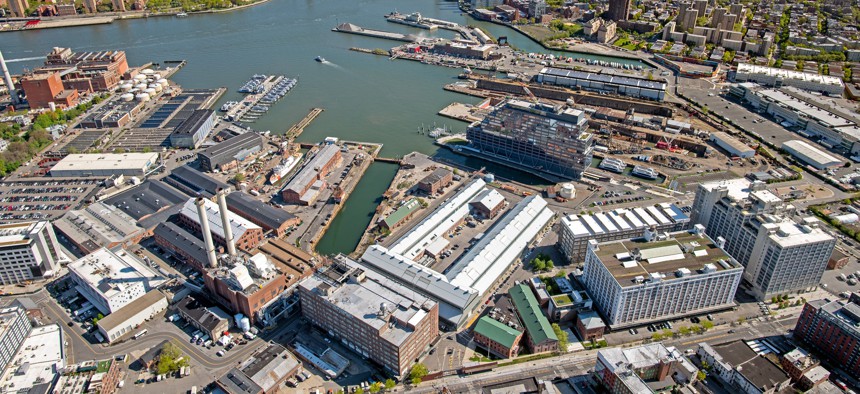
Today, the consequences have become impossible to ignore, particularly as AI ushers in an unprecedented wave of creative destruction. According to the 2024 McKinsey report Generative AI and the future of New York, “By 2030, as many as 1.1 million occupational shifts may be required in the New York region, and one-third or approximately 380,000 of these shifts are directly attributable to the impact of gen AI” (emphasis added).
By almost any measure—market share, profit, equity value, political influence—a small number of very large companies in technology, pharmaceuticals, and finance now dominate in ways that would have been unimaginable (and even illegal) not that long ago. The middle of the economy has thinned out considerably as new business formation has stagnated.
The number of new business startups per capita in the U.S. fell by nearly half between 1978 and 2012 and has only partially recovered since. The small and medium-sized enterprises that once formed the connective tissue of local economies —manufacturers, independent retailers, specialty service firms—have been squeezed by consolidation, by commercial real estate costs, and by a financing environment that has never been well calibrated to their needs. What’s left is being hoovered up by private equity.
Cities that once had diverse, locally robust industrial bases gave way to a relatively small professional class and a much larger stratum of service workers whose wages have not kept pace with housing costs in any American metropolitan area for at least 20 years. In city after city, what took hold was a theory of economic development that Jacobs would have recognized immediately as the urban renewal mistake in a nicer suit. The logical extreme of efficiency is monopoly.
The Attraction-Retention Trap
Most American cities and states have some version of the same strategy: identify large anchor employers, offer them sufficient tax incentives and infrastructure investment to choose one jurisdiction over another, and then spend the next decade providing more incentives to stay. The logic is efficiency: concentrate resources on the largest possible return, eliminate friction, optimize for the biggest fish. This attraction-retention model has dominated state and local economic development despite the fact that it has a surprisingly weak evidence base.
And yet state and local governments spend $50 billion annually on incentives, with roughly $47 billion directed toward tax breaks and cash subsidies primarily geared toward attracting and retaining firms. Both New York State and New York City are the biggest spenders on this model, peaking at $11 billion during the pandemic, which has not substantially come down since.
Research suggests that these resources could generate significantly greater returns if redirected toward investments in workforce development, infrastructure, and support for existing businesses—areas that more directly shape regional productivity and long-term growth.
Modeling further shows that shifting resources toward customized services for locally rooted small and midsize firms—such as job training partnerships, technical assistance, and infrastructure investments tied to existing industry—can produce substantially larger income gains that accrue disproportionately to lower-income residents compared with the minimal benefits provided by traditional corporate attraction strategies.
What’s more, place-based firms are more likely to recirculate profits within the regional economy, while externally owned firms tend to extract earnings, limiting local spillover effects. Place-based businesses are also more likely to be civically engaged, as the success of each company is tied to the success of the city as a whole.
The Process Knowledge Problem
Jacobs’ critique of the “efficiency” approach was structural, not just tactical. Economies that organize themselves around a small number of very large companies and sectors lose the capacity to innovate. She argued in The Economy of Cities that growth and shared prosperity come about by adding “new work” to “old work.”
Her most potent example is how the Wright Brothers, who started as bicycle mechanics in Dayton, Ohio, invented the first powered airplane by applying bicycle mechanical skills, chain-drive technology, and lightweight construction to aeronautics. She points out that the Wrights succeeded where heavily funded competitors failed because they were part of a flexible and innovative urban environment. Their ability to tinker, pivot, and apply mechanics to aerodynamics was key to their success.
New work emerges from the messy, recombinant activity of many firms of varying sizes, linked by competitive yet shared labor markets, suppliers, and the kind of informal knowledge transfer that happens when a machinist and an engineer and a product designer are all working within proximity of one another.
More recently, these observations have been validated by Dan Wang, a research fellow at the Hoover History Lab at Stanford University. He documents China’s industrial rise in his 2025 book, Breakneck: China’s Quest to Engineer the Future. Wang calls it “process knowledge”: the tacit, embodied understanding of how to manufacture things, which accumulates in workforces through years of practice, failure, and iteration.
Process knowledge cannot be written down in a manual or captured in intellectual property filings. It lives in people. And when production moves, that knowledge atrophies and is eventually lost. Much like Jacobs’ observation that “new work” comes from “old work,” Wang argues that process knowledge compounds over time. Success in one generation of technology (consumer electronics) creates the foundational skills for the next (electric vehicles).
Wang’s argument challenges a consensus that took hold in American business and policy circles in the 1970s and ’80s but really accelerated in the 1990s: that the U.S. could offshore manufacturing and retain high-value design, branding, and intellectual property work.
But the ability to improve a material product—to solve the production challenges that only emerge at scale and to develop the next generation of manufacturing processes—is inseparable from production itself. Design without manufacturing ultimately weakens innovation ecosystems that were largely made up of small and midsize firms that pay middle-class wages, not out of virtue, but because they create value by inventing new products and birthing new firms.
A case in point is the stagnation of productivity in the U.S. construction industry, which has been essentially flat since the 1970s. This reflects a broader erosion of process knowledge driven by the separation of design from production and the limited adoption of off-site, factory-based building systems. In contrast to countries that have embraced modular and prefabricated construction—where components are produced in controlled environments that enable repetition, standardization, and continuous improvement—the U.S. has largely remained committed to site-built projects.
The consequences are evident not only in stagnant productivity but also in persistently high costs. U.S. projects are often far more expensive than their international counterparts, reflecting in part the industry’s failure to capture the economies of scale and continuous innovation enabled by modular construction and the design-build process.
Now comes AI, which threatens to do to white-collar employment what automation did to manufacturing employment in the ’80s and ’90s. The jobs most immediately at risk (architectural design, legal research, financial analysis, software development, marketing, medical imaging) are precisely the jobs that anchor middle-class professional life in postindustrial America. Cities that reorganized their economies around the attraction of knowledge workers may soon find themselves without a theory of what comes next.

New York City as a Test Case
State and local governments need to stop treating economic development as a competition for the same small pool of large employers and start treating it as an ecosystem management problem. The question is not which city can offer the most generous incentives. It is what conditions— physical, financial, regulatory, educational—allow many different kinds of firms to start, survive, and grow in a particular place, generating the density and variety of economic activity that Jacobs identified as the precondition for new work.
No city has more at stake in this rebalancing than New York, and no region has a more complicated relationship with the attraction-retention model. Roughly speaking, New York City provides $2.1 billion in tax breaks, mainly to large companies, but gives only $180 million in direct grants to existing small businesses. While the former is forgone revenue and the latter is direct spending, the gap is nonetheless quite large. New York City and State are consistently the largest spenders on economic development programs in the US, despite an abundance of evidence that the benefits are not widely shared.
Now, under Mayor Zohran Mamdani, New York is testing whether his “economic justice” approach can be scaled into a governing philosophy. Mamdani appointed former U.S. Labor Secretary Julie A. Su as the first ever NYC Deputy Mayor for Economic Justice. What’s more, recent memos indicate that Mamdani wants to provide a new mission for the city’s Economic Development Corporation, elevating economic justice as a core complement to its traditional goals of growth and investment.
Whether this restructuring produces better economic outcomes is an open question. New York still needs to do big things. Reorienting EDC too much in the direction of small and midsize business development risks underinvesting in the generational infrastructure projects and sector-building initiatives that only an agency with EDC’s reach and balance sheet can deliver.
But the tension itself may be productive. If the Mamdani administration can pursue both imperatives, it would represent exactly the kind of rebalancing that Jacobs argued for. The risk, as always, is that the pendulum swings too far. The better outcome is a city that uses its economic development machinery to build the conditions for small businesses to become midsize firms and generate the economic density from which new work can emerge.
This may be a hard needle to thread, especially in an era of budget austerity and high interest rates. But New York, with its concentration of talent, capital, and institutional capacity, is probably better positioned than any other American city to try. If Mamdani hopes to reverse the outmigration of working-class jobs and middle-class families from New York City, he’ll need a more cohesive strategy—and a stronger rationale for it.
Here’s our argument in a nutshell: Economic justice emerges from economic diversity, and that is the origin story of New York City, from New Amsterdam to the present. But it is not a given. Jane Jacobs made this point so eloquently more than 50 years ago: “Cities have the capability of providing something for everybody, only because, and only when, they are created by everybody.”
Featured image: Amazon’s Seattle campus, via Seattle Spheres.