
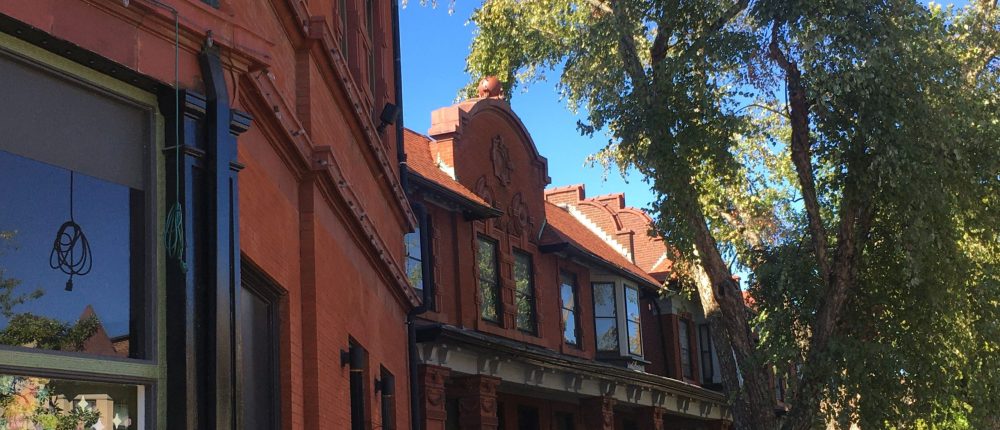
The Overlooked Charms and Underappreciated Glories of “Flyover Country”
In the early days of my work together with James Rojas, our clients were mainly in large coastal cities. Some of this had to do with our starting point, Los Angeles. We had the most professional and social connections there, and the secondary connections we made were linked to that city. However, when our book Dream Play Build came out in 2022, that client landscape expanded and changed. Suddenly, folks in smaller towns and cities across the country started contacting us and inviting us to do hands-on engagement work for them.
There are indeed many design firms the country and world over who wouldn’t so much as deign to work in these towns, or any place that doesn’t have a certain amount of cultural cachet attached to it—that is, the L.A.s, New Yorks, Londons, and Tokyos of the world. However, that is not us. To adhere to such a strict rule would both inherently contradict our work’s core mission of reaching broader audiences and leveling the playing field in planning and design, and completely limit our real understanding of place and places.
“Flyover country” and “flyover cities” are a kind of dismissive way of characterizing any American place that isn’t of a certain size and/or stature as a backwater of clueless people doing nothing but shopping and consuming and having nothing to offer to the broader cultural conversation.
In a recent article for The Guardian, an American journalist living in Paris and a French friend of his visited the U.S. and went on a cross-country roadtrip of this proverbial flyover country, seeking to paint a picture of the American cultural and built landscape in the year 2025. Instead of searching for the interesting and the bespoke, the odd and the regional, they came with the mission of looking for proof that the entire country is just a wash of faceless sprawl and unthinking people (“Like fish in water, I wonder if Americans are even aware of how they swim in it,” mused the author), somehow trying to explain how our suburban built form has begotten the political outcomes we now have.
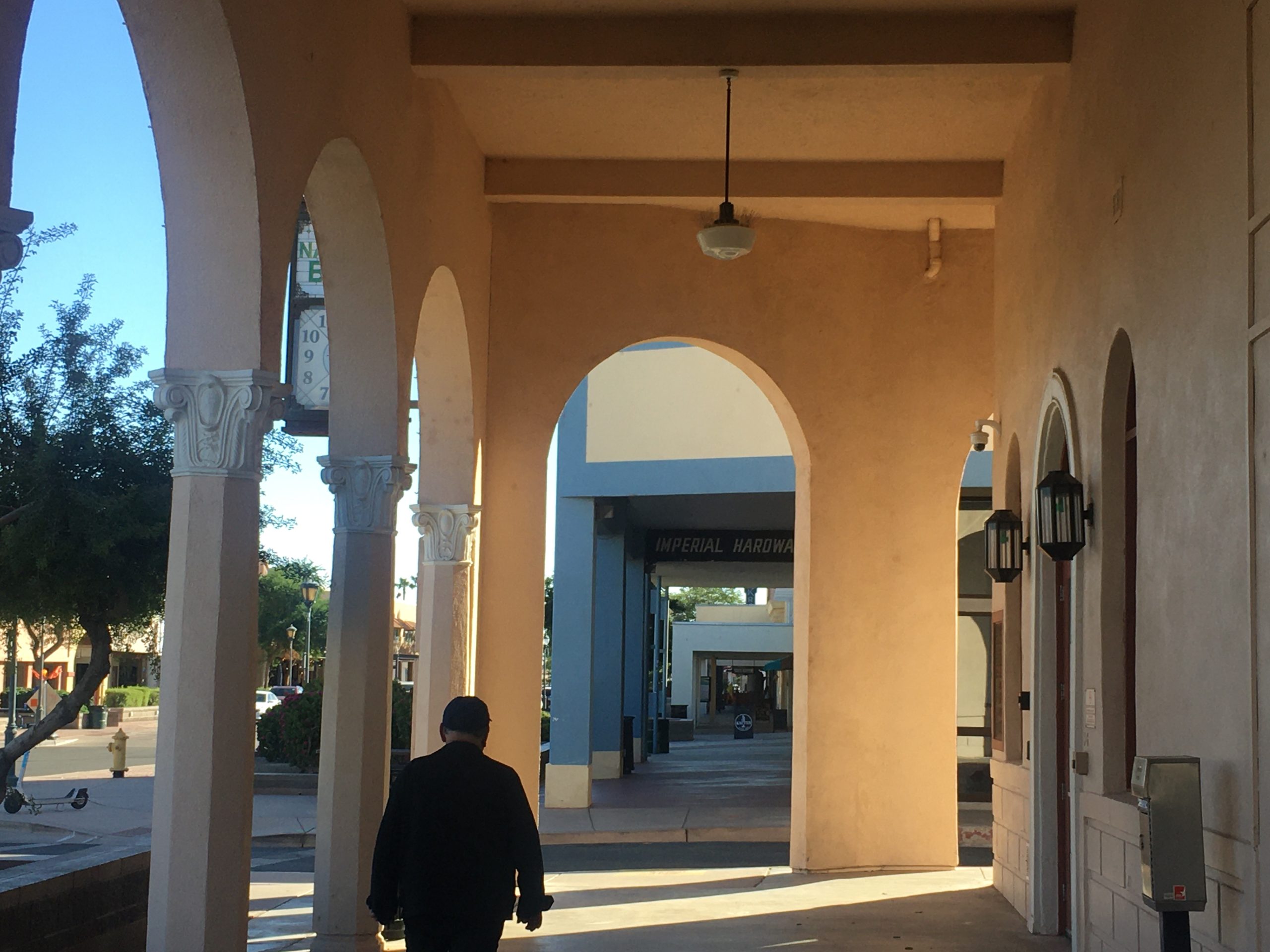
Historic and beautiful downtown Yuma, AZ, a city most people write-off as they simply pass through it on the freeway.
While some probably read the article with a kind of schadenfreude-infused delight (“I knew the entire U.S. sucked!”), to us it read as a succinct display of the kind of elitism that underpins the whole notion of “flyover country” in the first place. And embedded within the article was the acute irony that the supposedly culturally literate authors didn’t have the intellectual curiosity or energy to seek out that which was culturally interesting. They had set out looking for garbage, and they found said garbage. Case closed.
Yet our experience of working in these smaller towns and cities has revealed places that couldn’t be further from the dismissable backwaters so many imagine them being. From Redding, California, to Independence, Oregon, to Yuma, Scranton, and Kingman, Arizona, to Kansas City, Missouri, and beyond, we have found people committed to making where they live a better place (and, yes, even challenging sprawl and auto-centric planning); treasure troves of cultural creators and hubs; and spaces and places that are interesting, oftentimes beautiful, to be in and explore. Indeed, there is the ugly sprawl and the cringe-inducing big-box moats you may have to pass by, or through. But to say that this is all there is means to completely close one’s eyes to the deeper reality of these spaces and places. Here are just a few of those “flyover” places we’ve been to that are intriguing and worth a visit.
Kingman, Arizona

Art deco architecture and a pedestrian-friendly streetscape makeover on Beale Street in Kingman, AZ
A year ago, we were invited to Kingman to lead folks across Arizona who work in public health in a training on how to weave hands-on and sensory-based methods of engagement into their outreach work, which has increasingly focused on the intersection of the design of the built environment and corresponding health outcomes.
Located along historic Route 66, and on the way to, but not near, Flagstaff if coming from the west, historic Kingman is remote and easily missable, if you’re insistent on not straying far from I-40. But if you do head east off of the freeway and travel about a half-mile, you can park the car along Beale Street near First or Second Street and explore Kingman’s downtown and adjacent areas on foot. Or you can skip the car altogether and take the Amtrak Southwest Chief there, with the train station located just a block south of Beale, which has recently been given a streetscape update with wide sidewalks, bulbouts, newly planted trees, and stormwater swales, all framing a remarkably intact historic downtown core.
In our case, once we had checked in to our hotel, we walked east on Beale toward the center of downtown, passing Locomotive Park, a leafy greenspace full of old trains and interpretive signage about the railroad history of Kingman. (Freight trains run through town regularly.) From there we walked past a motorcycle paraphernalia shop with, yes, Trump flags, but also Swedish ones, and all manner of libertarian-themed slogans, a jarring juxtaposition (not least because I couldn’t think of anything that seemed less Swedish).
And yet, just when we thought we might want to turn around, we walked further up a slight incline and came upon two women with plein-air paint canvases set up right on the sidewalk, painting the mountains just to the north, with the historic town in the foreground. We stopped and chatted for a bit, and they were glad to share their progress with us. Immediately across the street is a record shop with a vast selection of new and old (to give you an idea, PJ Harvey’s Steve Albini–produced Dry was among the huge selection), and beyond there, a seemingly endless array of thrift and vintage stores (one in particular, Gracie’s Vintage, gives you the impression that you have stepped into the real-life version of Rick Ocasek and Pia Ziadora’s Baltimore rowhouse living room in the movie Hairspray).
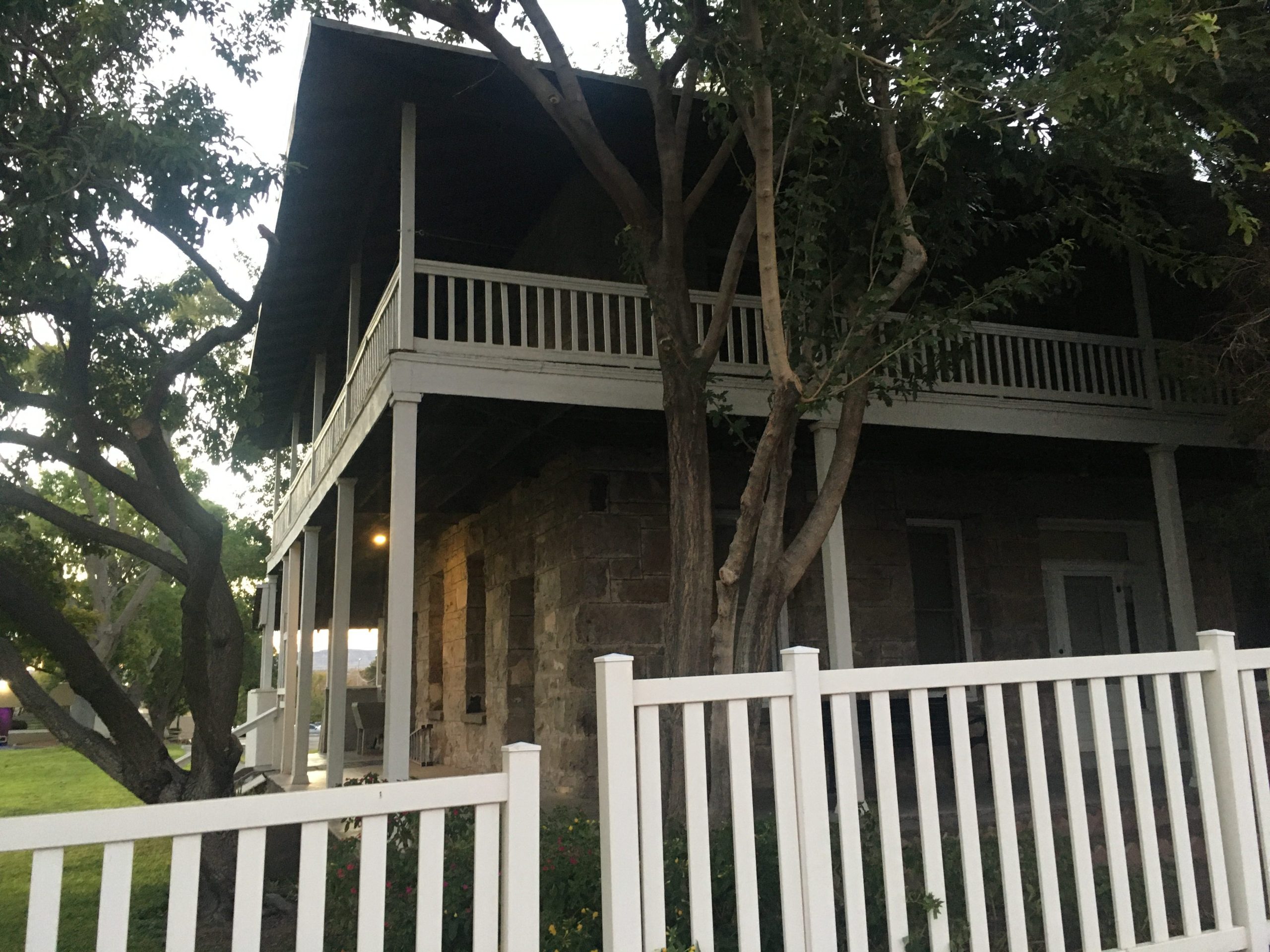
A historic home in downtown Kingman, now the Bonelli House Museum. It was built in 1915 by George and Effie Bonelli.
On the streets running north from Beale are historic buildings of a range of styles, including an old Art Deco Masonic Temple, the brick-and-stone Kingman municipal court buildings, and a historic stone fire station. Coming back down the hill on Fifth Street, one passes the headquarters of the Mohave County Democrats, whose building is adorned with a colorful mural speaking to Kingman’s history and the residents’ commitment to democracy and voting.
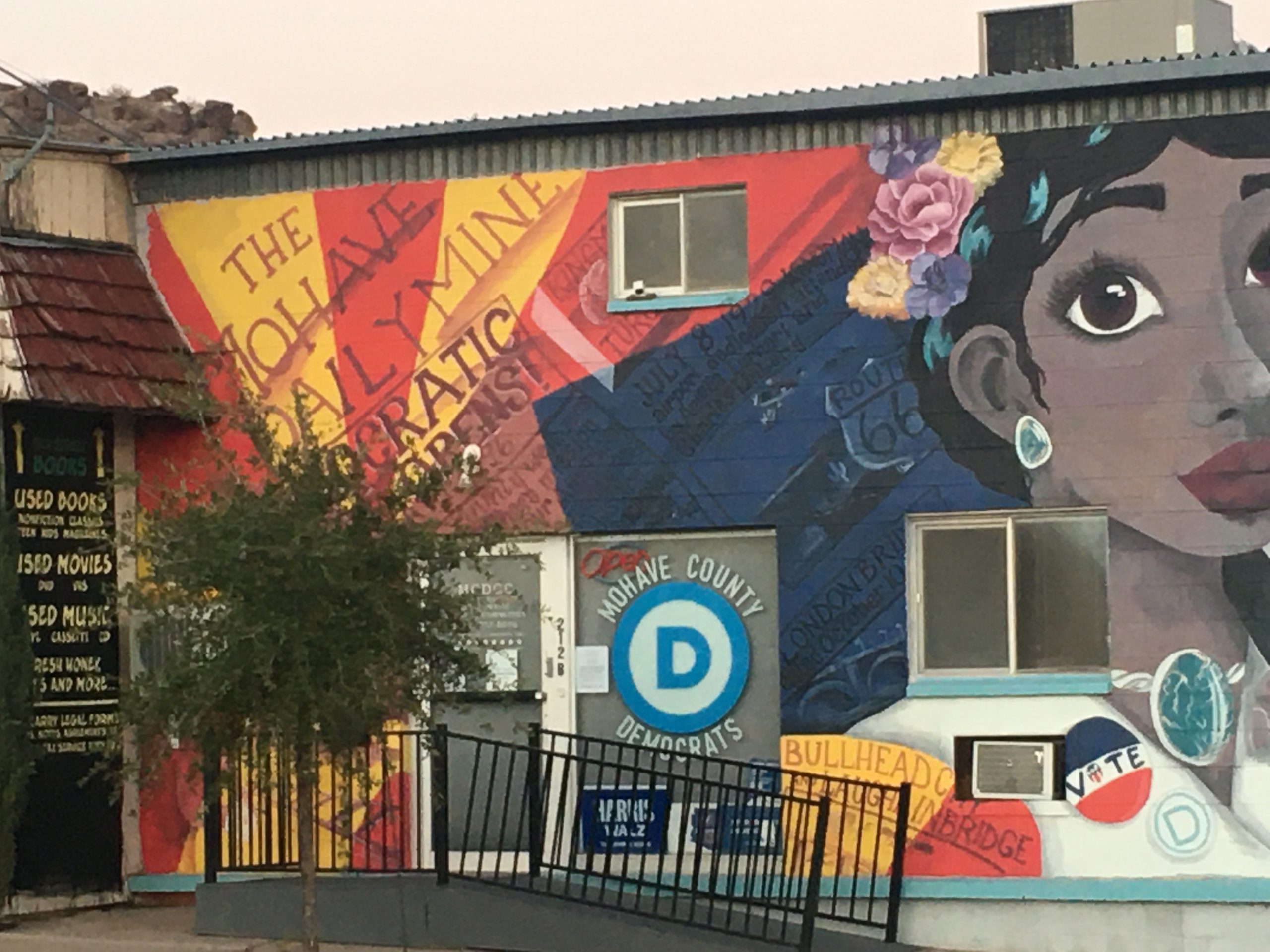
The headquarters of the Mohave County Democrats, in Kingman, AZ.
Back down on Beale there are breweries as well, one of which, Black Bridge, has an outdoor patio out back where, each evening, a taco truck comes in through the alley and pulls up, and you can go and put in an order for dinner while you hang out and drink very good beer. If tacos aren’t your thing, you can easily walk across the street to Floyd and Co. for legit-good wood-fired pizza. In short, you can easily make a day and night of Kingman and leave feeling like it was plenty worth it to explore.
Scranton, Pennsylvania
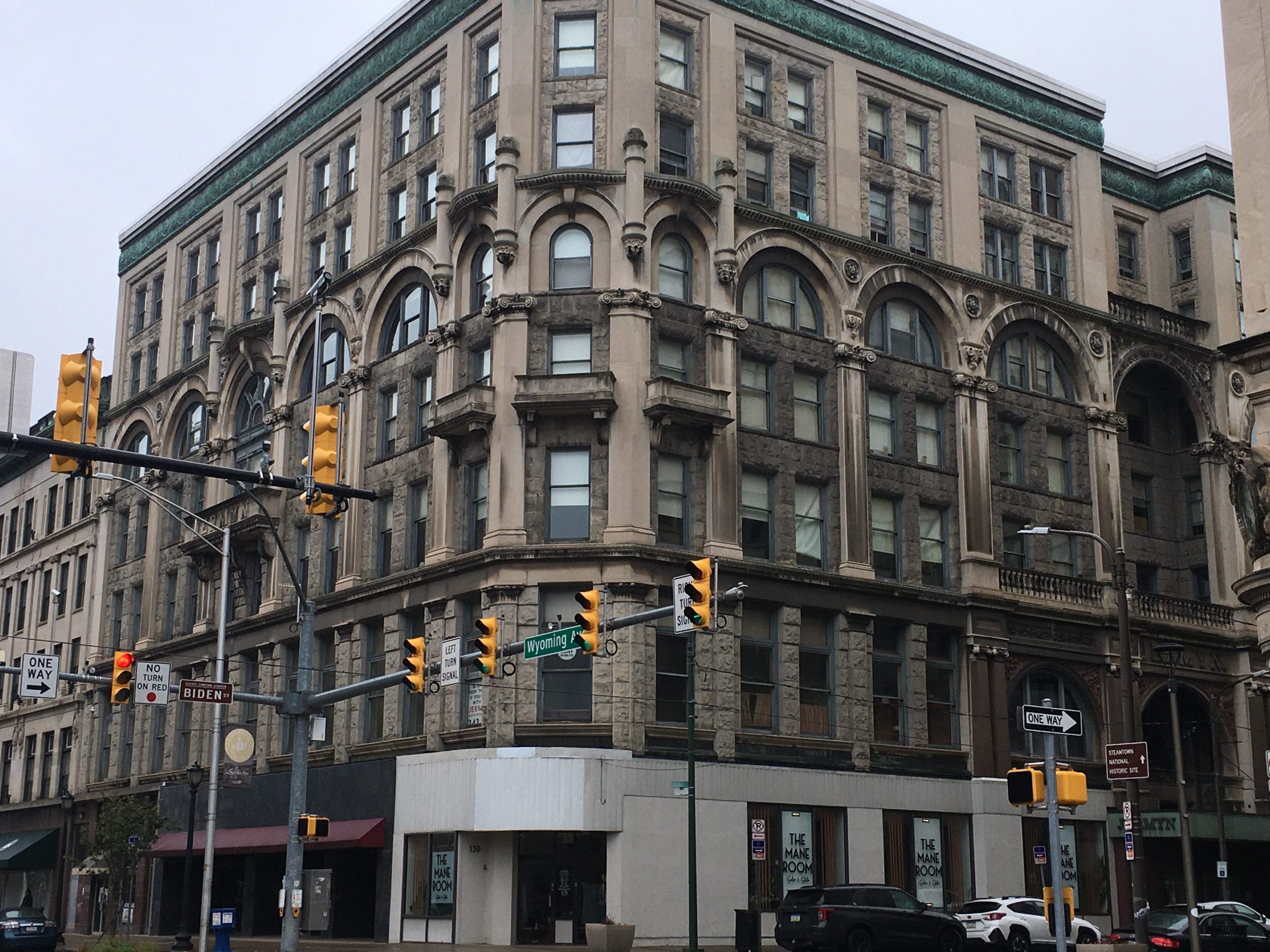
Historic, big-city architecture abounds in downtown Scranton.
Say “Scranton” these days and most people will say they know it as the location of the American spinoff of The Office and thus imagine it as a barely alive town providing a deadpan backdrop to the equally deadpan humor of the show. At one time the city was in the running for the official “Armpit of America” (more recently, and unfairly, given to Battle Mountain, Nevada, which humorously ended up leaning into the slur with gusto).
In fall 2023, we were invited by Maureen McGuigan, deputy director of arts and culture for Lackawanna County, to come to Scranton to be the keynote speakers at the Pennsylvania American Planning Conference to talk about how we engage people through their hands and senses in urban planning and design. McGuigan grew up in Scranton and left for California for many years, but ultimately returned to her hometown, committed to supporting the artists and makers increasingly calling Scranton their home. She told us she remembered when her hometown was in the running for the nation’s “armpit.” “It was slightly surreal,” she said, “as, to me, it was a real place where I just lived my life, as did many others.”
While our arrival into the city didn’t score the place any points in the charm department (the bus from New York City dropped us off in the parking lot of a failing shopping center well outside of downtown), we quickly changed our tune once situated. From our hotel, we walked down alley-like Center Street and came across small retail and cafe spaces tucked within the brick facades. Just before reaching Washington Avenue, we came upon the famed Office mural, which adorns the backside of one of the buildings lining Washington. (Here I will readily admit that, not being a die-hard fan of The Office, I had no idea the show was supposed to take place in Scranton and thus first assumed the people featured in the mural were simply famous local historical figures—which I suppose at this point they somewhat are.)
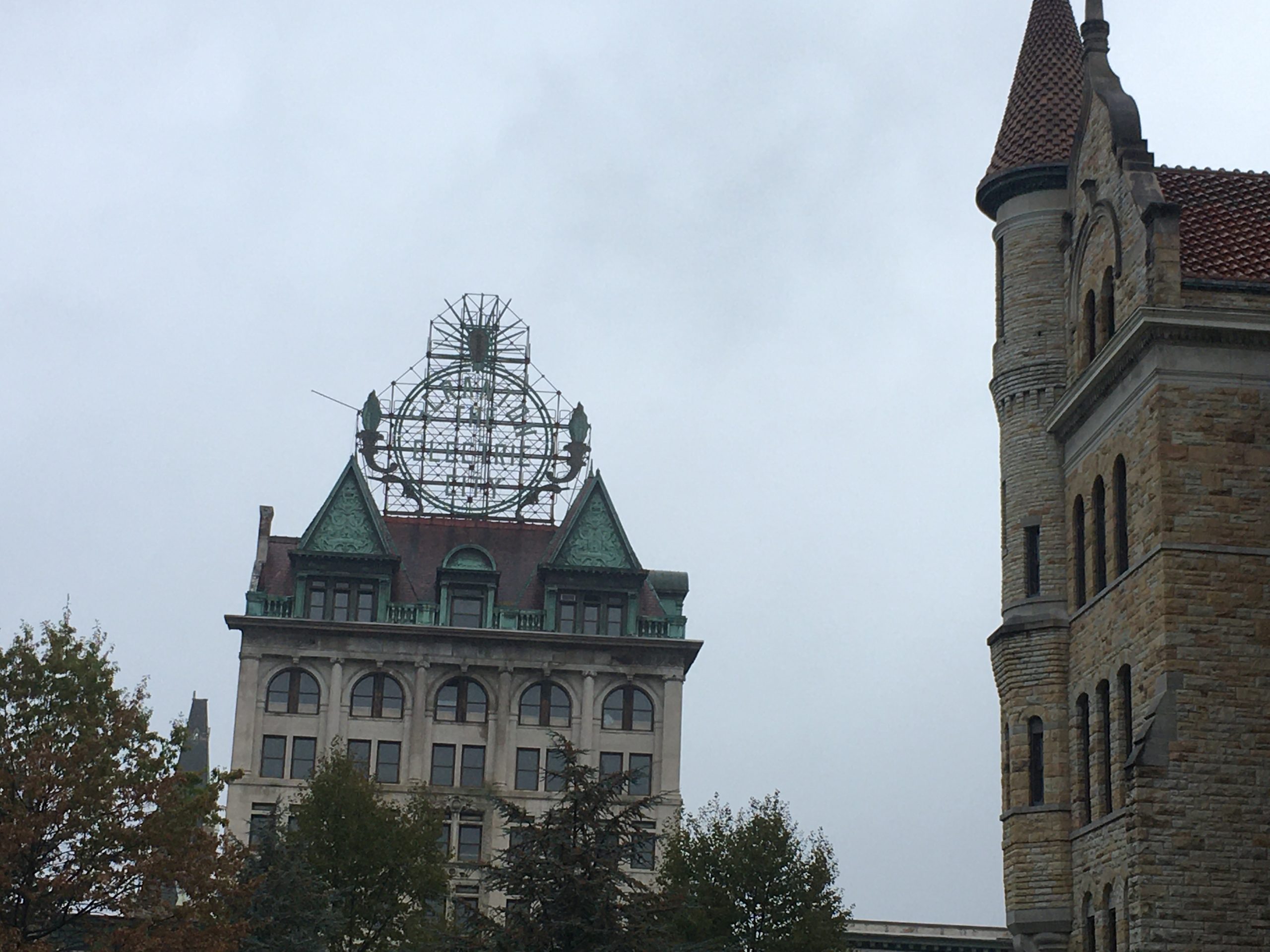
A view of the Scranton Electric Building (center) and its famous “Electric City” sign and the Lackawanna County Courthouse (right).
From there we headed down Washington and came to what is the star urban design and architectural focal point of the city: Lackawanna County Courthouse Square. From the 360-degree vantage point of the square, it becomes apparent that the city was at one time a wealthy, thriving hub that had aspirations to greatness. From the Romanesque Revival Lackawanna Courthouse itself, to to the Victorian Gothic Revival City Hall just down Washington, to the Beaux-Arts Scranton Electric Building (famed for its “Electric City” sign topping its double-gabled roof), there is highly detailed, big-city architecture all around.
From the square, we walked farther down Washington to the Scranton Cultural Center, which is housed in a former Masonic Temple designed by Raymond Hood, the not-so-obscure architect known for such buildings as the Chicago Tribune Tower and Rockefeller Center. The building’s style is technically a mix of Richardsonian and Gothic Revival, with some Art Deco flair thrown in for good measure, but the effect is something hard to put your finger on, a feeling of something simultaneously imposing and bombastic, odd and mystical that you would explore if given a secret key. Since the conference’s opening dinner was being held within the center, we did indeed get to explore, the interior proving to be a treasure trove of levels and mezzanines, and seemingly secret passageways and tucked-in alcoves.
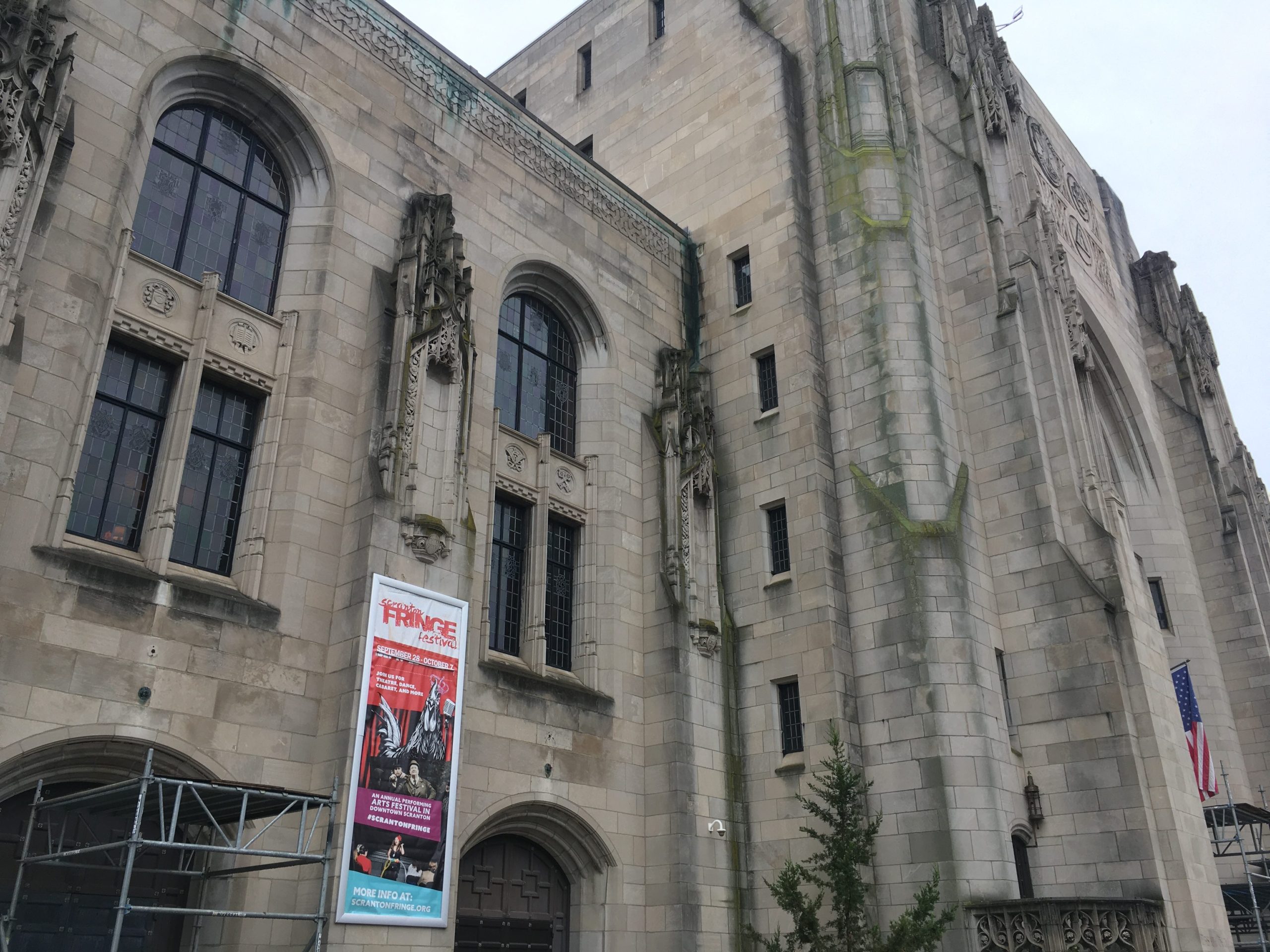
The strange and odd and grandiose Scranton Cultural Center, formerly the Masonic Temple, designed by Raymond Hood.
Within and around these buildings are older, more everyday commercial buildings that we also explored and that house everything from an off-kilter brewery called Mutant Brewing to cafes such as Northern Light and art spaces like the AFA Gallery. A bit farther outside of the city center lies Marywood University, whose Jane Jacobs–inspired Center for the Living City hosts the Observe Scranton community festival every two years (2025 is one of those years). With the tagline Jane Jacobs’ First City Festival, Observe Scranton brings together artists, architects, thinkers, electeds, and the broader community to explore all facets of urban revitalization, design, architecture, walking, artmaking, and more.
Lastly, the days of visiting Scranton by first getting dumped off in an ailing shopping-center parking lot may fortunately be numbered. When the city was in its heyday, it was home to an equally thriving passenger rail system, the testament to which is the palatial Lackawanna Station, which is still standing and now serves as a hotel and event space and is well worth a gander. Yet a movement has long been afoot to bring passenger rail service back to the city, and if all goes well, the route should be up and running by 2028, connecting Penn Station to Lackawanna by way of stops within the Poconos and northwestern New Jersey.
St. Louis, Missouri
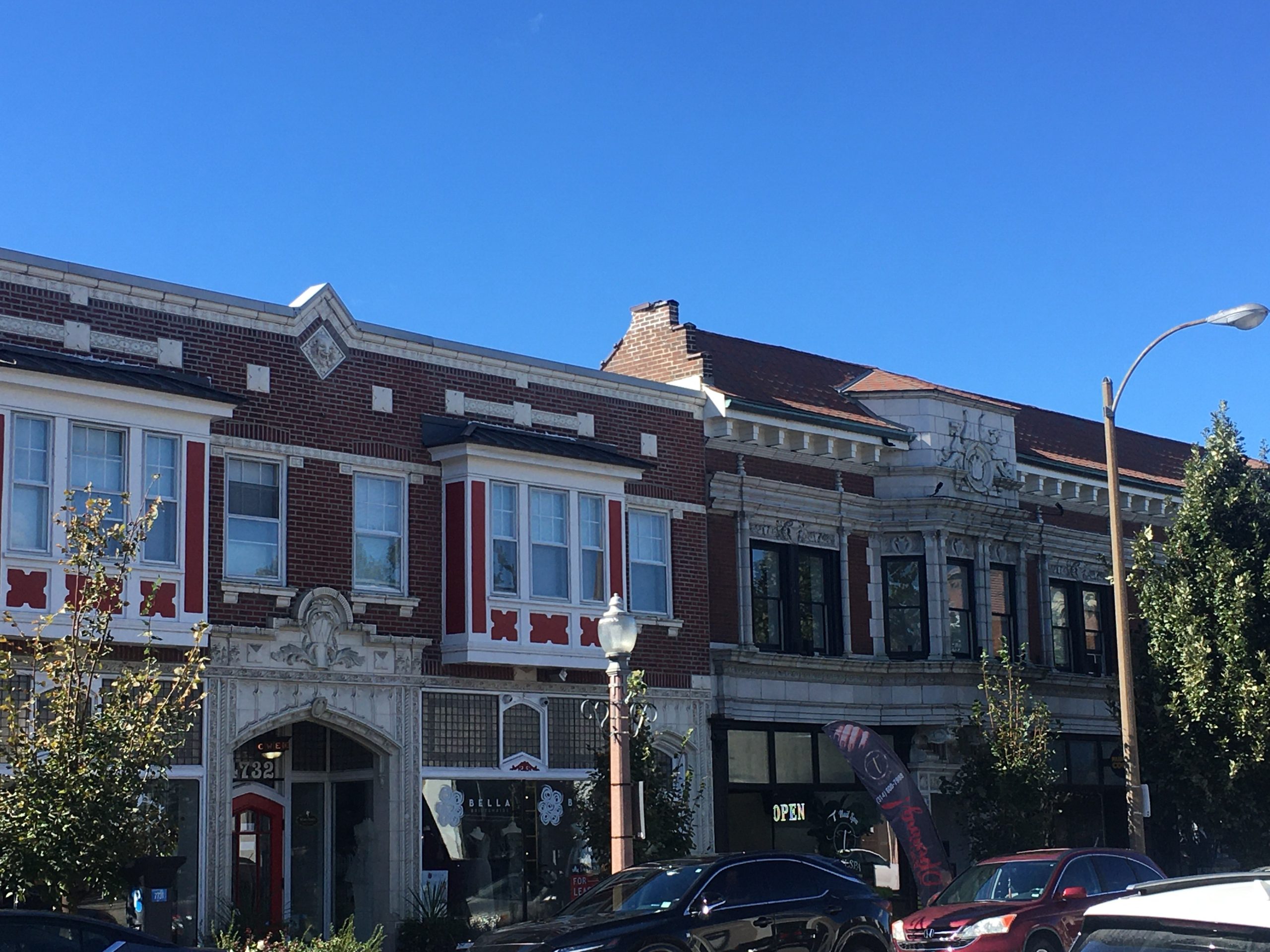
Staggeringly intricate brickwork and ornate commercial buildings, mostly designed and built by German immigrants, can be found all throughout St. Louis.
For anyone who has been to St. Louis or who lives there, it may feel almost comical that I am including the city within this character profile of “flyover cities.” It’s a city of significant history (founded in 1764, if you can believe it), staggering beautiful brick and stone architecture (its nickname is the “Row House City”), and sweeping, grandiose City Beautiful–era greenspaces. And it is home to lots of people committed to crafting creative and forward-thinking futures for a city that has the infrastructure for nearly 1,000,000 people (its population peaked in 1950), but whose current population hovers at just under 300,000.
Years of decline and poor urban planning and renewal decisions have resulted in a fragmented city, but the neighborhoods that are still intact (and there are many) offer some of my favorite urban walks of any U.S. city. Tower Grove Park, Lafayette Square, Cherokee Street, the Central West End—there are too many to count, but walks through each offer up that elusive combination of beauty, discovery, and decay, combined with a sense of possibility. Odd leftover spaces and historic buildings in various states of repair and disrepair abound, and residents have gotten creative with rethinking their uses.
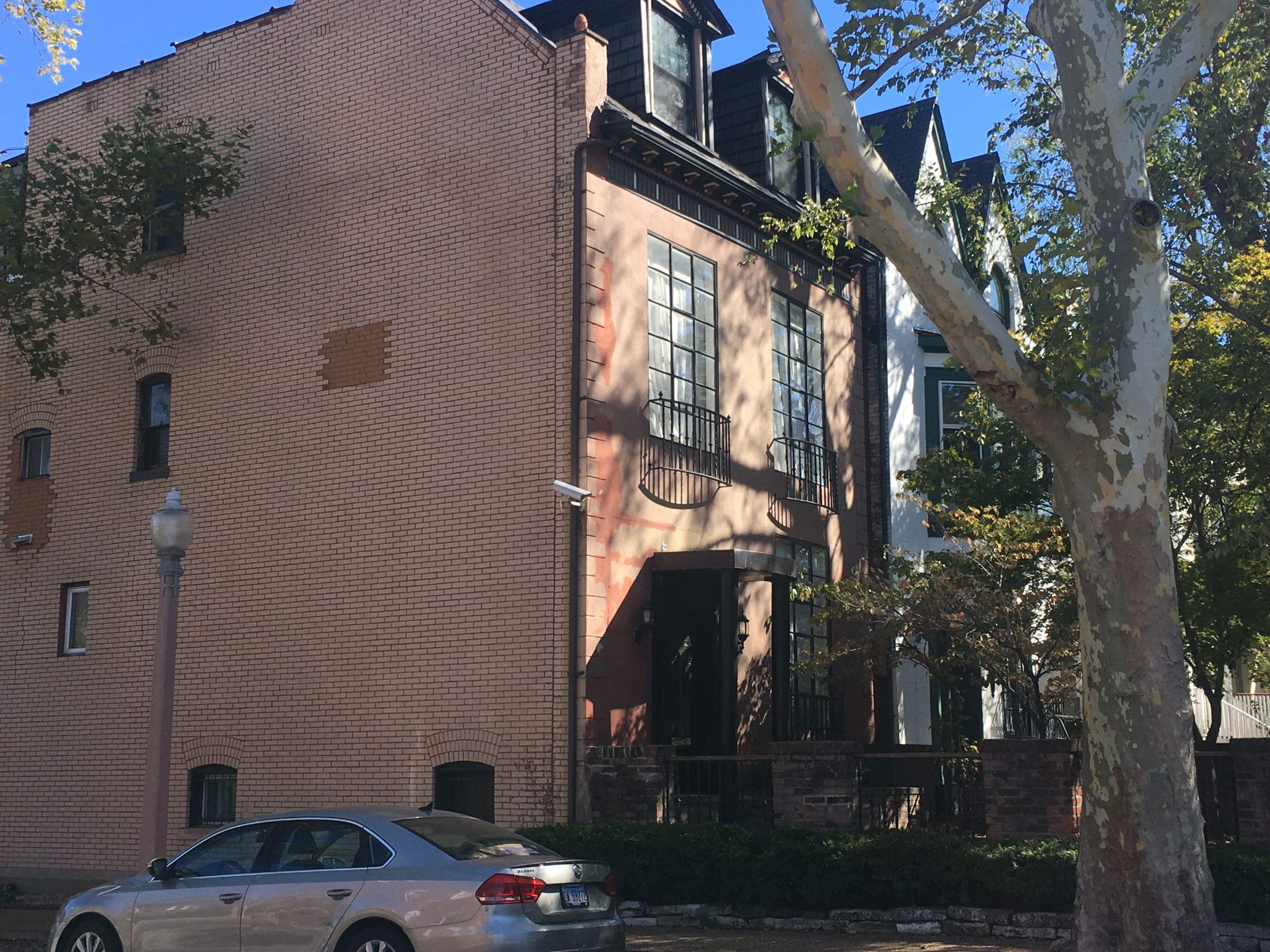
St. Louis is full of tree- and rowhouse-lined streets that are an absolute joy to walk down and explore.
One organization, the St. Louis Art Place Initiative (API), has seized on this sense of possibility while understanding that a place can go from “everything is possible” to “no one can afford to live here” in a seeming matter of seconds. API has created an affordable-ownership model combining subsidies, a mortgage loan fund, and downpayment assistance that allows local artists of low-to-moderate income to buy their own rowhouses, which API has refurbished. Deed restrictions are woven in as a means of ensuring the next owner will either be another artist or API itself and that the sale price won’t be so high that another artist can’t afford to buy it. Incidentally, API co-directors Jennifer Allen and Kaveh Razani are former residents of New York who saw and experienced challenges with affordability and preserving artist spaces firsthand. Allen wanted to move back to St. Louis in part “to work in a space in which communities can have more control over their own futures.”
For those who have never been to the city, a new light rail stop at Cortex offers a good midway point between Forest Park—a sweeping, classically urban and grandiose park of some 1,300 acres (for comparison, Central Park spans 843 acres) containing museums, walking and biking paths, vistas, wilder areas and more manicured ones—and downtown. And from Cortex Station itself you can make an easy walk north across Forest Park Avenue, potentially stopping for coffee at Northwest Coffee Roasting (housed in an old carriage house and greenhouse), and walking up to Maryland Avenue and west toward Euclid Avenue. Walk north from there to McPherson Avenue and you’ll come upon one of the most beautiful commercial corners of any city in the U.S., also home to a fantastic bookstore, Left Bank Books.
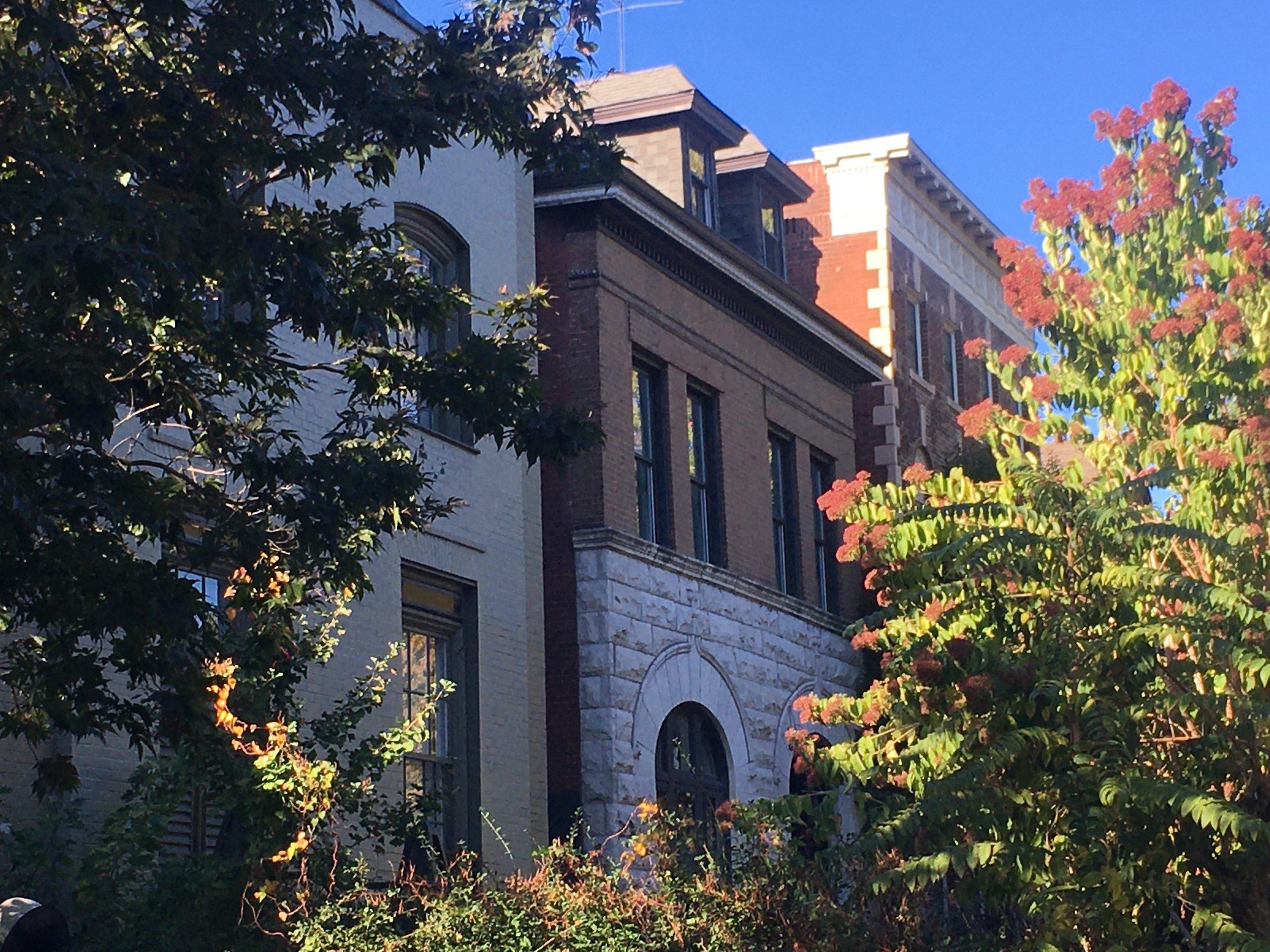
Once a city of nearly 1,000,000, now just shy of 300,000, St. Louis contains vestiges of big-city, grandiose architecture everywhere.
Blame the speed of delivery and the information saturation technology brings, but our narratives of place have increasingly become a kind of comforting but deceptive shorthand in our minds: Oakland is that crummy dangerous city near San Francisco; the entire Midwest is bland and shapeless, with each state the same as the next; everyone’s supposedly leaving California because it’s just so awful.
We do this in part out of intellectual laziness, in part because our brains probably can’t comprehend a deep understanding of a country as vast and varied as the U.S., and in part because we like to tell ourselves that we’ve made the right decision to either stay put or to move to where we have, that where we live is the good place. And in our politically polarized age, where everything has been reduced down to blue vs. red, us vs. them, we like to imagine that those places that are the color we don’t like are both the solid version of that color and one endless horror show of people who don’t know any better to see it for what it is.
Edmund White wrote that to be young partly entails being underformed to the point where everyone at a party is a potential new friend or hookup or lover or future spouse. The hard lines of opinions and notions we form later on might coincide with a better sense of who we are (ideally), but they will also cause a cutting off of the curiosity for newness and discovery that made the next party—real or proverbial—seem like such an enticing prospect.
When it comes to place and places, we need to remind ourselves to think more like our younger selves, where each city or small town, regardless of “flyover” reputation, could be that next proverbial party, one that will likely offer some sense of newness and discovery, and surprise, if we will only just open our eyes up to them, walk a little bit, and see what or who we might stumble upon.
Featured image: St. Louis, MO.. All photos by the author.