
You’re Not Antisocial, But Your Neighborhood Might Be
Since the publication of Robert D. Putnam’s Bowling Alone: The Collapse and Revival of American Community in 2000, a growing body of research has focused on the decline of civic and social engagement in the U.S., irrefutably substantiating the negative impact this is having on our individual and collective wellbeing. The signs are everywhere: reports of extreme loneliness, declining life expectancy due to “deaths of despair,” and, more recently, the emergence of chatbots as a substitute for companionship.
The proposed solutions have largely focused on nudging people to put down their phones and rejoin faith-based institutions, volunteer at social service organizations, sign up for the PTA, or organize a block party. This well-intentioned advice has done little to alter the trajectory of ever-increasing social isolation and civic breakdown, to say nothing of reversing it. And the multiplier effects have metastasized into full-blown national crises, from viral conspiracy theories and extreme political polarization to the normalization of gun violence.
Clearly, larger forces are at play, well beyond the choices that individuals make about how to spend their free time. Treating the symptoms is not the same as curing the disease. But the causes of the disease are so multifaceted, it’s hard to know where to start. While there is now widespread recognition that rebuilding community is critical, what we mean by “community” is undefined and probably strikes most people as insufficient, given the many crises we face.
Place Really Does Matter—a Lot
The most recent work in the field of “societal breakdown” studies is being led by Seth Kaplan, a lecturer in the Paul H. Nitze School of Advanced International Studies at Johns Hopkins University. Kaplan is not a traditional community development scholar. His background is studying fragile states—places like Somalia, Yemen, and South Sudan, where governments are weak, institutions don’t function, and social trust has collapsed. Over time, Kaplan says, he started to get an unexpected question: If you study fragile states, what’s wrong with America? He resisted this comparison at first until he couldn’t help but notice troubling parallels: rising polarization, addiction, and mental health crises, and declining trust in institutions.
Turning his attention to the U.S., he concluded that America is not a fragile state per se, but it is a nation of fragile neighborhoods. He argues in his book, aptly titled Fragile Neighborhoods: Repairing American Society, One Zip Code at a Time, that the roots of what he calls “social poverty” are hyperlocal. He points to a large body of evidence that the neighborhood where a child grows up is the strongest predictor of future educational attainment, income, and wellbeing.
Like other scholars and researchers before him, Kaplan focuses on the need to rebuild civic and social engagement at the local level while also acknowledging that the built environment is a contributing factor. He rightly makes the case that we have overinvested in large-scale infrastructure at the expense of neighborhoods—building ever-expanding highways and massive hospital complexes, for example, and not enough walkable local streets and community clinics.
Yet outside of urban planning circles, most conversations about social isolation stop well short of addressing the physical form of neighborhoods. From sprawling suburbs and gated communities, to unsafe or unwalkable streets, with more acreage given over to parked cars than mixed-income multifamily housing, to the uneven care and distribution of parks, recreation centers, and schools, our built environment often makes connection all but impossible.
Scarcity and Gentrification
Most American neighborhoods today are amorphous and lack a shared identity or coherent governance. Block clubs, neighborhood associations, business improvement districts, police precincts, and school zones have completely different boundaries. This physical and institutional fragmentation makes it difficult to build or sustain civic groups, because people cannot easily see how their engagement matters. Without a recognizable spatial unit of belonging, appeals to “community” become abstract, something we are told to care about but cannot locate, govern, or steward in practice.
On the other hand, neighborhoods that are well-defined and walkable, have local retail and good schools, parks and libraries, are the most expensive places to live precisely because they are highly desirable—and exceedingly rare. A 2023 report from Smart Growth America found that only 1.2% of land in the 35 largest metro areas is walkable. The vast majority of the U.S. is zoned and regulated in such a way that makes walkable, mixed-use, transit-rich neighborhoods impossible to build, despite the fact that these areas account for approximately 20% of U.S. GDP but are where a mere 6.8% of the U.S. population is located.
It’s no accident that the most hypergentrified neighborhoods are the ones that took shape before they were regulated out of existence by urban planners who were trying to rationalize cities into separate zones of use. Even when these places went into decline as a result of postwar suburbanization and urban disorder, they rebounded precisely because the building stock and street configurations remained mostly intact. These are the neighborhoods with recognizable characteristics and well-known names—and they are also the most likely to oppose new development, particularly mixed-income multifamily housing. Scarcity breeds exclusivity.
The Primordial Human Habitat
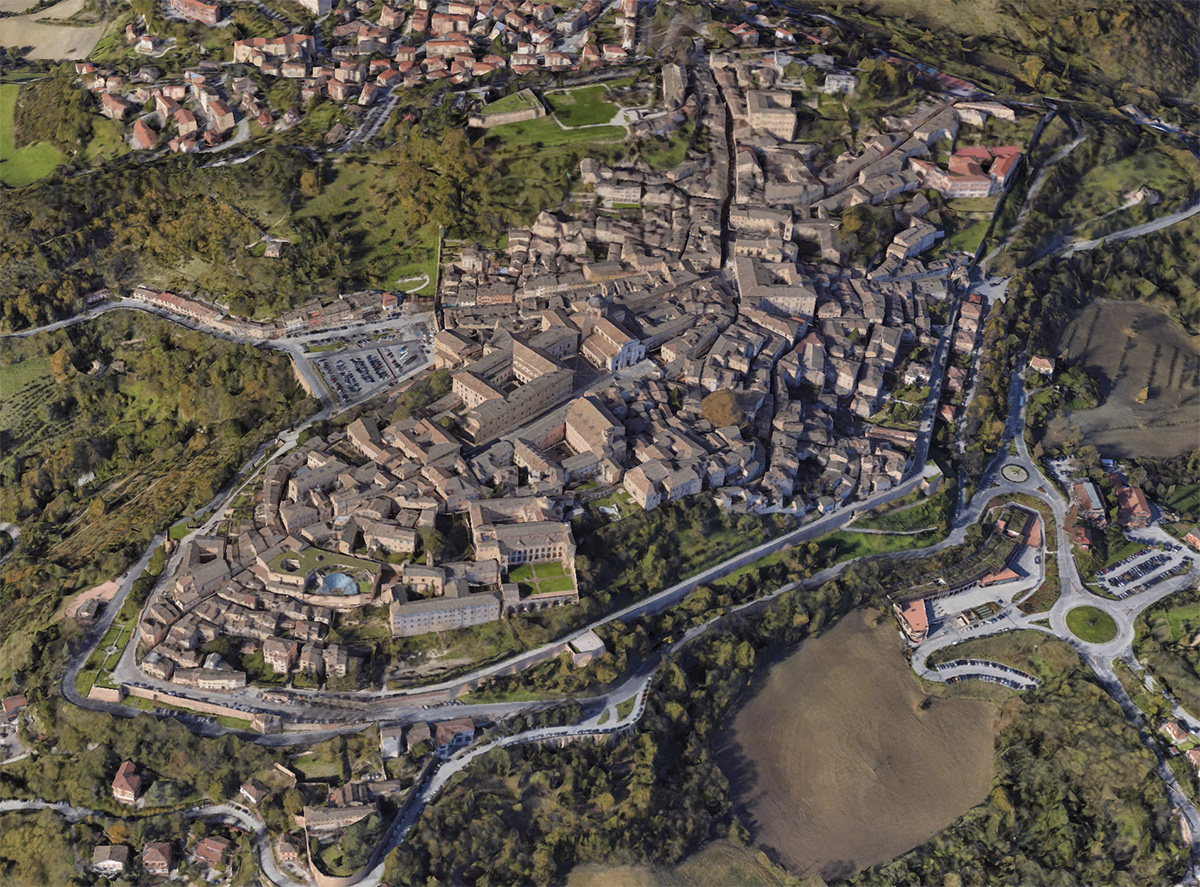
The modern era of development upended many thousands of years of human habitat formation. The physical form of neighborhoods gave humans both practical advantages (safety, access to resources) and social benefits (identity, cooperation, belonging). Neighborhoods are how people organized their lives for millennia, consisting of small, walkable clusters of dwellings around shared spaces such as markets, commons, and worship sites.
Emily Talen, a professor of urbanism at the University of Chicago, identifies neighborhoods as the primordial human habitat, one that existed long before cities, suburbs, or nation-states. When neighborhoods cluster, they become the “cells” of cities—the self-sustaining, functional units that together make urban life possible. Neighborhood form is not merely about convenience or aesthetics. It is a precondition for economic opportunity, political participation, cultural vitality, and collective wellbeing.

Across cultures and eras, Talen argues, neighborhoods are also the scale at which we establish norms, build trust, and recognize and care for others. This is not sentimental nostalgia; it is anthropological. Neighborhoods are where diversity and democracy are either nurtured or stifled. While “community” can be hard to define, neighborhoods, by contrast, are spatial, observable, and designable.
For leaders, planners and citizens in large cities and small towns alike, Talen’s message is both practical and provocative: We cannot build community without building neighborhoods that make community possible. If a place is wholly car-dependent, zoned for separate uses, and lacking in shared public spaces, then “community engagement” efforts tend to feel forced because the environment itself is working against connection. But when the physical form supports proximity, routine encounters, and a diversity of public life, social relations and civic engagement still take effort, but they don’t need to be engineered; they emerge.
A Neighborhood Engagement Case Study
Like many postindustrial midwestern cities, neighborhoods in Buffalo, New York, have struggled through decades of disinvestment, disrepair, and crime. Since the mid-2000s, the city has engaged the poorest areas through the Clean Sweep initiative, which has evolved over time from a block-by-block code enforcement effort into a robust program focused on outreach, cleanup, and repair.
Over the course of a week, coordinated teams consisting of social workers, maintenance crews, and police officers go door to door and talk with residents about issues that need addressing, and then they get to work removing graffiti, clearing vacant lots, repairing city infrastructure such as sidewalks, and boarding up vacant properties.
To understand the impacts of this program, researchers at the Bloomberg Center for Cities at the Harvard Kennedy School of Public Policy examined 911 and 311 data before and after these interventions. They were surprised to learn that in the six months following a Clean Sweep effort, residents were 42% more likely to call 911 for drug-related crimes and 9% more likely to call 311 for trash and graffiti compared to similar areas that did not receive attention.
The researchers expected the calls to go down, not up. But after talking with residents, they concluded that the increase in calls wasn’t a sign of escalating problems, but an indication that place-based interventions were having positive spillover effects. One resident said, “It brings the message that we’re important … that our place is important to the city.” A police officer observed, “I’ve found the more positive interactions … the more there’s a sense of safety and people’s bravery [to report crime] increases.” Another resident remarked, “We know what we need to do but sometimes we need a push—the Clean Sweep is a little push.” Others described starting block clubs, calling 311 themselves, or simply feeling empowered to “take care of their stuff.”
This is clear evidence that a block-by-block approach to improving everyday living conditions is a pathway to building trust and engagement, but it is unlikely to change the overall trajectory of people’s lives unless and until it is drastically scaled up.
A Big Bet on Place
As our neighborhoods have become increasingly sorted by income, the American dream of social mobility has steadily declined. Research shows that children born in 1940 had a 90% chance of earning more than their parents; by 1980, however, that likelihood had fallen to 50%. Over the same time period, the share of Americans living in mixed-income neighborhoods fell from around 67% to 40%.
The contributing factors to this spatial sorting are complex, but the way cities developed in the 20th century is unquestionably a driving force. Single-family zoning, redlining, highway expansion, mortgage financing, and school district boundaries systematically separated people by income and race. Neighborhoods that are physically structured to foster mobility and connection become elite, neglected areas remain stubbornly poor, and middle-class families struggle to find homes they can afford to buy—or even rent.
One of the most ambitious efforts to address this seemingly intractable pattern was recently announced by Atlanta Mayor Andre Dickens. The Neighborhood Reinvestment Initiative, a $5 billion plan that aims to make Atlanta “the best place to raise a child,” focuses on struggling neighborhoods that, despite years of disinvestment, still have valuable assets in strategic locations. The initiative’s scope encompasses housing, education, health, recreation, transportation, and local economic development.
The initiative “is a citywide attempt, the largest ever undertaken in America, to prove that geography is not destiny and where opportunity is not defined by zip code,” writes David Edwards, professor of practice in the School of Public Policy at the Georgia Institute of Technology and an adviser to the mayor.
This is the scale at which every American city—large, medium, and small—needs to disrupt the postindustrial model of development by prioritizing neighborhood investment based on what we know humans need to flourish. But it will require pole-vaulting over a very high crossbar: the financial infrastructure that has grown up around complicated zoning and land-use regulations that drive Big Development at the expense of locally grown, economically vibrant, and socially diverse placemaking.
Think Locally, Act Neighborly
The single most important pathway to radically scaling up locally driven, community-minded neighborhood revitalization projects is to reform and simplify zoning, land-use regulations, and permitting, all of which have arguably done more harm to neighborhoods—and, by extension, entire urban ecosystems—than any other single factor.
The complexity of navigating the permitting and construction process in most cities large and small has stifled infill and adaptive-reuse projects across the board, from modest multifamily housing to affordable retail and cultural spaces. Even if these projects are allowed under current zoning, they rarely pencil out. What ends up getting built are soulless large-scale developments that really do change the character of a neighborhood, which is why people oppose them.
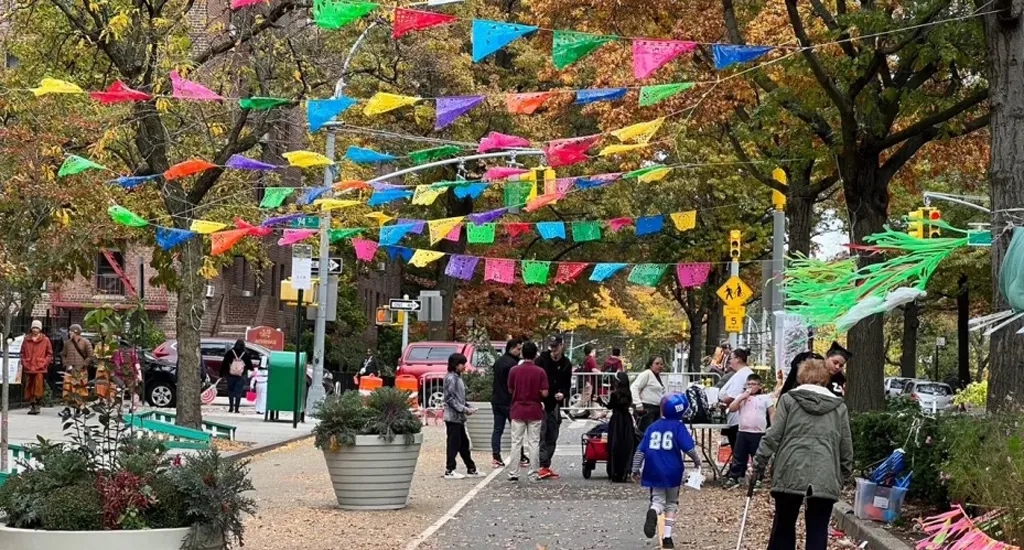
The good news is that changing zoning and land use regulations is wholly within the power of city leadership (unlike so many other crises that have emerged of late). What’s more, there is no shortage of planning and advocacy organizations that have developed toolkits and case studies: from local retail and zoning reform strategies, to co-housing designed to foster community without sacrificing privacy, to tactical urbanism interventions that improve mobility options and enable social interactions.
With a growing YIMBY/abundance movement and widespread recognition that the status quo is not working for anyone except the very privileged, it is critical that we turn our attention to the places we can have the most immediate and lasting impact: how we live our daily lives, get to work, go shopping, raise our families, and engage with our friends and neighbors.
“Whenever and wherever societies have flourished and prospered rather than stagnated and decayed, creative and workable cities have been at the core of the phenomenon; they have pulled their weight and more. It is the same still,” Jane Jacobs wrote in the foreword to the 50th anniversary reprint of The Death and Life of Great American Cities. “Decaying cities, declining economies, and mounting social troubles travel together. The combination is not coincidental. It is urgent that human beings understand as much as we can about city ecology—starting at any point in the city process. The humble, vital services performed by grace of good city streets and neighborhoods are probably as good a starting point as any.”
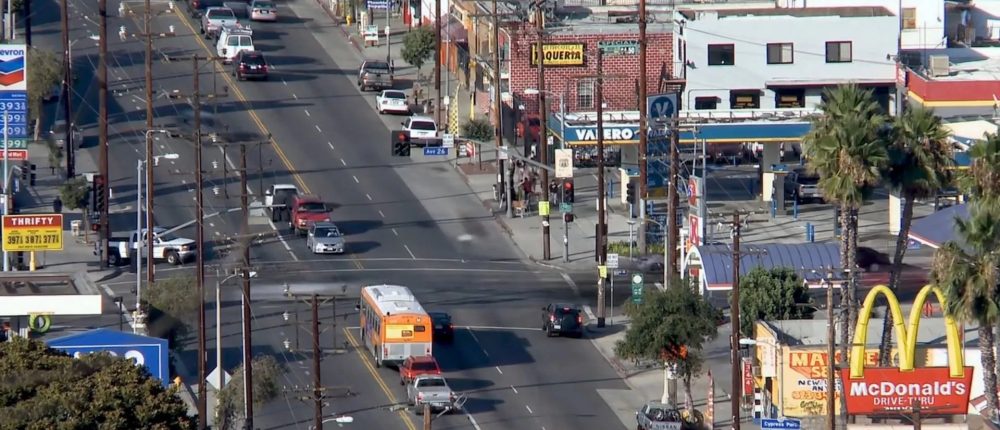
Featured image: A “Stroad.” Coined by Strong Towns, stroads are trying to be both a street and a road—enabling high-speed traffic while also trying to serve a commercial district, resulting in dangerous, inefficient, and unpleasant environments for drivers, pedestrians, and businesses alike. Photo via Strong Towns.